Van's Air Force

The definitive Van's Aircraft support community! Buying, building or flying an RV? Join our exclusive family of mentors and enthusiasts!

Old primer and how to proceed.

AlexHeatwole

Member
Friend
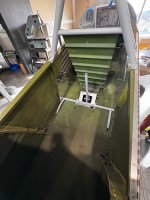
I’m about ready to start painting the interior. Previous builder primed the parts as he built back in the 1990s but I don’t know what he used.

Can I degrease and scuff the existing primed surfaces and paint over it or does it need a fresh coat of primer? Planning on using SW Jetflex.
 

Attachments

  • IMG_5784.jpeg
    IMG_5784.jpeg
    2.3 MB · Views: 56
  • IMG_5785.jpeg
    IMG_5785.jpeg
    1.6 MB · Views: 56
Whatever it is, you probably need to scuff it and clean it for mechanical bond. The primer has cured.

You might ask the PO what primer was used. The manufacturer' data sheets might have direction. Whatever you find, it's always best to test somewhere it doesn't show to be certain the paints play well.
 
Absolutely, but I am surprised you wouldn't say put another coat of primer on - isn't that the usual TDS advice? Just asking as you have the real world experience.
 
It looks like old rattle can zinc chromate, something everyone used as the standard. See if it loosens up with some acetone or MEK. It's not as robust as the urethane and epoxy such as AKZO, but if you are trying to stay with the same green chromate color, you might find someone that has the old school stuff. Otherwise, it will likely accept most other rattle can primers over it.
 
There’s actually nothing wrong with the old rattle can zinc chromate at all….id scuff it with maroon scotch brite and shoot it. The seat back looks like old dtzler dp-70 which is epoxy…the rest is zinc chromate.
 
When you anodize or even chem treat…you are etching with acid, neutralizing then chromate washing or conversion coating as it’s called in the industry…you are adding a thin layer of organic chemicals one of which is chromium which bonds to the aluminum substrate…allowing the paint layer to stick to the conversion coating.

You can wash that…and paint right over it.
 
Absolutely, but I am surprised you wouldn't say put another coat of primer on - isn't that the usual TDS advice? Just asking as you have the real world experience.
I'm not sure who you're asking.

IMHO
Extra weight. Not needed. If it were outside, I would say strip it off and start over. Inside isn't subject to the same environment.

I'm not a fan of Jet Flex. It started showing wear on mine before it was finsihed. Expensive stuff. I stripped quite a few parts and sprayed Kirker EnduroPrime gray and black. Just primer. No top coat. Virtually identical colors. Hard as nails.

The wheels on my 4x4 are going on 8 years sprayed with white. Colorado sun, snow, rain and road salt. They barely show any sign of wear. Only because I didn't prep them properly. I just roughed them up and sprayed them as a test. I didn't expect it to survive.
 
Absolutely, but I am surprised you wouldn't say put another coat of primer on - isn't that the usual TDS advice? Just asking as you have the real world experience.
If it’s quality primer and applied well then there is no reason to reprime the whole thing. As wirejock said, a test panel should be sprayed. My only experience is with the water reducible JetFlex. It does not get along with some primers.
 
I’m about ready to start painting the interior. Previous builder primed the parts as he built back in the 1990s but I don’t know what he used.

Can I degrease and scuff the existing primed surfaces and paint over it or does it need a fresh coat of primer? Planning on using SW Jetflex.
I'd strongly recommend, cleaning, scuffing, and repriming before paint. The interior is a bear to repaint down the road - you don't want to take any chances there, IMO.
 
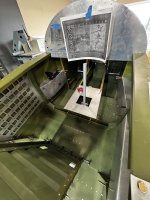
What’s the purpose of this panel? If that’s for switches you may not like the end result always looking over your left shoulder. Might be hard to even see the aft ones once you’re seated. Maybe I’m missing something but if that’s for switches I don’t think that’s a good plan
 

Attachments

  • IMG_3470.jpeg
    IMG_3470.jpeg
    184.4 KB · Views: 43
I'd strongly recommend, cleaning, scuffing, and repriming before paint. The interior is a bear to repaint down the road - you don't want to take any chances there, IMO.
This.

I did the “scuff up the old primer and top coat” once, and will never do that again. Even a light coat of new primer provides far superior adhesion for the final top coat than not doing it.
 
What’s the purpose of this panel? If that’s for switches you may not like the end result always looking over your left shoulder. Might be hard to even see the aft ones once you’re seated. Maybe I’m missing something but if that’s for switches I don’t think that’s a good plan
Molle panel so I can attach whatever storage bags or accessories I want to in the future.
 
I should have been more specific.
Run a test on an inconspicious area. Test whatever you plan to apply including prep process. Allow it to fully cure. Apply a six inch strip of Gorilla tape. Rub it down really good. Leave it overnight preferably with some heat like a hot day outside. Next day, rip it off like, well, we won't go there. If it rips off anything, go back to square one.
Best of luck.
 
I should have been more specific.
Run a test on an inconspicious area. Test whatever you plan to apply including prep process. Allow it to fully cure. Apply a six inch strip of Gorilla tape. Rub it down really good. Leave it overnight preferably with some heat like a hot day outside. Next day, rip it off like, well, we won't go there. If it rips off anything, go back to square one.
Best of luck.
I would suggest that what ever use test a small area first, they might not like each other and form blisters.
 
A lot of the popular primers, particularly catalyzed epoxy primers, can be mixed as a first coating primer for bare metal or with additional thinning sprayed as a sealer when being applied to properly prepared previously applied coatings.

The modern formulation of most paints, even ones that have been around for decades, have formulations that are very different from what they were 20 or 30 years ago because of EPA regulations. A lot of of these changes changed the adhesion properties of modern paint coatings. If you want a durable long lasting finish with no risk of delamination or other issues, a thin coat of fresh primer is what is needed so that the paint has something to chemically cross link to.
In simple terms, the old primer has had a long time to cure, and depending on what it actually is, the solvent in the new paint you spray on will probably have no effect in regards to microscopically softening the surface while the paint is wet. This is what is called chemically cross linking.
Most primers are designed in such a way that they do a much better job adhering to the substrate they sprayed onto without the need for a chemical cross link. The mechanical cross link to a properly scuffed/prepared surface is sufficient. Then you have a fresh primer surface that your paint coating will be able to cross link too well, and be assured of good adhesion.
It doesn’t take a lot. Primer mixed as a sealer and sprayed as a very light coat is generally sufficient and that is what I would recommend you do.
 
Molle panel so I can attach whatever storage bags or accessories I want to in the future.
I’ve never heard of those but after a little research I think that is a clever idea! The RV-4 isn’t a particularly roomy cockpit so once you get the seats in and sit down it will be interesting to see how it all works out. Love the ingenuity, that’s what’s great about experimentals to be able to do stuff like this. Nice job thinking outside the box, well done! Picture below looks like the back of a Jeep back but looks like you would have lots of options.
 

Attachments

  • IMG_2699.jpeg
    IMG_2699.jpeg
    425.3 KB · Views: 28
Back
Top