Id probably verify everything really closely if I was you. Base timing etc. Get a tach and check the RPMs.
Is your prop low pitch set properly?
Quite possible that your PMags installation is quite different to your LSEs. I would not trust your ears to tell the difference between 2780 and 2650. Notice any CHT changes?
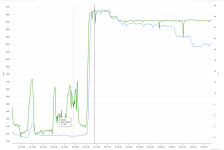
Is that you pulling the rpms back just after hitting WOT or the governor kicking in?
I know this doesn’t help your erratic reading question sorry.
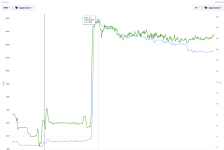
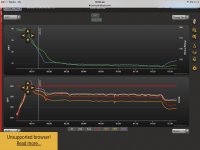
The below chart is from when the plane had the LSE ignitions. As you can see, it tops out at about 2650. Looking at the zoomed timeline, I do see some "glitches" in the RPM reading even with the LSE but in general, it was a lot more stable.
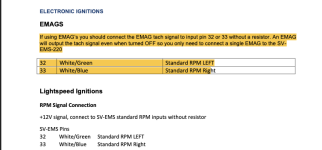
Question - if nothing other than the ignitions were changed, is there any reason that the prop settings (low pitch, max rpm, etc. settings) would change? My understanding is that the tach wire from the Pmag is purely an output to the EFIS.
Perhaps, I can switch the tach input (to the EFIS) to the other Pmag and see if it looks any different. I am going to call them to see if they have any ideas too.
On the chart from my previous post, yes, I pulled the prop back soon after takeoff because of the high RPM reading.
On CHTs, the Pmags originally came with the base timing set to about 22 degrees before TDC. We changed it to 25 since that's what the LSEs were set to and that's also what the engine plate said. I started to see some CHT issues on takeoff and in low speed flight (I am prepping for my CFI checkride) but I assumed it may have been due to the timing curve being different (as mentioned by the Emag folks) so I retarded it back to 22 degrees a couple of days ago and the CHTs have generally been ok since then. And, the CHTs seem to generally be unrelated to the prop setting. I did a lot of my maneuvers at 2400-2500 RPM.
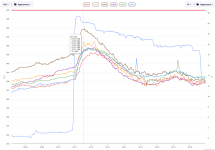
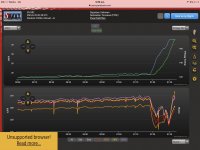
So, that is a different question - with the LSE, the CHT on #6 was typically the high one. As long as I climbed at about 135 KIAS on hot days, I was able to manage it. With the Pmags, I am finding that #3 (and next, #4) seems to be the hottest cylinder. We did put in 1 inch holes in the baffles to provide blast air cooling for the Pmags. Based on some reading, I thought it might be due to the blast air "stealing" cooling from the cylinders so I closed off 75% of the holes (the Emag guys said it would be fine) and I still saw CHT3 was high on takeoff (390-400 degrees) until I retarded the timing. Even now, it is higher than the others (see the second chart below).
Thanks,
Vas