Van's Air Force

The definitive Van's Aircraft support community! Buying, building or flying an RV? Join our exclusive family of mentors and enthusiasts!

Is the static port on my 2006 RV-7 REALLY just a pop rivet?

donmtt

Active Member
Patron
I had the first ever pitot/static check done on my (new to me) 2006 RV7 (after installing a GPS175). There was a "big leak" right at the fitting that connects the static tubing to the port. Per the PS guy (this is all he does and has been doing it for years), the static port in RV's is just a pop rivet with the center removed. And the problem is that the standard static lines don't fit well. In my case there was a load of silicon around the line - which presumably was leaking.

Is this the state of the art? And if so, what's the best way to seal that up?

(The rest of the system was virtually leak free and we were able to complete the test by disconnecting the port and direct-connecting the test machine to the line.)

Thanks!
 
Rec read the plans if you have them. There are after market options but some don’t always work as well. There should be lots of info on vaf.
 
The short answer to the OP’s question is yes…yes it is….😉

The long answer is that Vans has proven thit is accurate (of course you have to fix the leaks, but that’s not really hard once you crawl back into the tailcone). The shape, height, and location of the static port greatly affects the accuracy of your airspeed and altitude - it takes lots of testing to find the combination, and Vans has already done that. Most of the aftermarket ports we have sen here int eh past twenty years induce errors - folks either have to alter their shapes, build dams, or just replace them with pop rivets.

In your case, I’d pull off the static line, clean off all the RTV (or whatever sealant was used) and start over with new tubing and new sealant - you’ll end up with a nice, tight, accurate system.
 
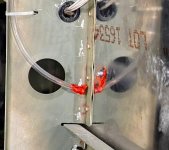
This is a static port that is intended to replicate the pop rivet static port. I actually just installed one of these this week. Nice snug fit to the static line. Whether or not in induces an error I have yet to determine. But they sell it on the vans website as well so there’s that. Visually it’s nearly identical to the standard pop rivet. https://www.steinair.com/product/p-ports/
 

Attachments

  • IMG_8045.jpeg
    IMG_8045.jpeg
    2.5 MB · Views: 128
  • IMG_7839.jpeg
    IMG_7839.jpeg
    1.7 MB · Views: 127
I had the first ever pitot/static check done on my (new to me) 2006 RV7 (after installing a GPS175). There was a "big leak" right at the fitting that connects the static tubing to the port. Per the PS guy (this is all he does and has been doing it for years), the static port in RV's is just a pop rivet with the center removed. And the problem is that the standard static lines don't fit well. In my case there was a load of silicon around the line - which presumably was leaking.

Is this the state of the art? And if so, what's the best way to seal that up?

(The rest of the system was virtually leak free and we were able to complete the test by disconnecting the port and direct-connecting the test machine to the line.)

Thanks!
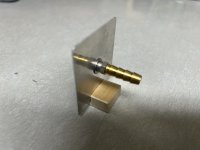
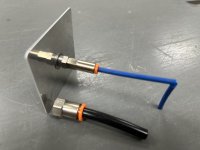
EZ-PORT, another data point ...

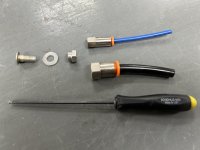
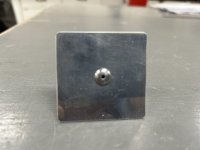
If you decide to change the rivet static "port" to something more in keeping with aircraft quality & durability, I make a static port out of a ground & polished HiLok fastener which has the flexibility of being able to tighten it down in the fuselage with a conventional 10-32 hex nut (with washer): and, for coupling (read sealing), you can screw on a barbed fitting or appropriately sized PC (Push-to-Connect) fittings. If you have any interest, please let me know - or make them yourself - I'll send you a couple of HiLoks for free if you want to modify them yourself ...

HFS
 

Attachments

  • EZ-PORT (Parts Breakdown).jpg
    EZ-PORT (Parts Breakdown).jpg
    1.7 MB · Views: 150
  • EZ-PORT (Front View).jpg
    EZ-PORT (Front View).jpg
    1.1 MB · Views: 154
  • EZ-PORT (Hose Barb).jpg
    EZ-PORT (Hose Barb).jpg
    947 KB · Views: 134
  • EZ-PORT (Side:Rear View).jpg
    EZ-PORT (Side:Rear View).jpg
    1.5 MB · Views: 147
This is a static port that is intended to replicate the pop rivet static port. I actually just installed one of these this week. Nice snug fit to the static line. Whether or not in induces an error I have yet to determine. But they sell it on the vans website as well so there’s that. Visually it’s nearly identical to the standard pop rivet. https://www.steinair.com/product/p-ports/

Me too. No errors or leaks. Barb fits standard tubing perfectly.IMG_0710.png
 
There's a dead simple solution to the pop rivet static leak problem, which I used on mine:
Obtain two 1/8" NPT cap fittings that have flat tops. Typical brass hardware store item.
Drill #30 hole in the center of the cap.
Select a suitably longer 1/8" pop rivet.
Apply sealant to the top of the cap. ProSeal would be best.
With an assistant - place cap on the inside of the fuselage. Push pop rivet thru from outside, engaging the cap. Pull the rivet.
Once the sealant sets screw your 1/8" fitting into the cap.

Bonus - should be available locally. No waiting!
 
Is this the state of the art? And if so, what's the best way to seal that up?
I get what you're saying, but what would make you think that anything on any airplane is "state of the art?" Airplane design innovates until it finds something that works, and then it doesn't ever change again unless theres a reason. Vans has perfected that to a fine art, because every design decision has to work, but it also has to be the cheapest practical option and be someting that you can build in your garage.

It's not just Vans. You can see that philosophy on every airplane ever built if you know where to look. The Piper part number on a Tampax tampon comes to mind, as does certain turbine APU parts that used to come in a Briggs and Stratton box, or the fact that Williams Rolls Royce calls out Phillips Milk of Magnesia as a high temp anti-seize to be applied between the flanges on certain jet engines.

Having said all that: yeah, that pop rivet works fine when you consider that it was no doubt intended for VFR flight. Same as the home made pitot tube in the plans. Neither one of those things sat well with me for an IFR airplane, so I went the ones up in post 7.
Whatever you do, it's vitally important that you don't change the external shape of that port. Vans has done the work to ensure that port works in that location. If you try to "improve it" you have a high probability of inducing significant static errors.
 
Last edited:
Airplane design innovates until it finds something that works, and then it doesn't ever change again unless theres a reason.

This x 1000. In a world where we update everything every 5 seconds it doesn't seem right. I just updated a lightbult. Yep, a lightbulb. What?
 
This is a static port that is intended to replicate the pop rivet static port. I actually just installed one of these this week. Nice snug fit to the static line. Whether or not in induces an error I have yet to determine. But they sell it on the vans website as well so there’s that. Visually it’s nearly identical to the standard pop rivet. https://www.steinair.com/product/p-ports/
My pop-rivet ports were leaking bad so I opted to replace them with these. My pitot static system is pretty accurate, TAS is +/-2kts.
 
19 years, 1000 hours, never a leak. The tubing originally supplied with the legacy kits is a smaller diameter “clear” and soft material. Not sure what they supplied in later years.
Also, invariably, when folks post pics of leaking ports, they are slathered with gobs of sealant. As you can see here, there is a judicious amount of sealant.
There is a bug in this tube. With the barb style ports, the bug would not be visible. Clear tubing also an advantage.
Just another data point. IMG_0878.jpeg
 
Last edited:
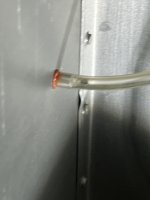
My stock pop rivet ports didn't make it 4 years after construction and I'm not sure the builder ever checked them. I replaced with the barbed ports. IMO, this is not a good design.
 

Attachments

  • 4d8eafad-76a0-4278-80ac-e1b906827bbf~1.jpg
    4d8eafad-76a0-4278-80ac-e1b906827bbf~1.jpg
    772.5 KB · Views: 117
  • image.jpg
    image.jpg
    68.8 KB · Views: 117
My stock pop rivet ports didn't make it 4 years after construction and I'm not sure the builder ever checked them. I replaced with the barbed ports. IMO, this is not a good design.
Poorly installed and never stood a chance. The tubing has to be supported. Good example of how not to do it.
However, the barb style are more forgiving for sure, but the design didn’t fail here.
You might want to properly support the wiring as well. If this is indicative of his build……
 
You might want to properly support the wiring as well. If this is indicative of his build……
Unfortunately, yes. The wiring isn't very clean.

The new static ports and tubing are much better, however.
 

Attachments

  • PXL_20241116_230009995~2.jpg
    PXL_20241116_230009995~2.jpg
    381.9 KB · Views: 72
On my last build, I had a couple machined units in the leftovers box, so I drilled out the center hole to fit the "pop" rivet, then used proseal to bond the fitting to the inner skin and installed the "pop" rivet as normal. Between the proseal and the rivet it was all pretty solid. I did not install the four rivets the fitting is drilled for.

After it all dried, I punched out the center mandrel and used a screw in fitting for the static line.

 
I had the first ever pitot/static check done on my (new to me) 2006 RV7 (after installing a GPS175). There was a "big leak" right at the fitting that connects the static tubing to the port. Per the PS guy (this is all he does and has been doing it for years), the static port in RV's is just a pop rivet with the center removed. And the problem is that the standard static lines don't fit well. In my case there was a load of silicon around the line - which presumably was leaking.

Is this the state of the art? And if so, what's the best way to seal that up?

(The rest of the system was virtually leak free and we were able to complete the test by disconnecting the port and direct-connecting the test machine to the line.)

Thanks!
Dynon makes a nice kit that has everything you need.
 
Dynon makes a nice kit that has everything you need.
I used the Dynon kit with their static ports and my -7 is spot on.
EDIT: I remember worrying about whether they would be accurate after reading all the grief of others with aftermarket ports. Now that Van's is selling a "approved" upgrade, I would go with that one.
 
I have the Dynon provided in the kit with the new pitot. I was going to use them, but my pop rivets are still fine, and then I saw the bug. I will have to debate if/when they fail; fix them and getting another 1000 hrs and 19 years plus, or “upgrading” to the Dynon.
Hate “fixing” stuff that works.
Do it right the first time and the pop rivets won’t let you down.
 
However, the barb style are more forgiving for sure, but the design didn’t fail here.
I'd just like to add that forgiving designs are good designs. I don't see the point in something being extra technique sensitive to achieve a degree of reliability. The many more robust ports available out there are evidence that it's possible to do better.
 
On my last build, I had a couple machined units in the leftovers box, so I drilled out the center hole to fit the "pop" rivet, then used proseal to bond the fitting to the inner skin and installed the "pop" rivet as normal. Between the proseal and the rivet it was all pretty solid. I did not install the four rivets the fitting is drilled for.

After it all dried, I punched out the center mandrel and used a screw in fitting for the static line.

Pretty much the same. Quick connect to NPT on the inside. Vans pop rivet outside. I would like to make two "Remove Before Flight" bug plugs. Seems like someone on VAF had a nice design.
 
To be fair to vans, back in the day, he was trying to create an affordable kit. He found a solution that worked and cost 5 cents. Van had many things like that back then. A different world than today when most builders back up the armored car full of cash to buy upgraded parts. With good craftsmanship, the simple rivet plus tube works. It just doesn’t fit the erector set stateof current kits.

Definitely more elegant solutions today, but we should be mindful of the era in which it was designed.
 
Last edited:
This is all an aside:

I took my stepmother for a first flight in a C-172. We did the walk around and she read the checklist, I checked the item, and described why we do it. When we got to the static port she called BS. I told her that is how the ambient pressure is known to compare to the ram air in the pitot... She would have nothing to do with it.

This turned into the longest preflight discussion!

Finally, I asked her to explain her disbelief and she said "it looks like a screw head" and I said, "yes, but this one has a hole in the middle and there's a tube attached to the back that goes to the instruments." She said okay and we went flying.

That was 15 years ago. She's 92 now and I don't have a high wing plane anymore, so no more arguments :)
 
This is all an aside:

I took my stepmother for a first flight in a C-172. We did the walk around and she read the checklist, I checked the item, and described why we do it. When we got to the static port she called BS. I told her that is how the ambient pressure is known to compare to the ram air in the pitot... She would have nothing to do with it.

This turned into the longest preflight discussion!

Finally, I asked her to explain her disbelief and she said "it looks like a screw head" and I said, "yes, but this one has a hole in the middle and there's a tube attached to the back that goes to the instruments." She said okay and we went flying.

That was 15 years ago. She's 92 now and I don't have a high wing plane anymore, so no more arguments :)
I'm not doubting you, but I've been around a lot of Cessnas and don't ever recall a static port that could be mistaken for a screw head. What year model was that?
 
To be fair to vans, back in the day, he was trying to create an affordable kit. He found a solution that worked and cost 5 cents. Van had many things like that back then. A different world than today when most builders back up the armored car full of cash to buy upgraded parts. With good craftsmanship, the simple rivet plus tube works. It just doesn’t fit the erector set stateof current kits.

Definitely more elegant solutions today, but we should be mindful of the era in which it was designed.
Good post. I suffer from the memory of all of the folks back in the day that thought the pop rivet was inadequate, made or bought something else, and suffered huge errors.
There are some good proven products out there now, that were not then. Still, the pop rivet works, as evidence of the thousands flying and personal experience.
 
My stock pop rivet ports didn't make it 4 years after construction and I'm not sure the builder ever checked them. I replaced with the barbed ports. IMO, this is not a good design.
Unfortunately, yes. The wiring isn't very clean.

The new static ports and tubing are much better, however.
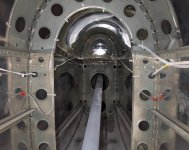
Still a bit of "downhill" action on the left side static port tubing -- shorten that line by about 1/4" when you get a chance...
 
Definitely more elegant solutions today, but we should be mindful of the era in which it was designed.
I don't think we should be as accepting of things being a certain way just because they were that way 30-40+ years ago. RV kits should have been shipped with a different port starting 20+ years ago at this point. Clever cost savings is one side of the coin, but the other is pinching pennies in dumb places for reasons that amount to "that's how we've always done it". Other kit manufacturers seem more willing to evolve their kits over time.

Now pardon me while I go fly my 8A, completed in 2020, that has the original nose gear leg, no option to change to the updated pivoting leg design, with a straight bolt that's starting to get sloppy instead of a tapered cone fit that everyone has to modify on every nose gear RV eventually. Wish I had known it was a problem while the engine was off, but that's not as bad as Vans knowing it was a problem when they shipped the engine mount.
 
I don't think we should be as accepting of things being a certain way just because they were that way 30-40+ years ago. RV kits should have been shipped with a different port starting 20+ years ago at this point. Clever cost savings is one side of the coin, but the other is pinching pennies in dumb places for reasons that amount to "that's how we've always done it". Other kit manufacturers seem more willing to evolve their kits over time.
Vans does offer a more elegant solution,. as posted above. They just chose to leave it as an option. I see no fault in that, but I suppose that is just my opinion.
 
The static ports on my HR2 are a phillips head screw with a hole drilled in the middle, that sit flush with the surrounding metal. Coincidentally my stall speeds seem to be a few kts higher than other rockets. Im suspicious of the accuracy of my setup.
 
Now pardon me while I go fly my 8A, completed in 2020, that has the original nose gear leg, no option to change to the updated pivoting leg design, with a straight bolt that's starting to get sloppy instead of a tapered cone fit that everyone has to modify on every nose gear RV eventually. Wish I had known it was a problem while the engine was off, but that's not as bad as Vans knowing it was a problem when they shipped the engine mount.
Now is the time to fix this..... Don't let it fail like the static port.
Mine had some play and was solved with a longer bolt.
I posted it on VAF with part numbers, and the reason it failed. Check my past posts.
 
Now is the time to fix this..... Don't let it fail like the static port.
Mine had some play and was solved with a longer bolt.
I posted it on VAF with part numbers, and the reason it failed. Check my past posts.
I'm not pulling the engine again, so there would have to be another way to do it
 
I just remembered an RV7A I saw arriving at an airshow. Pilot was yanking the elevator back to bounce the nose. At the time, everyone watching thought it looked cool. Now that I built, and fly one, no way in heck I would do that. I have Elastomeric Nose Gear and hold that nose up till the elevator is against the stop then hold it there till she's full stop at the hangar. I hope his airplane survived the abuse.
 
Oh Gosh Gee another Static Port thread... Ha ha. MY FAVORITE. Not even going to Opine. I have not read the replies even but sure you got all kinds of advice. I will say this topic like many things (Primer) is full of opinions, often different, not all good or bad, just different.

I changed my mind I will opine. THE POP RIVET IS STATE OF THE ART NEVER CHANGE IT. I am kidding. Yes it works on a good day, but subject to leaks if not executed perfectly with tubing well supported. However over time... Nothing like real solid pipe compression and threaded couplings. The slide tube over solid nipple is OK. But the pop rivet thing with RTV is slightly janky IMHO. However it is cheap, light, works (kind of).

Be aware the size and shape of aftermarket port, how proud or the protrusion above skin, surface area around the port all effects accuracy. 99% impossible to get PERFECT static reading, real ambient static air pressure, with 160kts of air moving past it, Prop slip wash, boundary layer turbulence yada yada yada. Do your best and flight test IAS and CAS charts. I think most EFIS allow you to calibrate it.

All we know is Van's location and pop rivet to be fairly accurate (if not leaking). The fairly accurate means "good enough". So if you must get over priced aftermarket static ports get a good one. The size, shape, height of a pop rivet with a better, leak free connection to the tubing. People will swear their aftermarket static is the best. But is it really? They invested in it and they want it to work.

I would LOVE to see a shoot out of different Statics mounted on the same RV and test flown collecting data. The PROBLEM is you have to cut a pretty big hole in your plane for some of these static ports. At min if you have POP rivet go take some flight test data, do your best to see what your TAS and IAS is. Then put in your aftermarket and repeat flight testing. Please publish it. There are technical papers by the way published in the aeronautical industry about what works and what does not... but frankly unless you are dragging a static cone 500 feet behind your plane you can not easily get free air static with a hole in fuselage easily. Best we can do is good enough, and check it and correct it with correction card. With RVSM (look it up) the cruddy statics on jets became a topic of great concern when planes are now separated by 1000 feet not 2000 feet above at FL290 and above. One plane low 200 feet, one high 200 feet. that gets pretty close at 500 kts.

I have read complaints about aftermarket static ports that were installed wrong. They were suppose to be mounted with flange inside and just the center penetrating the skin. They mount the whole kit N caboodle outside, flange and all. It was sitting way too high from skin surface. That large flange is not helping. Although Cessna does have static ports with a flange on outside but thin. Likely this was a fix during flight test trying different things. Tripping or energizing the boundary layer in front of a static port is a common fix or tuning or band aid in adjusting the performance. You want your If you are going to have airspeed error, you want it to read low at low speed (meaning IAS is slower than actual airspeed).

Again a base line is about the size, shape, height, of Van's pop rivet about where they say to put it. Can you change shape, shave them down? Yes. Can you trip the boundary layer (energize it) with a strips in front of and to side of static port. Yep. Look at factory planes you might see this bar riveted on to the skin near the port. Many have aerodynamic tricks, adjustments. They all are INACCURATE. just how much are you willing to tolerate. LEAKS ARE A NO-NO. That for sure will give you silly static pressure that changes with airspeed.

Note: Over the years looking many EAB's some flying for a long time, even IFR, with no transponder test. If you are VFR you are required to have transponder encoder tested and static test every 24 months. If you are IFR, you require to also have pitot-static system tested with transponder and to higher degree of accuracy. Some builder operators miss this. Do you know when your transponder was lasted certified? :unsure: :rolleyes:😁:oops:
 
Last edited:
Finished my -6 early 1993, per plans, including "pop rivet" static port. Sold the airplane over 25 years later. Never a static problem.
 
Why in the world would you go with a 50 cent well executed solution when you can spend $66?
Can't use zip-ties, need to use Adel clamps and on and on.

And here you have part of the answer on the heavy "unaffordable" $100,000+ RVs out there that I keep seeing complaints about.
 
Back
Top