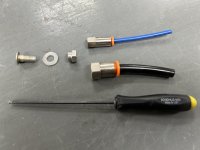
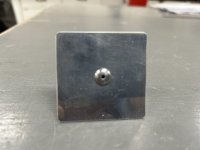
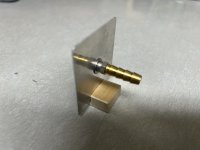
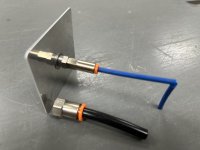
Oh Gosh Gee another Static Port thread... Ha ha. MY FAVORITE. Not even going to Opine. I have not read the replies even but sure you got all kinds of advice. I will say this topic like many things (Primer) is full of opinions, often different, not all good or bad, just different.
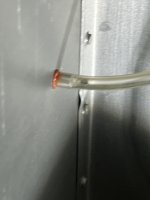
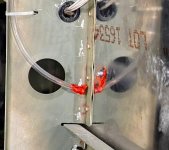
I changed my mind I will opine. THE POP RIVET IS STATE OF THE ART NEVER CHANGE IT. I am kidding. Yes it works on a good day, but subject to leaks if not executed perfectly with tubing well supported. However over time... Nothing like real solid pipe compression and threaded couplings. The slide tube over solid nipple is OK. But the pop rivet thing with RTV is slightly janky IMHO. However it is cheap, light, works (kind of).
Be aware the size and shape of aftermarket port, how proud or the protrusion above skin, surface area around the port all effects accuracy. 99% impossible to get PERFECT static reading, real ambient static air pressure, with 160kts of air moving past it, Prop slip wash, boundary layer turbulence yada yada yada. Do your best and flight test IAS and CAS charts. I think most EFIS allow you to calibrate it.
All we know is Van's location and pop rivet to be fairly accurate (if not leaking). The fairly accurate means "good enough". So if you must get over priced aftermarket static ports get a good one. The size, shape, height of a pop rivet with a better, leak free connection to the tubing. People will swear their aftermarket static is the best. But is it really? They invested in it and they want it to work.
I would LOVE to see a shoot out of different Statics mounted on the same RV and test flown collecting data. The PROBLEM is you have to cut a pretty big hole in your plane for some of these static ports. At min if you have POP rivet go take some flight test data, do your best to see what your TAS and IAS is. Then put in your aftermarket and repeat flight testing. Please publish it. There are technical papers by the way published in the aeronautical industry about what works and what does not... but frankly unless you are dragging a static cone 500 feet behind your plane you can not easily get free air static with a hole in fuselage easily. Best we can do is good enough, and check it and correct it with correction card. With RVSM (look it up) the cruddy statics on jets became a topic of great concern when planes are now separated by 1000 feet not 2000 feet above at FL290 and above. One plane low 200 feet, one high 200 feet. that gets pretty close at 500 kts.
I have read complaints about aftermarket static ports that were installed wrong. They were suppose to be mounted with flange inside and just the center penetrating the skin. They mount the whole kit N caboodle outside, flange and all. It was sitting way too high from skin surface. That large flange is not helping. Although Cessna does have static ports with a flange on outside but thin. Likely this was a fix during flight test trying different things. Tripping or energizing the boundary layer in front of a static port is a common fix or tuning or band aid in adjusting the performance. You want your If you are going to have airspeed error, you want it to read low at low speed (meaning IAS is slower than actual airspeed).
Again a base line is about the size, shape, height, of Van's pop rivet about where they say to put it. Can you change shape, shave them down? Yes. Can you trip the boundary layer (energize it) with a strips in front of and to side of static port. Yep. Look at factory planes you might see this bar riveted on to the skin near the port. Many have aerodynamic tricks, adjustments. They all are INACCURATE. just how much are you willing to tolerate. LEAKS ARE A NO-NO. That for sure will give you silly static pressure that changes with airspeed.
Note: Over the years looking many EAB's some flying for a long time, even IFR, with no transponder test. If you are VFR you are required to have transponder encoder tested and static test every 24 months. If you are IFR, you require to also have pitot-static system tested with transponder and to higher degree of accuracy. Some builder operators miss this. Do you know when your transponder was lasted certified?