
Building RV-12iS E-LSA. As I do not have an IFR rating, would still want the plane to have IFR capabilities for my training purposes and not going intentionally into IMC. Van's offer the Gamin IFR package for $13,000+ over DYNON VFR package ($24000). Is anyone uses Dynon Avionics for IFR with components bought after E-LSA build and after adding additional components is there much of a price difference? Another reason I am asking is, I am getting ready to close up the Tailcone and want to run cables necessary for the Nav Com antenna in VS.

Van's Air Force
You are using an out of date browser. It may not display this or other websites correctly.
You should upgrade or use an alternative browser.
You should upgrade or use an alternative browser.
IFR question??
- Thread starter YME
- Start date

There are a variety of answers to your question.
Are you looking for the ability to train under the hood, but always in VMC?
Same as above, but also being able to take the practical test in this aircraft?
Fly in actual IMC?
Number 3 greatly increases the cost, as now you need to think about equipment failures while IMC.
You need to speak with your cfii, and other instrument pilots. They’ll all have different answers but ultimately you’ll have to decide on what equipment you need.
Are you looking for the ability to train under the hood, but always in VMC?
Same as above, but also being able to take the practical test in this aircraft?
Fly in actual IMC?
Number 3 greatly increases the cost, as now you need to think about equipment failures while IMC.
You need to speak with your cfii, and other instrument pilots. They’ll all have different answers but ultimately you’ll have to decide on what equipment you need.
Thanks Bob,There are a variety of answers to your question.
Are you looking for the ability to train under the hood, but always in VMC?
Same as above, but also being able to take the practical test in this aircraft?
Fly in actual IMC?
Number 3 greatly increases the cost, as now you need to think about equipment failures while IMC.
You need to speak with your cfii, and other instrument pilots. They’ll all have different answers but ultimately you’ll have to decide on what equipment you need.
I would like to take IFR practical test with RV-912 and fly within the safety net of filing IFR. No CFI's within 90 min's of where I am and thanks for the reply.

Consider the Archer wingtip antenna instead of the eye pokers.I am getting ready to close up the Tailcone and want to run cables necessary for the Nav Com antenna in VS.
Things you'll need to think about are: Heated Pitot or not... Autopilot or not... approach certified navigator.

The GPS175 is always an option.Thanks Bob,
I would like to take IFR practical test with RV-912 and fly within the safety net of filing IFR. No CFI's within 90 min's of where I am and thanks for the reply.
In order to file IFR you have to be current to fly IFR.Thanks Bob,
I would like to take IFR practical test with RV-912 and fly within the safety net of filing IFR. No CFI's within 90 min's of where I am and thanks for the reply.
I get the safety net aspect of what you're wanting to do, but this isn't a one and done scenario. You're gonna need to stay current and keep the airplane current otherwise just having that IFR rating isn't worth much.

Do you recommend putting the wingtip antenna inside or outside the RV-12 all metal wingtip?Consider the Archer wingtip antenna instead of the eye pokers.
I understand staying current but at this point of my life I would like to take the challenge of getting the IFR ratingIn order to file IFR you have to be current to fly IFR.
I get the safety net aspect of what you're wanting to do, but this isn't a one and done scenario. You're gonna need to stay current and keep the airplane current otherwise just having that IFR rating isn't worth much.

jmra72a
Well Known Member
You mount the Archer in the fiberglass wing tip. The aluminum wing will block the signal. It can be fiber glassed into place quite easily.Do you recommend putting the wingtip antenna inside or outside the RV-12 all metal wingtip?
We are talking a RV-12 here being built ELSA. Only nav/com antenna available before AWC is the VS whisker. As a 12 it has aluminum wing tips, no fiberglas involved except for nav light mount.You mount the Archer in the fiberglass wing tip. The aluminum wing will block the signal. It can be fiber glassed into place quite easily.
If you're lucky, it would be possible to fit a GPS 175 above the comm radio, but I'm not sure there's room for it. I suspect fitting an IFR navigator in the Skyview panel would take some significant rearranging, and it would all have to be done after you get the airworthiness cert. You might not save as much money as you hope...

12’s have metal wing tips and you would have to be one tall person to get poked in the eye from an antenna mounted on the top of the VS.Consider the Archer wingtip antenna instead of the eye pokers.
Things you'll need to think about are: Heated Pitot or not... Autopilot or not... approach certified navigator.
Okay. As others have said, either you or your CFII must be instrument rated and current to file. Now, there is no guarantee that ATC won't send you into the clouds. How many failures will kill you? Do you have a backup to the AI? Altimeter and airspeed? If you have 2 EFIS boxes and they differ, can you tell which one is working correctly? This is a question of how much is enough. Some brave souls will risk their lives on a single box not failing. Others want 3 independent attitude sources. This is why I suggested you gather as much information and opinions as possible, before deciding. Of course the big dollar item is an approach approved (TSO'd) gps navigator. While it is possible to get the rating, in principle, with just a nav-com, you may find that very limiting, especially in your neck of the woods. Remember that you may get all but 15 hours of the required training flying with a safety pilot under the hood, VFR. However, I recommend regular flights with a CFII, so you don't develop bad habits that you'd need to un-learn, and also to get some actual IMC experience (it's just psychological, but a lot of new pilots find actual IMC to be an eye-opening experience).Thanks Bob,
I would like to take IFR practical test with RV-912 and fly within the safety net of filing IFR. No CFI's within 90 min's of where I am and thanks for the reply.
Bob, Great insight. Whether or not I pull the plug and get the Avionics needed for for IFR training, I would like to ensure the plane has the cabling in place to upgrade to IFR. As I am closing up the tailcone, which type of cable is needed for a Nav antenna and do the different brand antenna's have the same type of connection.Okay. As others have said, either you or your CFII must be instrument rated and current to file. Now, there is no guarantee that ATC won't send you into the clouds. How many failures will kill you? Do you have a backup to the AI? Altimeter and airspeed? If you have 2 EFIS boxes and they differ, can you tell which one is working correctly? This is a question of how much is enough. Some brave souls will risk their lives on a single box not failing. Others want 3 independent attitude sources. This is why I suggested you gather as much information and opinions as possible, before deciding. Of course the big dollar item is an approach approved (TSO'd) gps navigator. While it is possible to get the rating, in principle, with just a nav-com, you may find that very limiting, especially in your neck of the woods. Remember that you may get all but 15 hours of the required training flying with a safety pilot under the hood, VFR. However, I recommend regular flights with a CFII, so you don't develop bad habits that you'd need to un-learn, and also to get some actual IMC experience (it's just psychological, but a lot of new pilots find actual IMC to be an eye-opening experience).
Thank you
Oops! Sorry it's a non-option12’s have metal wing tips and you would have to be one tall person to get poked in the eye from an antenna mounted on the top of the VS.
Do you recommend putting the wingtip antenna inside or outside the RV-12 all metal wingtip?
Virtually all of them use 50 ohm coax. Some may take a BNC connector, some just ring terminals. RG58 was widely used 50 years ago, but for a few dollars more you can get superior RG400.Bob, Great insight. Whether or not I pull the plug and get the Avionics needed for for IFR training, I would like to ensure the plane has the cabling in place to upgrade to IFR. As I am closing up the tailcone, which type of cable is needed for a Nav antenna and do the different brand antenna's have the same type of connection.
Thank you

I did a bit of work on the 12iS avionics packages… the RV-12iST (factory IFR panel option) was really designed for training and passing a checkride more than it was for flight into IMC. Not to mention existing regulation of flying LSA into IMC (which may see change in the future). That being said, it’s an off the shelf kit with matching panels, nicely written plans, and limited “figure it out” factor.
The RV-12 airframe has a few inherit limitations… with the quick-removable wings, pitot tubes are mounted through the spinner, and hence non-heated. (However, you could mirror the AOA port plumbing and put one on the opposite side.) Or add an air line which is manually connected/disconnected.
Additionally, metal wingtips prohibited use of wingtip antennas, so the whiskers went up top on the VS. Fortunately, it is way up there with no worry about poking an eye out.
At the time of design, the GTN650 was the only navigator available from garmin.
Just months after releasing the kit, we were blindsided by the release of the GPS175 (Piper seemed to have an exclusive heads up on that). We kicked around the idea of doing a more economical IFR package using the GPS175 and a GTR200 , but never got around to it. Additionally, we agreed that most flight schools purchasing an RV-12iST would want to be able to teach VOR/LOC/GS operations.
Granted, when it came time to equip my own RV for IFR, I went the route of GPS-175 paired with the Dynon HDX. Having flown a variety of systems, the HDX and GTR-200B are some of my favorites, so the 175 was an economical addition to these which I found met my needs. Still shopping around for a backup compact adahars though!
Adding a GPS-175 (+SV airinc, and a backup compact ADAHRS such as a G5) is about a $7k addition to a Dynon panel.
The RV-12 airframe has a few inherit limitations… with the quick-removable wings, pitot tubes are mounted through the spinner, and hence non-heated. (However, you could mirror the AOA port plumbing and put one on the opposite side.) Or add an air line which is manually connected/disconnected.
Additionally, metal wingtips prohibited use of wingtip antennas, so the whiskers went up top on the VS. Fortunately, it is way up there with no worry about poking an eye out.
At the time of design, the GTN650 was the only navigator available from garmin.
Just months after releasing the kit, we were blindsided by the release of the GPS175 (Piper seemed to have an exclusive heads up on that). We kicked around the idea of doing a more economical IFR package using the GPS175 and a GTR200 , but never got around to it. Additionally, we agreed that most flight schools purchasing an RV-12iST would want to be able to teach VOR/LOC/GS operations.
Granted, when it came time to equip my own RV for IFR, I went the route of GPS-175 paired with the Dynon HDX. Having flown a variety of systems, the HDX and GTR-200B are some of my favorites, so the 175 was an economical addition to these which I found met my needs. Still shopping around for a backup compact adahars though!
Adding a GPS-175 (+SV airinc, and a backup compact ADAHRS such as a G5) is about a $7k addition to a Dynon panel.
Last edited:
It is possible with the Garmin VFR package. Not sure about Dynon but I believe it should work the same.If you're lucky, it would be possible to fit a GPS 175 above the comm radio, but I'm not sure there's room for it.
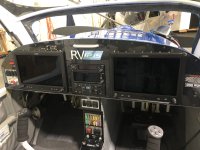
If you are going ELSA then you have to build it just like Vans delivers it, no changes. Once you get your Airworthiness certificate and are in Phase II, then you can make changes. If you make changes before your inspection then you will have to go EAB.
Don't shoot the messenger....
Don't shoot the messenger....
Last edited:
Tdeman,I did a bit of work on the 12iS avionics packages… the RV-12iST (factory IFR panel option) was really designed for training and passing a checkride more than it was for flight into IMC. Not to mention existing regulation of flying LSA into IMC (which may see change in the future). That being said, it’s an off the shelf kit with matching panels, nicely written plans, and limited “figure it out” factor.
The RV-12 airframe has a few inherit limitations… with the quick-removable wings, pitot tubes are mounted through the spinner, and hence non-heated. (However, you could mirror the AOA port plumbing and put one on the opposite side.) Or add an air line which is manually connected/disconnected.
Additionally, metal wingtips prohibited use of wingtip antennas, so the whiskers went up top on the VS. Fortunately, it is way up there with no worry about poking an eye out.
At the time of design, the GTN650 was the only navigator available from garmin.
Just months after releasing the kit, we were blindsided by the release of the GPS175 (Piper seemed to have an exclusive heads up on that). We kicked around the idea of doing a more economical IFR package using the GPS175 and a GTR200 , but never got around to it. Additionally, we agreed that most flight schools purchasing an RV-12iST would want to be able to teach VOR/LOC/GS operations.
Granted, when it came time to equip my own RV for IFR, I went the route of GPS-175 paired with the Dynon HDX. Having flown a variety of systems, the HDX and GTR-200B are some of my favorites, so the 175 was an economical addition to these which I found met my needs. Still shopping around for a backup compact adahars though!
Adding a GPS-175 (+SV airinc, and a backup compact ADAHRS such as a G5) is about a $7k addition to a Dynon panel.
Thanks for the information and a lot to think about with a the replies.
Understood.If you are going ELAS then you have to build it just like Vans delivers it, no changes. Once you get your Airworthiness certificate and are in Phase II, then you can make changes. If you make changes before your inspection then you will have to go EAB.
Don't shoot the messenger....
The Dynon SV-AP-PANEL / SV-KNOB-PANEL (both of which you definitely want!) are a lot taller than the Garmin autopilot head, though.It is possible with the Garmin VFR package. Not sure about Dynon but I believe it should work the same.
True but they are not deep. Seems that they could be moved up to where there are items behind the panel that would prohibit the radio or navigator being placed. Again, I'm just guessing as I am not familiar with the Dynon equipment.The Dynon SV-AP-PANEL / SV-KNOB-PANEL (both of which you definitely want!) are a lot taller than the Garmin autopilot head, though.

Mostly correct! You CAN make changes while still in Phase I.If you are going ELSA then you have to build it just like Vans delivers it, no changes. Once you get your Airworthiness certificate and are in Phase II, then you can make changes. If you make changes before your inspection then you will have to go EAB.
Don't shoot the messenger....
NORDO Industries LLC
Well Known Member
Depending on your redundancy requirements, have you considered foregoing installing NAV radios completely? The IFR check ride can officially be done with only GPS-based approaches now.
NORDO, I do not know enough about which avionics is required for IFR training and still trying to learn.Depending on your redundancy requirements, have you considered foregoing installing NAV radios completely? The IFR check ride can officially be done with only GPS-based approaches now.
NAV is not necessary. The GPS175 is the lowest IFR navigator option on the market and is sufficient for the IFR checkride.NORDO, I do not know enough about which avionics is required for IFR training and still trying to learn.
Jayson, Thanks for the info. I will have to look to see what Dynon offers compared to the Gamin IFR package.NAV is not necessary. The GPS175 is the lowest IFR navigator option on the market and is sufficient for the IFR checkride.
The GPS175 is not part of the Garmin IFR package for the -12. This was an addition that I did after a year or so flying the -12iS with the Garmin VFR package. I'm sure Dynon offers something similar but if not the GPS175 plays well with Dynon I've been told.I will have to look to see what Dynon offers compared to the Gamin IFR package.
would you suggest I go with the Garmin IFR package. Again, I ask because I want to run cables if necessary before I close up the Tailcone.The GPS175 is not part of the Garmin IFR package for the -12. This was an addition that I did after a year or so flying the -12iS with the Garmin VFR package. I'm sure Dynon offers something similar but if not the GPS175 plays well with Dynon I've been told.
There's a lot of good info above to sift through. The -12 has too low a wing loading for any serious IMC flight. I built mine as E/AB so I could include a heated pitot/AOA tube for very light IMC, and the full Garmin package. If you're planning to use yours for IFR education, I'd recommend the GTN navigator so you can learn to use VOR and ILS systems as well as integrated GPS/PFD systems. I considered other navigator & PFD combinations, but that leads into problems with component compatibility for full functionality, and with getting (or making) the necessary wiring harnesses. Having VOR/ILS capabilty also means including the VOR antenna fittings & cable when you build the rudder and tailcone (they have to be external since the -12 wingtips are metal, so Archer's antennas won't work). So equipped, the -12 is well suited for building time and experience with the IFR system.
That's from a steam-gauge pilot dragged kicking & screaming into the 21st century.
That's from a steam-gauge pilot dragged kicking & screaming into the 21st century.
Thanks Chris. Where did you put the heated pitot tube and did that come with the Garmin package? I am building E-LSA so can I assume if the Garmin IFR package comes with a heated pitot tube, I should be good to go. Or if not, run necessary wires in wing and install after certification.There's a lot of good info above to sift through. The -12 has too low a wing loading for any serious IMC flight. I built mine as E/AB so I could include a heated pitot/AOA tube for very light IMC, and the full Garmin package. If you're planning to use yours for IFR education, I'd recommend the GTN navigator so you can learn to use VOR and ILS systems as well as integrated GPS/PFD systems. I considered other navigator & PFD combinations, but that leads into problems with component compatibility for full functionality, and with getting (or making) the necessary wiring harnesses. Having VOR/ILS capabilty also means including the VOR antenna fittings & cable when you build the rudder and tailcone (they have to be external since the -12 wingtips are metal, so Archer's antennas won't work). So equipped, the -12 is well suited for building time and experience with the IFR system.
That's from a steam-gauge pilot dragged kicking & screaming into the 21st century.
Adding the GPS175 after a flying aircraft would not require any additional wiring in the tailcone and would save you at least $10,000 over going with the Garmin IFR package from Van's. Besides, often you will find that ILS/NAV approaches are not in use and take months to be repaired when down. GPS/RNAV approaches are what the traffic controllers prefer we use.would you suggest I go with the Garmin IFR package.
It does not come with the heated pitot because the Vans IFR package for the RV-12 is not intended for use in actual IMC. It’s intended for training only.Thanks Chris. Where did you put the heated pitot tube and did that come with the Garmin package? I am building E-LSA so can I assume if the Garmin IFR package comes with a heated pitot tube, I should be good to go. Or if not, run necessary wires in wing and install after certification.
You don't need heated pitot tube for IFR. In fact you get into icing and need your heated tube in an RV you are doing something wrong and need to exit to warmer temps or clear of visible moisture, eg clouds, drizzle, rain.It does not come with the heated pitot because the Vans IFR package for the RV-12 is not intended for use in actual IMC. It’s intended for training only.
Yes I am aware you can get into mild light rime ice that is no threat... on the other hand Ice should be avoided. But if your pitot is ICED OVER, you have BIGGER problems, like your prop, flight surfaces, controls, airframe. ICE = BAD in small SE GA planes. You are by authority of "the adminstrator" forbids, you to fly into known ice in any aircraft not certified for known ice. Once you are in it, it's known.
My point is legally, you don't need heated pitot. Fly clear of clouds OR in temps ABOVE freezing and not under a warm front overtaking sub freezing temps (ie freezing drizzle and rain).
Yes - Practice in VFR with a Safety Pilot of CFI or CFII? Yes. You can log it as simulated instrument, towards an IFR rating. What about filing an IFR flight in VFR plan or filing and flying actual IMC? No and Yes. It is possible. This is what Google now AI says:
"QUOTE
Yes, it's possible to fly a Light-Sport Aircraft (LSA) under Instrument Flight Rules (IFR) in some cases, but there are restrictions.
Restrictions
- Manufacturer preference: The manufacturer may not allow IFR flight.
- Operating limitations: The aircraft's operating limitations may prohibit IFR flight.
- Equipment: The aircraft may not have the required equipment for IFR flight.
- Pilot rating: The pilot may not have an IFR rating on their pilot certificate.
- Skills and medical: The pilot's skills and medical condition may not be suitable for IFR flight.
- Maintenance: The aircraft may not be properly maintained for IFR flight.
Relevant regulations
- FAR 91.205 lists the equipment required for various types of flight.
- The ASTM F.37 industry committee has been working on an IFR standard for LSA producers.
END QUOTE"
Keep in mind MOSAIC is coming. Not sure what that will be. Either does the FAA apparently. Formally Std Cat planes widely used in IFR may become LSA's by definition.
Last edited:
Exactly how I saw it… and the 175 is as simple of an install as it gets. Add the SV-Airinc Module (just connects to the Dynon Network with a 9 pin), then it’s 7 additional wires to the GPS-175 (2 of which are power).Adding the GPS175 after a flying aircraft would not require any additional wiring in the tailcone and would save you at least $10,000 over going with the Garmin IFR package from Van's. Besides, often you will find that ILS/NAV approaches are not in use and take months to be repaired when down. GPS/RNAV approaches are what the traffic controllers prefer we use.
And if you do decide you want Nav just to get familiar with it (or for emergency use), a handheld Yaesu FTA-850L will give you VOR/GS with indicator (and a backup com!) in the palm of your hand or on the panel for $400. (Granted, this is not approved for actual IFR use).
One step up from that would be a panel mounted MGL N16 Nav radio with the Vega control head for about $1000 total. (But you’ll be crawling through the tailcone to wire up the whiskers).
The GTN sure is cool, but there’s more affordable ways to go about it.

"...You don't need heated pitot tube for IFR..."
Just because it may be legal doesn't make it wise.
Flying IFR without a heated pitot is just asking for it...
Just because it may be legal doesn't make it wise.
Flying IFR without a heated pitot is just asking for it...
JackKing,You don't need heated pitot tube for IFR. In fact you get into icing and need your heated tube in an RV you are doing something wrong and need to exit to warmer temps or clear of visible moisture, eg clouds, drizzle, rain.
Yes I am aware you can get into mild light rime ice that is no threat... on the other hand Ice should be avoided. But if your pitot is ICED OVER, you have BIGGER problems, like your prop, flight surfaces, controls, airframe. ICE = BAD in small SE GA planes. You are by authority of "the adminstrator" forbids, you to fly into known ice in any aircraft not certified for known ice. Once you are in it, it's known.
My point is legally, you don't need heated pitot. Fly clear of clouds OR in temps ABOVE freezing and not under a warm front overtaking sub freezing temps (ie freezing drizzle and rain).
Yes - Practice in VFR with a Safety Pilot of CFI or CFII? Yes. You can log it as simulated instrument, towards an IFR rating. What about filing an IFR flight in VFR plan or filing and flying actual IMC? No and Yes. It is possible. This is what Google now AI says:
"QUOTE
Yes, it's possible to fly a Light-Sport Aircraft (LSA) under Instrument Flight Rules (IFR) in some cases, but there are restrictions.
Restrictions
Required equipment Two-way communication equipment, Navigation equipment, Gyroscopic rate-of-turn indicator, Sensitive altimeter, and Artificial horizon.
- Manufacturer preference: The manufacturer may not allow IFR flight.
- Operating limitations: The aircraft's operating limitations may prohibit IFR flight.
- Equipment: The aircraft may not have the required equipment for IFR flight.
- Pilot rating: The pilot may not have an IFR rating on their pilot certificate.
- Skills and medical: The pilot's skills and medical condition may not be suitable for IFR flight.
- Maintenance: The aircraft may not be properly maintained for IFR flight.
Relevant regulations
You can consult your aircraft's operating limitations to determine the conditions under which it can be flown under IFR.
- FAR 91.205 lists the equipment required for various types of flight.
- The ASTM F.37 industry committee has been working on an IFR standard for LSA producers.
END QUOTE"
Keep in mind MOSAIC is coming. Not sure what that will be. Either does the FAA apparently. Formally Std Cat planes widely used in IFR may become LSA's by definition.
Thank you for all the information. So for IFR training, I do not need a heated pitot. Good to know. Now I will have to see what Dynon has to offer and see what I need after airworthiness to make it so I can train for IFR. I know the Garmin IFR package is $46,000, so not sure what my total would be for Dynon and then an add on.
So you are only going to equip for IFR "training" and not have a heated pitot?JackKing,
Thank you for all the information. So for IFR training, I do not need a heated pitot. Good to know. Now I will have to see what Dynon has to offer and see what I need after airworthiness to make it so I can train for IFR. I know the Garmin IFR package is $46,000, so not sure what my total would be for Dynon and then an add on.
Please DO NOT EVER fly in actual IFR conditions in this configuration; the life you save may be your own.
JackKing,
Thank you for all the information. So for IFR training, I do not need a heated pitot. Good to know. Now I will have to see what Dynon has to offer and see what I need after airworthiness to make it so I can train for IFR. I know the Garmin IFR package is $46,000, so not sure what my total would be for Dynon and then an add on.
If your goal is truly training without intent of flying into IMC, the only thing you need to add to a basic Dynon package would be a TSO’d navigator, the cheapest being the GPS175, and an SV-Airinc module. Cheapest price I see online for the pair is $5350, so call it $5500 by the time you have it wired up. (Dynon does not offer a navigator permissible for use in the IFR system).
Don’t need backup ADAHRS or efis, don’t need heated pitot, but you could always add these down the road if you decided you wanted to venture into the fuzz.
I don’t think equipping an aircraft strictly for a training purpose is unreasonable… as already mentioned, all the factory RV-12is IFR package have a single adahr and unheated pitot.
If your goal is truly training without intent of flying into IMC, the only thing you need to add….
If you just want to get the rating while avoiding all IMC, you just need something like a used SL30 (which can bring in an ILS and a VOR (or two vor’s) simultaneously). You may have to travel for your test to find an ILS that doesn’t need something like a DME but they are out there.I don’t think equipping an aircraft strictly for a training purpose is unreasonable… as already mentioned, all the factory RV-12is IFR package have a single adahr and unheated pitot.
No intention of EVER doing that. Have read too many accident reports of ill equipped pilots. Thank you very much for your interests.So you are only going to equip for IFR "training" and not have a heated pitot?
Please DO NOT EVER fly in actual IFR conditions in this configuration; the life you save may be your own.
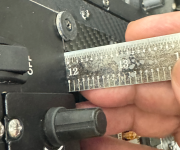
The Dynon remote panels are not deep. Here are a few photos showing what they look like on my RV-12. I got rid of the SL40 radio and went with the remote mounted Dynon radio. Love it BTW. Eventually I am getting rid of the fuses and installing to VP-X electronic circuit breakers to liberate more panel space for a Garmin 175.True but they are not deep. Seems that they could be moved up to where there are items behind the panel that would prohibit the radio or navigator being placed. Again, I'm just guessing as I am not familiar with the Dynon equipment.
Attachments
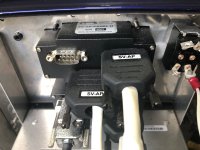
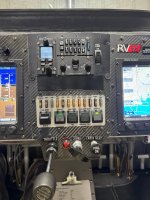
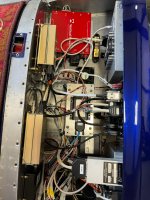
Another option is to buy a 355 instead of the 175 and not need to purchase a radio as it's integrated into the 355. The Dynon and Garmin integrate well.
Also, adding the Dynon autopilot control panel will allow you to fly an approach with the autopilot engaged using the VNAV function.
Also II, you want the Dynon AING-429 not the Garmin version if you are using a Dynon display.
Also, adding the Dynon autopilot control panel will allow you to fly an approach with the autopilot engaged using the VNAV function.
Also II, you want the Dynon AING-429 not the Garmin version if you are using a Dynon display.
If the builder is building ELSA then the radio will be in the avionics package regardless. The radio will need to be installed, at least initially, anyway,Another option is to buy a 355 instead of the 175 and not need to purchase a radio as it's integrated into the 355. The Dynon and Garmin integrate well.
Also, adding the Dynon autopilot control panel will allow you to fly an approach with the autopilot engaged using the VNAV function.
Also II, you want the Dynon AING-429 not the Garmin version if you are using a Dynon display.
I looked real hard at the 355 but the conclusion I came to is that it is ever so slightly too deep to fit flush in the panel. The SL40 radio that I took out is a tight squeeze. And the depth available changes depending on how high the the center panel you mount the radio. I wasn't willing to drop a bunch of $$$ just to find out it was too tight.Another option is to buy a 355 instead of the 175 and not need to purchase a radio as it's integrated into the 355. The Dynon and Garmin integrate well.
Garmin (Apollo) SL40
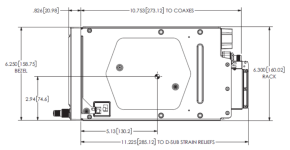
Garmin GNC 355 - Note, not much room for wires to exit the rear connector.
RV-12 Panel

Addressing the comments made regarding the RV-12 and its IFR capability, my personal experience is that the RV-12 works very well as an IFR platform. Having performed literally hundreds of instrument approaches using it for both travel and commuting for work - mostly in IMC, I will say it is a very stable and capable aircraft for this purpose.
I built mine E-AB, with a heated pitot probe mounted in the left wing, and then installed a GTN 625, which fit well in the middle center of the panel, although I did need to buy a 90º Garmin connector with the restricted depth.
I do not find the need for NAV or ILS noting that every airport I fly to IFR has a GPS approach; I saved the weight, money and time by not adding NAV equipment and am using the same methodology with my RV-10.
I built mine E-AB, with a heated pitot probe mounted in the left wing, and then installed a GTN 625, which fit well in the middle center of the panel, although I did need to buy a 90º Garmin connector with the restricted depth.
I do not find the need for NAV or ILS noting that every airport I fly to IFR has a GPS approach; I saved the weight, money and time by not adding NAV equipment and am using the same methodology with my RV-10.
What did you do for a backup AHRS and do you have dual Coms?Addressing the comments made regarding the RV-12 and its IFR capability, my personal experience is that the RV-12 works very well as an IFR platform. Having performed literally hundreds of instrument approaches using it for both travel and commuting for work - mostly in IMC, I will say it is a very stable and capable aircraft for this purpose.
I built mine E-AB, with a heated pitot probe mounted in the left wing, and then installed a GTN 625, which fit well in the middle center of the panel, although I did need to buy a 90º Garmin connector with the restricted depth.
I do not find the need for NAV or ILS noting that every airport I fly to IFR has a GPS approach; I saved the weight, money and time by not adding NAV equipment and am using the same methodology with my RV-10.
In my RV-12, I had a dual G3X setup that had reversionary capability. I had a single GTR 20 radio, and then my backup radio was a hand-held ICOM radio with panel mounted plugs for antenna and headset.What did you do for a backup AHRS and do you have dual Coms?
Did your second screen have its own AHRS? If so where did you mount it?In my RV-12, I had a dual G3X setup that had reversionary capability. I had a single GTR 20 radio, and then my backup radio was a hand-held ICOM radio with panel mounted plugs for antenna and headset.
