

Van's Air Force
You are using an out of date browser. It may not display this or other websites correctly.
You should upgrade or use an alternative browser.
You should upgrade or use an alternative browser.
I think I pooched my VS
- Thread starter TX_Flyer
- Start date


That might be a fit for a CherryMax pull rivet.
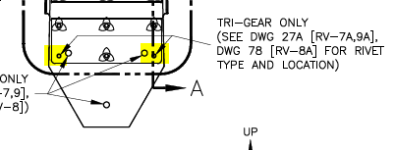
I am building a 7A. I see the bolts for the VS will be through the hinge as well, but I also assume Van's recommends the rivets there for a reason.Depends a bit on what you're building, -7 or -7A. Jump ahead in the plans, and look at DWG 27, 27A; you can see how the VS is going to be installed.
A bolt (AN3-nnA) will do a better job than an AN426AD4-5 rivet...
The issue I see is the need to countersink for a flush rivet on the forward side of the VS rear spar.That might be a fit for a CherryMax pull rivet.

Yes, those rivets hold the hinge bracket to the spar web and doubler. *But* - since you forgot - just locate the holes and drill them up to 3/16" (number #12 drill) and slap a couple of AN3 bolts through the entire assembly when you get to that point in the plans.I am building a 7A. I see the bolts for the VS will be through the hinge as well, but I also assume Van's recommends the rivets there for a reason.
AZSteve053
Well Known Member
Trouble is VS-803PP is 0.032, and you need a -4 countersunk rivet, head on fwd side, need 0.050 to countersink for the -4 rivet, edge distance to the tail tie down support is going to limit where you put a larger fastener & placing a larger fastener in the hole close to the tail cone skin could make installation a night mare. There are solutions but you'll need to look at the issues I mention closely. I recommend an Email to Tech Support, you can't be 1st person to do this - they probably have a canned solution ready to hand you.
Good luck.
Good luck.

I thought the same thing. The OP must be misunderstanding the drawings. Unless we're both missing what his question is...?I must be missing something. Those rivets go in from the forward side. The holes are accessible. Countersink and install. I'm probably missing something important. Sorry.
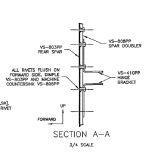
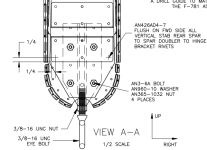

I remember now. There's a thin layer on the forward side. The VS-808PP spar gets countersinked and the thin VS-803PP layer dimpled. That's the OP's issue. It's assembled so there's no way to complete the task.I thought the same thing. The OP must be misunderstanding the drawings. Unless we're both missing what his question is...?
View attachment 84572
Call Vans. I'm sure they have a work around.
Sorry I missed that.
Bingo Larry, you nailed my issue. With it assembled I cannot countersink without knife-edging the thin layer. Sigh... I will reach out to the mothership and see what they say.I remember now. There's a thin layer on the forward side. The VS-808PP spar gets countersinked and the thin VS-803PP layer dimpled. That's the OP's issue. It's assembled so there's no way to complete the task.
Call Vans. I'm sure they have a work around.
Sorry I missed that.
It's two pieces -- the spar and the doubler. The doubler needs to be countersunk to accept the dimples in the spar web.I remember now. There's a thin layer on the forward side. The VS-808PP spar gets countersinked and the thin VS-803PP layer dimpled. That's the OP's issue. It's assembled so there's no way to complete the task.
Call Vans. I'm sure they have a work around.
Sorry I missed that.
Since the OP missed this, I think he has two workable options:
1. Locate and drill the holes, then upsize them to accept an AN3 bolt and install the two bolts (washers & nuts) when he does the final assembly.
2. Locate and drill the holes to #30, and >lightly< countersink the spar web to accept a NAS1097-AD4-7 "oops" reduced head rivet.
Call Van's..
You're saying drill and upsize the VS spar AND the bulkhead in the fuse to accept bolts? That seems extreme, and given that you have to drill through the bracket as well, likely to end up boogering things up.1. Locate and drill the holes, then upsize them to accept an AN3 bolt and install the two bolts (washers & nuts) when he does the final assembly.
But yes...a call to Van's is in order. I'd wager dollars to donuts they say it'd be ok to countersink the assembled parts, either for a full sized -4 or a 1097.
If it were me, I'd countersink the already assembled stack up and use the plans called rivet. I think there is little risk to structural integrity by knife edging the thin part of the spar given that its backed by an 1/8" thick doubler and the steel hinge bracket.

I have a vague recollection that those two holes may be the ones that bolt the VS to the bulkhead... My -7 tailkit said something about them to be drilled final size during assembly. The drawing calling out countersinking on the spar piece specifically said not to countersink them, nor to dimple the corresponding holes in the C-channel.
Or am I mixing these up with other holes?
Or am I mixing these up with other holes?
You are. See the drawings above.I have a vague recollection that those two holes may be the ones that bolt the VS to the bulkhead... My -7 tailkit said something about them to be drilled final size during assembly. The drawing calling out countersinking on the spar piece specifically said not to countersink them, nor to dimple the corresponding holes in the C-channel.
Or am I mixing these up with other holes?


That's an answer I certainly didn't have on MY bingo card. 
Took the exact literal words out of my mouth.That's an answer I certainly didn't have on MY bingo card.
I really want to know why they'd advocate for this much effort, instead of just a simple countersink (or countersink and oops rivet).
I don't know. The first response was why don't I just put in the rivet.. Then I mentioned my concern over knife-edging the thinner section and they came back with this....
Honestly not super confidence boosting. I don't have to worry about it for a while, but it still would have preferred other options. I am strongly considering the AN3 bolt option.
Honestly not super confidence boosting. I don't have to worry about it for a while, but it still would have preferred other options. I am strongly considering the AN3 bolt option.
If you do, be aware of edge distance...an AN3 there might put you awfully close to the minimum.

Vans solution to the problem seems like a really good one to me. Drilling two holes in assembly through the F-712 bulkhead and then enlarging them to have clearance for the proposed AN470 rivet tails will not affect the structural integrity of the bulkhead. Why would you substitute two 1/8 rivets for two AN3 bolts? Weight is weight! Every time you open the throttle you'll be carrying those two bolts for no reason at all. I know It doesn't seem like much but over the whole project that thinking adds up.

SquawkVFR
Active Member
Why would you countersink for an AD4 into a .032 piece of sheet metal when the very next sentence after this screenshot says the minimum thickness for countersinking for AD4 rivets is .050? Drawing 27A specifies the rivet size for this hole, and it's an AD4. That's a little too big to be countersunk for this thickness sheet metal - you won't be getting the full strength of the rivet if you do so.The VS-803PP is .032 in thickness, which is the minimum for countersinking, according to Section 5.5 of the builder’s manual.
View attachment 84653
In theses two locations I would countersink for an NAS1097AD4-7.
Because the underlying material is much, much thicker.Why would you countersink for an AD4 into a .032 piece of sheet metal when the very next sentence after this screenshot says the minimum thickness for countersinking for AD4 rivets is .050? Drawing 27A specifies the rivet size for this hole, and it's an AD4. That's a little too big to be countersunk for this thickness sheet metal - you won't be getting the full strength of the rivet if you do so.

jaradtke
Well Known Member
because the factory head size on a NAS1097AD4 is the same size as a AN426-3 but the stank is the same as a -4Why would you countersink for an AD4 into a .032 piece of sheet metal when the very next sentence after this screenshot says the minimum thickness for countersinking for AD4 rivets is .050? Drawing 27A specifies the rivet size for this hole, and it's an AD4. That's a little too big to be countersunk for this thickness sheet metal - you won't be getting the full strength of the rivet if you do so.
SquawkVFR
Active Member
I'm not an aircraft structural engineer, but I am a mechanical engineer. My concern is whether the NAS1097AD rivets have the same material properties as the AN426AD rivets, because I don't know what the design intent was for this particular part of the structure - is it shear, tension, or both?because the factory head size on a NAS1097AD4 is the same size as a AN426-3 but the stank is the same as a -4
I looked up the specs for both NAS1097 and AN426 on ASSIST to determine whether these two specs have the same material properties. Both of them indicated a chain of obsolete specifications with no real information of use. The chain of links ended up pointing to a spec that one would have to buy from aia-aerospace.org.
Spruce differentiates the AN426 into two categories - AN426 (1100 soft) and AN426AD (2117 hard). The plans call for the "hard" version of this rivet, so do you know if the NAS1097AD rivets have the same material properties as the "hard" AN426AD rivets?
jaradtke
Well Known Member
NAS1097AD are hardened rivetsI'm not an aircraft structural engineer, but I am a mechanical engineer. My concern is whether the NAS1097AD rivets have the same material properties as the AN426AD rivets, because I don't know what the design intent was for this particular part of the structure - is it shear, tension, or both?
I looked up the specs for both NAS1097 and AN426 on ASSIST to determine whether these two specs have the same material properties. Both of them indicated a chain of obsolete specifications with no real information of use. The chain of links ended up pointing to a spec that one would have to buy from aia-aerospace.org.
Spruce differentiates the AN426 into two categories - AN426 (1100 soft) and AN426AD (2117 hard). The plans call for the "hard" version of this rivet, so do you know if the NAS1097AD rivets have the same material properties as the "hard" AN426AD rivets?
