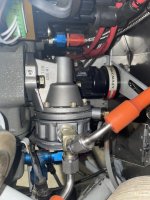
I've had a lot of issues with the fuel system in the plane after I bought it. One issue is the outlet fitting in the mechanical pump. You have to screw it almost all the way in, then hold the clocking position with a wrench while tightening the jam nut against the fuel pump body. The jam nut in mine was not tight, and the fitting was free to rotate. There should be an o-ring between the jam nut plate and the fuel pump body. Be sure to follow the torque spec for these in the Lycoming manual - they require much less torque than the B-nuts, and Lycoming warns you that you'll damage the threads if you don't back up the fitting while torquing the B-nuts.
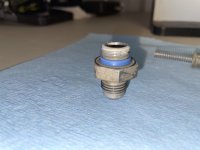
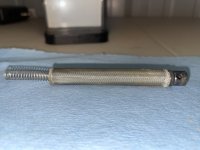
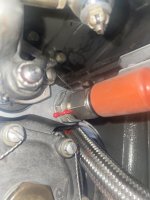
The other place I had issues was fuel seepage at the fuel servo inlet. There are two o-rings there that I ended up replacing. It's extremely important that these o-rings go in perfectly clean and the sealing surfaces inside the servo need to be perfectly clean as well. I learned this the hard way, because after cleaning out the inlet screen and re-installing with new o-rings, I still had seepage at the mating face. After the 3rd time pulling the fitting, I put on some 16x power magnifying glasses to get a real close look at the sealing surfaces, and there was all kinds of contamination that wasn't visible to the nake eye. After cleaning all that crap out and re-installing, it's now leak-free. Lycoming also has a torque spec for this fitting, and they warn you to back it up with a wrench while tightening up the B-nut to prevent damage to the fitting threads.
With all these o-rings, you'll also want to inspect them for cleanliness, along with their respective sealing surfaces. Mine had fine fibers and other particulate contamination that I had to clean out. I ultimately decided to replace all the o-rings. You'll want to make sure you use DC-4 to lube the rings when you install them, so they don't grip the sealing surfaces and twist as you tighten them.
In my case, there were no fuel stains. The seepage was so miniscule that I almost didn't notice it till I looked really closely with a flashlight at an angle. There was the ever so slight bit of wetness just barely around the perimeter of the fittings, so look closely and use a really good light at several different angles to try and catch the leak.
As for torquing B-nuts, I've also had issues with those leaking, and using the
flats method turned out to be really helpful and fixed all my leaky B-nut problems.