Van's Air Force

The definitive Van's Aircraft support community! Buying, building or flying an RV? Join our exclusive family of mentors and enthusiasts!

Have I ruined my new engine?

I have an update on this and I'd also like opinions from you all.

After tearing down the engine, I found the thrust face on the crankcase was torn up from metal circulating in there, and the crank had damage. I sent the cases back to Divco and the crank back to Aircraft Specialties (returned the rods too for inspection and yellow tag again).

Divco repaired the thrust face within a week and I have the cases back already - only charged me $500 to boot. Very pleased with this.

Aircraft Specialties sorted the crank... but accidentally polished the already minimum size oil seal area, so that crank is now scrap. They have told me they will find me a replacement crank at their cost, so I will just pay the repair fee. It's a shame but at least I'm not out of pocket.

As for Lycon, well because I bought new Lycoming cylinders they said they'd port and polish these at no charge for the time being, while they deal with the damaged Superiors. Also they asked for the carb so they can check it's flowing enough fuel. My carb is a 10-3678-32 which has the highest flow available for an O320 and takeoff fuel flow was 13.7GPH.

Anyway, I shipped them the 4 damaged superior cylinders and the 4 new Lyc ones... which sat in customs for 3 weeks [ed. Deleted the rest of the sentence as it was politics. Please read the posting rules. V/r,dr]. They finally arrived at Lycon a couple weeks ago. I've had to chase a bit to get updates, but they told me the following:

- The new cylinders are nearly done and should be finished this week. All good with me, no problems there.
- The Superior cylinders (damaged ones) had the "darkest combustion chambers they've seen". Strange, but they were burning oil, and only 4 hours run time, so doesn't surprise me personally?
- They have not provided any opinion on what happened with the Superiors, nor have they sent the cylinders to Superior. They've sent the cylinders to an "outside engineering company for evaluation, before sending to the manufacturer". I don't know who this engineering company is. I asked Lycon why was this necessary, since Lycon see loads of cylinders, but haven't received a straight answer.

I am surprised because I expected Lycon to want to return the cylinders to Superior ASAP and make it Superior's problem to deal with. Maybe they are concerned that they screwed up a ring gap and don't want Superior to know? Right now I guess they are being careful to not offer any suggestions as to what's gone wrong in case they say anything that might make them liable for the failure.

Bottom line is I need to get the engine back together but I also need to find out what caused this problem and depending on the outcome, who's going to pay for all of this. Anyone have any thoughts as to what's going on, and what I should be expecting? This whole experience is just strange. I run a company that repairs drones, so I'm not new to customer service in this type of work, and we do our best to keep customers in the loop with all information, good or bad, it just makes the whole process so much easier for everyone.

You can see in post #37 that the main damage is from the top piston ring, and it's remarkably similar to Mike's damage in post #88. Maybe Superior aren't hardening these cylinders properly?
Look in pic in post 37. There is heavy wear on the piston, just below the oil ring land and this lines up with the wear on the cylinder . There is .004”+ of clearance between piston ond cylinder wall, so something in the ring area was was too tight on the opposite side that was forcing the pisto against the wall. I still think your issue is too small a clearance in the ring land or ring fit up issue, like ring upside down or badd machining in the lands. I suspect if you try to push each of the rings in fully and go all the way around the piston, you will find an area where the ring protrudes past the pistons edge.

I am sure they are a bit cagey, as this is either something they did, or should have caught while assembling.
 
Last edited:
Today was supposed to be reassembly day, but unfortunately the crank that aircraft specialties sent me to replace my original one that they accidentally machined below limits is the wrong type of crank for my engine. It's an O320 crank, but without the oil feed tube for the prop and 3/8 prop bolt bushes instead of 7/16. Eugh.

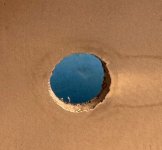
As if I wasn't fed up enough already, opening the new boxes of Superior bearings shows that they are impressively badly made for such expensive plain bearings. Here's a close up of the dowel locating hole - they come pre-loaded with swarf to damage your engine from the first start.

How the hell are manufacturers of certified aircraft parts able to get away with selling such utter crap? I might expect it from some cheap ebay bearings for a moped engine, but not a $100 aircraft bearing.

dowel2.jpg
 
At last I’m assembling the engine again. And here’s yet another example of complete lack of QC from Superior. This is a new rod nut - I’ve never seen this before, even from the cheapest hardware store nut. WTF.

 
At last I’m assembling the engine again. And here’s yet another example of complete lack of QC from Superior. This is a new rod nut - I’ve never seen this before, even from the cheapest hardware store nut. WTF.

Well, that is just sad. Seems superior has really hit the skids from a QA perspective. Just spoke with someone today who got another set of piston rings with no finishing on the outside - straight from the mold with the ridges. Sadly another mechanic missed it by not paying attention during assembly.
 
At last I’m assembling the engine again. And here’s yet another example of complete lack of QC from Superior. This is a new rod nut - I’ve never seen this before, even from the cheapest hardware store nut. WTF.


Pathetic!! Makes you wonder what else they are not doing properly.... that isn't as noticeable. Crazy
 
The FAA shut down Lycoming, pending recertification, more than 20 years ago, due to the cracking crankshafts.

This is more than sufficient grounds to shut down Superior. It is negligence from top to bottom.
 
The choke on my Superior cylinders is 0.020”

That is the difference in diameter from the bottom 4 inches of the bore to the top of where the top ring would end up in operation.

By comparison the Lycoming cylinders had 0.015 taper
For what it's worth.
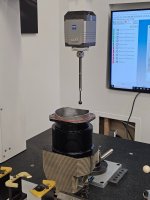
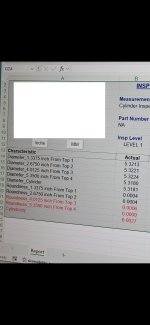
Just got my IO-390 cylinders back from Lycon and I measured them on a CMM machine at the shop. About 0.005 taper from top to bottom of cylinder.
 

Attachments

  • CP Bore Gage 1.jpeg
    CP Bore Gage 1.jpeg
    874.6 KB · Views: 40
  • CP Bore Gage 3.jpeg
    CP Bore Gage 3.jpeg
    305.6 KB · Views: 43
For what it's worth.
Just got my IO-390 cylinders back from Lycon and I measured them on a CMM machine at the shop. About 0.005 taper from top to bottom of cylinder.

Cool machine! Were these new cylinders or were they rebored/rehoned repaired/overhauled cylinders? I wonder why the parallel valve O320 cylinders would have so much more choke.

I'll update this thread properly soon but long story short, I now have the engine back together again with Lycoming cylinders and the ground runs are complete, everything looks good so far. Hopefully I'll get it flying this weekend. Lycon have sent me replacement Superiors at their cost but still haven't told me what they think happened to cause the original failure. You can bet we checked the ring gaps ourselves this time!
 
These IO-390 cylinders started out as new on engine. Lycon re-worked them with Port and Polish, Vave re-surface and re-hone to these dimensions. Sorry, didn't measure them before they went to Lycon.
 
Pathetic!! Makes you wonder what else they are not doing properly.... that isn't as noticeable. Crazy
How do you know what your looking at here--it's just a youtube video that someone posted claiming poor connecting rod nut QC. Looks like the nut itself is the wrong size for the bolt there but no other explanation--don't believe everything you see and hear on youtube!
 
How do you know what your looking at here--it's just a youtube video that someone posted claiming poor connecting rod nut QC. Looks like the nut itself is the wrong size for the bolt there but no other explanation--don't believe everything you see and hear on youtube!
That video was filmed and posted by me. Poor QC is precisely what is shown here. I was assembling the engine and that was a brand new nut which was machined wonky. I showed this to Superior at Oshkosh and they weren't really interested, just said it's a known issue from the supplier (ARP) and has been dealt with. In any case I threw away the new Superior nuts and bolts and fitted Lycoming ones.
 
How do you know what your looking at here--it's just a youtube video that someone posted claiming poor connecting rod nut QC. Looks like the nut itself is the wrong size for the bolt there but no other explanation--don't believe everything you see and hear on youtube!
Good grief. That's just downright rude. It's understandable to be sceptical of "just a YouTube video" but IO360 has been honestly and openly detailing his dreadful experience for all our information and benefit. I think we can be fairly assured of his honesty when he posts that video, especially with what he - and we - already know.

Having followed this thread (see what I did there?) closely, from now on I will be taking great care to verify the accuracy and tolerances of my engine components.
 
That video was filmed and posted by me. Poor QC is precisely what is shown here. I was assembling the engine and that was a brand new nut which was machined wonky. I showed this to Superior at Oshkosh and they weren't really interested, just said it's a known issue from the supplier (ARP) and has been dealt with. In any case I threw away the new Superior nuts and bolts and fitted Lycoming ones.
I know they had some issues in the late 90's with rod-end nut and bolts (non certified parts getting out), but I and many others have found their engine parts to be highly reliable over the past 25-years. And certainly, engines would be flying apart all of the time if this was a common issue. Most of the issues I have experienced have actually been with Lycoming made parts and Lycoming reman engines, but not with Superior.
 
Good grief. That's just downright rude. It's understandable to be sceptical of "just a YouTube video" but IO360 has been honestly and openly detailing his dreadful experience for all our information and benefit. I think we can be fairly assured of his honesty when he posts that video, especially with what he - and we - already know.

Having followed this thread (see what I did there?) closely, from now on I will be taking great care to verify the accuracy and tolerances of my engine components.
I know and have known many mechanics and build centers building-up engines with all Superior parts, and this is just not a common occurrence! And, I think it's IO390--not IO360. Trust me, I feel for IO390, but sometimes things don't go right on specific projects--but, this is just a sample of 1 engine build here. Personally, I think your better off having a reputable engine build center build-up and test-cell run new or remain engines!
 
Last edited:
I know and have known many mechanics and build centers building-up engines with all Superior parts, and this is just not a common occurrence! And, I think it's IO390--not IO360. Trust me, I feel for IO390, but sometimes things don't go right on specific projects--but, this is just a sample of 1 engine build here. Personally, I think your better off having a reputable engine build center build-up and test-cell run new or remain engines!
In retrospect, perhaps IO390 (noted) would also choose to have an "engine build center" do the work, I don't know. What I do know is that you called into question the video he posted.
 
How do you know what your looking at here--it's just a youtube video that someone posted claiming poor connecting rod nut QC. Looks like the nut itself is the wrong size for the bolt there but no other explanation--don't believe everything you see and hear on youtube!

If you don't believe this.... why would you believe anything else anyone posts on this forum? I am all about "trust but verify", but here is a poster posting his own video evidence of an important potential safety issue. Its not youtube click bait. Thats kind of a big part of why a forum like this exists...

To the OP- thanks for keeping us in the loop in all this, I will be doing my engine myself one day and I am always interested in information that would help!
 
If you don't believe this.... why would you believe anything else anyone posts on this forum? I am all about "trust but verify", but here is a poster posting his own video evidence of an important potential safety issue. Its not youtube click bait. Thats kind of a big part of why a forum like this exists...

To the OP- thanks for keeping us in the loop in all this, I will be doing my engine myself one day and I am always interested in information that would help!
It's not that I don't believe IO390, but I find it VERY hard to believe it's a Superior QC issue given the excellent quality of Superior parts over many years and many builders I know. So, I sent this video link to a friend (engine builder since 2002) at Aero Sport Power, who has built and overhauled more Superior parts engines for RV's than any other engine builder, other than maybe Lycoming. His response was "haven't seen this before--check to insure that nut is the right part number for the connecting end bolt used--different sizes for different engines". I and many other RV builders run Aero Sport Power Superior parts engines, and they are absolutely wonderful engines and generally run past TBO. And, Aero Sport Power tests their completed engines in a test-cell for twice as long as Lycoming.
 
Did SAP end up replacing all the AD/cracked crankshafts for customers?
On O-360 and IO-360 engines, the FAA determined that the crankshaft assembly failures (3-total and all in training aircraft) resulted from the manufacturing process at SAP's crankshaft vendor during 2012 and 2014. You might recall, Lycoming also required engine teardowns for similar reasons in the early 2000's.
 
On O-360 and IO-360 engines, the FAA determined that the crankshaft assembly failures (3-total and all in training aircraft) resulted from the manufacturing process at SAP's crankshaft vendor during 2012 and 2014. You might recall, Lycoming also required engine teardowns for similar reasons in the early 2000's.
Lycoming paid for replacements of AD cranks if I recall, is the same true for all those that were affected by SAP?
My recollection is SAP tried to get an approved AMOC 'repair' for the defective units but that never happened, which left many owners on their own to replace the defective cranks at their own expense.
 
Lycoming paid for replacements of AD cranks if I recall, is the same true for all those that were affected by SAP?
My recollection is SAP tried to get an approved AMOC 'repair' for the defective units but that never happened, which left many owners on their own to replace the defective cranks at their own expense.
SAP paid me back in full for my IO-400 that had a broken crankshaft. Don't know if it applied to the 360's.
 
Lycoming paid for replacements of AD cranks if I recall, is the same true for all those that were affected by SAP?
My recollection is SAP tried to get an approved AMOC 'repair' for the defective units but that never happened, which left many owners on their own to replace the defective cranks at their own expense.
It's really a bummer when these things happen, and I think Lycoming only paid a faction of the labor on that AD--remember some friends affected. I also see that many of the Experimental SAP engines were not affected by the AD. I remember having to replace an entire cylinder on a fresh Lycoming O-360 Reman engine once, which was pushing a high volume of oil past the rings on my #4 cylinder, and well past the break-in period. Lycoming finally sent me a new cylinder after many complaints but didn't pay for any labor to replace it.

The SAP crankshaft AD ended with a class action lawsuit as follow:

Superior Air Parts did not directly pay for all the new crankshafts on the affected AD engines. While Superior Air Parts designed the crankshafts in question, the manufacturer of the actual crankshafts, German company Ruhrtaler Gesenkschmiede F.W. Wengeler GmbH & Co. KG, is also set to pay a $50,000 settlement, according to the Dallas News. Superior Air Parts is also paying $5 million to settle the class action lawsuit.
 
It's not that I don't believe IO390, but I find it VERY hard to believe it's a Superior QC issue given the excellent quality of Superior parts over many years and many builders I know. So, I sent this video link to a friend (engine builder since 2002) at Aero Sport Power, who has built and overhauled more Superior parts engines for RV's than any other engine builder, other than maybe Lycoming. His response was "haven't seen this before--check to insure that nut is the right part number for the connecting end bolt used--different sizes for different engines". I and many other RV builders run Aero Sport Power Superior parts engines, and they are absolutely wonderful engines and generally run past TBO. And, Aero Sport Power tests their completed engines in a test-cell for twice as long as Lycoming.

See my post above, it’s correct nut and bolt combo, but made by a third party (ARP who is a reputable manufacturer). I showed this in person to Bill Ross at Superior who told me it was a known problem that has been dealt with. In any case I thought it was poor. Also the new Superior oil pump gears required *deburring*. Definitely not pleased with Superior parts.
 
Today was supposed to be reassembly day, but unfortunately the crank that aircraft specialties sent me to replace my original one that they accidentally machined below limits is the wrong type of crank for my engine. It's an O320 crank, but without the oil feed tube for the prop and 3/8 prop bolt bushes instead of 7/16. Eugh.

As if I wasn't fed up enough already, opening the new boxes of Superior bearings shows that they are impressively badly made for such expensive plain bearings. Here's a close up of the dowel locating hole - they come pre-loaded with swarf to damage your engine from the first start.

How the hell are manufacturers of certified aircraft parts able to get away with selling such utter crap? I might expect it from some cheap ebay bearings for a moped engine, but not a $100 aircraft bearing.

View attachment 90276
Superior makes absolutely terrible products, but makes up for it by not standing behind them
 
That video was filmed and posted by me. Poor QC is precisely what is shown here. I was assembling the engine and that was a brand new nut which was machined wonky. I showed this to Superior at Oshkosh and they weren't really interested, just said it's a known issue from the supplier (ARP) and has been dealt with. In any case I threw away the new Superior nuts and bolts and fitted Lycoming ones.
I don't believe that. ARP has been a gold standard in the Porsche engine world for many years. I have ARP studs on my flat 6 for example. I believe that statement is Superior just passing the buck. It's clear that no one in that company cares they make such poor products.
 
Lycoming paid for replacements of AD cranks if I recall, is the same true for all those that were affected by SAP?
My recollection is SAP tried to get an approved AMOC 'repair' for the defective units but that never happened, which left many owners on their own to replace the defective cranks at their own expense.
They did not
 
It's really a bummer when these things happen, and I think Lycoming only paid a faction of the labor on that AD--remember some friends affected. I also see that many of the Experimental SAP engines were not affected by the AD. I remember having to replace an entire cylinder on a fresh Lycoming O-360 Reman engine once, which was pushing a high volume of oil past the rings on my #4 cylinder, and well past the break-in period. Lycoming finally sent me a new cylinder after many complaints but didn't pay for any labor to replace it.

The SAP crankshaft AD ended with a class action lawsuit as follow:

Superior Air Parts did not directly pay for all the new crankshafts on the affected AD engines. While Superior Air Parts designed the crankshafts in question, the manufacturer of the actual crankshafts, German company Ruhrtaler Gesenkschmiede F.W. Wengeler GmbH & Co. KG, is also set to pay a $50,000 settlement, according to the Dallas News. Superior Air Parts is also paying $5 million to settle the class action lawsuit.
First I've heard of this.

EDIT: From what I can see this settlement was for a single, particular crash. Not payout to the victims of the crankshaft scam.
 
Good news, the engine is rebuilt again and running great. I followed Mahlon's ground test run guide and let the engine fully cool between steps. I wasn't able to get the 10 minute run done without overheating, only 7 minutes was possible. I changed the oil and filter after the ground runs, then flew for 8hrs. The first flight was 1.5hrs and oil usage on that flight was approx 0.5qt. Since then I have flown a further 6.5 hours and the oil usage in that time has been about 0.2qt at most. All flights have been done between 70-80% power, mostly 4-5000ft at WOT and then changing RPM.

Having now changed the oil again at the 8hr mark it's looking good. The oil was clean so I'll fly for 25hrs and then look at it again. As far as I'm concerned, it's all good. It's running smoothly at all RPMs and seems to have a good amount more horsepower than before. I'm doing all the test flying without any gear leg fairings or wheel spats, the plane is faster than it was previously with the fairings and spats. I can't wait to get the fairings back on and see how it goes.

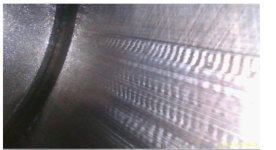
I borescoped the cylinder walls after the ground runs and after each flight and the results were quite interesting. As the Lycoming barrels are nitrided, they have a grey finish on the cylinder walls. As break in occurs much of this grey colour gets scraped away so the cylinders start off looking terrible, then quite quickly improve and after 8hrs look great. Importantly there is zero scuffing like last time, though I did check the ring gaps myself this time...

So that leaves me having had to overhaul the engine twice, and yes I replaced the mandatory overhaul parts the second time round too. I had a lot of problems the second time - Aircraft Specialties accidentally polished the crank under size and so they bought me a replacement (good on them, no complaints from me), various Superior parts which midly concerned me such as the oil pump, con rod nuts and bearings, and parts being stuck in customs for weeks on end. Lycon have now sent me a set of replacement Superior cylinders with their port and polish which I will sell to try and recoup some costs. For those who haven't been following I bought a new set of Lycoming cylinders at my cost when I originally found the problem with the first set of Superiors, which Lycon did port and polish for me at no cost.

The question is, what caused the problem originally? Well I think there was a ring issue on #2 which sent so much metal through the oil that it caused scuffing on all the other cylinders, scored the crank and ruined the bearings. Lycon have been promising me a failure analysis for 3 months which has not materialised. I'm happy to be corrected should I receive some more definitive information.

On the subject of piston rings, a guy locally has finished an RV7 with a Superior engine that was built and test run by Superior. After a couple hours flying they scoped the cylinders and found a washboarding pattern on the cylinder walls. The engine had been built 5 years ago but Superior sent a new set of cylinders no questions asked. All four cylinders required the rings to be ground down to fit, and they were adjusted to the high end of the gap tolerance. Interestingly, two of the original cylinders were below the minimum ring gap tolerance.

Thanks for everyone's advice.
 
as finished an RV7 with a Superior engine that was built and test run by Superior. After a couple hours flying they scoped the cylinders and found a washboarding pattern on the cylinder walls.

Recently replaced an O-470 cylinder on a C182. Washboarding evident, low compression. Got a new cylinder under warranty from Superior. They told me they had a problem with their honing process. I asked if the replacment cylinder was honed using new process. They said YES. Replaced cylinder again. Measured everything, did everything carefully and correctly. You can see where this is going. Washboarded again from the 4-5 oclock position on the cylinder. This time compressions came up 79/80. Engine is running properly with nothing in the filter. WTH?
 
Recently replaced an O-470 cylinder on a C182. Washboarding evident, low compression. Got a new cylinder under warranty from Superior. They told me they had a problem with their honing process. I asked if the replacment cylinder was honed using new process. They said YES. Replaced cylinder again. Measured everything, did everything carefully and correctly. You can see where this is going. Washboarded again from the 4-5 oclock position on the cylinder. This time compressions came up 79/80. Engine is running properly with nothing in the filter. WTH?
I've never heard the term "washboarding" before. Can you explain, provide some details and maybe a picture?

Thanks
 
Here is an example that I have seen. These are from the RV7 which had a Superior built engine from 5 years ago - was stored until recently when the plane was finished. So this is not a new problem.

IMG_1275.jpeg
 
As an aside, Lycoming did not pay for the dodgy crankshafts.
I got caught by SB569:
They sold you a crank+bearing kit for $2500, for a limited time. You still had to pay the $15k (min) for installing it.
If you took "credible" legal action (apparently a real law firm letter) they would do a settlement, believed to involce a Lyco reman engine, pro-rated to how far you were to the 2000hr TBO, but under an NDA so punitive that in all the years since I have never seen one disclosed.
 
All four cylinders required the rings to be ground down to fit, and they were adjusted to the high end of the gap tolerance. Interestingly, two of the original cylinders were below the minimum ring gap tolerance.
Glad to hear things are better! Yes--this is the big difference between the two manufactures. Lycoming generally grinds and fits their piston rings into each new cylinder, whereas Superior leaves the ring grinding, fitting and installation to the installer. However, they red-flag that needing to be done in their installation instructions. In not getting the piston ring gaps set properly and installed in the right orientation is by far the biggest problem field overhaulers face with Superior cylinders. Wish Superior would fit their rings and pistons into the jugs as part of their cylinder kits like Lycoming does!
 
Glad to hear things are better! Yes--this is the big difference between the two manufactures. Lycoming generally grinds and fits their piston rings into each new cylinder, whereas Superior leaves the ring grinding, fitting and installation to the installer. However, they red-flag that needing to be done in their installation instructions. In not getting the piston ring gaps set properly and installed in the right orientation is by far the biggest problem field overhaulers face with Superior cylinders. Wish Superior would fit their rings and pistons into the jugs as part of their cylinder kits like Lycoming does!

On all 4 of my Lycoming OEM cylinders the supplied rings still had the black coating on the ends, meaning they had not been ground. They all measured well out of the box, presumably due to better manufacturing. I don’t think Lycoming check rings for each cylinder.

For reasons unbeknownst to me, Superior have a more aggressive choke on their Lycoming cylinders which means tolerances will be more critical. Superior would either need to improve their tolerances or spend considerable man hours having people gap rings, which are then only usable in a given cylinder.

That’s not to say that I believe Lycoming parts are necessarily much better, they have had many quality issues which is why I chose Superior the first time around. It just seems that right now Superior is not a good choice for cylinders.
 
On all 4 of my Lycoming OEM cylinders the supplied rings still had the black coating on the ends, meaning they had not been ground. They all measured well out of the box, presumably due to better manufacturing. I don’t think Lycoming check rings for each cylinder.

For reasons unbeknownst to me, Superior have a more aggressive choke on their Lycoming cylinders which means tolerances will be more critical. Superior would either need to improve their tolerances or spend considerable man hours having people gap rings, which are then only usable in a given cylinder.

That’s not to say that I believe Lycoming parts are necessarily much better, they have had many quality issues which is why I chose Superior the first time around. It just seems that right now Superior is not a good choice for cylinders.
Interesting--when I ordered Lycoming cylinders from Van Bortel Air (Air Power Inc in Texas) some years back for an O-360 Lycoming engine on another aircraft we owned, they came with the pistons already installed and a note saying "the rings were pre-gapped". Heard this from other people more recently, too. Maybe that's a service that Van Bortel Air performs themselves. However, I do like my Superior Millennium cylinders on the O-320-D2A we have on our RV-9A. The engine has run beautifully and trouble free for 25-years with the compression still in the high 70's. Best of luck and "blue skies" to you and your RV!
 
Interesting--when I ordered Lycoming cylinders from Van Bortel Air (Air Power Inc in Texas) some years back for an O-360 Lycoming engine on another aircraft we owned, they came with the pistons already installed and a note saying "the rings were pre-gapped". Heard this from other people more recently, too. Maybe that's a service that Van Bortel Air performs themselves. However, I do like my Superior Millennium cylinders on the O-320-D2A we have on our RV-9A. The engine has run beautifully and trouble free for 25-years with the compression still in the high 70's. Best of luck and "blue skies" to you and your RV!
Trust but Verify
 
On all 4 of my Lycoming OEM cylinders the supplied rings still had the black coating on the ends, meaning they had not been ground. They all measured well out of the box, presumably due to better manufacturing. I don’t think Lycoming check rings for each cylinder.

For reasons unbeknownst to me, Superior have a more aggressive choke on their Lycoming cylinders which means tolerances will be more critical. Superior would either need to improve their tolerances or spend considerable man hours having people gap rings, which are then only usable in a given cylinder.

That’s not to say that I believe Lycoming parts are necessarily much better, they have had many quality issues which is why I chose Superior the first time around. It just seems that right now Superior is not a good choice for cylinders.
I believe that superior allows a significant tolerance variability on their cylinder boring operations. Because of that, they supply slightly oversized rings that must be custom fitted to each cylinder. I did 6 of them for my 540 overhaul and the ID in the choke areas were all different. I speculate that lycoming holds tighter tolerances here and can get away with std rings that don’t require sizing, though I would recommend it be done anyway.

I think the issue here is that there is a one page instruction sheet in the bottom of the box that looks like a packing list. The ring fitting step is not even bolded or highlighted. If the mechanic is used to lyc cylinders, there is a risk they don’t see it and skip the step, with nasty results. Superior really needs to attach a red tag to the cylinder with a warning to complete this step. They may have it now, but wasn’t there when i did mine.
 
Last edited:
I believe that superior allows a significant tolerance variability on their cylinder boring operations. Because of that, they supply slightly oversized rings that must be custom fitted to each cylinder. I did 6 of them for my 540 overhaul and the ID in the choke areas were all different. I speculate that lycoming holds tighter tolerances here and can get away with std rings that don’t require sizing, though I would recommend it be done anyway.

I think the issue here is that there is a one page instruction sheet in the bottom of the box that looks like a packing list. The ring fitting step is not even bolded or highlighted. If the mechanic is used to lyc cylinders, there is a risk they don’t see it and skip the step, with nasty results. Superior really needs to attach a red tag to the cylinder with a warning to complete this step. They may have it now, but wasn’t there when i did mine.
This video shows exactly how I received my Lycoming cylinders some time back (i.e. piston and rings already fitted into the cylinder) -- move video to 15:00 minutes to see the brand new Lycoming cylinder unboxing. Video was posted just 1-year ago. Conversely, the Superior Millennium cylinders come with the piston and rings not installed, so the rings always need to be filed and fitted.

 
This video shows exactly how I received my Lycoming cylinders some time back (i.e. piston and rings already fitted into the cylinder) -- move video to 15:00 minutes to see the brand new Lycoming cylinder unboxing. Video was posted just 1-year ago. Conversely, the Superior Millennium cylinders come with the piston and rings not installed, so the rings always need to be filed

Not to be too pedantic (who am I kidding, this is a flying forum), but I don’t think that’s how they are normally supplied. I believe the piston installation had been done by the shop that they bought the cylinder from. Note also that he has a Superior gasket set instead of Lycoming. The Lycoming cylinder kits I bought a couple months ago were supplied with the pistons and rings all separate, exactly the same as Superior. The Lyc kit also included Lycoming gaskets and it included a silicone rocker cover gasket instead of cork.

When Lycon did their port/polish they do fit the piston into the bore so it arrives as per the video you posted. This is handy because it means you don’t have to worry about checking ring gap. It’s also a pain because you then have to dismantle everything to check ring gap…
 
Not to be too pedantic (who am I kidding, this is a flying forum), but I don’t think that’s how they are normally supplied. I believe the piston installation had been done by the shop that they bought the cylinder from. Note also that he has a Superior gasket set instead of Lycoming. The Lycoming cylinder kits I bought a couple months ago were supplied with the pistons and rings all separate, exactly the same as Superior. The Lyc kit also included Lycoming gaskets and it included a silicone rocker cover gasket instead of cork.

When Lycon did their port/polish they do fit the piston into the bore so it arrives as per the video you posted. This is handy because it means you don’t have to worry about checking ring gap. It’s also a pain because you then have to dismantle everything to check ring gap…
It does sound "pedantic" given the pre-assembled Lycoming cylinder also comes with a note and instructions stating that the ring gaps have already been set and not to remove the piston--just install cylinder as shown in the video. And, if the Lycoming dealers (such as Air Power Inc) does this before shipping new Lycoming cylinders, I fully trust they can do it better than I can since they are a Lycoming dealer for new, factory remans and overhauled Lycoming engines. In addition, in pulling the ring off of the pistons, you also risk breaking the rings--right! Where did you buy your new Lycoming cylinder kit from? Most authorized US Lycoming dealers ship cylinders this way.
 
The only thing we can surmise is that the piston is smaller in diameter then the ID of the cylinder. You can't even trust how much until you measure them. Please don't trust someone else to do your do diligence if you put your own engine together.
 
The only thing we can surmise is that the piston is smaller in diameter then the ID of the cylinder. You can't even trust how much until you measure them. Please don't trust someone else to do your do diligence if you put your own engine together.
My pre-gapped Lycoming cylinders from a big authorized US Lycoming dealer worked perfectly both times! But, you would suggest the risk of breaking the rings by removing them from the piston? And. having an overhaul shop do an overhaul or top overhaul amounts to the same thing--right? New Superior cylinders are very clear that the rings come un-gapped and need gapping.
 
The only thing we can surmise is that the piston is smaller in diameter then the ID of the cylinder. You can't even trust how much until you measure them. Please don't trust someone else to do your do diligence if you put your own engine together.
+1

Even if pre-gapped, they should be checked. This is SOP on engine building. This work is done by humans and humans make mistakes from time to time. Ring gap, bearing clearance and conn rod torque are probably the three most critical aspects of building an engine; at least a short block.
 
Last edited:
Hopefully, if a person is building their own engine, they have the tools and expertise to do it properly. Otherwise, bad things can and do happen.
+1

If you can't remove and install rings without breaking them, you have no business assembling an engine. Best to leave it to someone that does! No, removing rings does not create a risk of breaking them wehen done properly.
 
+1

If you can't remove and install rings without breaking them, you have no business assembling an engine. Best to leave it to someone that does! No, removing rings does not create a risk of breaking them wehen done properly.
Just your opinion--nothing more!
 
Well, it seems that having a well known and regarded shop supply me with pre gapped rings didn’t pan out. And yeah lesson very much learned.

The Lycoming cylinders I bought from a distributor here in the UK were supplied with the piston and rings etc.. all neatly packed in the box as supplied by Lycoming. So maybe this is a recent change, or just something different overseas. It would be good to know what others have experienced on this?
 
Back
Top