Van's Air Force

The definitive Van's Aircraft support community! Buying, building or flying an RV? Join our exclusive family of mentors and enthusiasts!

Fuel leak around plug

scorwin

Active Member
Flew my RV-10 (IO-540 with dual pmags, 80 hours on engine/plane/plugs) from DFW to TUS last week after getting it painted and some work on cooling (cowl flaps, condition inspection). During that flight, the engine sputtered a couple times, almost felt like the nosewheel was shimmying, would only last maybe 1-2 seconds. No change on EFIS. However, one time, there was a 3-5 second sputter, where I lost all CHT/EGT from cylinder 5 and then when then engine was flying like normal, the info returned. I cant remember the CHT but the EGT went from around 700->900->1100->1350 (normal). The first couple hesitations, I had fuel at 10.5 GPH, flying at 10.5k, so I simply bumped it to 11.0 GPH, in case it wanted more fuel. Around 90 minutes outside KTUS (home), CHT started to slowly decrease from 340 down to 315 when I landed. Engine ran fine. If I didnt have the monitor, I would not have noticed. No change in RPM or speed.

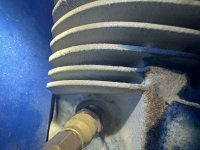
Taxi to hangar and call mechanic. Swap out plugs from cylinder 1 and 5, start it up. Kept it at 1400 RPM to get oil temp up (doesnt take long here in the summer), then 1900, then at 2400 RPM (all on ground with cowling off). Mechanic tells me to shut it down. CHT all the same throughout. He noticed the blue stain around the plug, didnt smell or notice anything with the runup.

Plan on his end is to clean up the plug. Run it again with cowling on. Fly it if run up is good again and then recheck the area around cyl 5 to see if there is any leaks.
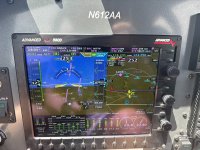
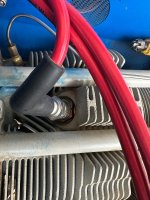
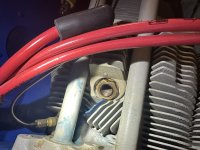
IMG_5546.jpeg

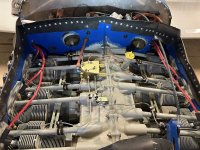
IMG_5553.jpeg
Reasonable plan? This is a new-to-me mechanic.
 
Flew my RV-10 (IO-540 with dual pmags, 80 hours on engine/plane/plugs) from DFW to TUS last week after getting it painted and some work on cooling (cowl flaps, condition inspection). During that flight, the engine sputtered a couple times, almost felt like the nosewheel was shimmying, would only last maybe 1-2 seconds. No change on EFIS. However, one time, there was a 3-5 second sputter, where I lost all CHT/EGT from cylinder 5 and then when then engine was flying like normal, the info returned. I cant remember the CHT but the EGT went from around 700->900->1100->1350 (normal). The first couple hesitations, I had fuel at 10.5 GPH, flying at 10.5k, so I simply bumped it to 11.0 GPH, in case it wanted more fuel. Around 90 minutes outside KTUS (home), CHT started to slowly decrease from 340 down to 315 when I landed. Engine ran fine. If I didnt have the monitor, I would not have noticed. No change in RPM or speed.

Taxi to hangar and call mechanic. Swap out plugs from cylinder 1 and 5, start it up. Kept it at 1400 RPM to get oil temp up (doesnt take long here in the summer), then 1900, then at 2400 RPM (all on ground with cowling off). Mechanic tells me to shut it down. CHT all the same throughout. He noticed the blue stain around the plug, didnt smell or notice anything with the runup.

Plan on his end is to clean up the plug. Run it again with cowling on. Fly it if run up is good again and then recheck the area around cyl 5 to see if there is any leaks.

View attachment 95079

View attachment 95078
Reasonable plan? This is a new-to-me mechanic.
Have the mechanic look at the fuel injector lines and the fuel injector screens. The blue staining might be coming from the injector.
 
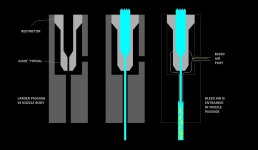
Possible carbon build up in the bottom of the fuel nozzle. The restrictor might be clean, but if there is build up in the bottom of the nozzle, it can disrupt the flow out into the intake port and push fuel out the aerator hole.
 
Plan now is to remove and clean all fuel lines/nozzles. I still have to do a GAMI spread eventually , but now this is in my mind, I want to make sure the lines are clean first.
 
Flew my RV-10 (IO-540 with dual pmags, 80 hours on engine/plane/plugs) from DFW to TUS last week after getting it painted and some work on cooling (cowl flaps, condition inspection). During that flight, the engine sputtered a couple times, almost felt like the nosewheel was shimmying, would only last maybe 1-2 seconds. No change on EFIS. However, one time, there was a 3-5 second sputter, where I lost all CHT/EGT from cylinder 5 and then when then engine was flying like normal, the info returned. I cant remember the CHT but the EGT went from around 700->900->1100->1350 (normal).
You want to do a GAMI spread but seems you don't have the ability to download EFIS data and review the results? You should be able to get a second-by-second readout on literally hundreds of parameters. Engine sputtered and nosewheel shimmy, I will guarantee there was a change in the EFIS readings.........but you said you lost CHT/EG temps, Are you the builder? If you can't read the EFIS data contact Savvy Aviation and they can do this for you.
 
You should NEVER be spitting fuel out in that area; at least not in any meaningful quantity. That is a pretty large fuel stain, meaning a significant amount of fuel was coming out from where it shouldn’t. Imho, you need to identify the source/problem before further flights. Spraying raw fuel on a 400* cylinder head can lead to serious issues.

It is not coming from the spark plug, it is coming from the fuel circuit. Could be a failing line or solder joint. Could be the injector. Could be something odd going on in the cyl intake chamber creating positive pressure and blowing fuel out the injector vent, etc.

Based upon the pic, my guess is a fracture in the ss line. No staining near injector . It is all parallel with the ss line. Is that line supported? There should be 2 support clamps per line for a 540. You should not allow plug wires to bounce up and down on those lines. They are somewhat fragile and lyc has had cracking problems in the past when they are not well supported. They cannot handle a lot of movement and they are not intended to support the weight of your plug wires.

Your temps all dropped off because the fuel was not making it to the cylinder and therefore no combustion. The fuel at that time was instead being sprayed on your pushrod tube. You must find why it did that, as it will inevitably do it again and possibly not just for a few seconds.

If your mechanic thought the issue was with the spark plug, it is time for a second opinion! Changing the plug and fly it again is bad advice imho.
 
Last edited:
You should NEVER be spitting fuel out in that area; at least not in any meaningful quantity. That is a pretty large fuel stain, meaning a significant amount of fuel was coming out from where it shouldn’t. Imho, you need to identify the source/problem before further flights. Spraying raw fuel on a 400* cylinder head can lead to serious issues.

It is not coming from the spark plug, it is coming from the fuel circuit. Could be a failing line or solder joint. Could be the injector. Could be something odd going on in the cyl intake chamber creating positive pressure and blowing fuel out the injector vent, etc.

Based upon the pic, my guess is a fracture in the ss line. No staining near injector . It is all parallel with the ss line. Is that line supported? There should be 2 support clamps per line for a 540. You should not allow plug wires to bounce up and down on those lines. They are somewhat fragile and lyc has had cracking problems in the past when they are not well supported. They cannot handle a lot of movement and they are not intended to support the weight of your plug wires.

Your temps all dropped off because the fuel was not making it to the cylinder and therefore no combustion. The fuel at that time was instead being sprayed on your pushrod tube. You must find why it did that, as it will inevitably do it again and possibly not just for a few seconds.

If your mechanic thought the issue was with the spark plug, it is time for a second opinion! Changing the plug and fly it again is bad advice imho.
+1 on everything Larry wrote - I would not fly until this is understood and fixed. An engine fire will ruin your whole day.
 
You should NEVER be spitting fuel out in that area; at least not in any meaningful quantity. That is a pretty large fuel stain, meaning a significant amount of fuel was coming out from where it shouldn’t. Imho, you need to identify the source/problem before further flights. Spraying raw fuel on a 400* cylinder head can lead to serious issues.

It is not coming from the spark plug, it is coming from the fuel circuit. Could be a failing line or solder joint. Could be the injector. Could be something odd going on in the cyl intake chamber creating positive pressure and blowing fuel out the injector vent, etc.

Based upon the pic, my guess is a fracture in the ss line. No staining near injector . It is all parallel with the ss line. Is that line supported? There should be 2 support clamps per line for a 540. You should not allow plug wires to bounce up and down on those lines. They are somewhat fragile and lyc has had cracking problems in the past when they are not well supported. They cannot handle a lot of movement and they are not intended to support the weight of your plug wires.

Your temps all dropped off because the fuel was not making it to the cylinder and therefore no combustion. The fuel at that time was instead being sprayed on your pushrod tube. You must find why it did that, as it will inevitably do it again and possibly not just for a few seconds.

If your mechanic thought the issue was with the spark plug, it is time for a second opinion! Changing the plug and fly it again is bad advice imho.
There's a very good bulletin from Lycoming (Maybe a SB) showing how to properly support injector lines from the spyder. Can somebody post?
 
There's a very good bulletin from Lycoming (Maybe a SB) showing how to properly support injector lines from the spyder. Can somebody post?
There is an AD that references a service bulletin. I'm very surprised his A&P doesn't know about this AD.

Double check me on the latest revision, but:

AD-2015-19-07

Service Bulletin (MSB) No. 342G


He should be able to upload his Advanced panel data to Savvy or import it as a .csv file into Excel and post the graphed results.

Thanks,

Joe
 
The OP may have the supports. The pic was not broad enough to see, hence the comment. Very possible they are there. however, if they are not, that further points to a fractured line.
 
The picture shows that SB 342G has not been properly complied with. The injector line should be supported by a clamp on the intake pushrod housing as close as possible to the head fins. It obviously is not there. If it is further down the pushrod housing, it’s not in compliance. The SB clearly shows proper positioning of the support clamps.
 
#1 I have attached an excerpt from the AdvFlt Pilots Manual showing how to download all data from EFIS screen onto a SDcard (front panel slot) or USB stick (back panel) - the EFIS stores many hours of historical data (100+) but you can choose to download either last flight, last 5 hours, all. Easy to look at data in MS Excel on a 1 second interval sample rate... you can also send to Savvy if you desire.
#2 I recommend disconnecting all 6 injector lines at the cylinders & installing block off plugs (male threads) into the line end connectors - then pressurize fuel system with back-up electric fuel pump, throttle & mixture firewall - closely examine all your injector lines for leaks - you have at least one. You may need to artificially heat lines (think heat gun) while lines are completely dry & not pressurized! and vibrate them with your fingers while watch for source of leak.
#3 Do NOT disrespect Lycoming's urging to inspect the line supporting each 100hr or on-condition yearly inspections - and be sure they are properly supported per the Lyc SB, not just that clamps are installed same as usual because they MAY BE INCORRECT.
 

Attachments

Plan on his end is to clean up the plug. Run it again with cowling on. Fly it if run up is good again and then recheck the area around cyl 5 to see if there is any leaks.

Reasonable plan? This is a new-to-me mechanic.

No. And I'd look for a new mechanic.

Significant blue staining says fuel where it should not be. Sticks out like a ruby in a goat's butt.

A fractured line is a real possibility.

Another possibility might be a bit of garbage in the nozzle. Rare, but not unknown; usually we find the trash in the restrictor insert. A blocked discharge passage can re-route some fuel out the air bleed hole in the side of the nozzle. You can't see the bleed hole. It's under the shroud and screen.

Constant Flow Nozzle Operation.jpg
 
No. And I'd look for a new mechanic.

Significant blue staining says fuel where it should not be. Sticks out like a ruby in a goat's butt.

A fractured line is a real possibility.

Another possibility might be a bit of garbage in the nozzle. Rare, but not unknown; usually we find the trash in the restrictor insert. A blocked discharge passage can re-route some fuel out the air bleed hole in the side of the nozzle. You can't see the bleed hole. It's under the shroud and screen.

View attachment 95125
Yes Sir...
That is what I was alluding to in post #3. A picture is worth a 1000 words!
 
Yes Sir...
That is what I was alluding to in post #3. A picture is worth a 1000 words!
I don't have a good picture for the fuel lines, will try to go to airport tonight and get it. Appreciate the bulletin from Lycoming though. Since I have dual pmags with auto plugs and the inserts, has anyone ever heard of leak around the inserts? Debris not allowing proper seal? I'll try to get better pics of the fuel stain as well.
 
I don't have a good picture for the fuel lines, will try to go to airport tonight and get it. Appreciate the bulletin from Lycoming though. Since I have dual pmags with auto plugs and the inserts, has anyone ever heard of leak around the inserts? Debris not allowing proper seal? I'll try to get better pics of the fuel stain as well.
Actually, I refering to Dan's picture of the fuel nozzle. But, please do remove the nozzle and check to see if it has any debris blocking the outlet hole.
 
I took off from Enid last Friday and got on the other side of Tulsa at 11.5 and the engine just did not feel right. Rechecked lean and then checked eMags. When I selected the left one to off, engine went silent. Limped it back home and went had a beer. Next day went through the eMag troubleshooting procedure and all was good.

This was my third flight with eMags installed and I had not installed blast tubes for cooling to the eMags. It appears the right one overheated and decided it did not wart to contribute to this flight anymore.
 
I don't have a good picture for the fuel lines, will try to go to airport tonight and get it. Appreciate the bulletin from Lycoming though. Since I have dual pmags with auto plugs and the inserts, has anyone ever heard of leak around the inserts? Debris not allowing proper seal? I'll try to get better pics of the fuel stain as well.

It is possible to develop a combustion products leak around the spark plug inserts, but not a blue 100LL fuel leak.
 
It is possible to develop a combustion products leak around the spark plug inserts, but not a blue 100LL fuel leak.
Got it, makes sense. It's the volume of 100LL that causes the blue staining, which is the concern. I'm a physician by trade, so honestly left a lot of firewall forward things to those in the know. I'm picking up what everyone is putting out there though.
 
I understand what Dan has described - HOWEVER there in no fuel blue stain on the injector (visible), if injector installed properly air bleed opening will be pointed down or toward the valve cover - fluid would have wrapped around injector certainly leaving a stain. The amount of fuel discharged to leave the stain shown is significant. When was the last time you practiced an emergency descent with an engine fire ?, Is the procedure in your POH ? Reasonable albeit hopefully never needed things to consider.
 
I don't have a good picture for the fuel lines, will try to go to airport tonight and get it. Appreciate the bulletin from Lycoming though. Since I have dual pmags with auto plugs and the inserts, has anyone ever heard of leak around the inserts? Debris not allowing proper seal? I'll try to get better pics of the fuel stain as well.
They can leak just a bit, but it will be carbon based dark grey or black. It will never be fuel / blue. Usually it is a dark gooey oil based residue that escapes around the inserts.
 
Last edited:
I understand what Dan has described - HOWEVER there in no fuel blue stain on the injector (visible), if injector installed properly air bleed opening will be pointed down or toward the valve cover - fluid would have wrapped around injector certainly leaving a stain.
yes, this is why we are all guessing it is a fractured fuel line.
 
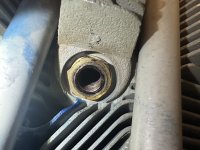
IMG_5560.jpegIMG_5558.jpegIMG_5562.jpegIMG_5561.jpeg

Let me know if you would like additional views. I have some from the bottom but it's dry.

Thanks
Shawn
 
Last edited:
No staining near injector, so unlikely that is the source. Crack in the line is most likely. Guessing the crack is right where the plug wires are resting on the line. Pull it off, examine and pressure test. If you can't make them, AFP is a good source.

Also need to address supports on those lines. Far from optimal and missing supports on a couple. The AD is for centered mounted dividers, which yours is not. You need to double up supports on all of the long runs (4 & 6). For the short runs, the support should be in the center of the run. Need to support plug wires so their weight is not being supported by the fuel lines.
 
Last edited:
On the Attached file - It's an Excel file with .txt suffix added to allow for posting.
I reformatted data from Shawns file posting to be more readable
Good job on the EFIS data Download !
Shawn - your EFIS software is about a year out of date - current AdvFlt Software Version: X17.00.03-MV16 as of June 2025
I agree completely with Larry's comments.
Bright blue streak leading to spark plug hole was fuel running downhill off push rod tube (relatively cool) to very hot Cyl cooling fin more down hill to spark plug.
Shawn - again , very good Pic's
I would not be a bit surprised to find that the leaking line is just under plug wires - possible abrasion combined with vibration.
 

Attachments

Hey. I was the first to reply with the fuel injector possibility but I see that you have used blue paint on your baffles. Any chance that’s not high temp paint and it is breaking down? Unlikely but worth a minute of thought.
 
It is possible to develop a combustion products leak around the spark plug inserts, but not a blue 100LL fuel leak.
100%. You may or may not have a problem with a spark plug - but you DEFINITELY have a fuel leak, and it's not coming from the spark plug.
 
Hey. I was the first to reply with the fuel injector possibility but I see that you have used blue paint on your baffles. Any chance that’s not high temp paint and it is breaking down? Unlikely but worth a minute of thought.
I don’t recall the blue paint being anywhere else. Prob wasn’t the best choice in hindsight also.

Still have to pull the fuel line, but since cyl 5 had the issues and I have the stain, going with a crack in the line for now.
 
i would consider cleaning all the blue away using isopropyl alcohol. With the engine off and cold you could run the aux electric fuel pump which will pressurize all of the injectors. Have a friend watch #5 as you do this to see if any fuel comes out. If the line is cracked you should see something. Of course this will put fuel in the cylinders so be careful. It will evaporate in time.
 
i would consider cleaning all the blue away using isopropyl alcohol. With the engine off and cold you could run the aux electric fuel pump which will pressurize all of the injectors. Have a friend watch #5 as you do this to see if any fuel comes out. If the line is cracked you should see something. Of course this will put fuel in the cylinders so be careful. It will evaporate in time.
strongly suggest the OP to remove the line and examine, including a pressure test. The symptoms show this to be an itermittent issue and the above test can easiily provide a false negative result. For example, a piece of debris floating in injector. When the stars align, it plugs the oriffice and the line pressure goes up and the leak starts. Once that SS line has a hairline crack, it will grow over time and someday let go with a terrible outcome.

No short cuts when you are spraying fuel on a hot cylinder!
 
Last edited:
Definitely pursue the possibility of a fuel line crack or nozzle issue first.
However, the data shows zero fluctuation in fuel flow (maybe sample rate too slow) which could suggest perhaps another possibility.
Data shows that cylinder went dead momentarily. Hard to imagine a blockage would appear and disappear so fast.
If no fuel line or nozzle defects are found, I’d seriously look at valve guide clearances to rule out a sticky valve.
The idea that the staining is baffle paint is quite valid- the dark stain on the cooling fin is an exact match. I wouldn’t expect a fuel stain to be that dark.
I agree with others- don’t fly it until the issue is found.
 
With the engine off and cold you could run the aux electric fuel pump which will pressurize all of the injectors.

Not really. Indicated fuel pressure is only valid up to the ball valve in the servo. Downstream, in the divider and lines, pressure when the engine isn't running will be very low. I don't have a nozzle pressure chart handy for a 540, but I'd estimate well under 0.5 psi at 3 gph.

It should be possible to pressure test in place if all the lines are removed from their nozzles and capped, but it would be more work than simply removing the line and rigging a bench pressure test with compressed air.

However, the data shows zero fluctuation in fuel flow...

A blocked injector doesn't cause a significant change to indicated fuel flow. The blocked volume is re-routed to the other five nozzles.
 
Last edited:
“A blocked injector does not change indicated fuel flow. The blocked volume is re-routed to the other five nozzles.”
You’re right Dan (as always) - guess I was thinking Continental where it (pressure) will actually go up with blocked injector.
Can’t wait for the outcome.
 
... guess I was thinking Continental where it (pressure) will actually go up with blocked injector.

Good point! My statement is only true with the current inline flow transducers.

For the curious...In the old days, systems tapped a port on the flow divider, and marked the gauge face with GPH as a proxy for pressure. With those, a blocked nozzle resulted in an increase on the gauge.
 
Hopefully not drifting the thread here, but I'm going around and around with GAMI on fuel coming out of a couple of my injectors. I have significantly more fuel staining than the OP. GAMI is telling me "sometimes that just happens". I can't smell any fuel and the engine appears to be running just fine. However, I've pained my baffles and upper cowl white so it shows up very well. To me it's very concerning. I've got about 50 hours on the engine since installing the GAMI's. Thinking about going back to the original Lycoming injectors and giving up on balancing. It's disappointing as the GAMI reduced the EGT and CHT spread quite a bit....but still a little way off.

I have a close friend that is what I believe to be a very good A&P/IA and he's had the same conversation with GAMI as he's seen it on multiple GAMI installs. I don't like it when threads drift, so if this takes away from the OPs original post, I'll start my own. My intent here is to say...he's not alone.
 
Are the nozzle bodies installed so the stamped "A" is facing down?
 
Are the nozzle bodies installed so the stamped "A" is facing down?
Recently I installed 6 new Airflow Performance injector nozzles on an AEIO-540 and I couldn’t get a single one with the “A” facing anywhere near down. They all ended up in the 10 through 3 o’clock positions. I started by torquing to 40 in-lbs and working my way up to 60. I knew I was in trouble when I was reaching 40 in-lbs at the 8 through 12 o’clock positions. I could have started swapping injector bodies, but I was tired of working on the thing and just wanted to get done. So far so good.
 
Are the nozzle bodies installed so the stamped "A" is facing down?
Dan,

Yes they are. And according to John-Paul at GAMI...they don't have to be. That is no longer required. He says that any position is now just fine.

This thread is timely because I'm still honing in on getting things balance. Tonight, I went to replace the injector in #3 and found that GAMI had included two washers in with the injector. This a first. I'm going to call them tomorrow and see why they were included. Hmmmmmm.......

Pretty frustrated right now. My hangarmates (RV-10 IO-540-D4A5 w/120 hrs.) are having the exact same issue. Stains on all 6 cylinders/injectors.

I may try and post pictures tomorrow evening.
 
Is your spider valve mounted inverted. It is possible that the spring is not letting the valve close all the way and any fuel left in the spider valve after shut-down is just leaking into the # 5 nozzle since it is the closest one and running out of the air bleed hole.
 
Last edited:
It should be possible to pressure test in place if all the lines are removed from their nozzles and capped, but it would be more work than simply removing the line and rigging a bench pressure test with compressed air.
Tried looking this up, but can only find how to test fuel lines in cars with a Schrader valve.... Take fuel line in question off at spider and nozzle. Cap one end with 1/8" fitting and another fitting to attach to air compressor?
Add a pressure gauge to the end and see if pressure drops?
Use air to pressurize the fuel line and place under water to find leak?
How much pressure could the line take?
 
Tried looking this up, but can only find how to test fuel lines in cars with a Schrader valve.... Take fuel line in question off at spider and nozzle. Cap one end with 1/8" fitting and another fitting to attach to air compressor?
Add a pressure gauge to the end and see if pressure drops?
Use air to pressurize the fuel line and place under water to find leak?
How much pressure could the line take?
Cap one end and apply pressure on the other. Put the tube in a bucket of water and will easily see if / where it is leaking from. You are not really looking to see if it holds pressure, but instead looking to find the leak via pressure. Just like putting an inner tube in water and looking for bubbles. Just like a leak in a tire, the small leaks often need to pass a threshold of pressure before they start leaking.

Wiggle the line around as you test to help open the crack. Don’t bend it, just light forces.

If your leak was from the line, it will be easy to spot. Don’t need a lot of pressure, as your pressure in those lines rarely goes over 12 psi in operation. So, if it was the line that was leaking in flight, it did so with less than 15 psi.
 
Last edited:
Still trying to figure out the cause....

Sent the data to Savvy. Their response:
"Hello Shawn,
Just working from first principles, in order to have both EGT and CHT drop off like that you need to have basically a total loss of combustion. That either means, there was no fuel, spark, or compression. The blue stains certainly point to the first possibility, as it is also very difficult to completely lose spark on one cylinder with two independent ignition system, and losing compression is possible with valve problems. Sounds like appropriate action was taken and checks were made. Possibilities include injector problems, flow divider problems. Suggest checking the cylinder with a borescope to have a look inside to see if anything is obvious. "

Had another A&P come out. He didnt have anything to pressure test lines, so cleaned lines and injector. Ran with boost pump, and another brief ground run. Couldn't replicate anything. Called another A&P, he doesn't have anything to pressure test the lines.

Does HD/Lowes have caps that will fit on the fuel lines or are they a specific thread? Another option I have is to call the big FBOs on the field and see if they can do it.
 
Does HD/Lowes have caps that will fit on the fuel lines or are they a specific thread? Another option I have is to call the big FBOs on the field and see if they can do it.

You're over-thinking this. It's a line with two B-nuts. Slide the nut up the line, slip a short length of tubing over the bulb on the end, wire or clamp it. Do both ends. Plug one end with whatever is handy. Blow air in the open end.
 
Back
Top