Van's Air Force

The definitive Van's Aircraft support community! Buying, building or flying an RV? Join our exclusive family of mentors and enthusiasts!

Fuel Boost Pump Failure Modes and Expected Life

Chachi7565

Well Known Member
Friend
Well...after getting my RPM issue sorted out (see previous threads on low-pitch static stops adjustment), I was heading back to the airport and I turned the boost pump on for landing. During the approach, I caught a whiff of some fumes - 100LL plus cigarette smoke. Took me a minute to realize what was going on, and by then the circuit breaker for the boost pump had popped. Once I got on the ground and shut down, I tried it again - reset the circuit breaker and turned the pump on. The pump was louder than normal, and almost immediately popped the breaker. Seems like I will need to replace the pump...or at least figure out why it's overloading the circuit.

Couple of questions for all you experts!
  • My only other experience with electric boost pumps is flying a Super Decathlon for about a dozen hours. In that aircraft, you could hear the pump when you primed the engine, but it was fairly quiet. In my RV-8A, which I bought in October, so I only have a few months flying it, when I prime the engine the boost pump is pretty loud. Is that normal, or has my pump been degraded / failing, and that's what made it loud?
  • What failure modes have you seen from the pump? I had an initial whiff of 100LL, which went away pretty quickly. Then I smelled smoke - strangely, not acrid "burning plastic" smoke that I would expect from an electrical fire, it really just smelled like cigarette smoke.
  • What sort of life should I expect from a boost pump? Per the logbook, this one was installed in August, 2023, only about 63 hours on the Tach since install. I'm sure that's not normal! What could have caused the failure? Any common installation errors I should look for?
For what it's worth, there are two entries re:fuel pumps in the aircraft logbook:
  • 08 June 2018: Inspected ELT per FAR 91.207. Replaced Holley Fuel Pump PN 12-802-1. Inspected and cleaned fuel screens. Replaced LH landing light lenses. Aircraft inspection IAW a condition inspection. Lubricated all pulleys, rod ends, hinges, bell cranks and cables. I certify this aircraft has been inspected IAW the scope and detail of CFR 43 Appendix D and found to be in a condition safe for flight.
  • 24 Aug 2023: Replaced inop fuel pump (electrical) in fwd fuselage, replaced nose tire and tube with new. Rerigged mixture control lever. Repaired and repainted nosewheel fairing. Updated Navigation databases. Cleaned spark plugs. Tach time 421.9 hrs.

As always, thank you all for your advice, it's been invaluable!
 
Last edited:
Pumps do fail and it is usually the electric motor that does so. Popping breakers and the smell of burning electronics would imply a failed moto, though possible that a siezed rotor could create similar symptoms.

When my pump failed it was very obvious that the sound changed. Not really louder, just different. If you keep failing pumps, at some point you have to look at installation issues over bad luck. Pumps should not fail at 63 hours.
 
I've been doing some research; it seems like the Holly fuel pump was used in some Van's builds in the past, but reading about it, it doesn't seem optimized for aircraft use. I'm also unclear if the replacement in 2023 was a direct replacement for the same model installed in 2018. Does anyone have experience with these Holly fuel pumps? I assume that putting in the same pump would be easiest, as that's what the plumbing is set up for, and they are very inexpensive ($180 online). But I'd rather have something more reliable. The Van's store sells the Andair pump, a big step up in cost ($1500ish) - is it worth the work and cost to upgrade in your opinions?
 
I've been doing some research; it seems like the Holly fuel pump was used in some Van's builds in the past, but reading about it, it doesn't seem optimized for aircraft use. I'm also unclear if the replacement in 2023 was a direct replacement for the same model installed in 2018. Does anyone have experience with these Holly fuel pumps? I assume that putting in the same pump would be easiest, as that's what the plumbing is set up for, and they are very inexpensive ($180 online). But I'd rather have something more reliable. The Van's store sells the Andair pump, a big step up in cost ($1500ish) - is it worth the work and cost to upgrade in your opinions?
Never seen a holley pump in an RV. What is the pressure relief/regulation setup? Clearly your setup is unique and not like other RV's. Going to need WAYYY more info to help. Setups like AFP and andair are fully engineered packages. What you have is not, so we need to understand the setup.
 
AFP for the win, ditch the Holley.
I have been running a EFII pump and very happy with it also.
 
You do not mention your engine type or model, I presume Carb base on fuel pressure of this pump
You do not mention if any alcohol or methanol fuels have been used.

Holley Fuel Pump PN 12-802-1
Features:
Tumble polished billet look
Lower housing casting designed for enhanced fuel flow
Motor draws only 3 amps current
Relay kit P/N 12-753 & 7 1/2 amp fuse recommended
Improved design for street/strip applications
Not designed for use on aircraft of any type
Distinctive “Blue” logo
Flows 110 GPH (free flow)
Flows 88 GPH at 9 psi
maximum pressure is 14 psi
Includes P/N 12-803 fuel pressure regulator
Provides constant fuel flow with no pulsation
Has externally accessible pressure relief valve (max 14 psi)
Rotor/vane pump design is more tolerant of contaminated fuels
Weighs only 3 lbs
Includes mounting bracket
Repair kits are readily available
Can be serviced from the pump end
Not compatible with alcohol or methanol fuels
Use of safety shut-off switch, P/N 12-810, strongly recommended
Not designed or recommended for use with fuel injection systems
 
Sorry for leaving out the necessary details.

IO-360, so not carbureted. I only use 100LL.

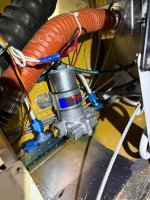
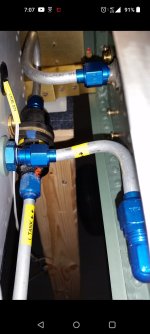
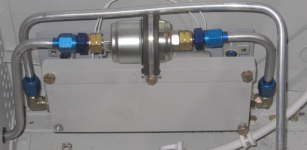
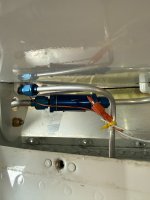
I dug into the aircraft today and uncovered the fuel pump. Not easy to get to! Picture attached. It was definitely this pump that failed - there's some brown sticky residue coming out of the pump; when I smelled it, it smelled just like the fumes I smelled in the cockpit - sort of fuel-smelling, but more like nail polish remover. I'm assuming melted motor windings.

I'm trying to decide whether to replace this as a one-for-one swap - the easiest answer, as I won't need to replumb the lines, or replace it - I like the EFii boost pump. My concern is that the Holley pump isn't designed for this application, and has been replaced twice before I bought the aircraft.

For those of you with experience with the EFii pump - what level of effort does this look like to replumb? It looks to me like I can disconnect the lines on the left, before the T-fitting, and on the right, where they go through the bulkhead, and incorporate the new filter there. That just leaves finding a place to mount the prefilter, and the pump itself. I'd love to hear your ideas.

Thanks!
 

Attachments

  • IMG_1229.JPG
    IMG_1229.JPG
    3 MB · Views: 126
Based on what you have now disclosed, I would tell you that the Max pressure from the Holley pump is spec's at 14psi, per Lycoming the min inlet to a FI servo (redline low) is 14psi. You need to get familiar with what you have, what you need and how to best get there. I strongly suggest getting the Van's RV8 drawing package (includes A model) which will give you their standard Fuel system drawings and components - you also need to diagram EXACTLY what you have now... and decide how to make changes to get an airworthy configuration. If you do not feel comfortable with this type of corrective action then I suggest employing an A&P.
 

Attachments

Sorry for leaving out the necessary details.

IO-360, so not carbureted. I only use 100LL.

For those of you with experience with the EFii pump - what level of effort does this look like to replumb? It looks to me like I can disconnect the lines on the left, before the T-fitting, and on the right, where they go through the bulkhead, and incorporate the new filter there. That just leaves finding a place to mount the prefilter, and the pump itself. I'd love to hear your ideas.

Thanks!
For the EFii pump "rail bracket" (and others) you will need a lot more physical space to install. It's an excellent pump and almost bullet proof. Hundreds maybe thousands have used the Walbro pump with almost zero failure rate reported. (EFII and SDS users) I think you will need someone who builds experientials for a consultation. Maybe PM Vic S, Mel or Walt to ask for their help. It looks like you have issues to install this correctly. Good luck and be safe!
 
Based on what you have now disclosed, I would tell you that the Max pressure from the Holley pump is spec's at 14psi, per Lycoming the min inlet to a FI servo (redline low) is 14psi. You need to get familiar with what you have, what you need and how to best get there. I strongly suggest getting the Van's RV8 drawing package (includes A model) which will give you their standard Fuel system drawings and components - you also need to diagram EXACTLY what you have now... and decide how to make changes to get an airworthy configuration. If you do not feel comfortable with this type of corrective action then I suggest employing an A&P.
Thanks, great advice! The drawings from Van's are already on their way - I ordered them last week - and I have downloaded the PDFs and reviewed the plans for the fuel setup. I have a good A&P who will work with me to get this done, too.

The low pressure of the Holley pump is what is prompting me to make the change to the EFii pump instead of just replacing the Holley. The simplicity of the EFii install is a huge plus, too, it looks like a great product.
 
For the EFii pump "rail bracket" (and others) you will need a lot more physical space to install. It's an excellent pump and almost bullet proof. Hundreds maybe thousands have used the Walbro pump with almost zero failure rate reported. (EFII and SDS users) I think you will need someone who builds experientials for a consultation. Maybe PM Vic S, Mel or Walt to ask for their help. It looks like you have issues to install this correctly. Good luck and be safe!
Thanks, appreciate it. I looked at the EFii site, and if I put the filter on further downstream, I can get the size of the module down to 11", which looks very doable. Heading to the hangar tomorrow to measure it and confirm. My concern was mounting it, but another thread here on Van's Air Force suggested nutserts into the floor, which seems doable as well. I've got an A&P to help me, and the local Van's mafia is strong, so lots of help there too!
 
Sorry for leaving out the necessary details.

IO-360, so not carbureted. I only use 100LL.

I dug into the aircraft today and uncovered the fuel pump. Not easy to get to! Picture attached. It was definitely this pump that failed - there's some brown sticky residue coming out of the pump; when I smelled it, it smelled just like the fumes I smelled in the cockpit - sort of fuel-smelling, but more like nail polish remover. I'm assuming melted motor windings.

I'm trying to decide whether to replace this as a one-for-one swap - the easiest answer, as I won't need to replumb the lines, or replace it - I like the EFii boost pump. My concern is that the Holley pump isn't designed for this application, and has been replaced twice before I bought the aircraft.

For those of you with experience with the EFii pump - what level of effort does this look like to replumb? It looks to me like I can disconnect the lines on the left, before the T-fitting, and on the right, where they go through the bulkhead, and incorporate the new filter there. That just leaves finding a place to mount the prefilter, and the pump itself. I'd love to hear your ideas.

Thanks!
That pic doesn’t show the regulator. I see the pipes for the regulator circuit, but need to see more. The brown goo and nail polish smell is a burned up motor. I think you need to fully understand the system here and ensure it is correct before just replacing that pump. The fact that it died in 63 hours is possibly due to a poor setup.
 
But I'd rather have something more reliable. The Van's store sells the Andair pump, a big step up in cost ($1500ish) - is it worth the work and cost to upgrade in your opinions?

I have the Andair pump, and it has worked well, but I needed to send it in for an "upgrade" due to a SB related to MOGAS. That was not too much of a problem since I'm in Europe, and used local UK shipping to get it there while on a visit to London. They shipped it back to me in Switzerland without hassle, and reasonable cost. Andair doesn't have a great reputation on VAF due to support issues, but I think the equipment is solid. It's certainly a much smaller and lighter package than the others.

Based in the US, I'd strongly consider the Airflow Performance package. https://airflowperformance.com/index.php/product/auxiliary-pump-assembly/

You should be able to plumb that on in with minimal fuss. Do you have some fuel filters? That's pretty important as well. I'd also recommend getting the ts-flightlines guys to get a complete kit for plumbing this with a good filter.


I've got an A&P to help me, and the local Van's mafia is strong, so lots of help there too!
That's good to hear. Problems in the fuel delivery have killed a lot of pilots. This is not a place to experiment without a lot of experience.
 
AFP for the win, ditch the Holley.
I have been running a EFII pump and very happy with it also.
Doesn’t EFII and SDS utilize Walbro pumps. Seem to remember both proprietors thinking the Walbro’s were the top of the line. Whether they are the top or not, they’re reputation is good enough that there are a bunch of cheap, foreign counterfeit products out there.
 
I have the Andair pump, and it has worked well, but I needed to send it in for an "upgrade" due to a SB related to MOGAS. That was not too much of a problem since I'm in Europe, and used local UK shipping to get it there while on a visit to London. They shipped it back to me in Switzerland without hassle, and reasonable cost. Andair doesn't have a great reputation on VAF due to support issues, but I think the equipment is solid. It's certainly a much smaller and lighter package than the others.

That's good to hear. Problems in the fuel delivery have killed a lot of pilots. This is not a place to experiment without a lot of experience.
Small form factor, filter inline with pump is serviceable (take it apart to clean), parts available for mounting in RV7, likely applicable to an RV8A. Many installed in RV's.
 

Attachments

Small form factor, filter inline with pump is serviceable (take it apart to clean), parts available for mounting in RV7, likely applicable to an RV8A. Many installed in RV's.
Andair makes great fuel valves, but not a fan of their pump/filter.
 
Thanks everyone for the great input.

Following up - I ordered the EFii setup with the 90-degree fittings, and got some great advice on how to route things from one of my local Van's experts. Scheduling time with my A&P to do the install as soon as the parts arrive. Here's the setup I'm going to go with, as @AZSteve053 pointed out, the filter needs to go before the pump.
 

Attachments

  • tTBhCrt0a82aiMiv.jpg
    tTBhCrt0a82aiMiv.jpg
    1.9 MB · Views: 72
A filter BEFORE the pump is ALWAYS recommended
Per Walbro specs: (The 10-micron post filter is for engines with some sort of electronic fuel injection)

Screenshot 2025-12-30 061037.png

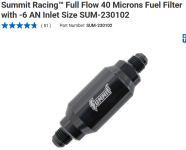
I found this filter a good alternative (Built in AN6 fittings, SS cleanable filter media, filter has a decent amount of filter cartridge area) If you are using MoGas review the use of filters containing cellulose (paper).

Screenshot 2025-12-30 063628.png
 
Last edited:
One trick to consider about that filter: it looks like the same ubiquitous Delco unit used on almost every GM vehicle from the 90’s on. If you get the appropriate flare nuts and proper flare dies you can get rid of that goofy adapter setup. It eliminates some weight, leak paths and enables you to have a true bolt in filter element available at any parts store. I did this for my Rocket and I just throw the filter in the trash at CI time.
 
Thanks everyone for the great input.

Following up - I ordered the EFii setup with the 90-degree fittings, and got some great advice on how to route things from one of my local Van's experts. Scheduling time with my A&P to do the install as soon as the parts arrive. Here's the setup I'm going to go with, as @AZSteve053 pointed out, the filter needs to go before the pump.
I would try to avoid the elevated position of the filter, pulling fuel up hill is never a good thing.
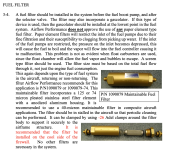
Per Walbro specs: (The 10-micron post filter is for engines with some sort of electronic fuel injection)

View attachment 105911

I found this filter a good alternative (Built in AN6 fittings, SS cleanable filter media, filter has a decent amount of filter cartridge area) If you are using MoGas review the use of filters containing cellulose (paper).

View attachment 105912
I use a 70 micron SS mesh billet filter in front of this same pump, was not impressed with the 90 micron GM style prefilter supplied and funky adapters.
 
One trick to consider about that filter: it looks like the same ubiquitous Delco unit used on almost every GM vehicle from the 90’s on. If you get the appropriate flare nuts and proper flare dies you can get rid of that goofy adapter setup. It eliminates some weight, leak paths and enables you to have a true bolt in filter element available at any parts store. I did this for my Rocket and I just throw the filter in the trash at CI time.
More info please. Do you have the filter part number? Are you just cutting off the barb and then flaring?
 
I would try to avoid the elevated position of the filter, pulling fuel up hill is never a good thing.

It’s never wise to not agree with Walt’s knowledge and extensive experience; but,

the pump being at the lowest position possible is the most important consideration here. Elevation changes are recoverable. Ensuring an always flooded suction (with margin) will cover a lot of other sins.

Also I’d get rid of any angled fittings on the suction side of the pump.
 
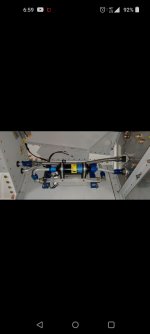
300 plus hours zero issues. Pre filters wing mounted, post filter above pumps.
 

Attachments

  • Screenshot_2025-12-30-06-59-53-97_1cdbe7dded7ec259ed1024b4ff1ae8db.jpg
    Screenshot_2025-12-30-06-59-53-97_1cdbe7dded7ec259ed1024b4ff1ae8db.jpg
    117.6 KB · Views: 53
  • Screenshot_2025-12-30-07-07-13-84_1cdbe7dded7ec259ed1024b4ff1ae8db.jpg
    Screenshot_2025-12-30-07-07-13-84_1cdbe7dded7ec259ed1024b4ff1ae8db.jpg
    256.5 KB · Views: 52
More info please. Do you have the filter part number? Are you just cutting off the barb and then flaring?


There is no modification of any kind on the filter. Using my method, the filter is ready to install right out of the box and only takes a minute or two to change (with easy access, like I have). Note that the subject filter has a flared female body on inlet and outlet. Also note that this is a special “bulbed” flare type and metric threads. One can buy the nuts and make this special flare in the aluminum fuel line for this special nut, or buy a length of pre manufactured fuel tube from the auto parts counter and cut it in half, adding the normal AN flare to the cut end. The good thing is the tube size is still 3/8 inch on the car side, so will take the -6 AN fittings as easily as any other “aircraft” part.
 
Last edited:
It’s never wise to not agree with Walt’s knowledge and extensive experience; but,

the pump being at the lowest position possible is the most important consideration here. Elevation changes are recoverable. Ensuring an always flooded suction (with margin) will cover a lot of other sins.

Also I’d get rid of any angled fittings on the suction side of the pump.
Yes, but the pre-filter is before the pump... so you not only have the pump having to pull fuel from the tanks but then up to the filter.
I also think the filter would tend to empty it contents which would lead to pump cavitation every start.
Ideally the pump/filter should be gravity fed, which means keeping both as low as possible.
With full tanks fuel should flow out the firewall fitting without the elect pump running.
 
Last edited:
Yes, but the pre-filter is before the pump... so you not only have the pump having to pull fuel from the tanks but then up to the filter.
I also think the filter would tend to empty it contents which would lead to pump cavitation every start.
Ideally the pump/filter should be gravity fed, which means keeping both as low as possible.
With full tanks fuel should flow out the firewall fitting without the elect pump running.
No one has more respect your opinions and experience than me but elevation changes are recoverable. The net elevation delta is what matters for loses. Also, if the fuel is running back out of the filter, that means there has to be air ingress somewhere other than injectors. If I’m not seeing it correctly, let me know.
 
No one has more respect your opinions and experience than me but elevation changes are recoverable. The net elevation delta is what matters for loses. Also, if the fuel is running back out of the filter, that means there has to be air ingress somewhere other than injectors. If I’m not seeing it correctly, let me know.
Heck I don't know, just seems to me that if I have to suck fuel up a hill it's gonna create a bit of a suction compared to no hill to climb.
Suctiion/low pressure is what causes vaporization/vapor lock. So if I have a choice, which you do in the above routing, I think it best to keep the fuel system as low as practical. And even though the system is theoretically closed I bet fuel would tend to run out of the filter back to the tank.
I'm not saying it won't work but I think it's better to allow gravity to help.
 
No one has more respect your opinions and experience than me but elevation changes are recoverable. The net elevation delta is what matters for loses. Also, if the fuel is running back out of the filter, that means there has to be air ingress somewhere other than injectors. If I’m not seeing it correctly, let me know.

The energy may be recoverable but when you raise the pump you will lower the input pressure. That makes any vapor bubbles bigger and increases the possibility of cavitation and fuel starvation. Vans designed them to be mounted as low as possible for a reason.
 
The energy may be recoverable but when you raise the pump you will lower the input pressure. That makes any vapor bubbles bigger and increases the possibility of cavitation and fuel starvation. Vans designed them to be mounted as low as possible for a reason.
Never mentioned the configuration you’re referencing. I specifically stated the pump (specifically the pump suction if you want more definition) should be the lowest point possible. I’ll state again, elevation changes are recoverable. Only net elevation delta matters; before anyone mentions xx # inches of additional friction losses, please don’t. It won’t be measurable at system fluid velocities.

I’ll state again, a configuration that always ensures a flooded pump suction covers up for some off nominal situations like air in a suction line. (Most) PD pumps have a decent amount of pick-up. A flooded suction ensures the pump Is primed (thus additional pick-up margin) and also ensures the pump proper has some initial lubrication (vanes, stators, gears, bearings, whatever). If someone has contrary, non-anecdotal, positions or theories they’d like to share, I’m always willing to learn; though, not always good at it.
 
One trick to consider about that filter: it looks like the same ubiquitous Delco unit used on almost every GM vehicle from the 90’s on. If you get the appropriate flare nuts and proper flare dies you can get rid of that goofy adapter setup. It eliminates some weight, leak paths and enables you to have a true bolt in filter element available at any parts store. I did this for my Rocket and I just throw the filter in the trash at CI time.


There is no modification of any kind on the filter. Using my method, the filter is ready to install right out of the box and only takes a minute or two to change (with easy access, like I have). Note that the subject filter has a flared female body on inlet and outlet. Also note that this is a special “bulbed” flare type and metric threads. One can buy the nuts and make this special flare in the aluminum fuel line for this special nut, or buy a length of pre manufactured fuel tube from the auto parts counter and cut it in half, adding the normal AN flare to the cut end. The good thing is the tube size is still 3/8 inch on the car side, so will take the -6 AN fittings as easily as any other “aircraft” part.
Assuming you're referencing this 40-micron pre-filter:

1767130843198.png

Your GM filter is a 15-micron unit intended for installation at the electric pump outlet. It is not meant to be used as a pre-filter, even though it apparently works fine on your Rocket. Instead use a 40-micron unit as a pre-filter, and this GM filter at the pump outlet.

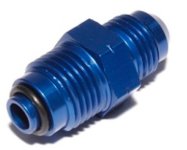
Also, that GM filter does not have flare, nor bubble flare fittings: they are O-ring fittings. You can get -6 AN adapters readily:

1767129320850.jpeg

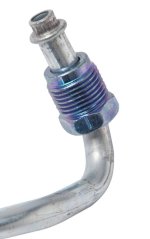
The original GM fuel line tubing for that filter is 3/8" steel with O-rings and metric threads:

1767129265433.jpeg

You can get an elegant pre-filter without all those adapters:

1767131174341.png
 
Last edited:
I don’t get increasing the pressure drop on the suction side of the pump or making it any harder to prime. The Vans delivered Airflow Performance pre filter is 74 microns. Even then they caution it might not prime if it is run dry.
 
Assuming you're referencing this 40-micron pre-filter:


You can get an elegant pre-filter without all those adapters:

View attachment 105997
Although not 100% sure I believe the filter above uses this type of filter media (below) which I refer to as a "disk" type filter media. Although rated for 40 microns the filter area is a fraction of the filter area of "cartridge" type filters. Below is a picture of the filter and it's easy to see the difference:

Screenshot 2025-12-30 173606.png

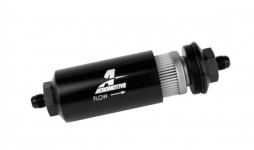
Compared to the filter area of this type: (Aeromotive and FuelLab both make a similar filter with AN6 fittings and a decent filter area)

Screenshot 2025-12-30 174529.png

I did quite a bit of testing different filters, fittings (the dreaded hard 90) and pumps many years ago to try and understand pressure drops better using a water manometer and pumping rates in the 40 gal/hr. rate. The "disc" filter had a pressure drop 3 -4 times that of the "cartridge" fittings. Again, if this filter does not use the disc filter and uses a cartridge ignore my comment. Also trapping 40-micron particles and larger this type of filter most of the time would probably be ok.

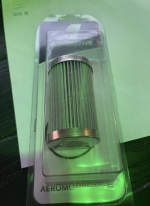
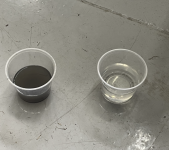
With all the talk about 10- and 40-micron filters (which I use in my set-up) I wanted to explain why I like cleanable filters. (It's not that I am cheap and didn't want to spend 50 bucks for 2 filters, well maybe part of the reason) Every year I remove the filter and dump out the contents then take carb cleaner and a micro straw and blow the filter out from the inside and collect the "stuff". I did that when I used a throw away filter and it was a pain to open up and clean properly. I wanted to see how much crud I collected and if in a year the variation. The picture below is the 10- and 40-micron residue after ~ 10 mins of settling. The 10-micron filter takes a few days for the dust to settle, and the 40-micron filter settles within minutes. (This is typical of collected amount in a year although the 40-micron filter seemed a little less this year, FYI)

Screenshot 2025-12-30 174500.png
 
….Your GM filter is a 15-micron unit intended for installation at the electric pump outlet. It is not meant to be used as a pre-filter, even though it apparently works fine on your Rocket. Instead use a 40-micron unit as a pre-filter, and this GM filter at the pump outlet.

Thanks for that correction. I was thinking (and use the suggested filter) as “post pump” application in the Rocket. My pre pump solution is an Andair gascolalator that was in the airplane when I bought it.
 
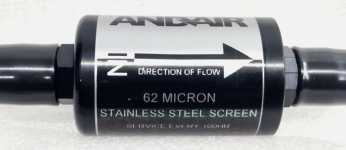
Speaking of Andair filters their cartridge filter (also tested years ago) checked all the box's (AN6 SS fittings, cartridge filter, compact AND has a safety wire or C-clip to keep from unintentionally opening) and used as a pre-filter for my 10 but because of tariff issues has become ultra-expensive and seems to being phased out by Andair. :rolleyes:

Screenshot 2025-12-30 184431.png
 
.... I refer to as a "disk" type filter media. Although rated for 40 microns the filter area is a fraction of the filter area of "cartridge" type filters. Below is a picture of the filter and it's easy to see the difference:

View attachment 106002

Compared to the filter area of this type: (Aeromotive and FuelLab both make a similar filter with AN6 fittings and a decent filter area)......
Are you saying size matters, Sir?

BTW, does anyone else have a high school flash back when viewing the product above?

Back on topic, these "disk" type of cartidge filters scare the crap out of me. There's just so little fouling margin. I've tried to make this point before inm another thread. Don't think it matters? I believe it was @airguy that backed this concern by having experienced a partial loss of power/unplanned landing when utilizing such. My apologies to him if I rememebered this wrong.

Anyway, filteration products very commonly only list their ratings in new & clean condition. Important to consider all of the attributes. Just sayin'.
 
From my Automotive Hot Rod days, Electric fuel pumps were always mounted back by the fuel tank as low as you could get them - this was because Electric pumps push fluid very well however they are not known for "sucking" fuel well, cavitation during a dry start attempt was mostly futile until you manually "primed" the pump. Mechanical diaphragm fuel pumps historically "suck" VERY well and push fuel well also... but since they are typically mounted to an engine they tend to add heat to the fuel which has it's own issues. If you think about it, most if not all car manufactures put their electric fuel pumps inside the fuel tank completely cover with fuel... and I don't know if mechanical pumps are even put on car engines any more. Just my analogy from past years as to why placement of a E pump and input plumbing might be sensitive...
 
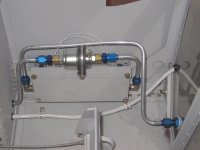
So, I did a bit more sleuthing on my airplane to get to know it better, and found that I have fuel filters installed in each wing root, underneath the fairings (See pic).

Given this, does it still make sense to use the filter that EFii provides before the pump? Should I put it after the pump? Should I delete it and rely on the filters in the wing roots only?

Does anyone know if the EFii filter has a bypass if the filter is clogged?
 

Attachments

  • IMG_1291.JPG
    IMG_1291.JPG
    1.1 MB · Views: 22
Heck I don't know, just seems to me that if I have to suck fuel up a hill it's gonna create a bit of a suction compared to no hill to climb.
Suctiion/low pressure is what causes vaporization/vapor lock. So if I have a choice, which you do in the above routing, I think it best to keep the fuel system as low as practical. And even though the system is theoretically closed I bet fuel would tend to run out of the filter back to the tank.
I'm not saying it won't work but I think it's better to allow gravity to help.
I believe he is referring to the physics principles that are demonstrated in gas tank siphoning, by shoving a hose down in the gas tank. So the hose goes 2’ uphill, then 2’ downhill to the can. Takes a good amount of vacuum to start the siphon, but once started, it self perpetuates with no suction required. I can even clamp the line off and when i open it again, it instantly flows with no additional vacuum applied, assuming there were no leaks allowing drain back.

Sorry, please don’t ask me to explain the physics principles involved, as I don’t know them. This is just observational stuff and may be missing key elements.
 
So, I did a bit more sleuthing on my airplane to get to know it better, and found that I have fuel filters installed in each wing root, underneath the fairings (See pic).

Given this, does it still make sense to use the filter that EFii provides before the pump? Should I put it after the pump? Should I delete it and rely on the filters in the wing roots only?
Pre-filters in the wing root are what you want. A filter after the pump is a good idea, but best to consult with your FI supplier. AFP for example specifies from 75 to 125 micron pre-filters, and nothing after the electric fuel pump, unless you have a fiberglass aircraft. Their fuel servo has a small 40 micron filter.

AFP says that paper filters before the pumps, like some of the auto filters mentioned above, are evil due to getting blocked if there is water in the fuel.


1767168389498.png
 
Filtration requirements very short summary:

- Course screen to prevent large debris from entering/clogging suction tubing.
- Pre-(pump)filter with micro rating i.a.w pump OEM specs. There is sliding contact/close tolerances in these. Debris could damage or even seize these.
- Post pump filter with micro rating i.a.w fuel system OEM specs. most always governed by injector requirements.

Even without a pump mechanical issue/failure, fuel pumps are positive displacement types and known to make domestic object debris (DOD vs FOD). This is why a single, higher rated, filter upstream of the pumps isn't recommended.

There's more to it than just filtration rating; (prefilter) pressure drop, media surface area -> fouling margin need consideration. You'll find more post here where the decisions were made on cost or ease of fitment.

Build safe
 
So, I did a bit more sleuthing on my airplane to get to know it better, and found that I have fuel filters installed in each wing root, underneath the fairings (See pic).

Given this, does it still make sense to use the filter that EFii provides before the pump? Should I put it after the pump? Should I delete it and rely on the filters in the wing roots only?

Does anyone know if the EFii filter has a bypass if the filter is clogged?
If you have proper wing root filters that protect the pump using the manufactures specs that should be fine. The picture supplied anything including nothing could be inside. Do you know when the last time the wing root filters where cleaned? If you are using electronic injectors, (which I don't believe you are) then you will need a post pump filter that meets the injector manufacture specs, which I believe Freemasm stated.

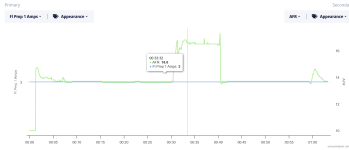
And no, the EFII filter if clogged will not bypass. For my 10 I installed 2 hall effect current sensors (One on each pump) to monitor amperage to HOPEFULLY give me an indication that the post filter or pre-filter is clogging (when tested I get a slight current drop if I partially closed off the pump inlet and a slight amp increase if I closed off the outlet) I wrapped the +14 volt line through the hall effect sensor 10 times to increase sensitivity and then scaled it down by 10 read correctly but it seems Garmin rounds to the nearest amp so I get a reading of 3 so it could be 2.6 to 3.4 amps and I cannot see the exact value but better than nothing. (maybe)

Screenshot 2025-12-31 175029.png
 
Are you saying size matters, Sir?

BTW, does anyone else have a high school flash back when viewing the product above?

Back on topic, these "disk" type of cartidge filters scare the crap out of me. There's just so little fouling margin. I've tried to make this point before inm another thread. Don't think it matters? I believe it was @airguy that backed this concern by having experienced a partial loss of power/unplanned landing when utilizing such. My apologies to him if I rememebered this wrong.

Anyway, filteration products very commonly only list their ratings in new & clean condition. Important to consider all of the attributes. Just sayin'.
Close - my issue was actually a plugged post-filter, caused by a mud-dauber nest that got pumped into my fuel tank from my (at the time unprotected) home fueling setup.

Both EFII and SDS (they used to be the same company, remember?) used the Walbro GSL393 pump, SDS still does, not sure about EFII. I am using the Earls Performance 230206ERL prefilters with excellent performance so far, then through my SDS pump module into a Holley billet filter with 162-566 part number canister. Testing has shown that I can start building back-pressure across the post-filter at about 150-180 hours, so I have a 100-hour filter change included in my PM schedule.

Both my prefilters and pumps are mounted on the forward side of my main spar in the cabin, a couple inches above the floor.
 
Last edited:
Close - my issue was actually a plugged post-filter, caused by a mud-dauber nest that got pumped into my fuel tank from my (at the time unprotected) home fueling setup.

Both EFII and SDS (they used to be the same company, remember?) used the Walbro GSL393 pump, SDS still does, not sure about EFII. I am using the Earls Performance 230206ERL prefilters with excellent performance so far, then through my SDS pump module into a Holley billet filter with 162-566 part number canister. Testing has shown that I can start building back-pressure across the post-filter at about 150-180 hours, so I have a 100-hour filter change included in my PM schedule.

Both my prefilters and pumps are mounted on the forward side of my main spar in the cabin, a couple inches above the floor.
Figures I would remember it not quite right.

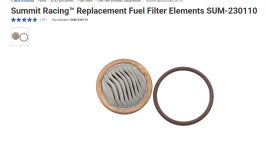
That previous thread, specifically some of the non-informed posts that it included made me rethink some things. I trashed the EFII filter. Though OEM supplied, it had unknown media surface area. The one I down selected has a whopping 60 sq.in. of media, an inspectable, replaceable element, and is very efficiently packaged.
 
I've been doing some research; it seems like the Holly fuel pump was used in some Van's builds in the past, but reading about it, it doesn't seem optimized for aircraft use. I'm also unclear if the replacement in 2023 was a direct replacement for the same model installed in 2018. Does anyone have experience with these Holly fuel pumps? I assume that putting in the same pump would be easiest, as that's what the plumbing is set up for, and they are very inexpensive ($180 online). But I'd rather have something more reliable. The Van's store sells the Andair pump, a big step up in cost ($1500ish) - is it worth the work and cost to upgrade in your opinions?
I had a Holley on my 8 when I purchased it 11 years ago. It failed in the same way, fairly smokey landing actually. Replaced with Walbro setup, much better imho
 
Testing has shown that I can start building back-pressure across the post-filter at about 150-180 hours, so I have a 100-hour filter change included in my PM schedule.
What micron rating are you using for the pre- and post-filter elements?
 
I had a Holley on my 8 when I purchased it 11 years ago. It failed in the same way, fairly smokey landing actually. Replaced with Walbro setup, much better imho
Well, if nothing else, I'm glad to know that I'm not the only one in this boat, and that the builder wasn't completely out of the norm.

Just got my EFii pump in the mail today.
 
Back
Top