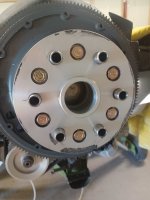
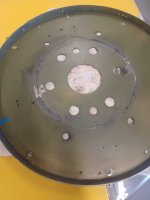
Hans, in the case of a wood prop, the drive lugs are a backup...they don't actually drive anything until after the failure of the primary torque transmission, which is static friction between the clamped parts. The fretting says torque capacity based on static friction was inadequate.
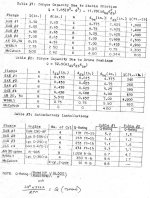
The attached is a page from an article published many years ago by the chief engineer at Sensenich. The underlying equations have since been updated, plus there are certain assumptions, like bare yellow birch on steel. Looks like yours is painted aluminum on anodized aluminum, thus a different coefficient of static friction. So, don't assume the given Q values valid for your case. I post it merely to illustrate the point about the driving capacity of bushings vs frictional driving capacity.
Key factors are coefficient of static friction, clamping force, and diameter.
Coatings and materials make a lot of difference in terms of static friction, plus or minus. I recall a case in which a well known fellow lost a prop becasue he placed a cool carbon fiber/epoxy backplate in the stack.
The available clamping force depends on the crush strength of the propeller hub material, and bolt size.
High compression pistons are also a big deal, as the required torque capacity isn't a dyno average, but instantaneous torque impulse.
View attachment 92057