Van's Air Force

The definitive Van's Aircraft support community! Buying, building or flying an RV? Join our exclusive family of mentors and enthusiasts!

First Flight - With an Impossible Turn

N890GF

Well Known Member
Patron
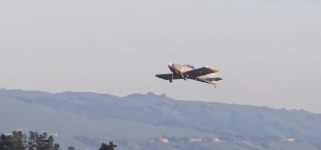
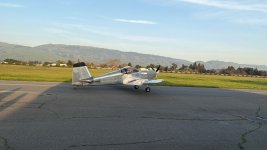
Today is the day I did my first flight in N890GF!

All ground run checks were in the green, so I taxied out to the runway for a beautiful, calm normal takeoff. Climb out at 2700 RPM making full power, fuel flow perfect at 15GPH, fuel and oil pressure all in the green.

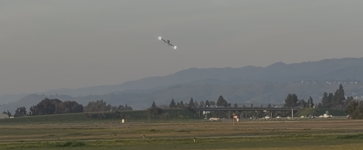
About 800 ft up I some strong engine stuttering, ground observers said black smoke from the exhaust. No change to oil or fuel pressure, but fuel flow dropped to about 8GPH, RPM down to 1700 or so, and EGTs on 1, 2, 3, all dropped to from ~1450 down to 850. #4 stayed high at ~1300 (down from 1500). #3 eventually got down to 500F before reducing power to idle.

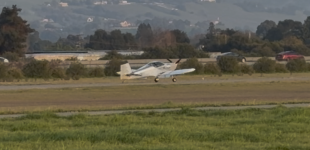
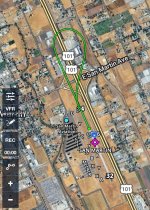
I immediately looked at my speed (105KIAS) and altitude (900ft agl) and decided to do the impossible turn. I made a slight right turn and let my speed come down to 70KIAS before bringing the nose back down to hit 75KIAS. Because I was still making partial power (~40%) I knew I would make the field, but when I brought throttle back to idle my RPM was still sitting at about 1500 (maybe this is related, but unsure). I got over the numbers at 72KIAS, and wasn't seeing it bleed off, so I pulled the mixture to idle-cutoff and did my best tail low wheel landing about 1/3rd of the way down the runway.

The funny thing about making this decision was literally reading the thread on the impossible turn over the last few days. Seeing the decisions others have made and my decision to do this is something I'm sure folks will have opinions on, but for me, with the altitude and speed I had, the calm wind, and the distance to the airport, I knew I would make it. I made the turn about half a mile away from the airport.

All in all, I'm glad I can make this write up. These forums have been invaluable for me in being ready for this day. Thank you to everyone on the forums, my instructor Taylor, my wife and family for supporting me on this 10 year journey.

Flight #2 should be soon hopefully - engine investigation first.

George
IMG_2882.JPG

Screenshot 2026-01-31 at 8.11.11 PM.png

Screenshot 2026-01-31 at 8.11.56 PM.png

Screenshot 2026-01-31 at 8.12.14 PM.png

IMG_3130.jpg
 
Last edited:
Nice work, George!

Thanks for citing Vac's thread. It's a great read, isn't it? And congratulations on getting your bird airborne----even with the drama involved. All the best in your troubleshooting and future Phase 1.
 
Nice work, George!

Thanks for citing Vac's thread. It's a great read, isn't it? And congratulations on getting your bird airborne----even with the drama involved. All the best in your troubleshooting and future Phase 1.
Yeah I just edited my post as well to hyperlink to it directly. invaluable information for sure
 
Thanks for sharing - it will be very interesting to hear what caused this. Glad you and the aircraft are safe!
 
About 800 ft up I some strong engine stuttering, ground observers said black smoke from the exhaust. No change to oil or fuel pressure, but fuel flow dropped to about 8GPH, RPM down to 1700 or so, and EGTs on 1, 2, 3, all dropped to from ~1450 down to 850. #4 stayed high at ~1300 (down from 1500). #3 eventually got down to 500F before reducing power to idle.
Very rich mixture....
 
One of the things I always advice is to start a slight downwind turn to set yourself up on base, so it is not a true 180 turn. If there is a crosswind runway position yourself to only have 90-degree turn. Always remember don't stall the airplane were ever you have to land, hold 70 kts till the flare.
 
One of the things I always advice is to start a slight downwind turn to set yourself up on base, so it is not a true 180 turn. If there is a crosswind runway position yourself to only have 90-degree turn. Always remember don't stall the airplane were ever you have to land, hold 70 kts till the flare.

70 kts could get you into trouble. If you have AOA, use AOA. Otherwise, I assume 70 is => 1.2 Vs? Big thing to emphasize missing with the 70 kt view is to let the nose drop as you do it.

The term “downwind” can be confusing here as it can be used as a concept or as a position. Similar issues with the positions as are they the positions based on takeoff or for landing? When do they swap names? So really we have three conditions for “downwind,” and three conditions for “upwind.” A concept for each and two different positions. So, for the concept, recommend using ‘with the wind’ and something to the effect of ‘into the wind’ or ‘against the wind.’ Avoid ‘upwind,’ ‘crosswind,’ and ‘downwind.’ Have no clear cutoff for when crosswind leg becomes base leg. ‘Base’ itself however seems pretty clear to context. In your first sentence, reading it alone, I interpret as such to try to help reduce reverse return. The subsequent sentence brings another concept to ‘crosswind’ though yes, bias to take advantage of another runway and prioritize biasing for such a runway if you have it.

Assuming no other cross runway, Drift away from the wind aka with the wind initially in climb to set up an into the wind against the wind reversal. This is the clarification avoiding terms. Assuming all other factors neutral, as able, flow with the wind departing so as to have turning space into the wind on reversal. For light winds, maybe even a small cut with the wind on departure not merely flowing drifting with it. Good idea, Spezio, create turning room as able beforehand for easier alignment if needed.

If anything such helps make it closer to a true 180 turn as the whole idea is to help lineup and lessen need for counter reversal turns. Counter reversals required for lineup mean 180 isn’t. Drifting on the go may make for true 180 in strong winds or to a parallel runway or taxiway. Only do the with the wind takeoff drift or light wind takeoff cut away if no other factors set a direction of offset. If a cross runway makes sense to teardrop a particular direction, bias to make that more readily happen.
 
First, well done.

I thought of adding this to the Impossible turn thread but didn't want to muddy the waters. One thing that has stuck with me over the years is that these emergencies rarely develop exactly how we were trained. I would bet there's 3x as many partial power loss scenarios like yours than complete engine failure.

This happened to me years ago flying a twin commanche, one engine was running on 3 cylinders and I didn't know until I pushed power up for the touch and go and had to use a ton of rudder to keep it flying. By the time I figured out what was going on, we were over the fence at 75'

Here is where an engine monitor can save you, as you saw, you look at that instrument and know immediately something isn't right. In our case it was clogged injectors from a rusty AN fitting.
 
George,

No special knowledge of the cause, but it sure sounds like you sucked in some hardware, the nut, bolt or screw getting stuck under a valve seat.

Carl
 
One thing that has stuck with me over the years is that these emergencies rarely develop exactly how we were trained.

Which is why “plan the flight, fly the plan” and “procedure, procedure, procedure” fall short. This is not against planning, rather against the plan - see Eisenhower. See also Bader (or Day?).
 
George, well done. Good decision matrix, excellent energy management, well flown. Sometimes when we get down in the weeds, we forget that "all's well that ends well!" And congratulations on the first flight--not many folks build an airplane and then test fly it themselves. That's a huge achievement.

Vac
 
I’ll also add my congratulations on getting a good outcome on this George - excellent job! The case you had was one of those things that is different than what folks often think about, but is actually quite typical - a partial power situation (rather than a completely silent engine). I’ve had them myself, and they can be terribly confusing because your brain wants to say that the engine might keep running, and your gut says the engine has failed - and you are stuck in between making the hard decision. So my congratulations go out for good decision making with what you had, staying cool, and getting the airplane back on the ground for another day!
 
I’d also add: great job prioritizing “fly the airplane” (which in this case meant “land the airplane”) over “make the engine work better”.
Someone who’d spend less time reading our “Impossible Turn” thread and thinking about that decision, or with less training and experience, might have gotten sucked into the “what’s wrong with the engine?” thinking for too many seconds, thus making the turn truly “impossible”.

In short - good work prioritizing tasks in a demanding, time-critical situation.
 
I’d also add: great job prioritizing “fly the airplane” (which in this case meant “land the airplane”) over “make the engine work better”.
Someone who’d spend less time reading our “Impossible Turn” thread and thinking about that decision, or with less training and experience, might have gotten sucked into the “what’s wrong with the engine?” thinking for too many seconds, thus making the turn truly “impossible”.

In short - good work prioritizing tasks in a demanding, time-critical situation.
Yeah, I want to also emphasize great job with prioritizing flying the airplane first and worry about the "why" later. It would have been very easy for someone else to continue straight ahead with a rough engine trying to troubleshoot it and get themselves out of glideback distance.

When I was recently going through my CFI course about 2 years ago - often whenever the young 250 hr CFI would give me the engine out scenario - they seemed to pay lip service only to the A and B and wanted me to get right into the C (checklists) so I could troubleshoot the cause of the engine issue. Several times I had to go "dude, just chill for a moment - I'm still flying the airplane and getting set up for where to land." Sure, if you can do things like simultaneously flip the fuel pump on, swap tanks, etc while you're turning back to the runway - great. If you can't.... fly the airplane first!!

@N890GF - great job!
 
Great job!

Had a similar partial power loss on the last touch and go of my night flights for my PPL. At about 800ft right as I was starting to turn crosswind, the 152 we were in swallowed the inlet air screen/filter.

My instructor thought I had pulled the power back. I was already in the turn so kept coming around. We had about 30-40% power. I asked her if she wanted the airplane and she said “Nope! Looks like you got it”.

We arrived over the numbers with room to spare. The plane would not taxi under its own power so we pushed it back to the maintenance hangar.

Never want to experience that again! The instructor thought for sure that she would never see me again! LOL, that was something like 38 years of participating in GA ago!
 
Last edited:
George,
Great prep, execution and result. Glad you we able to remain clear headed and fly the plane all the way to a stop.

Happy to help with the after action investigation if you are interested in another set of eyes and pair of hands. Let’s make the next flight less noteworthy!

Peter
 
Last edited:
Excellent assessment and execution. Partial power takes the book and tosses it, and raises lots of questions without answers.

I've only done two real emergency landings in 27 years, both partial power, one of them in IMC - it will get all of your attention.
 
kept cool, flew the plane, and took all the right decisions.
As already stated by all the others, well done, and thanks for sharing.
 
Back
Top