

Van's Air Force
You are using an out of date browser. It may not display this or other websites correctly.
You should upgrade or use an alternative browser.
You should upgrade or use an alternative browser.
epoxy or polyester for the nose spat
- Thread starter nhbsgd87
- Start date

If you don't know the base material always use epoxy. Polyester will only stick well to polyester. Epoxy will stick to either.

Any epoxy based resin/fiberglass layup should work, but you need to make sure the substrate is in a condition for the bonding. Sand off as much as you can without sacrificing the original shape, use 80 grit for initial epoxy grip. Clean it like you are going into surgery. Any epoxy based solvent should work, but make sure you clean it off completely. I’ve used 91% alcohol from Walgreens to final clean for layup prep and it’s worked well. The fiberglass cloth impregnated with epoxy resin should stick very well to any properly prepared substrate. I’ve used West System epoxy products - available at most local boat supply houses - in most US cities, or from ACS and others. There are many other options for epoxy/glass products. WS is just who I’ve used and had good luck with for the last 27 years.

What Scott ^ said. I would add...brush on a coat of neat epoxy before applying the saturated fabric. When you apply peel ply, any excess will be absorbed. I've found it helps the first layup stick.Any epoxy based resin/fiberglass layup should work, but you need to make sure the substrate is in a condition for the bonding. Sand off as much as you can without sacrificing the original shape, use 80 grit for initial epoxy grip. Clean it like you are going into surgery. Any epoxy based solvent should work, but make sure you clean it off completely. I’ve used 91% alcohol from Walgreens to final clean for layup prep and it’s worked well. The fiberglass cloth impregnated with epoxy resin should stick very well to any properly prepared substrate. I’ve used West System epoxy products - available at most local boat supply houses - in most US cities, or from ACS and others. There are many other options for epoxy/glass products. WS is just who I’ve used and had good luck with for the last 27 years.
Before grinding away at the area to be repaired, back it up with a slab of masking tape.
One of the tricks I learned is to always make a slab of at least 8 layers of masking tape. For typical repairs I’ll use a clean steel beam and place a long layer of wide masking tape on it. Press it firmly on the structure and rub it hard with the but of a screwdriver for close intimate contact. Repeat with 7 additional layers, rubbing each with enough vigor that the individual layers of tape becomes a slab.
Clean the area with your favorite solvent. I like acetone. Cut an oversized slab of tape to cover the area to be repaired. This thickness will provide the backing to grind your area paper thin, and provide enough support to maintain the original shape after epoxy. This will save you from trying to reinvent the original shape.
If I can, I’ll put the tape on the finished side and do my repair on the interior or unfinished side.
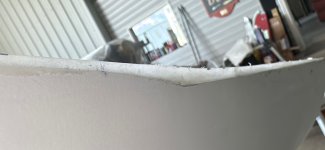
I just extended the side canopy skirt of my -7 tip up using this basic idea.
If you need more help, don’t be afraid to PM me. I am a retired A&P that did fiberglass as a full time job while going through A&P school
One of the tricks I learned is to always make a slab of at least 8 layers of masking tape. For typical repairs I’ll use a clean steel beam and place a long layer of wide masking tape on it. Press it firmly on the structure and rub it hard with the but of a screwdriver for close intimate contact. Repeat with 7 additional layers, rubbing each with enough vigor that the individual layers of tape becomes a slab.
Clean the area with your favorite solvent. I like acetone. Cut an oversized slab of tape to cover the area to be repaired. This thickness will provide the backing to grind your area paper thin, and provide enough support to maintain the original shape after epoxy. This will save you from trying to reinvent the original shape.
If I can, I’ll put the tape on the finished side and do my repair on the interior or unfinished side.
I just extended the side canopy skirt of my -7 tip up using this basic idea.
If you need more help, don’t be afraid to PM me. I am a retired A&P that did fiberglass as a full time job while going through A&P school
Attachments
I don't wipe down with solvent but clean off with a vacuum, solvent has the risk of spreading around any contaminants. Apart from that all the advice above is spot on. Rough up and rough up more, all the shiny stuff must be sanded off with 60 or 80 grit abrasive. Rough up at least an inch around any patch. Always epoxy.
I always use 3M white masking tape to keep my repair area from growing. I’ll lay up the repair on top of the tape and let it cure. Come back to it the next day and hit it with a heat gun and pull the tape out from between the repair and the original fiberglass.I don't wipe down with solvent but clean off with a vacuum, solvent has the risk of spreading around any contaminants. Apart from that all the advice above is spot on. Rough up and rough up more, all the shiny stuff must be sanded off with 60 or 80 grit abrasive. Rough up at least an inch around any patch. Always epoxy.
Grinding it down to the original thickness is a breeze.
