Van's Air Force

The definitive Van's Aircraft support community! Buying, building or flying an RV? Join our exclusive family of mentors and enthusiasts!

Engine options

2 inch extension (not used on a Rotax powered RV-12) and the additional 6 bolts (only 12 used on the Rotax RV-12) explains at least some of the weight difference...
The 2" extension and 6 bolts with prop flange threaded bushings came in a 2 lb 4 oz. That leaves the prop and spinner assembly at 13 lbs.
 
Hey folks. Wrapping up my 2nd build and exploring my next money pit. Trained in a DA20 with O200 Continental. It was just a cream puff. Are there any successful conversions of the -12 with a dinosaur engine? Don’t try to convert me to Rotax. It won’t work.
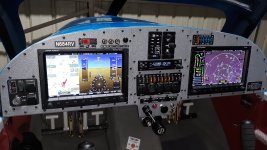
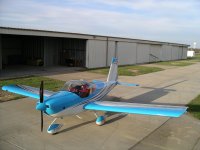
Back in 2014, while assembling the kit I decided to use a ULPower 260is engine as I wanted digital engine control and Vans was not blessing dual EFIS in the panel because of electric load. Yeah back then I had the same response from the naysayers that I was crazy and the 12 was not designed, and could not accept any engine other than the ULS912. If the 912is had been available, I am pretty sure I would have just went with the munchkins, installed the IS engine and been happy ever after, other than the continuous SBs from Rotax, expensive parts, and poor factory support.
Fast forward. I now have 915 (6-16 first flight) trouble free hours on the the bird with my 260is. I just get in it and go.
No radiator, carb, floats, engine driven fuel pump, hose replacement issues. No burping the oil receiver. No annoying clunk on shutdown.

Weight is 805lb with a 6lb chunk of tungsten on the stabilator bulkhead. The weight could be eliminated with a shorter engine mount.
I installed redundant engine computers/sensors, dual alternators.

Top speed is 5 knot less than Vans published, but I can run that all time if desired.
Routinely climb out at 1000fpm

 

Attachments

  • 20191120_105849.jpg
    20191120_105849.jpg
    1.5 MB · Views: 87
  • IMGP0184.JPG
    IMGP0184.JPG
    784.7 KB · Views: 90
Back in 2014, while assembling the kit I decided to use a ULPower 260is engine as I wanted digital engine control and Vans was not blessing dual EFIS in the panel because of electric load. Yeah back then I had the same response from the naysayers that I was crazy and the 12 was not designed, and could not accept any engine other than the ULS912. If the 912is had been available, I am pretty sure I would have just went with the munchkins, installed the IS engine and been happy ever after, other than the continuous SBs from Rotax, expensive parts, and poor factory support.
Fast forward. I now have 915 (6-16 first flight) trouble free hours on the the bird with my 260is. I just get in it and go.
No radiator, carb, floats, engine driven fuel pump, hose replacement issues. No burping the oil receiver. No annoying clunk on shutdown.

Weight is 805lb with a 6lb chunk of tungsten on the stabilator bulkhead. The weight could be eliminated with a shorter engine mount.
I installed redundant engine computers/sensors, dual alternators.

Top speed is 5 knot less than Vans published, but I can run that all time if desired.
Routinely climb out at 1000fpm

That’s what I was waiting for, an actual build with UL. So what mount did you use?
 
Personally I find it more entertaining to hear from the people who say they are choosing an alternative to avoid dealing with SBs. :D

So far the alternatives do not present benefits that outweigh the risks for me, but I'm pretty conservative or as some might say 'chicken stuff'. I love to see other people doing it and encourage people like Blain to do WTF they want. For us skeptics, one way to answer these questions is having more builders attempt to build a better mousetrap.

Please please build your continental powered RV-12. I want to see it.
I like the “wtf they want”. That explains most of my life however I’m conservative when it comes to the experiment aspect of our hobby. And no, I wouldn’t be the pioneer. But I would copy a well designed conversion.
 
I would have just went with the munchkins, installed the IS engine and been happy ever after, other than the continuous SBs from Rotax, expensive parts, and poor factory support.
Just noticing the UL 260is has has 10 SB’s since 6/16 when you got yours. Seems everyone has growing pains.
 
Just noticing the UL 260is has has 10 SB’s since 6/16 when you got yours. Seems everyone has growing pains.
Only 4 of the SBs affected my build and were satisfied for less than 50bucks. :cool:
One of the affected, revised alternator fan, was provided by the factory at no cost.
 
That’s what I was waiting for, an actual build with UL. So what mount did you use?
I had a place in Indiana custom and stress relieve for me. I would need to research stored records to get name.

There are two shops now that supply firewall forward kits for the 130hp 350is which includes the mount.
Herman Eshuis at Wings and Wheels in Lake City FL
Ray Lawrence at Kaolin Aviation Services in Sandersville GA
 
I had a place in Indiana custom and stress relieve for me. I would need to research stored records to get name.

There are two shops now that supply firewall forward kits for the 130hp 350is which includes the mount.
Herman Eshuis at Wings and Wheels in Lake City FL
Ray Lawrence at Kaolin Aviation Services in Sandersville GA
Thanks for the contact info.
 
Which ever way you go you can save 12lbs by installing an EarhtX battery approx 4 lbs vs 16lbs
 
The UL engines have been around a long time and on many different planes, but mostly in Europe. The reliability and cost of parts and customer service seems very good. I have been searching the forums for any negatives for the engine and they are very hard to find, unlike a Lycoming. The cost and all the problems with new Lycs is what scared me off for getting back into that club.
Subject to test flight performance on the new Sonex Highwing, I will be putting the aerobatic version of the UL350 on my new Highwing quickbuild. At 73 I'm too old to wait for the RV15, so I'm jumping ship. I wasn't planning on any sand bar landings anyway.
 
I really like the UL Power engines. But take a good look at the power curves. UL rates their engines at 3300 rpm. Look at the power curves and see what you are actually getting at a reasonable prop rpm, like 2700 - 2800.
 
I really like the UL Power engines. But take a good look at the power curves. UL rates their engines at 3300 rpm. Look at the power curves and see what you are actually getting at a reasonable prop rpm, like 2700 - 2800.
I agree the rpm/HP curve affects output, but the engine can be run at 3300 RPM all day and it slings a small enough diameter prop to keep things less hectic, but I will probably pull it back a little in cruise. The fuel consumption is a big issue too.
Burning only 5.5 GPH of 91 or 93 octane Mogas or 100 LL is a big deal with me as well because we don't know what fuel prices are going to do. (actually we do, go up!) . The UL can be equipped with dual everything: Fadec, ignition, fuel pumps, etc.
You can choose your compression ratio to allow for 91 or 93 octane. The 91 will cost you 10 HP, but 91 is easy to find which may become an issue down the road. Changing the compression ratio is rather easy in the UL, as it was designed with simplicity of maintenance as a primary feature. A complete top end is probably less money than a new Lycoming or Rotax cylinder.
The Highwing is designed to perform well on only 100 HP. That too will be verified in flight testing.
 
Lycoming has put the DEL-120 on their website. It was briefly there years ago and removed, I suspect at DoD's request. Since the DEL-120 was used for multiple drones. At this point, I would suspect Lycoming has some good operational experience for it.
Has anyone considered chasing down Lycoming if this could be sold into the E-A/B market?

Tim
 
The UL engines have been around a long time and on many different planes, but mostly in Europe. The reliability and cost of parts and customer service seems very good. I have been searching the forums for any negatives for the engine and they are very hard to find, unlike a Lycoming. The cost and all the problems with new Lycs is what scared me off for getting back into that club.
Subject to test flight performance on the new Sonex Highwing, I will be putting the aerobatic version of the UL350 on my new Highwing quickbuild. At 73 I'm too old to wait for the RV15, so I'm jumping ship. I wasn't planning on any sand bar landings anyway.
The only negative comments I have found about UL Power engines is that they use a hypereutectic cast aluminum piston that, in combination with excess piston-cylinder clearance can result in piston slap and associated piston/ring/cylinder damage. Apparently, an easy cure with forged pistons, cylinders honed to closely matched bore diameters, and rings gapped to spec for each cylinder. Interesting that you can get some UL engine parts from Wicks Aircraft.
 
Same Sensenich prop and hub as a Rotax RV-12 with L vs R blades. The total weight of the 2 prop blades, hub, 2" spacer, 18 bolts, 6 prop flange threaded bushings, spinner backing plate and spinner was 15 lb 5 oz. E-Prop blades (3), hub, spinner, and 6 nuts were 6 lb 0 oz. on the same scale.

John Salak
RV-12 N896HS
Good morning from West Texas... I am flying behind a Viking 110 with my 12 and have an empty weight of 798#. I am very interrested in you review of the E-Prop on this setup! I currently run a DUC Whirlwind 3-blade setup but it is quite bulky. I flew E-prop on a gyroplane and loved it. Message me with your thoughts after you have some time behind the e-prop on the 110 powered 12. Thanks!!!!

Scott Evans
RV-12 N503KB
 
Just this month someone on the ramp complimented me on my -12 paintwork then followed up with "but running 5,500 RPM that every flight is a crap shoot for when that engine will just fly apart into a thousand pieces."

I asked him how Ferrari, with engines spinning in excess of 9,500 RPM, ever convinces anyone to buy one of those vehicles.
No need to worry about 5500 rpm operating speed... The Rotax 9-Series engines use a roller crankshaft and Nikasil cylinder coating (read: high-end racing engine). The gear reduction allows the engine to make 100 HP with only 1352cc displacement. A slipper clutch in the gearbox protects the pressed-together crankshaft in the event of a prop strike. Many Rotax 9-series engines have been operated well beyond TBO without spliting case or removing cylinders. My 912ULS w/970TT uses less than 1 liter oil/75 hrs. I think modern design and modern metallurgy beat pre-WWII era every time….
 
No need to worry about 5500 rpm operating speed... The Rotax 9-Series engines use a roller crankshaft and Nikasil cylinder coating (read: high-end racing engine). The gear reduction allows the engine to make 100 HP with only 1352cc displacement. A slipper clutch in the gearbox protects the pressed-together crankshaft in the event of a prop strike. Many Rotax 9-series engines have been operated well beyond TBO without spliting case or removing cylinders. My 912ULS w/970TT uses less than 1 liter oil/75 hrs. I think modern design and modern metallurgy beat pre-WWII era every time….
I'm certain the rotax won't fly apart. Some of us geezers just freak out when we see 5,500 on the tach 😜
 
I'm certain the rotax won't fly apart. Some of us geezers just freak out when we see 5,500 on the tach 😜
I too am sure that they won’t fly apart, and 40 years of experience with Rotax snowmobile engines has left me unconcerned with seeing 9000 RPM on the tachometer. That said, those high performance engines have had rare-but-consistent mechanical issues and my experience has left me, rightly or wrongly, with some bias regarding Rotax engines. And the addition of a 9000 RPM gear reduction unit doesn’t help my comfort level. An engine problem on a Minnesota snowmobile trail is different than an engine problem at 10,000 feet in the air.

Perhaps the biggest problem around here, diligent maintenance being extremely important in keeping a Rotax aircraft engine running safely, is the lack of Rotax airplane engine mechanics. There are no Rotax gurus around here. Likewise, the lack of MOGAS at the airport is problematic.
 
Last edited:
I too am sure that they won’t fly apart, and 40 years of experience with Rotax snowmobile engines has left me unconcerned with seeing 9000 RPM on the tachometer. That said, those high performance engines have had rare-but-consistent mechanical issues and my experience has left me, rightly or wrongly, with some bias regarding Rotax engines. And the addition of a 9000 RPM gear reduction unit doesn’t help my comfort level. An engine problem on a Minnesota snowmobile trail is different than an engine problem at 10,000 feet in the air.

Perhaps the biggest problem around here, diligent maintenance being extremely important in keeping a Rotax aircraft engine running safely, is the lack of Rotax airplane engine mechanics. There are no Rotax gurus around here. Likewise, the lack of MOGAS at the airport is problematic.
I appreciate your snowmobile experience and yes iRMT coverage in Minnesota appears sparse. However the aero engines are more robust than anything I have seen in the Ski-Doo's (2 cycle, my experience in boat service once upon a time). As to routine maintenance, not anything really out of the ordinary, in fact more like a modern car. Check the oil, check the water. Change the plugs yearly. Excellent service training available for owner/operators. Single lever operation. Runs 100LL just fine though it really doesn't like lead so use Declin. Most folks will haul 10-15 gallons of mogas to airport to reduce cost. Its a modern engine, with its idiosyncrasies, just different from a traditional Lycoming. Thousands flying for years. I have no issue flying behind one. With a retail around $52K I would not be surprised to see a 916 option for the RV-15 as that engine appears to perform well in the RV-9 as well as Carbon Cub. Personal opinion alert, Rotax is a real competitor to <180 hp Lycomings, both in performance and value. I suspect this is another never ending debate :>)
 
Personal opinion alert, Rotax is a real competitor to <180 hp Lycomings, both in performance and value. I suspect this is another never ending debate :>)

I think the Rotax path to 180hp+ is well developed and a few years out but we will see one of the iterative steps along the way soon. We can revisit in the fall.
 
I really like the UL Power engines. Their weight is within the Rotax range. And no re-drive, no coolant tanks, no radiators, hoses or external oil tanks.
I see on their website there is a picture of a RV-12 and a note stating firewall kits available.
 
I really like the UL Power engines. But take a good look at the power curves. UL rates their engines at 3300 rpm. Look at the power curves and see what you are actually getting at a reasonable prop rpm, like 2700 - 2800.
Per "Prop Speed Calculator" running 3300 RPM with a 72" prop gets you to about 0.9 Mach. A 70" prop drops that to 0.88 Mach. Note comments regarding tips speeds on this site.

72 inch prop at 3300 RPM

72 inch prop at 3300 RPM
 
Back
Top