Van's Air Force

The definitive Van's Aircraft support community! Buying, building or flying an RV? Join our exclusive family of mentors and enthusiasts!

Engine-Driven Fuel Pump on O-360 AIA (opinions??)

jclark

Well Known Member
Benefactor
i looks like we may need a fuel pump for my friend's RV6A (O-360 AIA).

Any opinions on models/brands that work better (or worse)?

(Symptoms: As soon as the engine warms up, fuel pressure drops below 1.5 psi. Often as low as .3 psi. Once I saw .1 psi. Of course, my pressure sensor could be off, but with the electric boost pump on before startup, I can see 6-7 psi, and when the engine pump dips, if I turn it on, I can see 5-6 psi. All of this on the ground.)
 
Can't speak to any other brand but I put a new Tempest on my 7. Over 800hrs in 8 yrs with no issue.
 
Aircraft Spruce carries rebuilt pumps. Tempest is the re-builder. The external castings are cleaned up and re-used......all other parts are new.

One in my -6A
 
First, I think Tempest has the market cornered.

Second- how old is the pump? If it’s twenty plus years old, its probably due for replacement.

Third - has the pressure he sees changed recently? Many systems show almost no pressure when the engine is running just fine - if it has suddenly dropped to low values, something changed. If it’s always been this way, then it is probably fine. the best way to find out what is actually happening is to find a mechanical gauge, plumbing it in, and watch what the analog needle says.
 
Paul is, not really a surprise, right :)
As a data point, my old pump had about 1.5Kh and was some 17 years old when it started failing... the P was still ok in the 5 PSI range, and stable, but fuel leaked out of the pump's drain. A new one from ACS fixed that.

Have fun replacing that pump... if you have to.
 
First, I think Tempest has the market cornered.
I've bought several Tempest with good results. Also, turn the crank to a point where the pump "plunger" is in its most relieved or highest position. You can put your finger in there and *carefully* feel when the plunger retracts. Make it "easier" to install the new. (No swearing allowed! And don't cross thread the fastners.)
 
First, I think Tempest has the market cornered.

Second- how old is the pump? If it’s twenty plus years old, its probably due for replacement.

Third - has the pressure he sees changed recently? Many systems show almost no pressure when the engine is running just fine - if it has suddenly dropped to low values, something changed. If it’s always been this way, then it is probably fine. the best way to find out what is actually happening is to find a mechanical gauge, plumbing it in, and watch what the analog needle says.
The pump is about 25+ years old (Plane built in 2000). When I had my not-yet-used 360 "refreshed" after sitting for a few years. the manufacturer suggested that I replace the NEVER-used fuel pump due to age, so "I hear ya!" :)

We recently added complete engine management, so when I was ferrying it, I could not tell, although my (what my friends call) "calibrated seat bottom" sensed a small "surge". Not a cylinder drop, just a slight, yet smooth, decrease, followed by a small increase in perceived power.

After a landing (during transition training), the alarm went off for low fuel pressure. I think I have it set for two psi. It went a bit lowerer over time. We initially thought it might have been heat (and it still could be), so we made adjustments accordingly. It seems okay with the cowl off, but as soon as it warms up, it gets weak. Now, my RVs with carburetors have never acted this way—and with nothing special in the setups. We pulled the RV8 out and performed the same run-ups in the same locations. After reviewing the data, it was rock solid at 6-7 psi from startup to shutdown.

I considered cross-checking the new fuel pressure sensor, but when I turn on the boost pump, it remains solidly at 5-6 psi.
 
I've bought several Tempest with good results. Also, turn the crank to a point where the pump "plunger" is in its most relieved or highest position. You can put your finger in there and *carefully* feel when the plunger retracts. Make it "easier" to install the new. (No swearing allowed! And don't cross thread the fastners.)
Too late for that ...

She took the old one off and put it back on without crossing the threads (long story, but same results.)

I am sure some cussing was done (though not by me), but she took pride in being able to do it (with a little help from me), without breaking any nails, and was ready for the tequila that someone mentioned about installing these things. [Laughingly, we took pictures of the nails as proof. :) ]

Or was it bourbon???

A new pump is on order from ACS. It may not be the solution, but the data implicates it, so we want to remove it from the equation on something so important.
 
Too late for that ...

She took the old one off and put it back on without crossing the threads (long story, but same results.)

I am sure some cussing was done (though not by me), but she took pride in being able to do it (with a little help from me), without breaking any nails, and was ready for the tequila that someone mentioned about installing these things. [Laughingly, we took pictures of the nails as proof. :) ]

Or was it bourbon???

A new pump is on order from ACS. It may not be the solution, but the data implicates it, so we want to remove it from the equation on something so important.
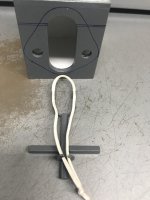
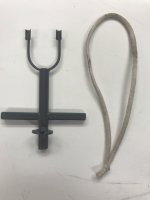
Just as an aside - I make a little "tool" that makes holding the operating rod in the up position when installing a mechanical pump in those tight spots of a flying airplane. There are many other ways to do this, and most who have done it (a lot) have developed one they like (or can live with) - mine is pretty simple from the get-go. Take a look at the attached pics and let me know if you would like to try one - they're 3D printed so don't cost much to begin with ...

I have a video of the ops on my phone, but not on my Mac - if you would like to see the vid, just leave me a texting number and I'll send it too you - thx.

HFS
 

Attachments

  • EZ-HOLD - FUEL PUMP ROD 2.jpg
    EZ-HOLD - FUEL PUMP ROD 2.jpg
    1.2 MB · Views: 41
  • EZ-HOLD Fuel Pump Rod - 2.JPG
    EZ-HOLD Fuel Pump Rod - 2.JPG
    987.1 KB · Views: 41
Hello There... I purchased an RV-7 with an O-360-A1D... I have been getting low fuel pressure warnings... down to 0.5 psi. when I turn on the boost pump, the pressure does go up, to no more than 4 psi... more like 3 to 4 psi.. and it isn't fast. Since I didn't know how old the fuel pump really is, and nothing about it was mentioned in the logbooks.. I have to assume it is at least 2 years old, as the airplane. Anyways. I did buy a New Tempest fuel pump, and installed it, with the help of some dental floss, and a lot of dexterity and patience. My flight testing seems to indicate the problem is still persisting.
I don't feel engine roughness, and my fuel flow readings on the DYNON D180 seem steady. But having the pressure drop that low is a bit concerning.
The hose to the sensor manifold on the firewall, is plumbed in with a T fitting right at the output of the mechanical fuel pump, but before the Fuel flow sensor, that is just upstream of the carbuerator. Has anyone seen this? My DYNON D180 has the latest software updates, but he sensor is probably 20 years old also... Since the boost pump improves the pressure when running, I thought the pump may be worn... but I took the old pump apart and didn't see anything obvious. HOW Can I install a second, or maybe a wireless 0-15 psi sensor or gauge and test this in flight? BTW... the low pressure doesn't just happen at high or max powers.. it happens in cruise also.. .sometimes even on the ground. Could it be a fuel inlet issue of some type? Has anyone experienced something similar? Tempest specs seem to indicate I should see 4-6 psi... I never see 4 psi, I don't think. Please help , Thank You
 
Since your sending unit is 20yrs old I would replace it. Just because you get improved readings with the boost pump on does not mean the sender/sensor is good
 
@Frankmali17 .. I used to get the low pressure warning particularly when the fuel was cold on take off, Dynon came out with a SB about changing the older sensors to the newer Kavlico (SP?) sensors that need a 5v supply. This seemed to address my issue although I do occasionally still get a low pressure warning on cold winter days. There is a long thread on here somewhere about how low the carb pressure can go with the engine still running fine (summary: enough to keep filling the bowl). Flying 18 years.
Figs
 
Back
Top