Hi all, on Canada day I had my first engine failure (suspected fuel starvation) in flight in my RV9A. I am a PPL with limited experience and looking for troubleshooting tips. I have an IO-320-B1A, IFR-rated and IMC permitted (and has been used as such for a very long time). 1700 Air time on airframe and engine, construction 2011.
Pre-flight included checking the breather hoses externally and fuel sump as usual. Taxi and run-up we had some difficulty with the magnetos check and CHT#3 temps since it was such a hot day (31C, 90% RH), we couldn’t get to high RPM and peak mixture to clean the plugs Finally we accepted a drop of 80rpm on each mag. Everything was done on the R tank. During takeoff, we noticed lower fuel pressure at 21 PSI. Historically we are at 26-27 PSI and the pump manufacturer (Tempest #AF15473) recommends 25-30. We turned on the electric fuel pump when we noticed this and the pressure went back up to 25 for the rest of the climb to 1500. Disengaged electric pump as of this altitude.
No indications during cruise, everything was going well. We did some steep turns and stalls. At some point a few minutes before the engine failure, I switched to the L fuel tank (for the first time since engine start). I did two stalls and on the second stall recovery, the engine failure occurred. No CHT/EGT/Oil pressure/Oil temperature indications, but the fuel pressure dropped. My instructor turned on the electric fuel pump and switched the tank back to R. This restarted the engine and we were able to make it down to an airport safely. On the ground, we re-checked the sumps and didn’t find any water or contaminants. A ground run on the next day with the mechanical fuel pump on L tank revealed no issues.
Speaking to a few people and looking at my engine data, we have a few main hypotheses:
1. Left-side breather hose partial blockage
2. Left-side fuel line partial blockage
3. Mechanical fuel pump in the process of failing
4. Possibility that I didn’t push the L fuel valve in completely resulting in partial fuel flow
5. Two people mentioned the possibility of vapour lock in flight? We were at 7500 density altitude, 90-95% humidity, during high nose-up attitude prior to stalls
6. Two people also mentioned the possibility of induction icing in the throttle body?
The mechanic on the ground put a thin metal wire inside the left breather hose and thinks he felt some blockage but wasn’t confident if it was a kink in the line or a real obstruction - diagnosis unclear.
Things I’d consider changing in all cases
1. Mechanical fuel pump is past service life (10 years), should we change this?
2. Engine oil and checking filters just to confirm we didn’t have an actual engine failure
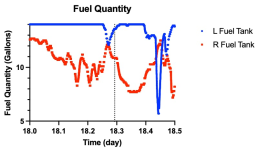
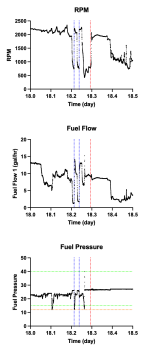
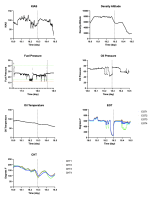
I've pulled the engine data from the EFIS and posted here. The vertical line represents approximately 1 minute post-emergency. Any ideas other than what we're thinking? Where should we start?
**Edit** Fuel quantity 13L/14R
Pre-flight included checking the breather hoses externally and fuel sump as usual. Taxi and run-up we had some difficulty with the magnetos check and CHT#3 temps since it was such a hot day (31C, 90% RH), we couldn’t get to high RPM and peak mixture to clean the plugs Finally we accepted a drop of 80rpm on each mag. Everything was done on the R tank. During takeoff, we noticed lower fuel pressure at 21 PSI. Historically we are at 26-27 PSI and the pump manufacturer (Tempest #AF15473) recommends 25-30. We turned on the electric fuel pump when we noticed this and the pressure went back up to 25 for the rest of the climb to 1500. Disengaged electric pump as of this altitude.
No indications during cruise, everything was going well. We did some steep turns and stalls. At some point a few minutes before the engine failure, I switched to the L fuel tank (for the first time since engine start). I did two stalls and on the second stall recovery, the engine failure occurred. No CHT/EGT/Oil pressure/Oil temperature indications, but the fuel pressure dropped. My instructor turned on the electric fuel pump and switched the tank back to R. This restarted the engine and we were able to make it down to an airport safely. On the ground, we re-checked the sumps and didn’t find any water or contaminants. A ground run on the next day with the mechanical fuel pump on L tank revealed no issues.
Speaking to a few people and looking at my engine data, we have a few main hypotheses:
1. Left-side breather hose partial blockage
2. Left-side fuel line partial blockage
3. Mechanical fuel pump in the process of failing
4. Possibility that I didn’t push the L fuel valve in completely resulting in partial fuel flow
5. Two people mentioned the possibility of vapour lock in flight? We were at 7500 density altitude, 90-95% humidity, during high nose-up attitude prior to stalls
6. Two people also mentioned the possibility of induction icing in the throttle body?
The mechanic on the ground put a thin metal wire inside the left breather hose and thinks he felt some blockage but wasn’t confident if it was a kink in the line or a real obstruction - diagnosis unclear.
Things I’d consider changing in all cases
1. Mechanical fuel pump is past service life (10 years), should we change this?
2. Engine oil and checking filters just to confirm we didn’t have an actual engine failure
I've pulled the engine data from the EFIS and posted here. The vertical line represents approximately 1 minute post-emergency. Any ideas other than what we're thinking? Where should we start?
**Edit** Fuel quantity 13L/14R
Attachments
Last edited: