I've learned over the years not talk bad about any product and only state the facts as I know them and have experienced them. With that said, I have personally experienced EarthX melting due to overcharging. They know about it and I'm sure have done everything to correct it, but at the end of the day you are relying on a chip to shut down overcharging. Just think twice about putting it in a cabin with no ventilation. I think they make a great battery in regards to performance. I have one in my Carbon Cub and it spins the prop beautifully. It sits under the front seat but I can open the door and/windows of my Cub in flight incase of smoke. You have to accept that something may go wrong and if it does, what will be the likely outcome. Sometimes, in order to mitigate risk, we have to choose something safer over better performance. If possible, just put them FWF.
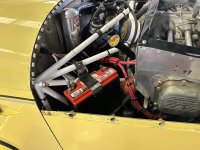
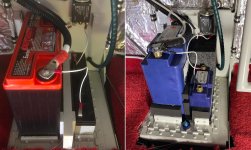
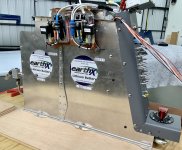
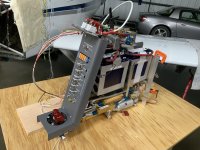
Can you share the EarthX make/model and installation configuration? Also, the EMS data around (before, during and after) this event - plus photos, videos, whatever you have.
Seriously, I'd rather have MOSFETs + uController in a very well designed energy storage system turn the current off than just have the battery melt down through the cabin floor.
And to clarify a bit, it's
overvoltage, which is why we have crowbar protections in the alternator, trench FET's, and other overvoltage protections in our electrical systems ( if you don't....well...).
Unfortunately, the electrical systems in our aircraft (Loads, Storage, Supply) do not typically contain a separate battery charging "system."
The battery is charged and discharged by virtue of the difference between the buss voltage and battery cell voltage (state of charge) -- if the buss voltage is higher than the battery, the battery will "charge"; the rate (amps) is determined by the deltaVoltage and internal resistance (impedance) of the battery. Additionally, the electrical supply (alternator) is constant Voltage -- not current -- so it will deliver as many Amps as the resistance in the circuit will allow at a given voltage (ed. there are other limiting factors at work too; flux saturation, heat, domain wells, etc.)
It's good practice to vent batteries, no matter the type, to the outside air (light reading --
https://iestbattery.com/case/analysis-gas-production-behavior-of-lfp-cell/).
@Mikeyb I am all in favor of opening old wounds and killing old wives tales... Otherwise we'd still believe the earth was flat, witches were made of wood, and so on