Van's Air Force

The definitive Van's Aircraft support community! Buying, building or flying an RV? Join our exclusive family of mentors and enthusiasts!

Dynon Previews Integrated IFR GPS Navigation Capability for SkyView HDX

Dynon

Well Known Member
Advertiser
Next-generation capability is in development to bring full IFR GPS navigation, including coupled LPV approaches, directly to the SkyView HDX platform with zero additional panel space required.


Dynon is excited to announce the development of a revolutionary leap forward for the light general aviation market: integrated IFR GPS navigation for the industry-leading SkyView HDX avionics system. This capability is being developed for simultaneous release across both Dynon Certified and experimental SkyView HDX product lines.
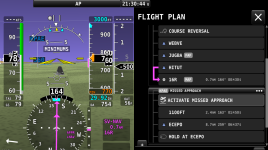
KPAE_final_minimums.png

Historically, aircraft builders and retrofitters looking for full Instrument Flight Rules (IFR) capabilities were forced to install expensive external navigators into their radio stack. Dynon is shattering that paradigm by integrating full next-generation IFR navigation directly into the SkyView HDX system.
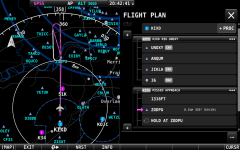
KIXD_going_missed.png

"Our goal has always been to make world-class avionics accessible, integrated, and intuitive," said Brad Thurow, President of Dynon. "With this upcoming capability, we intend for SkyView HDX owners to fly IFR missions, including coupled LPV approaches, without sacrificing a single inch of valuable radio stack panel space."

Simplicity by Design: Redefined Flight Planning

Beyond the hardware and integration breakthrough, Dynon will introduce a completely redesigned, ultra-intuitive flight planning interface built directly into the SkyView HDX software. While most IFR navigators often feel like operating decades-old Flight Management Systems (FMS) that require specialized training courses just to enter a route, Dynon's next-gen flight planner brings modern simplicity to the cockpit.
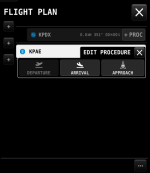

1_choosing_procedure.png3_choosing_appr_transition.png5_pilot_defined_hold_RIPON.png
The flight planner seamlessly handles both VFR and complex IFR scenarios with effortless ease, serving as a steadfast ally in the cockpit that simplifies even the most demanding flight phases. Pilots will intuitively load departures, arrivals, and approaches using clear, visual workflows, entirely eliminating the steep learning curves historically associated with instrument flight transitions.

Ultimate Panel Flexibility & Lower Cost of Ownership

For existing SkyView HDX owners, the upgrade path will be incredibly simple. The underlying IFR capability will be delivered by a new, remote-mounted IFR module, bringing the capability into SkyView's on-screen flight planner. This solution utilizes the same proven modular architecture found across the existing SkyView product family and mounts completely behind the instrument panel. This leaves radio stacks perfectly clean, creating space for larger displays, additional radios, or storage.

Key Product Highlights:

  • Full IFR Capabilities, including LPV Approaches: Supports RNAV approaches down to LPV minimums, providing both horizontal and vertical guidance.
  • Zero Panel Space Required: Remote-mounted module keeps the radio stack wide open, allowing for cleaner panels and more flexible aircraft design.
  • Intuitive Next-Gen Flight Planner: A clean sheet design built to handle IFR and VFR scenarios seamlessly. Easily load departures, arrivals, and approaches with ease, eliminating the need for complex legacy training courses.
  • MOSAIC-Ready Integration: Designed perfectly for the next generation of aircraft. The new MOSAIC regulations now arriving open the door for IFR operations in Light Sport Aircraft. Dynon’s integrated navigation will provide a critical, space-saving solution for these airframes, allowing manufacturers and builders to deliver full-functionality IFR aircraft without traditional panel-stack penalties.
  • Seamless Autopilot Integration: Fully couples to the Dynon autopilot for rock-solid, hands-off approach flying.
  • Future-Proof Protection: Allows pilots to purchase and install a SkyView HDX system today and add full IFR capability as soon as certification is finalized.

Pricing and Availability

Dynon is committed to maintaining its legacy of affordability and will offer this groundbreaking capability at a highly disruptive total cost of ownership that represents a fraction of the cost of traditional, standalone panel-mounted IFR navigators. Advanced flight testing and certification efforts are well underway. Pricing and availability information will follow as release timelines are finalized.

Additional Information / FAQ

More information, including a list of frequently asked questions, are also available here.
 

Attachments

  • 2_choosing_arrival.png
    2_choosing_arrival.png
    37.5 KB · Views: 27
  • MOSAIC-Ready Integration: Designed perfectly for the next generation of aircraft. The new MOSAIC regulations now arriving open the door for IFR operations in Light Sport Aircraft.
An exciting development!

Does this mean that this functionality can only be used in EAB aircraft that meet the light sport criteria? Or is it able to be used legally on all EAB aircraft?
 
An exciting development!

Does this mean that this functionality can only be used in EAB aircraft that meet the light sport criteria? Or is it able to be used legally on all EAB aircraft?
Also from the release:
This capability is being developed for simultaneous release across both Dynon Certified and experimental SkyView HDX product lines.
 
Wondering if Dynon is working with Vans to lift the RV-12 Limitation that prohibits flight into both IFR and Instrument Meteorological Conditions (IMC)? Having a legal GPS driven navigator is one thing but maybe Vans has other reasons to restrict flight into IMC?
 
Also from the release:
This capability is being developed for simultaneous release across both Dynon Certified and experimental SkyView HDX product lines.
Saw that. Just a bit confusing, as they don't discuss getting the TSO's for the navigator function, so wondered if this was getting slipped into the newer ASTM stuff or has a new TSO. Always thought traditional Op Lims required TSO'ed navigators for IFR, though understand things may now be different if your EAB meets the LS criteria. Just trying to get some detail. Releases like this can be fuzzy about what is really coming.
 
So I guess I don’t need the ARINC 429? Also what am I gonna do with my extra panel space now! Been saving a slot for a garmin navigator, but I guess not necessary anymore.
For the GPS correct. They do not mention anything about NAV. If it is not incorporated then you may need it if you're going to use a NAV source. I was REALLY hoping for a GPS/NAV/COM to replace the 650 I have been sitting on for a year waiting for word from Dynon. I know GPS is almost everywhere but I do like the idea of a backup in VOR/ILS.
 
Last edited:
Saw that. Just a bit confusing, as they don't discuss getting the TSO's for the navigator function, so wondered if this was getting slipped into the newer ASTM stuff or has a new TSO. Always thought traditional Op Lims required TSO'ed navigators for IFR, though understand things may now be different if your EAB meets the LS criteria. Just trying to get some detail. Releases like this can be fuzzy about what is really coming.
From Dynon

Q: How will it be certified? Will it be TSO’d?

A: We are currently engaged in the formal certification process with the FAA to ensure full compliance for both experimental and type-certificated aircraft. We are keeping the specific regulatory and technical details confidential while this program is in progress. Upon successful completion of our product and certification programs, this will be a fully approved, legal solution.
 
Does this allow for IFR flight with by the fact you can now load and activate via the MFD vs the stand-alone GPS? So we would no longer need something like a Garmin 650/720 just a GPS to the MFD?
Trying to understand what this means
 
From Dynon

Q: How will it be certified? Will it be TSO’d?

A: We are currently engaged in the formal certification process with the FAA to ensure full compliance for both experimental and type-certificated aircraft. We are keeping the specific regulatory and technical details confidential while this program is in progress. Upon successful completion of our product and certification programs, this will be a fully approved, legal solution.
thanks. very helpfull. Great to see another company break up the quasi-monopoly in this space!!!
 
Wondering if Dynon is working with Vans to lift the RV-12 Limitation that prohibits flight into both IFR and Instrument Meteorological Conditions (IMC)? Having a legal GPS driven navigator is one thing but maybe Vans has other reasons to restrict flight into IMC?
This limitation was based on the light sport consensus standard rules. The same limitation applied to all special light support Aircraft.
The opportunity for IFR in special light sport Aircraft will be the result of the new mosaic rules.
 
Does this allow for IFR flight with by the fact you can now load and activate via the MFD vs the stand-alone GPS? So we would no longer need something like a Garmin 650/720 just a GPS to the MFD?
Trying to understand what this means
This effectively will take the place of the Garmin 625 / 175 stand alone GPS units and replace with a remote box mounted behind the panel and accesses through the Skyview HDX efis. This is for GPS only. The 650 is GPS/NAV/COM.
 
Argh!
I just had my panel cut by AFS for an HDX setup and it includes a 430 I picked up.
Down the road I’ll have an odd blanking plate where the 430 is. And I could have moved a few things around when I was doing one of my last config meetings they told me about the remote radio before it was announced but not this.
I’m guessing it will still be awhile before it’s ready for release.
But exciting to hear!
 
Also from the release:
This capability is being developed for simultaneous release across both Dynon Certified and experimental SkyView HDX product lines.
This is probably due to FAA requiring a certified GPS navigator for IFR/RNAV, regardless of the aircraft category.
 
I would love it if it came to the AFS 6600 as well, but given that they don't have a certified PFD to start with, will that be a no go? Or is the GPS/Nav box the only piece that has to be certified, then as long as the AFS can control it, it's kosher?
 
This is probably due to FAA requiring a certified GPS navigator for IFR/RNAV, regardless of the aircraft category.
Exactly.
I am very curious to see how this works out.
You may know that GRT has offered something that sounds similar (LPV approaches) for some years now. But, as a small company, they could not afford the cost of obtaining the TSO, and, without that, the faa would not approve ifr operations, so very few have been sold. So I’m wondering: is Dynon going full bore on the TSO route (estimated to cost millions of dollars)? Or are they hoping to get an alternate means of approval? And, surely, Garmin will react with a significant price reduction. Since they have long ago amortized the TSO cost, they can still make a small profit while undercutting Dynon’s price. To me, this sounds like a bold, ‘bet the farm’ move by Dynon.
 
I would love it if it came to the AFS 6600 as well, but given that they don't have a certified PFD to start with, will that be a no go? Or is the GPS/Nav box the only piece that has to be certified, then as long as the AFS can control it, it's kosher?
Do you think a G3X is TSO’d? So far the faa’s interpretation has been just the gps receiver needs the TSO.
 
And the next question will be: what will be the price for the software license for this feature?
The certification cost will need to be amortized somehow!
 
And the next question will be: what will be the price for the software license for this feature?
The certification cost will need to be amortized somehow!
sounds like databases/charts will be third party (i'm thinking companies like airmate ~$49 a year). To be competitive it has to beat a Garmin GPS 175 price range, and since its a remote box as opposed to a stand alone unit with integrated screen, it should be able to beat that from a cost standpoint. I'm guessing something in the 4k-5k range
 
sounds like databases/charts will be third party (i'm thinking companies like airmate ~$49 a year). To be competitive it has to beat a Garmin GPS 175 price range, and since its a remote box as opposed to a stand alone unit with integrated screen, it should be able to beat that from a cost standpoint. I'm guessing something in the 4k-5k range
I'll bet it will be cheaper than that (Dynon's press release say's a "fraction of the cost..."). You can buy Garmin's GPS-175 with antenna and SV-ARINC-429 for under 6K. My bet? $2,995.
 
I'll bet it will be cheaper than that (Dynon's press release say's a "fraction of the cost..."). You can buy Garmin's GPS-175 with antenna and SV-ARINC-429 for under 6K. My bet? $2,995.
Yeah, Nah.

This is aviation; think of a reasonable price, add a markup and then triple it.
But maybe all they have to be is 20% less than Garmin.
 
This may also be an attempt to circumvent builders going to Garmin with the new products they are currently teasing.
That's not to say this project isn't well in the works. Sure, it's in their interest to make this announcement, but it's also to the benefit of all the builder/owners who are either planning their panels, or (like me) someone who's been wanting to install an IFR GPS unit, but just don't want to have to cut the panel and rearrange avionics to fit in another box. For me, this is fantastic news, and something the community has been asking for for years.
 
Garmin will react with a significant price reduction. Since they have long ago amortized the TSO cost, they can still make a small profit while undercutting Dynon’s price.
Competition from Dynon is a good thing. Garmin basically has a monopoly on the GPS IFR solution and this is why 10 - 20 years old Garmin unit still costs a lot of money. The same with EFIS. Dynon was first to certify its experimental EFIS for the GA market and that influenced Garmin to certify its experimental products.
 
Last edited:
Yeah, Nah.

This is aviation; think of a reasonable price, add a markup and then triple it.
But maybe all they have to be is 20% less than Garmin.
Maybe, but consider the architecture. A GPS 175 at ~$6,250 has to pay for a touchscreen, bezel, chassis, buttons, and its own display software. Dynon's box has none of that. It's a remote-mounted module, an antenna, and a software update for existing HDX displays. The bill of materials for a remote WAAS receiver/nav computer is pretty small. The big cost is the certification - millions of dollars, but that's a fixed cost amortized across what will likely be a very large volume, given the size of the installed HDX fleet plus the new MOSAIC LSA market, plus all the Garmin customers they're going to poach. 3K might be wishful thinking, but not out of the question. I'd be truly surprised if it toped $4k. I think Dynon aims to be disruptive with this release, and I think they'll succeed.
 
Garmin asked for it by disabling flight plan transfers from the HDX back to the GPS and $$$ subscriptions for the lightly reformatted digital coded procedure file freely available from the FAA. 😀
 
Maybe, but consider the architecture. A GPS 175 at ~$6,250 has to pay for a touchscreen, bezel, chassis, buttons, and its own display software. Dynon's box has none of that. It's a remote-mounted module, an antenna, and a software update for existing HDX displays. The bill of materials for a remote WAAS receiver/nav computer is pretty small. The big cost is the certification - millions of dollars, but that's a fixed cost amortized across what will likely be a very large volume, given the size of the installed HDX fleet plus the new MOSAIC LSA market, plus all the Garmin customers they're going to poach. 3K might be wishful thinking, but not out of the question. I'd be truly surprised if it toped $4k. I think Dynon aims to be disruptive with this release, and I think they'll succeed.
I would guess the cost to make 175 is WELL under $1000. The exorbitant price tag is all margin because they can. Pretty easy to bring a competitive offering to the market at half the cost and still make good money, regardless of display and bezel. Just need the capital and patience to do the certification.

Based on pauls comments, i suspect this is just throwing a reminder out there that they are still working on it as everyone starts to drool over the garmin offering. If this were coming somewhere in the near term, i am pretty sure that would have covered in the release.
 
Was thinking about cutting and re-arranging my panel for the IFR upgrade with a Garmin unit, but now I think waiting will be the right way to go. Go Dynon!!!
 
I would guess the cost to make 175 is WELL under $1000. The exorbitant price tag is all margin because they can. Pretty easy to bring a competitive offering to the market at half the cost and still make good money, regardless of display and bezel. Just need the capital and patience to do the certification.

Not so.
An large amount of the cost of an IFR navigator is paperwork/approvals and experimental does not get a pass for IFR nav.
The Garmin markup is not exorbitant just excessive :)
 
Not so.
An large amount of the cost of an IFR navigator is paperwork/approvals and experimental does not get a pass for IFR nav.
The Garmin markup is not exorbitant just excessive :)
It’s in their annual report.
Gross margin for the Aviation business is 76%…
Gross margin for the entire company is 60%
Aviation has by far the highest gross margin.
 
Do you think a G3X is TSO’d? So far the faa’s interpretation has been just the gps receiver needs the TSO.

Doesn't that depend on the TSO? 145 is for the receiver itself, 146 is for "standalone" equipment. The G3X isn't part of the TSO'd system since the 175/650/etc. is "standalone" and the G3X simply hooks up to it. That appears to be different than Dynon's approach where everything is controlled and displayed via the HDX screen.

Curious to see how this plays out, if it ever does. I have to admit I'm skeptical given the snails pace at Dynon seems to release bug fixes let alone new features.
 
Back
Top