Van's Air Force

The definitive Van's Aircraft support community! Buying, building or flying an RV? Join our exclusive family of mentors and enthusiasts!

Displaying thermal image on Garmin G3X. What IR/thermal video camera?

rockyfatcat

Well Known Member
Patron
I have been posting on this thread https://vansairforce.net/threads/garmin-g3x-video-in.116145/#post-1863005

The Garmin G3X has a BNC connector that will accept Astm region 1 standards for video in. Apparently the world has moved on from the Astm region 1 standard (At least for thermal cameras) and those cameras are no longer available.

It was pointed out that thermal cameras with ethernet output are available and there are devices that can convert the signal to an analog signal compatible with Astm region 1 standards.

Thermal cameras have evolved into highly technical devices that are used to accurately measure heat in the manufacturing process.

I’m looking for some help identifying a suitable thermal camera that can display a thermal image on my G3X similar to the astronics unit https://www.astronics.com/dual-sensor-evs without spending 11k.
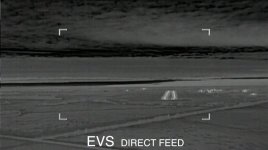


IMG_0314.jpeg
I know there are lots of thermal cameras out there. Looking at all the choices and the specs, I’m baffled as to which one I should gamble on. I know I want something that looks something like either a box or a cigar that is sealed up, so I can mount it on my aircraft.

I’m pretty sure that there are some folks here that understand this far better than I ever could. I would appreciate any guidance.
 
I have been posting on this thread https://vansairforce.net/threads/garmin-g3x-video-in.116145/#post-1863005

The Garmin G3X has a BNC connector that will accept Astm region 1 standards for video in. Apparently the world has moved on from the Astm region 1 standard (At least for thermal cameras) and those cameras are no longer available.

It was pointed out that thermal cameras with ethernet output are available and there are devices that can convert the signal to an analog signal compatible with Astm region 1 standards.

Thermal cameras have evolved into highly technical devices that are used to accurately measure heat in the manufacturing process.

I’m looking for some help identifying a suitable thermal camera that can display a thermal image on my G3X similar to the astronics unit https://www.astronics.com/dual-sensor-evs without spending 11k.


View attachment 94598
I know there are lots of thermal cameras out there. Looking at all the choices and the specs, I’m baffled as to which one I should gamble on. I know I want something that looks something like either a box or a cigar that is sealed up, so I can mount it on my aircraft.

I’m pretty sure that there are some folks here that understand this far better than I ever could. I would appreciate any guidance.
I called Garmin today. They quoted page 38 of the installation manual as saying the input is ntsc/pal/secam.

So I got wrong info at Oshkosh and need to look around some more.
 

Make sure and check out the video they posted on this page.

The only thing I know about this camera is what’s on their website. I contacted their sales people two weeks ago with no reply.
 

Make sure and check out the video they posted on this page.

The only thing I know about this camera is what’s on their website. I contacted their sales people two weeks ago with no reply.
Keep us posted. I was also looking into this but not worth the 11K to me either! I found some scientific flir cameras on ebay but haven't dove deep into what would work yet. Seems with how readily available IR is there should be a lower cost solution out there.
 

Make sure and check out the video they posted on this page.

The only thing I know about this camera is what’s on their website. I contacted their sales people two weeks ago with no reply.
I talked with a guy who sells this tenum 640 thermal camera. He quizzed me as to application and available light. His price to sell one to me was 6.5k.

He suggested I look at ultra low light cameras, and even suggested the Watec's WAT-3500 super low light camera. Which already has the ntsc/pal bnc output. Available on amazon for less than 1k.

While it is not a infrared or thermal camera. I’m going to buy one. It even has an optional remote to bring up an on screen display to make adjustments to the display like Zoom

A minimum illumination of 0.0001 lx.

 
Last edited:
Good news: this problem is solvable for much less than $11,000. Dynon Skyview also supports Composite video input for those interested as well.

If you are inside the US, FLIR PathfindIR modules are basically what you want. Apply 12v, get composite video out. They were discontinued a few years ago, but it's still possible to find them for $1-2k. The modules were used as an option for Cadillac Escalades and BMWs ~2021, but from my research, they won't function until they get the right CANBUS commands sent to them, and that hasn't been reverse-engineered yet, so I wouldn't advise trying to save some money buying ones off eBay. Units sold with FLIR branding are the ones you want.

If you're outside the US, would recommend looking into new modules like the Axisflying 640 that are available for a few hundred $ out of China. Thermal imaging sensors are considered a weapon under ITAR and the seller would need an export license to sell you a FLIR module. On the flip side, US buyers will get slapped with tariffs, but there are a few places that stockpiled them earlier this year. Of note: by default, they will hiccup for ~a second every 10 minutes to re-calibrate the sensor, but the manual does have documentation about how to adjust the settings over UART. They're also not weatherproof – if you wanted to build an enclosure for it, be advised you'll also have to source a germanium window, since standard glass will block long-wavelength IR.

Amazon also has thermal night vision systems for cars being sold under various keymash names (e.g. TOPDON NV001) that seem to run around $500. Documentation seems to be mediocre at best for them.
 
Last edited:
Good news: this problem is solvable for much less than $11,000. Dynon Skyview also supports Composite video input for those interested as well.

If you are inside the US, FLIR PathfindIR modules are basically what you want. Apply 12v, get composite video out. They were discontinued a few years ago, but it's still possible to find them for $1-2k. The modules were used as an option for Cadillac Escalades and BMWs ~2021, but from my research, they won't function until they get the right CANBUS commands sent to them, and that hasn't been reverse-engineered yet, so I wouldn't advise trying to save some money buying ones off eBay. Units sold with FLIR branding are the ones you want.

If you're outside the US, would recommend looking into new modules like the Axisflying 640 that are available for a few hundred $ out of China. Thermal imaging sensors are considered a weapon under ITAR and the seller would need an export license to sell you a FLIR module. On the flip side, US buyers will get slapped with tariffs, but there are a few places that stockpiled them earlier this year. Of note: by default, they will hiccup for ~a second every 10 minutes to re-calibrate the sensor, but the manual does have documentation about how to adjust the settings over UART. They're also not weatherproof – if you wanted to build an enclosure for it, be advised you'll also have to source a germanium window, since standard glass will block long-wavelength IR.

Amazon also has thermal night vision systems for cars being sold under various keymash names (e.g. TOPDON NV001) that seem to run around $500. Documentation seems to be mediocre at best for them.
I’d be interested if they are analog and the output is compatible with the G3X
 
quick googling shows that people have used a regular analog composite to BNC adapter to get video in the G3x.
While you're at it, why not consider a PTZ marine flir unit. Make people think you're some sort of ISR platform with that bubble hanging down!
 
Please keep us posted. Heck, with all the smoke we have been getting from Canada this summer, a FLIR might be the only way to safely fly! ;)
 
I’d be interested if they are analog and the output is compatible with the G3X
Yup, both FLIR PathfindIR and the Axisflying/Chinese Modules have analog Composite Video (CVBS) outputs, so they'll work.

G3X installation manual:
In a G3X Touch system with GDU 4XX displays, each display has a rear connector which supports composite (NTSC/PAL/SECAM) video.
Dynon Skyview supports it but needs a USB adapter that they sell.

A note that the Chinese modules output in PAL mode. For Dynon, you'll need to configure that explicitly in your Skyview settings. I wasn't able to find where to adjust that in G3x.
 
Good news: this problem is solvable for much less than $11,000. Dynon Skyview also supports Composite video input for those interested as well.

If you are inside the US, FLIR PathfindIR modules are basically what you want. Apply 12v, get composite video out. They were discontinued a few years ago, but it's still possible to find them for $1-2k. The modules were used as an option for Cadillac Escalades and BMWs ~2021, but from my research, they won't function until they get the right CANBUS commands sent to them, and that hasn't been reverse-engineered yet, so I wouldn't advise trying to save some money buying ones off eBay. Units sold with FLIR branding are the ones you want.

If you're outside the US, would recommend looking into new modules like the Axisflying 640 that are available for a few hundred $ out of China. Thermal imaging sensors are considered a weapon under ITAR and the seller would need an export license to sell you a FLIR module. On the flip side, US buyers will get slapped with tariffs, but there are a few places that stockpiled them earlier this year. Of note: by default, they will hiccup for ~a second every 10 minutes to re-calibrate the sensor, but the manual does have documentation about how to adjust the settings over UART. They're also not weatherproof – if you wanted to build an enclosure for it, be advised you'll also have to source a germanium window, since standard glass will block long-wavelength IR.

Amazon also has thermal night vision systems for cars being sold under various keymash names (e.g. TOPDON NV001) that seem to run around $500. Documentation seems to be mediocre at best for them.
I’m looking at the Axisflying 640 now and it looks like it’ll do the job! A couple questions: They offer 3 different options for resolution. 256*192 / 384x288 / 640 x512 which choice is best suited for a forward looking thermal camera from an aircraft? Besides price is it the difference the feild of view angle? What angle is appropriate? The Astronics unit uses 45 degrees

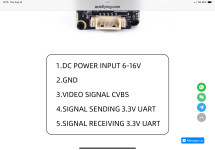
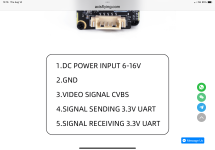
When you look at the Axisflying 640 connector, on the back they have a 5 pin connector. What sort of connector do I need to buy to plug into that socket? And which ones will need to connect to the coax to go to the BNC in at the Garmin unit? What do the other pins do?

IMG_0316.png
 
I’m looking at the Axisflying 640 now and it looks like it’ll do the job! A couple questions: They offer 3 different options for resolution. 256*192 / 384x288 / 640 x512 which choice is best suited for a forward looking thermal camera from an aircraft? Besides price is it the difference the feild of view angle? What angle is appropriate? The Astronics unit uses 45 degrees

When you look at the Axisflying 640 connector, on the back they have a 5 pin connector. What sort of connector do I need to buy to plug into that socket? And which ones will need to connect to the coax to go to the BNC in at the Garmin unit? What do the other pins do?

View attachment 94978
Is it even possible to get video out with the Axisflying 640 without deep diving into UART protocols ?

I just want a thermal image to display on my G3X. I don’t want to learn another profession. Is there an adapter that can grab the video output and give me a BNC out?

It’d be nice to have some in cockpit control of the camera, but not if I have to reinvent something
 
Last edited:
Is it even possible to get video out with the Axisflying 640 without deep diving into UART protocols ?

I just want a thermal image to display on my G3X. I don’t want to learn another profession. Is there an adapter that can grab the video output and give me a BNC out?

It’d be nice to have some in cockpit control of the camera, but not if I have to reinvent something
Haha I saw those and thought the same thing!
 
Is it even possible to get video out with the Axisflying 640 without deep diving into UART protocols ?

I just want a thermal image to display on my G3X. I don’t want to learn another profession. Is there an adapter that can grab the video output and give me a BNC out?

It’d be nice to have some in cockpit control of the camera, but not if I have to reinvent something
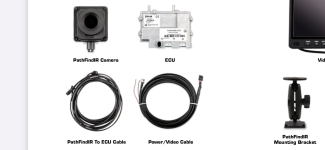
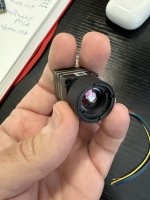
For those of you following this thread. I’m back to a thermal camera with the FLIR PathfindIR. They are available just under 3k if you shop around. The FLIR PathfindIR kit comes in a couple of flavors. Depending on if you want their mounting kit and their display. This unit measures approximately 2.3 x 2.8 x 3.3 inches.

This unit is sealed and is weatherproof. It is designed to mount behind the grill of a car. The 4 bits I will need are the 2 cables, the camera, and the ECU.


IMG_8051.png
The camera needs to be ‘in the wind’ as any sort of glass or plastic will stop the thermal wavelength. I’m thinking a lower engine cowling mount. The camera uses the standard 2 wire positive & negative automotive 12 volts and works well within the normal automotive variance. One cable runs from the camera to the ECU to be mounted inside the aircraft which must be grounded. The other cable runs from the ECU to the BNC connector on the back of the G3X.

Throw in a some basic mounting hardware, a 2 amp circuit breaker, a switch and some quality time playing with fiberglass this is a very doable 3k project.
 
I know this has already been covered in prior post by NORDO above. Keep in mind G3X video input cannot support an AHD signal (Analog High Definition). Only the older and lower resolution CVBS signal (Composite Video Blanking and Sync). Pathfinder and Axisflying do output CVBS so they are compatible. But I ran into a problem trying to get a automotive camera with AHD signal to work with G3X.
 
I know this has already been covered in prior post by NORDO above. Keep in mind G3X video input cannot support an AHD signal (Analog High Definition). Only the older and lower resolution CVBS signal (Composite Video Blanking and Sync). Pathfinder and Axisflying do output CVBS so they are compatible. But I ran into a problem trying to get a automotive camera with AHD signal to work with G3X.
This is the second time someone has said the Axisflying has the appropriate output. Axisflying has a UART 5 wire digital connector on the back. IMG_0316.png
At less than 1k, the Axisflying 640 looks like a great option. The problem is how do you connect it to the G3X? Connect pin 3 to the center wire of the BNC connector? What about the other 2 pins?

The Axisflying 640 has an onscreen menu to change settings like from color to black/white & white/black. How is that going to work? It looks like it needs some sort of an ECU to connect and control the camera. Identify what I need to buy to make it plug and play and I’m there!

Otherwise I can’t get there from here
 
This is the second time someone has said the Axisflying has the appropriate output. Axisflying has a UART 5 wire digital connector on the back. View attachment 95195
At less than 1k, the Axisflying 640 looks like a great option. The problem is how do you connect it to the G3X? Connect pin 3 to the center wire of the BNC connector? What about the other 2 pins?

The Axisflying 640 has an onscreen menu to change settings like from color to black/white & white/black. How is that going to work? It looks like it needs some sort of an ECU to connect and control the camera. Identify what I need to buy to make it plug and play and I’m there!

Otherwise I can’t get there from here
Hi,

I think we might not need to mess with the UART ports at all. I have built a dozen of different drones using different cameras and they all follow more or less the same standard.

The cameras will work on a “standard configuration “ out of the box and you simply connect power and route video out to your inner bnc connector, like you said, and make sure the coax shield is grounded to the same ground as camera power.

The uart configurations allow you to further customize image: brightness, color temperatures, picture orientation, etc, WHICH MIGHT POTENTIALLY BE NEEDED for our application.

But, given the price, I think it is worth a try. I will buy the medium resolution option which has similar field of view (FOV) as to the flor kits used in cars and similar to what I use on my drones.

You don’t want a too wide FOV because for our application, or even for drone flying, what we need is good image quality on a narrower fov ahead of us, which will actually give you more details on the area we really need to see.

I will be buying one and trying to make it work. Will report it back in a few months from now, in case you want to wait for my results ;)

Order placed
 
Last edited:
if you want something that will pass IR but keep the bugs off the lens, you might consider a sapphire watch crystal. You can get them in pretty big diameters.
If you google Germanium glass you’ll find that different cameras need transparency In the Infrared 8-12um range.

Germanium's most notable property is its high transparency in the infrared spectrum, particularly between 2 and 14 μm. This allows it to efficiently transmit infrared light while blocking visible light, making it ideal for thermal imaging cameras and other devices that rely on infrared radiation.
You can try a watch crystal if you like
 
Hi,

I think we might not need to mess with the UART ports at all. I have built a dozen of different drones using different cameras and they all follow more or less the same standard.

The cameras will work on a “standard configuration “ out of the box and you simply connect power and route video out to your inner bnc connector, like you said, and make sure the coax shield is grounded to the same ground as camera power.

The uart configurations allow you to further customize image: brightness, color temperatures, picture orientation, etc, WHICH MIGHT POTENTIALLY BE NEEDED for our application.

But, given the price, I think it is worth a try. I will buy the medium resolution option which has similar field of view (FOV) as to the flor kits used in cars and similar to what I use on my drones.

You don’t want a too wide FOV because for our application, or even for drone flying, what we need is good image quality on a narrower fov ahead of us, which will actually give you more details on the area we really need to see.

I will be buying one and trying to make it work. Will report it back in a few months from now, in case you want to wait for my results ;)

Order placed
the astronics unit is 45 degrees. The axisflying unit will probably power up but without the ability to toggle through the settings you are stuck with whatever it powers up like.
 
if you want something that will pass IR but keep the bugs off the lens, you might consider a sapphire watch crystal. You can get them in pretty

the astronics unit is 45 degrees. The axisflying unit will probably power up but without the ability to toggle through the settings you are stuck with whatever it powers up like.
Yes. I understand that. But camera manufacturers try to set defaults that are reasonably good. I hope it will be good for our application. If not I will develop a microcontroller that speaks this protocol. The manufacturer provided all details on the manual.

Stand by. I will post pictures once I get the camera
 
Yes. I understand that. But camera manufacturers try to set defaults that are reasonably good. I hope it will be good for our application. If not I will develop a microcontroller that speaks this protocol. The manufacturer provided all details on the manual.

Stand by. I will post pictures once I get the camera
Please provide the link to the axisflying 640 manual. Everything I found was an incorrect download. Very frustrating.
 
At less than 1k, the Axisflying 640 looks like a great option. The problem is how do you connect it to the G3X? Connect pin 3 to the center wire of the BNC connector? What about the other 2 pins?

The Axisflying 640 has an onscreen menu to change settings like from color to black/white & white/black. How is that going to work? It looks like it needs some sort of an ECU to connect and control the camera. Identify what I need to buy to make it plug and play and I’m there!

Otherwise I can’t get there from here
I'm fairly confident that's a JST connector. You can get kits with all the connectors you'd want and pre-crimped cable ends for under $20. Center pin of your video connector would go to pin 3 on the module connector, and the outer shroud would be ground.

UART is basically a serial connection. You can get UART/TTL to USB interfaces for $15 all day.
 
I'm fairly confident that's a JST connector. You can get kits with all the connectors you'd want and pre-crimped cable ends for under $20. Center pin of your video connector would go to pin 3 on the module connector, and the outer shroud would be ground.

UART is basically a serial connection. You can get UART/TTL to USB interfaces for $15 all day.
I am an A&P, and absolutely not an avionics guy. I read the axis flying user manual. It will power up to the default white hot at 100% brightness and has a couple other default settings. To adjust it would require access to the on screen prompts, requiring sending and receiving data packets to the #4 & #5 pins.

I imagine someone could invent a ECU box with a couple wires routed to push buttons on the dash for selecting items on the on screen menu.

Not my circus not my monkey.
 
Does composite mean EO/IR? Or does it mean video under PFD? ‘cause I’d want all three. EO/IR image with your pitch ladder and flight path marker / velocity vector superimposed. Center your CDI to the FPM with an option to cage lateral out (but display a ghost uncaged) should crosswind be too displacing.
 
I found 20mm germanium window for 88usd. The saphire seems to perform worse in terms of IR transparency. Amazon germanium. :)
Germanium:
  • Excellent infrared transmission: Highly transparent in the mid-wave infrared (MWIR) and long-wave infrared (LWIR) bands, typically between 2 µm and 16 µm

  • Sapphire:
    • Wide transmission range: Transmits from ultraviolet (UV) to near-infrared (NIR) and mid-infrared (MIR) wavelengths, typically from 0.15 µm to 5.5 µm
axisflying = 8~14um
Flir pathfinder 8~14um

Don’t waste your money. The pathfinder is a sealed camera designed to ride behind an auto grill. The Axisflying is a drone camera that claims to be waterproof.
 
Germanium:
  • Excellent infrared transmission: Highly transparent in the mid-wave infrared (MWIR) and long-wave infrared (LWIR) bands, typically between 2 µm and 16 µm

  • Sapphire:
    • Wide transmission range: Transmits from ultraviolet (UV) to near-infrared (NIR) and mid-infrared (MIR) wavelengths, typically from 0.15 µm to 5.5 µm
axisflying = 8~14um
Flir pathfinder 8~14um

Don’t waste your money. The pathfinder is a sealed camera designed to ride behind an auto grill. The Axisflying is a drone camera that claims to be waterproof.
Too late for me LoL. Money already wasted if project doesn't work. Already placed an order for Axisflying camera and it is on its way. But anyway, the lowest price I found for the flir pathfinder was 2.8x the Axisflying price, and looks like pathfinder has been discontinued. I don't underestimate the drone industry, they are bringing so much innovation to the aerospace industry. I could bet the guts of this drone camera is more modern than the discontinued flir pathfinder, and I believe we can solve water proofing with 3D printed sealed case for the camera and leave only lenses sticking out.
 
Too late for me LoL. Money already wasted if project doesn't work. Already placed an order for Axisflying camera and it is on its way. But anyway, the lowest price I found for the flir pathfinder was 2.8x the Axisflying price, and looks like pathfinder has been discontinued. I don't underestimate the drone industry, they are bringing so much innovation to the aerospace industry. I could bet the guts of this drone camera is more modern than the discontinued flir pathfinder, and I believe we can solve water proofing with 3D printed sealed case for the camera and leave only lenses sticking out.
I was just trying to steer you away from waisting money the Sapphire. Return it to Amazon.

I’ll be waiting to see what you can cook up control the AxisFlying via UART.
 
Do these cameras get washed out in daytime / high light? It would be nice if they could do double duty as a taxi cam
Yes they work in daylight. Unlike night vision devices, thermal cameras detect heat signatures rather than relying on visible light.

The default setting for the axis flying 640 is white hot/ black cold.

How much detail do you think you’d get at Phoenix sky harbor at noon in August when it is 115 degrees outside?
 
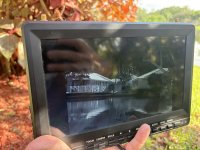
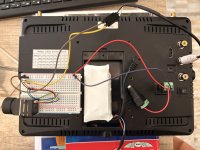
So I hooked up the camera using default settings. I did not connect the UART ports yet. Only wires connected are power (12V), Ground and Video. The format is PAL-M but my test display is PAL-N. not perfect image but works.

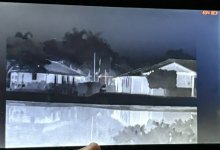
I took a picture of the image I saw on the display during day light, florida sun, and a picture using my phone to compare:

IMG_9672.JPGIMG_9673.JPG
I think the resolution is spot on. there is a fair amount of "amplification" I can see well the houses across the pond (100ft).

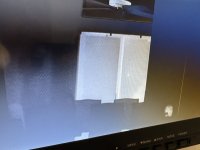
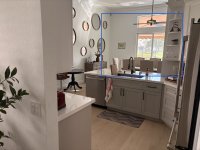
This is a picture from inside my house. roughly 15ft from camera to dining room windows. I wanted to see if camera would "auto tune" the colors. seems to work well:
Fields of view marked in blue on the picture to the right.
IMG_9674.JPGIMG_9675.JPG


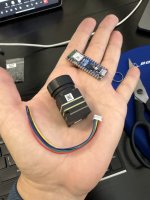
The rigging was pretty simple. just 3 wires and a very low quality display. I just stuck the camera to the back of the display and ran the 3 wire connections..

IMG_9676.JPG


This is very encouraging. Later tonight I will take another picture and share the results. I think the Arduino controller was bought in excess... LoL
 
So I hooked up the camera using default settings. I did not connect the UART ports yet. Only wires connected are power (12V), Ground and Video. The format is PAL-M but my test display is PAL-N. not perfect image but works.
Which version/res of the camera did you buy?
 
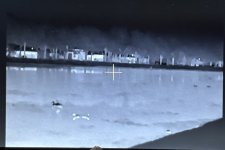
Night pictures looking pretty good with default settings:

First picture is the same house across the pond 100ft away:
IMG_9678.jpeg

This second photo is at 600ft away:
IMG_9679.jpeg
 
Does composite mean EO/IR? Or does it mean video under PFD? ‘cause I’d want all three. EO/IR image with your pitch ladder and flight path marker / velocity vector superimposed. Center your CDI to the FPM with an option to cage lateral out (but display a ghost uncaged) should crosswind be too displacing.
“Composite” in this instance refers to the video signal format: Composite Video Baseband Signal (CVBS). AKA the yellow plug from your VCR/DVD player.

As far as compositing the video on the display, G3X will put it in a little window in the corner, and Dynon will let you put it in the right half of a split screen.
 
This rocks.

Can you let us know what happens when you reach the (default) 10-minute mark and the camera has to re-calibrate? Does it freeze the image or blank it out? And how long is the hiccup for?
I left the camera on for 30min. Never noticed any glitch whatsoever. Sometimes it does a mechanical clic sound, like there is some kind of moving parts inside it. But no noticeable change on the video feed.
 
Today I finished coding the camera controller application. I used an Arduino to talk to the camera and Bluetooth/wifi to make changes on the camera settings via a phone app.

It is working like a charm. The modules only need aircraft power to power them up. No wiring from camera to video receiver unit. The only wires are the power wires and the wire that connects to the G3Xtouch video input.

Next step is polishing a little bit the phone app and fabricating the camera enclosure to hold the camera, video transmitter and Arduino module.

And the last step will be to mount it on the plane and test it. Will do this step a few weeks from now and report back to the group.

Here is a quick video showing how it works:

 
Today I finished coding the camera controller application. I used an Arduino to talk to the camera and Bluetooth/wifi to make changes on the camera settings via a phone app.

It is working like a charm. The modules only need aircraft power to power them up. No wiring from camera to video receiver unit. The only wires are the power wires and the wire that connects to the G3Xtouch video input.

Next step is polishing a little bit the phone app and fabricating the camera enclosure to hold the camera, video transmitter and Arduino module.

And the last step will be to mount it on the plane and test it. Will do this step a few weeks from now and report back to the group.

Here is a quick video showing how it works:

Great progress!
 
Back
Top