
the hottest startup I have in flysto was with 40° OAT and well over 90° under the cowling. It was a re-start 15 min after the previous flight with the oil and CHT still very hot. I was surprised but the EarthX did not cut off, although it was only a very brief cranking (under a second probably)so I’m assuming the BMS tripped due to high temperature

Van's Air Force
You are using an out of date browser. It may not display this or other websites correctly.
You should upgrade or use an alternative browser.
You should upgrade or use an alternative browser.
considering EarthX battery, thoughts?
- Thread starter seagull
- Start date


I doubt it was high temp that tripped the BMS. I have a ring thermocouple attached to my 2 batteries FWF, one high on the firewall one low opposite side along with the Earth X fault indicators. Would regularly see the earth X fault indicator for the battery mounted low go into high temp alarm as my thermocouple mounted in the front would exceed 160 F. (Long holds in FL during the summer) I ran it this way for a few years until finally going with a 2 in blast tube for the lower battery. Talking with Earth X they assured me the only issue would be a shortened life and not a safety issue. The lower battery was changed at 3+ years when the ampacity test fell below 80%. Obviously concerned about temps going higher after shutdown so shut down the engine leaving the G3X on and the lower battery would almost immediately start to cool down and the upper batter temp would rise a maximum of 10 F after shutting down at 120F. (Removing the source of the heat works wonders) That battery still passes the 80% ampacity test after 5 years. If you did not get an alarm (assuming your alarm system is functioning properly) on the Earth X fault indicators during your prolonged taxi doubtful you got the BMS so hot to shut it down. Maybe Cathy can weigh in, but I do not believe a high temp condition would shut off the BMS. Hi current for sure can but I'm not sure a high temp condition will do this unless something else is wrong and produces an ultra-high temp but that is a guess on my part. I pretty much tortured my lower battery for years in Florida and never did I have a BMS disconnect. Since there are many spare thermocouple inputs on the G3X system recommend installing 2 and coil up some slack to place thermocouples at different places one wants to monitor temps. One gets great logging on Savoy and FlySto to analyze the data.Hi everyone,
I have an ETX900 installed in my RV-7 with a Lycoming IO-390. Yesterday was the aircraft’s 4th flight — it only has 6 hours on it so far. I was flying in northern Argentina, surface temperature was around 32°C (89.6°F). We flew for 1.6 hours, and after landing I had to do a fairly long taxi due to airport procedures.
I shut the engine down, and after about 5 minutes tried to start it again. As soon as I hit the starter, the prop rotated maybe 20 degrees and then everything went dead — the battery shut off.
I couldn’t check the battery LED since I have the fault wire connected directly to the G3X, which was off at the time. However, after a few hours I had master power again. I removed the cowling and everything looks normal, so I’m assuming the BMS tripped due to high temperatureBefore my next flight I plan to install a thermocouple to an independent monitoring system to log the battery temperature in real time. I’ll report back with my findings to share with the community.
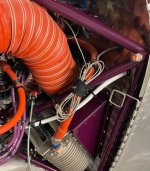
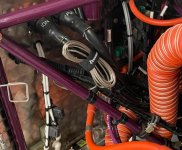
This on the 10
Last edited:

I had the same experience as Scott. Happened twice. Kind of a pain since you got to get out of plane in the cold, remove cowling, put voltage on EarthX to reset it, recowl, get back in, hope it starts without tripping. When it trips, it trips and there’s no warning. To reset, apply voltage. The extra “protection” does have its drawbacks. I wired up a quick disconnect to make the process easier in future but so far, hasn’t repeated. Maybe it was just the combination of a cold soaked plane on a cold Georgia morning combined with higher resistance of the b&c starter. Maybe not. One thing about it, The old lead acid would give plenty of warning before it quit. I’ve always felt that a dual battery of some sort for starting and general backup would be a good plan.Put an EarthX in my constant speed 7A I built to keep down the nose weight. Great for 4 years but then would shut down from high current draw in a cold soaked start. Replaced it and the old one has been faithfully starting my riding mower and jump starting car since. Guess the Lycoming just drew too many amps once the battery had some age.
I have the Odyssey in my current legacy 12. The weight and balance stock and more so once I switched to the lighter E-Prop has always had an aft bias. Solo with full fuel the plane is baggage limited. Just means going to Oshkosh my camping gear is my passenger. Do a new W&B to share so we know. Mine is attached. Could only have 40# before the change and 24# now.

How long do you crank it? My neighbor use to crank for what seemed like a long time (~15 to 20 secs) and he would get disconnects. I recommended not cranking for more than 10 secs per 60 sec period and since then he's never had an issue. Earth X chemistry can provide a lot of amps and that is what "fixes" Skytech LW starters as they need the amps but the downside is they can provide a lot of amps and the BMS is meant to protect the battery. I'm convinced I could taxi my 14 with just cranking power.I had the same experience as Scott. Happened twice. Kind of a pain since you got to get out of plane in the cold, remove cowling, put voltage on EarthX to reset it, recowl, get back in, hope it starts without tripping. When it trips, it trips and there’s no warning. To reset, apply voltage. The extra “protection” does have its drawbacks. I wired up a quick disconnect to make the process easier in future but so far, hasn’t repeated. Maybe it was just the combination of a cold soaked plane on a cold Georgia morning combined with higher resistance of the b&c starter. Maybe not. One thing about it, The old lead acid would give plenty of warning before it quit. I’ve always felt that a dual battery of some sort for starting and general backup would be a good plan.


I could be wrong about this but in VERY COLD weather, I think that I have read that if you turn on the landing lights for a few minutes BEFORE trying to crank, that will "thaw out" (technical termI had the same experience as Scott. Happened twice. Kind of a pain since you got to get out of plane in the cold, remove cowling, put voltage on EarthX to reset it, recowl, get back in, hope it starts without tripping. When it trips, it trips and there’s no warning. To reset, apply voltage. The extra “protection” does have its drawbacks. I wired up a quick disconnect to make the process easier in future but so far, hasn’t repeated. Maybe it was just the combination of a cold soaked plane on a cold Georgia morning combined with higher resistance of the b&c starter. Maybe not. One thing about it, The old lead acid would give plenty of warning before it quit. I’ve always felt that a dual battery of some sort for starting and general backup would be a good plan.
 ) the battery and prepare it for delivering a bit more current. Basically, slowly get it more into a favorable operating temp.
Again, I could be WRONG on this. YMMV.
I think you are right James. This would have save me a lot of trouble and is just one of those quirks with these batteries. Wished I had something to warm up my old arthritic joints when I had to climb back out of the cockpit.I could be wrong about this but in VERY COLD weather, I think that I have read that if you turn on the landing lights for a few minutes BEFORE trying to crank, that will "thaw out" (technical term
Again, I could be WRONG on this. YMMV.

finally was able to make the plane power alternator deliver the rated current (66amps) by running a controlled over the airport depletion/recharge test of the EarthX down to the cutoff voltage. 16 Amps was consumed by avionics and the rest went to charging.
Several years since installation the ETX680 is still near 100% capacity. It took 20 minutes to fully recharge. After ~3 minutes the total current dropped below 50 amps. In the normal operation I don't see more than 40-45 amps and only for a brief period. The battery is installed firewall forward. Even if it decides to vent toxic fumes I don't expect it to enter the cabin. It will probably breathe to outside since there is positive pressure from a couple of blast tubes over the magnetos. I cannot find a single downside with EarthX, even cost is not a factor. It will easily last 2-3 lifetimes of an AGM due to vastly higher recharge cycle rating.
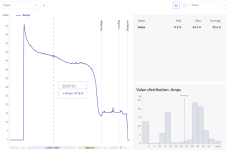
Several years since installation the ETX680 is still near 100% capacity. It took 20 minutes to fully recharge. After ~3 minutes the total current dropped below 50 amps. In the normal operation I don't see more than 40-45 amps and only for a brief period. The battery is installed firewall forward. Even if it decides to vent toxic fumes I don't expect it to enter the cabin. It will probably breathe to outside since there is positive pressure from a couple of blast tubes over the magnetos. I cannot find a single downside with EarthX, even cost is not a factor. It will easily last 2-3 lifetimes of an AGM due to vastly higher recharge cycle rating.
I'm considering a new Earth-X to replace my Odessey PC-680. I previously had an Earth-x battery installed but had the 60 amp Alternator breaker pop a couple times on climbout with the battery sucking power along with the other amperage draw in my all electric RV-7. It concerned me so I went back to the PC-680. I wish I could throttle down the re-charging draw from the Earth X battery a little. Perhaps the breaker was getting a little weak as well.
I want to get some temperature readings from close to the stock battery location on the firewall to see if I ever get close to the temp limits of either battery. Today is a very warm, sunny day and I don't want to wait for Amazon to deliver temperature strips or a remote readout thermometer. What is the consensus about taking my #3 CHT temperature sensor out of the engine and temporarily using a zip tie to attach it as close to the battery box as possible? Seems like I could then read the battery location temp on my Skyview as #3 CHT, right? I could watch it real time in flight and then after soaking on the ground sitting in the sun. Maybe try it again with the oil door open to see if that makes much difference. Thoughts?
I want to get some temperature readings from close to the stock battery location on the firewall to see if I ever get close to the temp limits of either battery. Today is a very warm, sunny day and I don't want to wait for Amazon to deliver temperature strips or a remote readout thermometer. What is the consensus about taking my #3 CHT temperature sensor out of the engine and temporarily using a zip tie to attach it as close to the battery box as possible? Seems like I could then read the battery location temp on my Skyview as #3 CHT, right? I could watch it real time in flight and then after soaking on the ground sitting in the sun. Maybe try it again with the oil door open to see if that makes much difference. Thoughts?

Why not just increase the breaker size, or switch to a big fuse? What's the alternator's max output?I previously had an Earth-x battery installed but had the 60 amp Alternator breaker pop a couple times on climbout with the battery sucking power along with the other amperage draw in my all electric RV-7.
That is extatically what I do with an extra probe that I had. It is long enough to place in the alternator, oil cooler and battery or almost any place on the motor.I'm considering a new Earth-X to replace my Odessey PC-680. I previously had an Earth-x battery installed but had the 60 amp Alternator breaker pop a couple times on climbout with the battery sucking power along with the other amperage draw in my all electric RV-7. It concerned me so I went back to the PC-680. I wish I could throttle down the re-charging draw from the Earth X battery a little. Perhaps the breaker was getting a little weak as well.
I want to get some temperature readings from close to the stock battery location on the firewall to see if I ever get close to the temp limits of either battery. Today is a very warm, sunny day and I don't want to wait for Amazon to deliver temperature strips or a remote readout thermometer. What is the consensus about taking my #3 CHT temperature sensor out of the engine and temporarily using a zip tie to attach it as close to the battery box as possible? Seems like I could then read the battery location temp on my Skyview as #3 CHT, right? I could watch it real time in flight and then after soaking on the ground sitting in the sun. Maybe try it again with the oil door open to see if that makes much difference. Thoughts?
I added this to my battery. It is Bluetooth connected to my phone. I can read it from anywhere within 70’ of the plane, yes in flight also. It gives current voltage and temperature plus a graph with a 5 day history.
Remote temperature sensors are very cheap. Here's one, for example: FIT0507 https://ch.farnell.com/en-CH/dfrobot/fit0507/thermometer-50-to-110deg-c/dp/3769929I want to get some temperature readings from close to the stock battery location on the firewall to see if I ever get close to the temp limits of either battery.
I have dedicated thermocouple on both my FWF batteries (One upper and one lower) and the upper battery location (RV-14) never sees over 125 F even after shutdown hot summer Florida day. Let us know what temps you see. It's a worthwhile experiment.I'm considering a new Earth-X to replace my Odessey PC-680. I previously had an Earth-x battery installed but had the 60 amp Alternator breaker pop a couple times on climbout with the battery sucking power along with the other amperage draw in my all electric RV-7. It concerned me so I went back to the PC-680. I wish I could throttle down the re-charging draw from the Earth X battery a little. Perhaps the breaker was getting a little weak as well.never
I want to get some temperature readings from close to the stock battery location on the firewall to see if I ever get close to the temp limits of either battery. Today is a very warm, sunny day and I don't want to wait for Amazon to deliver temperature strips or a remote readout thermometer. What is the consensus about taking my #3 CHT temperature sensor out of the engine and temporarily using a zip tie to attach it as close to the battery box as possible? Seems like I could then read the battery location temp on my Skyview as #3 CHT, right? I could watch it real time in flight and then after soaking on the ground sitting in the sun. Maybe try it again with the oil door open to see if that makes much difference. Thoughts?
Using a CB FWF seems asking for inaccuracy issues. I have always used ANL fuses to protect the B leads. Their trip rating seems much better documented and accurate than a CB.
i dont think charge current limiting is possible without some major complications. that's why EarthX recommends a max alternator size for their batteries. If exceeded the battery may draw more than 5C current and that will degrade the cells. For ETX680 60amps rated alternator is the correct size.. I wish I could throttle down the re-charging draw from the Earth X battery a little.
Also realize that a "60A alternator" will likely deliver at least 10% over the rated amount IF the battery "requests" it.Why not just increase the breaker size, or switch to a big fuse? What's the alternator's max output?
I would use a wire and a breaker, using only 80% of the breaker's capacity. Thus, an 80A breaker/fuse in your case.
ANOTHER point is to use low idle for a while on the ground so that you are NOT getting maximum output from the alternator. If you take a few minutes, the battery will be charged up, so you'll only need a few amps to top it off when you're ready to take off.
(If I have discharged my battery a lot, I tend to wait until the alternator output is below 25-30 amps before I even taxi out.
Just another perspective.

Get the Lead Out - KITPLANES
We’ve all been there. The airplane is pulled out and baking on the hot ramp. Preflight complete. Passengers and bags are loaded and ready to go. Systems powering up seem normal. Battery voltage is a tad low, but still above 12 volts. Hit the starter and you’re rewarded with a weak quarter turn...
 www.kitplanes.com
It looks like some installations use the Blue Sea marine grade battery fuse instead of a breaker. They are inexpensive and designed to allow over current for short periods. There is only one breaker in my plane on the Alternator field wire and the rest of circuits are fused. The downside is that if the fuse trips in flight there is no chance to reset until on the ground. Or is it a plus?I would use a wire and a breaker, using only 80% of the breaker's capacity. Thus, an 80A breaker/fuse in your case.
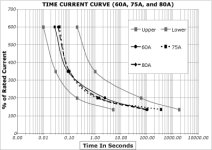
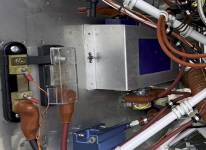
I had a similar experience, however what I learned is that if it sits for a while, (3-5 minutes) it should reset itself. Mine cut itself off from a loss of voltage on a cold day. (It had also been sitting for almost 2 months.I had the same experience as Scott. Happened twice. Kind of a pain since you got to get out of plane in the cold, remove cowling, put voltage on EarthX to reset it, recowl, get back in, hope it starts without tripping. When it trips, it trips and there’s no warning. To reset, apply voltage. The extra “protection” does have its drawbacks. I wired up a quick disconnect to make the process easier in future but so far, hasn’t repeated. Maybe it was just the combination of a cold soaked plane on a cold Georgia morning combined with higher resistance of the b&c starter. Maybe not. One thing about it, The old lead acid would give plenty of warning before it quit. I’ve always felt that a dual battery of some sort for starting and general backup would be a good plan.
It is a plus. The pilot can keep flying the airplane instead of being distracted by a fuse. An airliner once crashed in the Florida everglades while the pilots were trying to figure out why an indicator light wasn't working. Bob N (who wrote the book on aircraft wiring) once said, "That blown fuse or tripped circuit breaker just prevented a fire. Do you want to give the fire a second chance?"The downside is that if the fuse trips in flight there is no chance to reset until on the ground. Or is it a plus?
Save troubleshooting for when safely on the ground.
