Van's Air Force

The definitive Van's Aircraft support community! Buying, building or flying an RV? Join our exclusive family of mentors and enthusiasts!

Condition Inspection Cost

Have had the same shop to my annual for the past five years. The cost has crept up a bit, but this year it was $2k MORE.
Last year it was $2500 and this year it was $4500. When I ask why:
“Your past flat rate was 11 hours at $128 an hour. I went online and found that I was way under market. The median is 16 hours.”
The new shop rate per hour is $138.
After the flat rate of 16 hours are six SBs @.5. ie -connecting rods inspection, wing aft spar inspection, elevator spar inspection, inspect wing and bolt attach,ents, horizontal stab spar inspection, fuel injector line inspection.
$4500 seems to me to be in line for a Mooney or Beech annual. How much are you paying? Does your mechanic charge a flat rate rather than hours actually worked? Finally hy are the SBs not included in the flat rate?
 
My last condition inspection cost me $750, not including the cost of oil, filter, and plugs, but including the cost of borescoping and installing an AS oil cooler shutter / Bowden. He uses the standard Van's condition inspection checklist and I provide him with the construction drawings on disk and any new service bulletins. He's an A&P/IA for one of the two EMS helicopter services at our airport. I don't know how he figures the cost, but when he's done I just ask him what I owe him. I'm very grateful for his support at such a reasonable cost.
 
Last edited:
My condition inspections cost me only my time and normally take between 2 or 2.5 days to complete. Using a rather long check list, systematically going through all the items that need checking/lubing. Of course if I find an item that is questionable or out of limits, gets replaced and don't consider those costs a condition inspection cost and chock it up to normal maintenance costs.
In my view, I have a greater vested interest in knowing my aircraft intimately and inspecting it thoroughly than the fella that's charging $138 an hour and stays on the ground.
When flying certified aircraft didn't have the luxury of signing the aircraft as being airworthy, but was always fully involved in the Annual/100hr inspection process. Savings were had by removing/installing interior, inspection panels, cleaning and repacking wheel bearings and so on.
I have seen errors on the part of the pro's doing aircraft inspections and being human, these things happen. Working with and helping those that inspect your aircraft may reduce your inspection cost and increase thoroughness of the inspection.
 
....Working with and helping those that inspect your aircraft may reduce your inspection cost and increase thoroughness of the inspection.
Old joke. Sign on aircraft shop door: "$100/hr. Or $130/hr if you help."
Seriously, I think it's perfectly fair for an A&P to charge you for the time he spends teaching/mentoring you. IMHO it's money well spent. And, as you get good at it, it will eventually save money.
 
Have had the same shop to my annual for the past five years. The cost has crept up a bit, but this year it was $2k MORE.
Last year it was $2500 and this year it was $4500. When I ask why:
“Your past flat rate was 11 hours at $128 an hour. I went online and found that I was way under market. The median is 16 hours.”
The new shop rate per hour is $138.
After the flat rate of 16 hours are six SBs @.5. ie -connecting rods inspection, wing aft spar inspection, elevator spar inspection, inspect wing and bolt attach,ents, horizontal stab spar inspection, fuel injector line inspection.
$4500 seems to me to be in line for a Mooney or Beech annual. How much are you paying? Does your mechanic charge a flat rate rather than hours actually worked? Finally hy are the SBs not included in the flat rate?
Sounds excessive. Im OCD and do a lot of triple check
Have had the same shop to my annual for the past five years. The cost has crept up a bit, but this year it was $2k MORE.
Last year it was $2500 and this year it was $4500. When I ask why:
“Your past flat rate was 11 hours at $128 an hour. I went online and found that I was way under market. The median is 16 hours.”
The new shop rate per hour is $138.
After the flat rate of 16 hours are six SBs @.5. ie -connecting rods inspection, wing aft spar inspection, elevator spar inspection, inspect wing and bolt attach,ents, horizontal stab spar inspection, fuel injector line inspection.
$4500 seems to me to be in line for a Mooney or Beech annual. How much are you paying? Does your mechanic charge a flat rate rather than hours actually worked? Finally hy are the SBs not included in the flat rate?
Unless you have major deficiency s, thats excessive. Id look for another shop.
 
I’m glad you brought thiss up. I Just brought my 2007 4Runner into a small shop that works exclusively on Honda/Toyota that has been around a long time to have a few things done that I’m not equipped to do. Their shop rate is $175/hr, local car dealers are at $250/hr!

So guess what, I’m raising my rate to the same as my auto repair shop guys, $175/hr.
So my normal 2 seat CI which I agree is a 16hr job will be $2500 flat rate not including parts/repairs (SB checks included).
It’s insane that the hourly rate for car repairs is higher than aircraft repair.
 
Last edited:
Have had the same shop to my annual for the past five years. The cost has crept up a bit, but this year it was $2k MORE.
Last year it was $2500 and this year it was $4500. When I ask why:
“Your past flat rate was 11 hours at $128 an hour. I went online and found that I was way under market. The median is 16 hours.”
The new shop rate per hour is $138.
After the flat rate of 16 hours are six SBs @.5. ie -connecting rods inspection, wing aft spar inspection, elevator spar inspection, inspect wing and bolt attach,ents, horizontal stab spar inspection, fuel injector line inspection.
$4500 seems to me to be in line for a Mooney or Beech annual. How much are you paying? Does your mechanic charge a flat rate rather than hours actually worked? Finally hy are the SBs not included in the flat rate?

Ask for 16 shop hours at your local car place for an equivalent performing car.
Realize the actual 3D aircraft costs less to maintain than the factory program on an equivalent performance 2D car.

If not rolling up your sleeves, pay the man.
 
Last edited:
If the cost really bothers you (it would me at that amount, but for many, they wouldn’t bat an eye…), then I’d start thinking about your annual Condition Inspection differently. Delete the phrase “shop” from your vocabulary, and instead, start a relationship with a good A&P who will work with you to do the inspection. Ask here, for folks in your local area, ask around your EAA chapter….there are folks (although I know they are getting harder to find - I personally don’t have the time to do CI’s for other people, its just not what I do with my time on a daily basis. But having an airplane inspected costs time - your or someone else’s, and you can either spend your time or your money. A “shop” with an accounting department is going to do everything by a schedule, a computer program, a plan….the mechanic who touches your airplane receives a tiny fraction of what you spend, and has no discretion in the final cost.

The other thing to remember about a condition inspection is that it is just an inspection You should be doing regular maintenance all year long. If you think that the airplane only needs to be maintained once a year, then you’re going to see all those costs at once.

When I owned a certified airplane, and had to have an A&P do the work and an IA do the inspection, the inspection itself had a fixed costs (it was a long time ago and was about $300). My A&P was a friend, and he mentored me to do most of the maintenance tasks myself, so I paid him in meals and other things, change my own oil, removed and replace inspection covers, and wrote a check for $300…..

It’s all about how you want your economy to work - do you want to be involved, or just drop things off at the dealer?
 
The average builder/owner maybe the worst inspector of his own aircraft for various reasons.

……Or, he might be the best - all for very good reasons. No question, another set of eyes on critical areas is a good idea. My CI is usually stretched out over about a month done in sections, because I’m taking my time and not taking the airplane out of service the whole time.
 
When I owned a certified airplane, and had to have an A&P do the work and an IA do the inspection,
I was wondering how much of the work the owner is allowed to do with certificated airplane. I was under the impression that an owner can do a lot of the work, short of modifying the of the airplane, and the annual inspection.
 
Have had the same shop to my annual for the past five years. The cost has crept up a bit, but this year it was $2k MORE.
Last year it was $2500 and this year it was $4500. When I ask why:
“Your past flat rate was 11 hours at $128 an hour. I went online and found that I was way under market. The median is 16 hours.”
The new shop rate per hour is $138.
After the flat rate of 16 hours are six SBs @.5. ie -connecting rods inspection, wing aft spar inspection, elevator spar inspection, inspect wing and bolt attach,ents, horizontal stab spar inspection, fuel injector line inspection.
$4500 seems to me to be in line for a Mooney or Beech annual. How much are you paying? Does your mechanic charge a flat rate rather than hours actually worked? Finally hy are the SBs not included in the flat rate?
I charge a reasonable hourly rate for however long it takes. Most RV owners do pre-inspection work themselves which cuts down my time spent. Helping is fine, sometimes helping increases my time spent, depends upon the owner's skills. Service Bulletins laid out in advance shortens my time spent. Opening inspection panels, changing your own oil, all shorten time. Never have I been accused of over charging
Have had the same shop to my annual for the past five years. The cost has crept up a bit, but this year it was $2k MORE.
Last year it was $2500 and this year it was $4500. When I ask why:
“Your past flat rate was 11 hours at $128 an hour. I went online and found that I was way under market. The median is 16 hours.”
The new shop rate per hour is $138.
After the flat rate of 16 hours are six SBs @.5. ie -connecting rods inspection, wing aft spar inspection, elevator spar inspection, inspect wing and bolt attach,ents, horizontal stab spar inspection, fuel injector line inspection.
$4500 seems to me to be in line for a Mooney or Beech annual. How much are you paying? Does your mechanic charge a flat rate rather than hours actually worked? Finally hy are the SBs not included in the flat rate?
I charge a very reasonable hourly rate for however long it takes. Most RV owners cut the time down by opening cowling, panels, etc.. Laying out service bulletins cuts time as well. Owners often change their own oil and filter too. Helping with the work is fine but it doesn't always speed things up. The price paid by the OP sounds high to me
 
I was wondering how much of the work the owner is allowed to do with certificated airplane. I was under the impression that an owner can do a lot of the work, short of modifying the of the airplane, and the annual inspection.
Mechanics are allowed to have apprentices (where do you think many mechanics come from?), and theoretically, those apprentices are working under the direct supervision of the A&P to do certain tasks. Many of those tasks are the big time sinks - removing and replacing cowls, inspection panels, and interiors, If the maintenance has been kept up, records kept of SB’s, the airplane opened for inspection….the actual inspection doesn’t take that long. And the owner can be the A&P’s apprentice. It is much more common for that to happen in the experimental world than in the certified world…which is one reason that one world is shrinking while the other is growing……
 
The condition inspection has become the most challenging part of ownership for us. I had one A&P get old and pulled back after getting covid. I had another A&P move across the country. This last summer my A&P was murdered the day before my condition inspection was scheduled to occur.

I've been to the shops that want to take it in and do 100% of it without my involvement. They weren't familiar with type. That ended up being costly and they caused damage in the process. Really don't want to go down that road again. Finding an A&P willing to supervise me doing the work of the condition inspection is challenging despite my having all the requisite tools and deep knowledge of the aircraft / powerplant /systems...

Sure would be nice to have a pathway to perform our own condition inspection for non-builder owners.
 
Wouldn't own a homebuilt if couldn't inspect it myself. Kind of defeats the purpose. Inspection cost is $0.
That would limit Experimental Aviation to only to the person who built the airplane or to owners who happen to be an A&P. Mark me down as "opposed" to the concept.
 
I've been to the shops that want to take it in and do 100% of it without my involvement. They weren't familiar with type. That ended up being costly and they caused damage in the process. Really don't want to go down that road again.
This is what would scare me - some “expert” that decided he did not like (or understand) something and starts “fixing” it.

I do my own CIs but never alone. I have at least one experienced RV owner looking over my shoulder. I do however enjoy an old school A&P dropping by to take a look as well. I’m always open to the pearls of wisdom from someone who has seem more engines than I ever will.

For non builders do as been suggested, find an A&P that wants to teach you, prepare the plane, and then pay him for his time. Add food and beer as appropriate. Everyone wins.

Carl
 
When I read the opening post my first thought was WOW. Way WAY to much. Then I read the others. Sixteen hours to complete a CI? I built my plane and have done the inspections each year X 12 now. First year it took me 6 days with at least 8 hours or more each day... 48 hours. Of course I was new at it and had no clue how to approach it. Since then I have learned alot and it now usually requires four 8 hours days. While reading this thread I had the thought if I was an AP/AI and charged only $100 an hour that would still be $3200... and that does not include any parts, oil, filters etc. I was surprised. Stepping back and looking at the bigger aviation picture on the whole, it's just sad things are the way they are and how expensive it is.

EDIT: If my above example was true, I know me and would not have the heart to charge a fellow plane owner that much for a CI. I would likely charge half that which by todays standards would not be off at all. This of course would only work if one is an independent operator. Now take that same plane into a business with several mechanics, a small one or two person front office staff and $$$ overhead.... I don't see how they could remain profitable enough to stay in business without charging a lot more.
 
Last edited:
Or the best…depends on the person.
Nothing new here, proven many times that self inspection doesn’t work well….

“Boeing is under scrutiny over reports of recurring errors on the assembly line for the 787 Dreamliner plane. The errors are believed to have stemmed from a manufacturing process that allows mechanics to self-inspect their work”.
 
Nothing new here, proven many times that self inspection doesn’t work well….

“Boeing is under scrutiny over reports of recurring errors on the assembly line for the 787 Dreamliner plane. The errors are believed to have stemmed from a manufacturing process that allows mechanics to self-inspect their work”.
In Canada the owner of a homebuilt/experimental is allowed to do their own inspections and sign it off, whether they built the plane or not. Seems to be working for us, and I agree with Walt some of us shouldn't be doing it without a lot of guidance.
 
In Canada the owner of a homebuilt/experimental is allowed to do their own inspections and sign it off, whether they built the plane or not. Seems to be working for us, and I agree with Walt some of us shouldn't be doing it without a lot of guidance.
Interesting discussion, I have completed 7 CI,s on the RV4 I built and have not been able to complete an inspection in less than 40 hours. I do maintenance as needed throughout the year so not a lot of actual work to do at CI time. I always have a AP/IA check out my engine/firewall forward and they have always found a little something they wanted addressed. The most recent CI in November the AP/IA said " I don't see anything I don't like but here is a couple areas you should address". Took me about an hour to change/fix the areas he wanted addressed and we both feel good about the inspection. I have been very fortunate to find experienced people to double check my work for very little cost.
 
I think the takeaway here is to do as much of the ongoing maintenance as you can - oil changes, repacking wheel bearings, changing brake pads and tires. Then when inspection time comes, pull the cowling, pull the panels, open up any areas that are subject to SB's, etc. The inspector is a set of eyes to verify that everything is as it should be. You're wasting their talent (and your money) if you pay them to unscrew panels, remove a cowl, change the oil, etc.
 
Just because a person has learned how to build an aircraft does not mean that they have learned how to inspect it. I have proposed several times to the FAA that the first condition inspection of an amateur-built aircraft by a "Repairman" should be under the direct supervision of an A&P, or at least a very experienced inspector of the aircraft type being inspected.
Another problem with a repairman inspecting his/her own aircraft is that when you are very familiar with the aircraft, it is extremely easy to overlook a discrepancy that would be obvious to another set of eyes. When I do my own inspections, I almost always have another inspector come look things over before I put it back together.
 
Con-rod inspection is a big one...$4500 seems excessive but that is very time consuming. If $4500 is a one-off with the AD, then I wouldn't fret about it. This is coming from someone that pays only $300 for owner assist.
 
The average builder/owner maybe the worst inspector of his own aircraft for various reasons.
i agree Walt, a 2nd set of QUALIFIED eyes is always a good idea...in my experience, certified A/C, run the gamut from airworthy to not so much (bar room annuals) I think they're called....
 
Just because a person has learned how to build an aircraft does not mean that they have learned how to inspect it. I have proposed several times to the FAA that the first condition inspection of an amateur-built aircraft by a "Repairman" should be under the direct supervision of an A&P, or at least a very experienced inspector of the aircraft type being inspected.
Another problem with a repairman inspecting his/her own aircraft is that when you are very familiar with the aircraft, it is extremely easy to overlook a discrepancy that would be obvious to another set of eyes. When I do my own inspections, I almost always have another inspector come look things over before I put it back together.
While I understand it is extremely prudence to have another set of eyes to verify my own inspection, I am 100% against additional regulations on the EAB repairment inspection.
What I would prefer is the FAA ASI, before signing off the Repairment Certificate, quiz the builder/owner on how he plans to inspect his airplane. If he doesn't have the knowledge or the tools to perform the tasks satisfactory, then don't sign the form. This was my experience. I had two (2) ASIs came to my hangar and inspected the airplane post Phase 1, quizzed me on maintenance, asked me to demonstrate how to use the tools, before signing off the form. There were A LOT of incredulous comments on this forum regarding my own experience, since most RV builders got an automatic sign off from the FAA. If the FAA wants to tighten the rules, then this is how to do it. Not to add more regulations.

Edit: This was the thread about my experience with the local FSDO ASI regarding the repairement certificate form sign off. This process was way more involved comparing to all the RV builders, including those who finished their RV8 at the same local airport.
 
Last edited:
I agree a second set of "trustworthy" eyes is always a good thing. I am an ex Delta line mechanic, A&P, FCC. My a/c partner is even more sharp eyed and picky than me. We do our inspections as a team.

We decided to go with 6 month condition inspections, 1 is airframe and the other is firewall fwd. This breaks up the down time and gets more frequent detailed looks on the airplane.
 
Nothing new here, proven many times that self inspection doesn’t work well….

I'm sure Walt welcomes another set of eyes for annuals on his own airplane, as I do. Reality is I make mistakes. I do my own inspections, but I feel better when a qualified person stops by the hangar and joins me for a good look.

I've told this one before, but it bears repeating. I got a lesson early on. My new JN-4C replica went through the usual TC and DAR inspections. A lot of local airplane people looked it over. I flew it Alabama to Oshkosh and back, so it was poked and scoped by aircraft judges and spectators. Got a Gold Lindy and an EAA photographer's "dead grass" photo. Took it to SERFI for more looking. You get the idea.

At the first annual, I discovered there was no nut on the bolt coupling the torque tube to the aileron pushrods. I had designed it in double shear with the bolt installed head up , so gravity alone kept it there. Understand this little detail...although under the seat, the joint was plainly visible through the boarding step holes on the side of the fuselage. I'd guess 500 "inspectors" had looked through those holes.

When folks stop by to shoot the breeze, hand them a flashlight and invite them really look.
 
It’s insane that the hourly rate for car repairs is higher than aircraft repair.
I agree with the insanity of these rate. I am an IT engineer with more than 30 years of experience and my hourly rate is a fraction of that. Last time we took my wife's car to the dealer, they told us of hourly rate of $253 and the cost of repair was much more than the car is worth. So, we brought the car home and I spent one day of my time and 1/15 of the cost of repair on parts to do exactly what they were going to do.

Thank you Audi dealer
 
Part of the higher shop rate for auto shops, especially dealers, has got to be the physical and staff overhead. Huge, opulent buildings with a nice lounge for customers, service writers, parts pickup drivers, customer shuttle drivers, guys who wash the cars, fairly large inventory of parts across numerous models kept in stock, computers, code readers and software for diagnosis - things that few, if any, general aviation shops have.
 
If it helps the OP, while I do my own CI’s on the RV with my repairman cert, the Bucker is Experimental Exhibition, requiring a AP sign off.
There were multiple AP’s on the Airpark willing to sign off my work for a beer, but when we moved it was tough finding someone. I eventually did.
I do all the work and leave the aircraft cowl off. He checks for pertinent AD’s, and spends about 4 hours inspecting control linkages, boroscope photos, and basically gives everything a good look, and a wrench here and there.
He has a two hour one way drive.
I pay him $600. So, under $100/hour including his driving time.
They are out there.
 
Part of the higher shop rate for auto shops, especially dealers, has got to be the physical and staff overhead. Huge, opulent buildings with a nice lounge for customers, service writers, parts pickup drivers, customer shuttle drivers, guys who wash the cars, fairly large inventory of parts across numerous models kept in stock, computers, code readers and software for diagnosis - things that few, if any, general aviation shops have.
My independent car guy has a shop about the size of my hanger, and as far as tools and specialized equipment, we're probably pretty close.

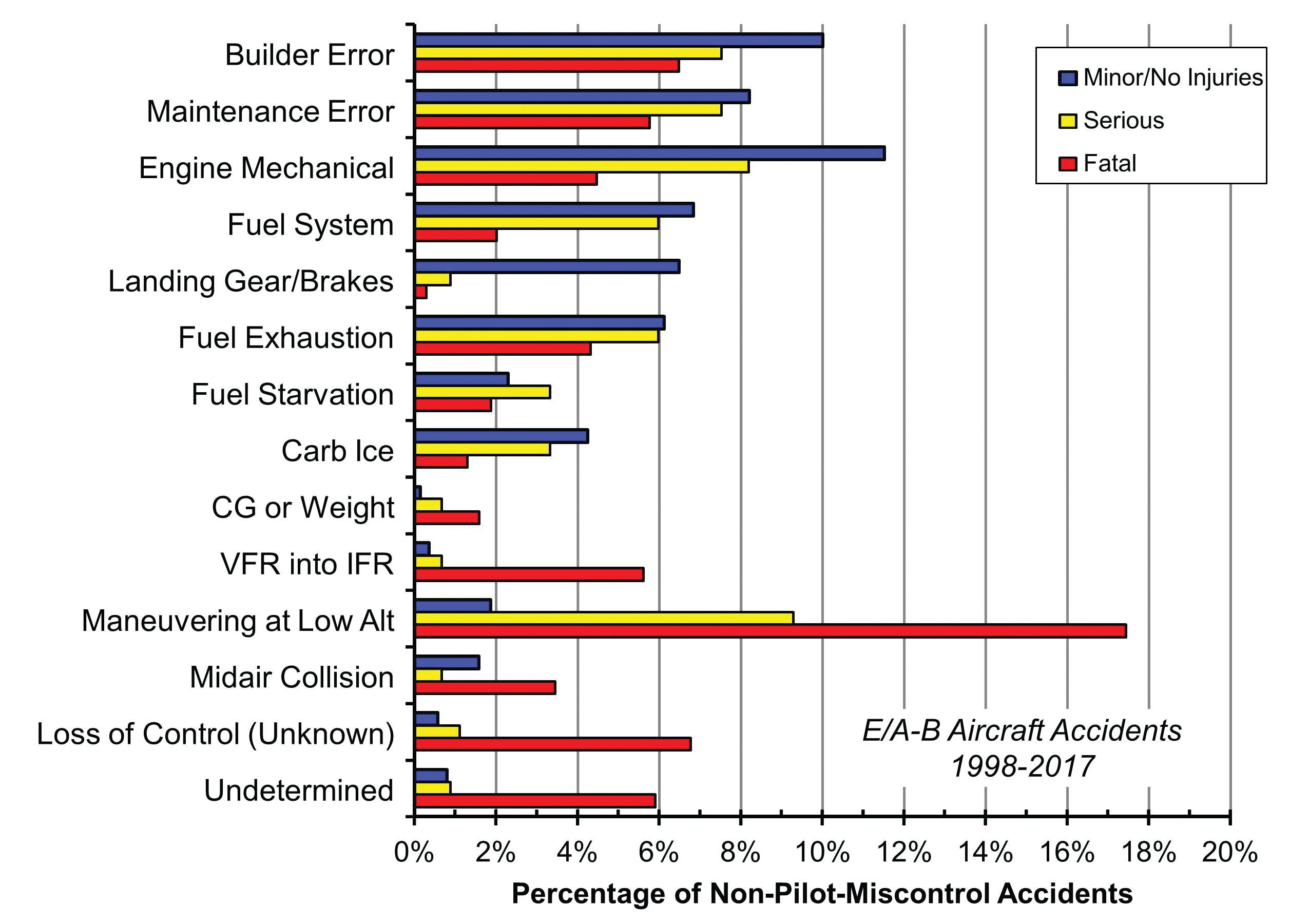
And for those folks who view maintenance as some unjustified outrageous expense, I encourage you to review the EAB safety record which is not so great, many of those accidents appear to be a loss of power. We've had a few of those sad stories posted on VAF recently.
 
Last edited:
Minor drift, search the "Waddington Effect". Inspections, catching wear and faults early with good pre and even better postflight inspections is as valuable as a "good" annual condition inspection.

Second sets of eyes are priceless, as are experience maintaining as close to make and model as possible.

Minimize instrusion and disruption/interruption, lest the gremlins intrude.
 
Nothing new here, proven many times that self inspection doesn’t work well….

“Boeing is under scrutiny over reports of recurring errors on the assembly line for the 787 Dreamliner plane. The errors are believed to have stemmed from a manufacturing process that allows mechanics to self-inspect their work”.
Give me a break. There is no one more qualified to do a condition inspection on the plane I built, than me.

Who has the most skin in the game? The A&P that signs the logbook or the guy in the seat with nowhere to go when things go wrong?

Unfortunately, non builders do not have the option, and have to put their trust in a mechanic that may or may not have familiarity with RV aircraft.
 
Give me a break. There is no one more qualified to do a condition inspection on the plane I built, than me.
Of course none of this applies to you Bob, you’re my hero :rolleyes:
Your ego probably wouldn’t have done well at the airlines, 3 sets of eyes/signatures on flt critical stuff.
 
Last edited:
Great discussion. Over 17 years that I owned a Cherokee & then a Turbo Dakota, I owner-assist partipated in every annual but one with the main intent of learning everything I could about the aircraft that carried me, my family and friends through the skies. Being a DIY type, I loved it and it's always made me feel better to have that intimate knowledge of the birds I'm flying.

I've carried that forward into five years with my RV-8 as a non-builder owner where with an extensive checklist, I do 85-90% of the CI work, with a trusted and EAB experienced IA in a small shop a few hangars away available to consult as needed throughout. He'll then finish the CI with everything still opened up performing the things that make him feel comfortable signing off airworthiness and we'll discuss any applicable SB's needed, most of which I also do myself. Squawks & any discrepancies discovered during the CI we address separately. Once it's all back together & test runs complete, he'll do the signoffs in the logbooks. I can get everything done over a couple of long weekends, or a short week. I typically come in <$500 for his time and the usual materials annually, which I see as a fringe benefit for my efforts.

To me, that trusted relationship with the A&P/IA has always been key. I've had just a few different ones over all the years, so our trust in each other grows with each engagement. Most importantly, I know my limitations (you don't know what you don't know), and they've each learned quickly that I'll always come to them with questions or ask for help if I'm even remotely unsure of what I'm looking at or dealing with. As others have said, it's my butt in the seat that suffers the consequences otherwise.
 
I encourage you to review the EAB safety record which is not so great, many of those accidents appear to be a loss of power. We've had a few of those sad stories posted on VAF recently.
Good point. Most of the RV accidents aren't the result of structural failure, but something went wrong with the powerplant, fuel, or a combination of both. We just had a recent forced landing of a RV14A. Another accident in NorCal with an RV that was in the pattern due to an engine failure. The only incidences I could recall of structural failure were exceeding the VNE. I've even know one RV8from my local field that crashed after taking off due to an engine failure early last year.
 
Great discussion. Over 17 years that I owned a Cherokee & then a Turbo Dakota, I owner-assist partipated in every annual but one with the main intent of learning everything I could about the aircraft that carried me, my family and friends through the skies. Being a DIY type, I loved it and it's always made me feel better to have that intimate knowledge of the birds I'm flying.

I've carried that forward into five years with my RV-8 as a non-builder owner where with an extensive checklist, I do 85-90% of the CI work, with a trusted and EAB experienced IA in a small shop a few hangars away available to consult as needed throughout. He'll then finish the CI with everything still opened up performing the things that make him feel comfortable signing off airworthiness and we'll discuss any applicable SB's needed, most of which I also do myself. Squawks & any discrepancies discovered during the CI we address separately. Once it's all back together & test runs complete, he'll do the signoffs in the logbooks. I can get everything done over a couple of long weekends, or a short week. I typically come in <$500 for his time and the usual materials annually, which I see as a fringe benefit for my efforts.

To me, that trusted relationship with the A&P/IA has always been key. I've had just a few different ones over all the years, so our trust in each other grows with each engagement. Most importantly, I know my limitations (you don't know what you don't know), and they've each learned quickly that I'll always come to them with questions or ask for help if I'm even remotely unsure of what I'm looking at or dealing with. As others have said, it's my butt in the seat that suffers the consequences otherwise.
Excellent post.

I would never trust my RV or the Bucker with an AP/AI who didn’t have direct and extensive experience with type unless I was involved. Even at that, I’m going to be involved. I had several AP’s deny my request for services as an owner assist for the Bucker. They simply wouldn’t do owner assist. “Not cost effective and we’re too busy….” Or “we don’t do owner assist.”
I moved on.

You’re lucky if you can find someone you can work with and trust.

To date, I have only done about 50 CI’s and annuals, so I’m still learning..
Every year there is something new learned. Maybe not a major “fall out of the sky” thing but a new technique or something obvious that most, even experienced guys, just don’t know or do.

I consider wrenching on my airplanes a part of my “hobby”, for “entertainment and education” right?
I won’t own an airplane I don’t know intimately, but I would encourage everyone to have some involvement with the inter workings of their machine.
 
Good point. Most of the RV accidents aren't the result of structural failure, but something went wrong with the powerplant, fuel, or a combination of both. We just had a recent forced landing of a RV14A. Another accident in NorCal with an RV that was in the pattern due to an engine failure. The only incidences I could recall of structural failure were exceeding the VNE. I've even know one RV8from my local field that crashed after taking off due to an engine failure early last year.
Were these the result of the owner doing their own CI’s?
 
Were these the result of the owner doing their own CI’s?
I just started browsing the NTSB database (with "RV" in the model), and out of all completed accident reports over the last two years involving serious injuries or worse, there was only one involving an engine failure. Turns out the plane had just completed a CI (non-builder owner, so it would have been an A&P) and whoever inspected it failed to notice that the fuel pickup SB had not been complied with and the engine died of fuel starvation. I wouldn't call that proof that A&Ps shouldn't do inspections at all, just that they aren't all perfect or created equal. The original builder missed this, also.

I would imagine we can all agree that the more experienced eyes on an inspection the better, but I wouldn't go so far as to say that there is "proof" that self-inspection is worse. That would require data. Nobody is infallible, and if I had to have just one person inspect my plane, I'd choose me over most A&Ps. I'd choose several of you over me, as well (Vic, Walt, Mel, etc).

Chris
 
I just started browsing the NTSB database (with "RV" in the model), and out of all completed accident reports over the last two years involving serious injuries or worse, there was only one involving an engine failure. Turns out the plane had just completed a CI (non-builder owner, so it would have been an A&P) and whoever inspected it failed to notice that the fuel pickup SB had not been complied with and the engine died of fuel starvation. I wouldn't call that proof that A&Ps shouldn't do inspections at all, just that they aren't all perfect or created equal.

I would imagine we can all agree that the more experienced eyes on an inspection the better, but I wouldn't go so far as to say that there is "proof" that self-inspection is worse. That would require data. Nobody is infallible, and if I had to have just one person inspect my plane, I'd choose me over most A&Ps. I'd choose several of you over me, as well (Vic, Walt, Mel, etc).

Chris
Thanks Chris -
One thing everyone can do regardless of who’s doing the work is pull all the documentation together.
Registration, AW Cert., AD’s, SB’s, etc….
It will save time and cost and these are things every aircraft owner should know.
There are good AP’s out there and there are total idiots. Don’t get me started!
 
According to Kitplanes Magazine, here are some statistics about accidents involving Experimental/Amateur-Built (E/A-B) aircraft:
  • First flights
    The loss rate for first flights is about 0.60%, which is similar to the overall fleet rate.However, the rate of builder error accidents is higher during the first flight, at 26.2%.

  • Testing phase
    About 13% of crashes occur during the testing phase, which can be up to 40 flight hours. Most happen in the first 10 flight hours.

  • Engine stopping
    Almost a third of all E/A-B aircraft accidents start with the engine stopping.

Homebuilt Accidents: Fatal Factors - AVwebHomebuilt Accidents: Fatal Factors - AVweb
 
Last edited:
Quit whining about the cost and whine about the quality of the inspection. I changed A&P’s this year to one that worked for Beech that also teaches at the tech school.

He found things that my previous 2 guys should have caught. My V-Tail has never been neglected and all issues identified were always corrected.

He gave me a box of parts that were replaced including a header with tiny flange cracks and it was only 2 years old on a new engine. A worn out landing gear motor way past replacement time and worn out rod end bearings and a frayed cable. Needless to say I was shocked and pissed at the same time these things were not previously taken care of. The crap he found below the floorboards. He even rebuilt the upper fuel senders and now the gauges are accurate when the tanks are more than 3/4 full. Gear doors are now tight when closed. You get the picture.

Labor was $13k. Add parts cost and you can guess the total. As I looked over his work, I can tell he touched everything in the plane. My only complaint is the plane is dirty and for that price, it should have been washed.
 
As I looked over his work, I can tell he touched everything in the plane. My only complaint is the plane is dirty and for that price, it should have been washed.
Was your annual inspection actually performed in accordance with Part 43, Appendix D? According to Part 43, Appendix D (a) "Each person performing an annual or 100-hour inspection shall, before that inspection,...................... He shall thoroughly clean the aircraft and aircraft engine."

If he returned it dirty, the annual was not done properly! You canNOT properly inspect a dirty aircraft.

Ditto on what Walt said. "Bring it to me clean or expect to pay to get it cleaned!"
 
Last edited:
Cleaning is considered owner maintenance, I’ve told more than one person don’t bring me a dirty airplane or be prepared to pay to get it cleaned!
But it is dirtier than what I delivered to them. LOL.

And it was clean when delivered.

Come on Mel, it was meant as a funny. Sweat marks on a window, a grease finger print on the cowl. The usual stuff that come from touching stuff that those of us with ownership pride keep clean. Quite frankly I’m glad to see cuz I know where he had been.
 
Last edited:
Back
Top