Van's Air Force

The definitive Van's Aircraft support community! Buying, building or flying an RV? Join our exclusive family of mentors and enthusiasts!

Close Encounters Of The Bird Kind

jscurlock

Member
I’ve had several over the years, including a couple of actual strikes - small birds - but the latest was today, in cruise at ~11,000’ msl, late afternoon, near the Utah-Idaho border, basically over the middle of god-awful nowhere. Suddenly a Redtail whizzed by the right wingtip, maybe 30 feet off… I could see that it was apparently making a see-and-avoid evasive turn. All in a blink - maybe a two or three second event. I was indicating ~170 mph at the time. That hawk was up there living its best life, for sure… I’m interested to hear your own RV-bird interactions, particularly the near misses.
 
All the fowl I have encountered in close quarters, be it tactical jets or RV's, have gone down and left, so I now pull up and right.

Maybe I am an old wife telling a tale, but that is my story, and I am sticking with it.
 
I've had a couple of bird strikes over the years. Thankfully both in Cessnas which are built like a Brinks truck compared to an RV. As far as evasive maneuvers, both times I didn't even see the bird until its was too late. The first was something that hit the leading edge on climb out and left a dent, the second was presumably an owl that went through the prop at night while I was in the traffic pattern. All the ones that have been far enough for me to process "hey that's a bird". have gotten out of my way without me doing anything.

As far as do they dive or climb? My non-scientific observations make me think that it depends on the bird. Raptors seem like the climb, non-raptors dive. Or maybe it's completely random. Then again, maybe they have their own right of way rules that they learn in bird school...
 
I've had a couple of bird strikes over the years. Thankfully both in Cessnas which are built like a Brinks truck compared to an RV. As far as evasive maneuvers, both times I didn't even see the bird until its was too late. The first was something that hit the leading edge on climb out and left a dent, the second was presumably an owl that went through the prop at night while I was in the traffic pattern. All the ones that have been far enough for me to process "hey that's a bird". have gotten out of my way without me doing anything.

As far as do they dive or climb? My non-scientific observations make me think that it depends on the bird. Raptors seem like the climb, non-raptors dive. Or maybe it's completely random. Then again, maybe they have their own right of way rules that they learn in bird school...
I also have noticed that raptors act differently than non-raptors. Here in Wisconsin, we have a lot of Eagles. They tend to just look at you and seemingly ask "what the heck are you doing in my airspace". They do not seem to take a lot of evasive action. Other types of birds will tend to immediately dive. Not sure if right or left. I would not want to hit either type of bird.
Keith
 
All the fowl I have encountered in close quarters, be it tactical jets or RV's, have gone down and left, so I now pull up and right.

Maybe I am an old wife telling a tale, but that is my story, and I am sticking with it.
This one was diving down for sure, and trying to turn away as well
I've had a couple of bird strikes over the years. Thankfully both in Cessnas which are built like a Brinks truck compared to an RV. As far as evasive maneuvers, both times I didn't even see the bird until its was too late. The first was something that hit the leading edge on climb out and left a dent, the second was presumably an owl that went through the prop at night while I was in the traffic pattern. All the ones that have been far enough for me to process "hey that's a bird". have gotten out of my way without me doing anything.

As far as do they dive or climb? My non-scientific observations make me think that it depends on the bird. Raptors seem like the climb, non-raptors dive. Or maybe it's completely random. Then again, maybe they have their own right of way rules that they learn in bird school...
Yesterday I had no chance whatsoever to evade. Both of the birds I hit were small, like swallows, and did no damage. I went through a flock of geese about twenty years ago in my -6 - I’ll never forget seeing a goose pass over my left wing about five feet or so from the cockpit…. I also saw a V-formation of geese once when I was working up in North Cascades National Park, I was circling at about 9000’ above Hozomeen Mountain by Ross Lake and they passed below me at about 8000’ - above a cloud deck! That was in the -6 as well, probably around 2010. Even though I was a thousand feet above them, they were clearly disturbed by my presence and I departed the area as soon as I noticed that.
 
All the fowl I have encountered in close quarters, be it tactical jets or RV's, have gone down and left, so I now pull up and right.

Maybe I am an old wife telling a tale, but that is my story, and I am sticking with it.

There is nothing to left v right, however, they dropping down is an important note. Birds can’t climb well, they mostly can’t zoom either. But they can tuck their wings and dive. If you have the energy, up to avoid is always good. As for a turn away aspect, that gets weird, as birds are the pre-eminent “one circle fighters,” they love to cut in so as to try to force a predator’s overshoot. This means they often won’t do what seems logical to us and turn away.
 
I had a near run in with a small flock of geese several years ago. I had just turned west, into the very late fall afternoon setting sun after following the western shore of the bay of Green Bay here in Wisconsin. I glanced down at my panel for a quick monitor only to look up again to see a bunch of really pissed off geese making evasive maneuvers.

For a second there, I thought my goose was cooked.

Fall in these parts gets rather busy with migrating birds, so after that eye opener, I pay more attention to sharing airspace with them, particularly in the evenings when they are looking for a good FBO to spend the night.
 
I had a near run in with a small flock of geese several years ago. I had just turned west, into the very late fall afternoon setting sun after following the western shore of the bay of Green Bay here in Wisconsin. I glanced down at my panel for a quick monitor only to look up again to see a bunch of really pissed off geese making evasive maneuvers.

For a second there, I thought my goose was cooked.

Fall in these parts gets rather busy with migrating birds, so after that eye opener, I pay more attention to sharing airspace with them, particularly in the evenings when they are looking for a good FBO to spend the night.
That’s almost exactly what happened to me.
 
Had a buddy in an RV-4 who was not as fortunate. He was flying Birmingham (BHM) to Meridian (MEI), Marine F/A-18 pilot doing a T-45 instructor tour (NMM), who took a goose through his upper canopy slightly off to the side. He took some to the head and deliriously made an emergency landing to Topton Estates in the south portion of Navy McCain class D. He got out, was trying to look over his plane, and a resident of the air park came over “dude, you don’t look so good. You need to go to the hospital.” Head gash, blood obscuring his vision though not really cognizant of these. He recovered fine and lucky no one was in the back seat as that took the bulk of the bird, probably would have killed anyone there, plane was deemed totaled. Insurance later trucked out the airframe.
 
While at China Lake, one of the AV-8Bs was nearly disintegrated by a flock of birds. And we all remember Sully…
 
I live in the woods, literally inside the Paul Bunyan State forest. Have my own strip and fly my 'bush' type planes out of. Had a few bird strikes over the years. My Cessna that I had at the time, built like a tank, just splattered them with generally a mess of blood and guts to clean up on landing.

I do have a slight dent in the leading edge of my Rebel that took a direct hit from a small bird. Eagles, buzzards and hawks are what worry me the most. As others have mentioned, eagles generally give you the 'WTF do you think you're doing in my area' look. Lots of them in the area with several nesting pairs.

Landing also has it's challenges at times. Sand hill cranes like to spend time on my strip, not a small bird and surly would cause some big damage. They are not very high speed when departing nor are they of the agile type when flying.

Of course there are wolves, bears, and deer that are around but most of those will run when approached.
 
We hit a small bird, maybe a starling, in our 10 two weeks ago. We were around 2000 agl just inside the delta airspace. Fortunately we weren’t moving too fast and it left only a very small dent in the leading edge. No significant creasing, so hoping i can just fill in the area and add paint. This was my first strike.
 
I also have noticed that raptors act differently than non-raptors. Here in Wisconsin, we have a lot of Eagles. They tend to just look at you and seemingly ask "what the heck are you doing in my airspace". They do not seem to take a lot of evasive action. Other types of birds will tend to immediately dive. Not sure if right or left. I would not want to hit either type of bird.
Keith
While approaching kapa in Colorado I saw what i thought was a small plane. Remember thinking who paints their plane brown. As it got closer, I realized it was an eagle. It was huge. It turned its head toward me and gave a look that implied “what the heck are you doing in my airspace.” It clearly felt dominant and made no evasive action, but seemed to expect me to get out of its way. I true case of alpha behavior.
 
Out of Auburn Wa. Southbound over lake Tapps an osprey just below us flips over on his back and shows his talons ready to give me the business. We passed with nothing but his threat showing. Obviously I violated his airspace.
 
I realized it was an eagle. It was huge. It turned its head toward me and gave a look that implied “what the heck are you doing in my airspace.” It clearly felt dominant and made no evasive action, but seemed to expect me to get out of its way. I true case of alpha behavior.

Funny thing about this is that the larger birds are actually worse flyers and get beat all the time by smaller more agile birds. Boyd was right about Fast Transients. And about Energy-Maneuverability. Small birds attack and drive away big ones fearless of their own selves but fearful of their eggs and hatchlings.
 
Never in a plane although I've dodged quite a few buzzards. l was trained to climb, because they dive. Just don't stall trying to avoid a bird.

I have been buzzed by a bald eagle a couple times. They fish in Lake Estes. From a few feet away, that is a really big bird. The sound is amazing too. I think they buzz me to size up my dog. She's 20lbs. A little heavy for an eagle snack. They are happier with a nice rainbow trout.
 
Canadian Geese are flocking around here this time of year to start heading south. We have to be real vigilant as at times you might see over a thousand birds in many V formations out the window at the same time.
If I see these guys ahead at same altitude, I pull & climb over them, they don’t seem to be able to climb very well. But you don’t want to be around when they try to evade & swarm.
Snow Geese look to be even bigger & are real pretty to see flying formation (from a distance). You can see them farther away because the reflected light off their wings look like strobes.
Night flight isn’t a good idea here this time of year.
 
Flying a sailplane approaching my next thermal only to find it was already occupied by a hawk. The hawk turned head on toward me, tucked one wing and did a roll in an attempt to defend its thermal. Then rolled a second time. I gained some altitude and left for my next thermal. The hawk followed me and ten feet over my canopy, extended it's talons at me to show who was boss.
 
Over Castlerock, CO, one day in my C180, a golden eagle dove on me. I got a glimpse of it as it came from down above to in front of my right wing, unfurled and showed me its talons, then realized the C180 was a bit too big to take home for dinner. It retucked and dove. This took place around 1,500' AGL. It all took a second or two.

Another time, west of Boulder, CO, I was at 16,500' northbound, and flew near a bald eagle. It was heading a little westerly of me and ignored me completely. But there he was, heading into the storm I was trying to get home before. Which I shortly did, got the plane in the hangar, and the next morning there was 24" of fresh snow.

Dave
 
I've come close a couple times but thankfully no contact. I did install wig wag LEDs in the wing tips several years back. During my research about wig wags I came across an article. An airline, Quantas IIRC, had done a study by placing wig wags on a few of their big jets. I don't know how they came up with the numbers, but their conclusions were those jets with the wig wags had a "10-40%" reduction in bird strikes compared to those that didn't have wig wags. I fly with my WW on all the time and feel it does make me more noticeable to other aircraft and birds.
 
Flying a sailplane approaching my next thermal only to find it was already occupied by a hawk. The hawk turned head on toward me, tucked one wing and did a roll in an attempt to defend its thermal. Then rolled a second time. I gained some altitude and left for my next thermal. The hawk followed me and ten feet over my canopy, extended it's talons at me to show who was boss.
This reminds me of the time returning from OSH, flew close to the base of a small cloud & ran into a flock of Gulls (I assume) riding the thermal under it. Happened so quick, scared the Gull poo right out of me.
 
Nebraska is right in the midst of the bird migration hiway. All the big stuff like cranes and geese. These folks do this nearly everyday in the spring each year, it would be terrifying to me.
 
Migrating geese and duck season starting here.
They fly all weather and even night time.
I hit something once that put a dent in a C172 wing strut. Didn’t see it coming.
The noise scarred the s#@* out of me. Glad it did not come through the windshield.
Recently, saw a small drone at about 1000 agl, even if it shouldn’t be there…
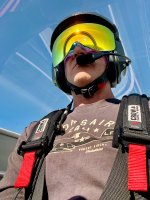
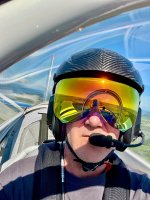
2 years ago, I bought a helmet to protect my head and eyes, not in case of a forced landing but to reduce injury if something hits the windshield and goes through. I also wear protective glasses under the visor. Gives me the impression that I’d have half a chance.
I’m not affiliated in anyway with a helmet company.
We all love buzzing around at ~ 160 KTAS. Until something hits you…
 

Attachments

  • IMG_9989.jpeg
    IMG_9989.jpeg
    3 MB · Views: 44
  • IMG_9988.jpeg
    IMG_9988.jpeg
    2.7 MB · Views: 44
Over Castlerock, CO, one day in my C180, a golden eagle dove on me. I got a glimpse of it as it came from down above to in front of my right wing, unfurled and showed me its talons, then realized the C180 was a bit too big to take home for dinner. It retucked and dove. This took place around 1,500' AGL. It all took a second or two.

Another time, west of Boulder, CO, I was at 16,500' northbound, and flew near a bald eagle. It was heading a little westerly of me and ignored me completely. But there he was, heading into the storm I was trying to get home before. Which I shortly did, got the plane in the hangar, and the next morning there was 24" of fresh snow.

Dave
16.5....!!! wow.. I was curious so I researched the highest flying bird. Apparently a Rüppell's vulture, an Asian giant, hit by a passenger jet flying at over 37K...
 
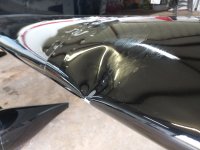
I saw the duck pre-impact for about a half second as it dived into my field of view.....these encounters are 99.9% chance......six feet farther left it would have been a miss.....six feet farther right the canopy..........a split second later the horiz stab.............

View attachment 97590
that's, ummm... not so good. Many years ago I saw a pic in, I think, the RVator where a bird strike on the horzontal stab dented it back to the spar.....
 
June 27, 2017, RV7 fatal near Buckeye AZ. Inflight structural breakup, Probable cause lists bird strike and exceedance of structural limits, POSSIBLY in an attempt to avoid bird.
 
I've had a couple of bird strikes over the years. Thankfully both in Cessnas which are built like a Brinks truck compared to an RV. As far as evasive maneuvers, both times I didn't even see the bird until its was too late. The first was something that hit the leading edge on climb out and left a dent, the second was presumably an owl that went through the prop at night while I was in the traffic pattern. All the ones that have been far enough for me to process "hey that's a bird". have gotten out of my way without me doing anything.

As far as do they dive or climb? My non-scientific observations make me think that it depends on the bird. Raptors seem like the climb, non-raptors dive. Or maybe it's completely random. Then again, maybe they have their own right of way rules that they learn in bird school...
An absurd statement. The aerobatic RV models are 6G airplanes compared to 3.8 or 4.4 for Cessna depending on model. Even the 150/152 Cessna Aerobats are not as strong as RV.
 
In Iowa, a couple of years back, I was climbing out of Red Oak Municipal in a 172 during migratory season and realized I was closing with a V of Geese. Goose lead was giving me the stink eye that I was in his airspace and wasn't going to give me quarter. I gave way, and we all went happily on our way. Have dodged several Raptors in the T-1, it happens fast at 240 IAS, but usually we as instructors see them before the pilots because we have eyes outside scanning for threats and landmarks (low level navigator training).
 
At my day (and night) job riding in helicopters, bird strikes are unfortunately relatively common. Usually it's a minor event and they hit a skid or above the windscreen, but I would not want to take one to the face at 140 knots in the Bell 429 through the windscreen, nor through the rotor hub or heaven forbid the tail rotor. The "Birdcast" tool is helpful for visualizing peak migration areas and times, and our experience tends to track with what it shows. Here in central NC the bird activity is extremely high at night, and that is when the vast majority of our recent bird strikes have been.


Chris
 
On the ILS into PDX caught sight of a bald eagle who wasn't talking to ATC who was also doing the ILS.. as well as perfectly on glideslope.
The wildest part, was there was just enough time for time to slow down, and I swear to God that bald eagle heard us, looked over it's shoulder, and we made eye contact.
He dove, we shallowed the descent for a moment for a happy ending for both parties.
 
On the ILS into PDX caught sight of a bald eagle who wasn't talking to ATC who was also doing the ILS.. as well as perfectly on glideslope.
The wildest part, was there was just enough time for time to slow down, and I swear to God that bald eagle heard us, looked over it's shoulder, and we made eye contact.
He dove, we shallowed the descent for a moment for a happy ending for both parties.
that's awesome! I had one pacing me once while in the pattern at 3W5... no ILS up there.. it wasn't announcing its intentions, either.. the ones up there on the upper Skagit are seasonal - fall/early winter, when salmon are in the river. Most of the time they aren't the troublemakers.
 
I had filmed my close encounter with a bird see link below. That would have been nasty Lesson learnt is to climb as birds instinctively go into a dive as I read somewhere. Second when flying low I reduce speed to increase the chance to see & avoid. But as you can see there was no time to react really.
 
An absurd statement. The aerobatic RV models are 6G airplanes compared to 3.8 or 4.4 for Cessna depending on model. Even the 150/152 Cessna Aerobats are not as strong as RV.
I don't see how you could make the case that in any way relates to the ability to withstand a bird strike...which is what this thread is about.

I also don't see why you would call me absurd?
 
Last edited:
We have a ton of eagles around here now, and they seem completely unconcerned with airplanes. I flew through three of them dogfighting each other (or something) at 2500 feet a while back, and missed them by sheer luck.

The even more numerous buzzards (black vultures and American turkey vultures) are interested in avoiding you but aren’t always successful. My friend hit one in his Bonanza and it made a huge (huge) dent in a wing leading edge and blew guts all over the tail. Amazing how much liquid is in one of those things. He said the airplane flew just fine afterwards, the damage caused no change to handling!

I am also a “wig wag on all the time” guy. Who knows if it helps, but there’s at least some evidence in favor of it.
 
An absurd statement. The aerobatic RV models are 6G airplanes compared to 3.8 or 4.4 for Cessna depending on model. Even the 150/152 Cessna Aerobats are not as strong as RV.

Cessna windscreens are rather thick compared to most other GA windows and canopies. Built like a brick has different contexts. Skin strength not spar strength.

As for g tolerance, Cessna may be built stronger than published. Lawyers play in such not just engineers. If the FAA minimum g required be x, you better believe the published value in most cases will be x even if built to a larger y.
 
when flying low I reduce speed to increase the chance to see & avoid. But as you can see there was no time to react really.

Reduced speed can actually reduce chance to see due to higher AOA hence higher pitch angles. It also reduces energy available to maneuver to avoid. With more energy you can more rapidly Zoom and Zoom Climb rather than merely Climb. We really need to differentiate Zoom from Climb and Dive from Descent. You also have more g available to Turn. Turning relates rather well with Zooming (instantaneous turn) and Climbing (sustained turn) from an energy perspective.

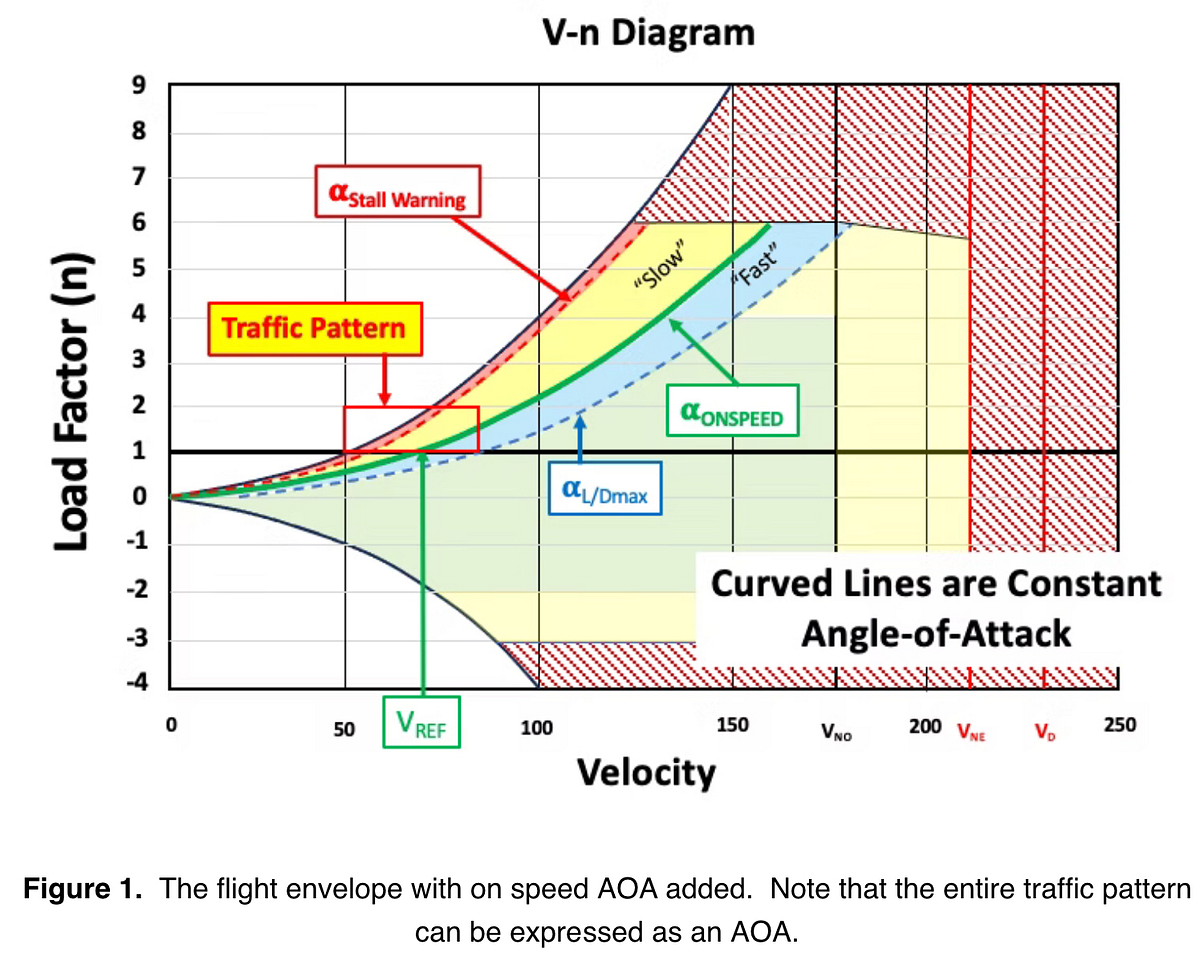
But, as you’re thinking, when faster, yes, there is less reaction time, so this is a bit like your drag curve. There are a front and a back sides. Though, yes, there is consideration for the bird seeing and/or hearing you and having time to react of its own accord which would bias you slightly toward your own back side of whatever your bird avoidance energy curve may be. Yes, I know, we use power required for our true back side being props, but this leaves very little back side, I believe the glider, jet, and engine out discriminant is a better fit. Note Vac’s flyonspeed has a blog about maneuvering highlighting best sustained turn rate and needing more kinetic energy than this to be able to pull instantaneous turn both faster rate and smaller radius… best sustained is essentially AOAref. So, if you’re going to slow, consider L/Dmax, doesn’t obscure forward vision, gives some energy to pull toward min power required (for which Vac uses AOAref as a reasonable proxy) with this pull being able to go to Zoom and/or Turn from which you can sustain further climb and/or turn. You pull with a bleed rate till hitting AOAref then sustain AOAref till you’ve avoided the hit or taken the hit in a less damaging location.


As an aside, in the Hornet, flying low one of the rules is to always be above corner speed so as to have means to maneuver. In T-45, corner speed is too fast and thus radius would be large, the rule is adapted to always be at or faster than vertical maneuvering (over-the-top) speed; if you can do an Immelmann, you have an out. I do acknowledge there are rare contexts that falling below these speeds makes sense so the rules should be seen more as heuristic. I would often hit one of the rare contexts flying up the west side of the Saline Valley. The ridge plateaus to a flat westward cross to the Owen’s Valley while there are lots of fingers running up and down. Hence getting slow so as to wingover and run eastward back into Saline is ok as you still have out options, and due to the ridge being a plateau, you also had option to bunt reducing load demand more rapidly adding energy for a continued west flow. In this location, multiple options north and south to flow back east and a west option. The most important rare instance, however, is when you need excess energy available to maneuver to avoid. In this way, these values are like minimum fuel reserves. You don’t plan to use them as they create your margins. But you use them when you need to. In my Saline case, I could tap the kinetic energy excess as I assured other margins present.

Similarly, in the Super Hornet and Growler, the NATOPS says “speeds up to 350 KIAS may be required below 10,000 ft for safety” and the Goshawk’s says something similar to 300 KIAS; these are there partly as you want lower pitch angles flying approaches thus being partly so as to see birds and traffic. Such also helps in formation so as lead can be further above Idle allowing wing more room to accommodate variance. It also helps keep compressors spooled up such that the engine is more responsive. Both these platforms with those speeds have means for vertical maneuver as well as instantaneous turning available.

So others are using faster as safer for both better sight and means to react. There is a balance. But, then again, if you’re going to take a hit, you’d rather it be underside than leading edge and/or upper side.

As much as I don’t like Dan Gryder’s DMMS, he is correct that generally maneuvering speed should be viewed as a minimum not a maximum. Note he says he has “the solution,” no he doesn’t, he has a solution while Vac has a better solution. And in this, realize the value being a minimum is like a minimum fuel reserve; you use it when you need to.


The "Birdcast" tool is helpful for visualizing peak migration areas and times, and our experience tends to track with what it shows.


Chris

Air Force also has a tool that you can use (they even put it on a dot com not dot mil so as to avoid “information assurance” requirements meaning no CAC (common access card, an id with a chip like your credit card) required for access): https://www.usahas.com/
 
Reduced speed can actually reduce chance to see due to higher AOA hence higher pitch angles. It also reduces energy available to maneuver to avoid. With more energy you can more rapidly Zoom and Zoom Climb rather than merely Climb. We really need to differentiate Zoom from Climb and Dive from Descent. You also have more g available to Turn. Turning relates rather well with Zooming (instantaneous turn) and Climbing (sustained turn) from an energy perspective.

But, as you’re thinking, when faster, yes, there is less reaction time, so this is a bit like your drag curve. There are a front and a back sides. Though, yes, there is consideration for the bird seeing and/or hearing you and having time to react of its own accord which would bias you slightly toward your own back side of whatever your bird avoidance energy curve may be. Yes, I know, we use power required for our true back side being props, but this leaves very little back side, I believe the glider, jet, and engine out discriminant is a better fit. Note Vac’s flyonspeed has a blog about maneuvering highlighting best sustained turn rate and needing more kinetic energy than this to be able to pull instantaneous turn both faster rate and smaller radius… best sustained is essentially AOAref. So, if you’re going to slow, consider L/Dmax, doesn’t obscure forward vision, gives some energy to pull toward min power required (for which Vac uses AOAref as a reasonable proxy) with this pull being able to go to Zoom and/or Turn from which you can sustain further climb and/or turn. You pull with a bleed rate till hitting AOAref then sustain AOAref till you’ve avoided the hit or taken the hit in a less damaging location.


As an aside, in the Hornet, flying low one of the rules is to always be above corner speed so as to have means to maneuver. In T-45, corner speed is too fast and thus radius would be large, the rule is adapted to always be at or faster than vertical maneuvering (over-the-top) speed; if you can do an Immelmann, you have an out. I do acknowledge there are rare contexts that falling below these speeds makes sense so the rules should be seen more as heuristic. I would often hit one of the rare contexts flying up the west side of the Saline Valley. The ridge plateaus to a flat westward cross to the Owen’s Valley while there are lots of fingers running up and down. Hence getting slow so as to wingover and run eastward back into Saline is ok as you still have out options, and due to the ridge being a plateau, you also had option to bunt reducing load demand more rapidly adding energy for a continued west flow. In this location, multiple options north and south to flow back east and a west option. The most important rare instance, however, is when you need excess energy available to maneuver to avoid. In this way, these values are like minimum fuel reserves. You don’t plan to use them as they create your margins. But you use them when you need to. In my Saline case, I could tap the kinetic energy excess as I assured other margins present.

Similarly, in the Super Hornet and Growler, the NATOPS says “speeds up to 350 KIAS may be required below 10,000 ft for safety” and the Goshawk’s says something similar to 300 KIAS; these are there partly as you want lower pitch angles flying approaches thus being partly so as to see birds and traffic. Such also helps in formation so as lead can be further above Idle allowing wing more room to accommodate variance. It also helps keep compressors spooled up such that the engine is more responsive. Both these platforms with those speeds have means for vertical maneuver as well as instantaneous turning available.

So others are using faster as safer for both better sight and means to react. There is a balance. But, then again, if you’re going to take a hit, you’d rather it be underside than leading edge and/or upper side.

As much as I don’t like Dan Gryder’s DMMS, he is correct that generally maneuvering speed should be viewed as a minimum not a maximum. Note he says he has “the solution,” no he doesn’t, he has a solution while Vac has a better solution. And in this, realize the value being a minimum is like a minimum fuel reserve; you use it when you need to.


I can assure you I didn't have time to consider any of the above in the split second between visual on the diving duck and impact with the wing leading edge......I was just on a routine flight. Guess I need to stop doing routine flights...... 😉
 
I only had one strike in my own plane. It was on the RH fiberglass wingtip and it caused a hairline crack which was easy to fix with some FG cloth and epoxy resin. Luckily it's a 50yr old Arrow and they over did the FG parts
 
Unfortunately, I've been to 4 funerals as the result of bird strikes. Not much does much good at 540 knots at 100 feet when a bird hits the canopy. All routine flights. For the record, both jets had AOA. Didn't help.

The point Flats is making is slowing down in the low altitude environment isn't the correct answer. You actually give up energy maneuverability by slowing down and you will simply hit the bird at whatever your "tactical" airspeed is. Obviously, at 540 knots the F=MA equation is different than at 150 knots, and there is something to be said for an armored windscreen, but both of the airplanes above had one and it didn't help. Obviously, where the bird hits is purely a matter of luck. You might jink (abruptly maneuver to miss the bird), you might not. You have MORE energy to jink if you are faster.

When we maneuver, there is a "knee in the curve" as a statistician would explain. There is a simple solution for "optimum maneuverability" and that is an on speed (AOA) condition. You need a properly calibrated AOA system to know when you are on speed. When we maneuver to avoid a bird (or another airplane, etc.), we are doing a "break turn." The idea is to get the nose moving as quickly as possible (maximum turn rate and minimum turn radius) initially, but there is a point where we have to quit pulling on the stick (on speed), because if we don't, we get slow (back side of the power curve) and can't maintain our "energy" (airspeed and altitude). By definition, a break turn occurs at the stall limit, and we keep pulling until we achieve on speed, at which point we reduce AOA by reducing pull on the stick. We can sustain an on speed condition with full power. It's the same technique we use to avoid hitting the ground. The video Flats posted is great, but it's a lot simpler to just "quit pulling on speed, and maintain that condition." Airspeed is simply a proxy for AOA (AOA and power CONTROL airspeed).

I realize most airplanes don't have AOA and most pilots don't have instruction on "optimum" or "performance" maneuvering using AOA in lieu of airspeed, so if you don't have a flyable on speed cue, the video is a good place to start, but be sure to check out the attached link. If you have AOA, the trick is to calibrate it to provide a usable on speed cue (if practical) the way it's applied in the military :cool:.

Fly safe,

Vac
 
Last edited:
A thought that needs to be more overtly expressed here is that the bird is a threat and it’s probability greatly increases in low altitude environments but it is not the only threat and the other threats also increase as you get low. The other threats are generally worse than the bird but while they can be independent threats, they can also amplify each other. Consider you’re flying slow because you’re flying low scared of birds, a bird pops in front of you startling you, you yank both elevator and some aileron to attempt a zoom up and away…
 
Last edited:
I wonder what the birds say about us? ;)
We can talk all day long about AOA, speed, environment, etc…. But it all boils down to luck. For them and us…..

I’ve never had a strike. Some close calls as most of us have had. I flew up and into a flock of geese once in a high wing. Some flared up, some dove down….it was quite a messy gaggle. In all of my other close calls we just didn’t see each other or the bird banked and dove.
 
But it all boils down to luck. For them and us…..

Funny thing about luck is you can still stack a few cards in the deck. Bit like buying lotto but only on the windfall rollover days (Michigan, Massachusetts). Seems some others cited good numbers via wigwag lights. Sometimes you’re surprised, sometimes you can react, sometimes you can respond.
 
At a FAA presentation I attended, the speaker stated that most bird strikes occur below 2,000 feet AGL. And with all the turkey vultures around here, I do most of my goofing around burning avgas between 2,000 to 3,000 feet.

Years ago, I was cruising along on a trip and ATC told me they had a target at my 10 o’clock, unknown altitude. I looked down and there was a very large mass of large birds (whiteish in color looking down on them) a couple of thousand feet below me. And I would guess they were around 2,000 feet AGL.

It’s amazing the number of planes around us we never see but know they are out there since the advent of ADS-B. Imagine what we would see on the screen for ADS-Bird. :oops:
 
Back
Top