Reduced speed can actually reduce chance to see due to higher AOA hence higher pitch angles. It also reduces energy available to maneuver to avoid. With more energy you can more rapidly Zoom and Zoom Climb rather than merely Climb. We really need to differentiate Zoom from Climb and Dive from Descent. You also have more g available to Turn. Turning relates rather well with Zooming (instantaneous turn) and Climbing (sustained turn) from an energy perspective.
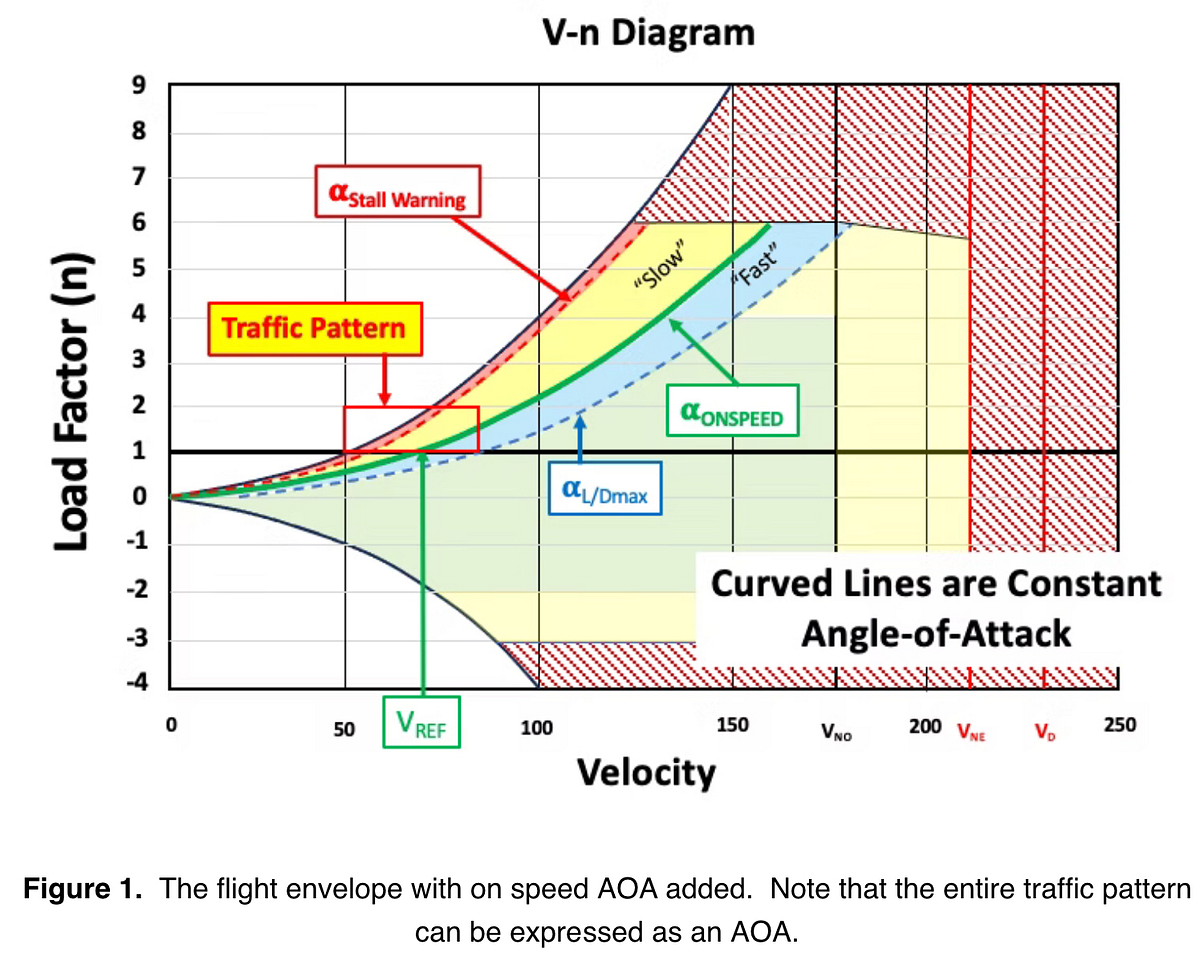
But, as you’re thinking, when faster, yes, there is less reaction time, so this is a bit like your drag curve. There are a front and a back sides. Though, yes, there is consideration for the bird seeing and/or hearing you and having time to react of its own accord which would bias you slightly toward your own back side of whatever your bird avoidance energy curve may be. Yes, I know, we use power required for our true back side being props, but this leaves very little back side, I believe the glider, jet, and engine out discriminant is a better fit. Note Vac’s flyonspeed has a blog about maneuvering highlighting best sustained turn rate and needing more kinetic energy than this to be able to pull instantaneous turn both faster rate and smaller radius… best sustained is essentially AOAref. So, if you’re going to slow, consider L/Dmax, doesn’t obscure forward vision, gives some energy to pull toward min power required (for which Vac uses AOAref as a reasonable proxy) with this pull being able to go to Zoom and/or Turn from which you can sustain further climb and/or turn. You pull with a bleed rate till hitting AOAref then sustain AOAref till you’ve avoided the hit or taken the hit in a less damaging location.

www.flyonspeed.org
With the late 2024 FAA SAIB publication advocating for adoption of AOA by all GA, there has been much discussion about mitigating loss of control (LOC) risk by providing accurate AOA feedback to the pilot in one form or another. What hasn’t been discussed as widely, is the increased precision...
www.flyonspeed.org
As an aside, in the Hornet, flying low one of the rules is to always be above corner speed so as to have means to maneuver. In T-45, corner speed is too fast and thus radius would be large, the rule is adapted to always be at or faster than vertical maneuvering (over-the-top) speed; if you can do an Immelmann, you have an out. I do acknowledge there are rare contexts that falling below these speeds makes sense so the rules should be seen more as heuristic. I would often hit one of the rare contexts flying up the west side of the Saline Valley. The ridge plateaus to a flat westward cross to the Owen’s Valley while there are lots of fingers running up and down. Hence getting slow so as to wingover and run eastward back into Saline is ok as you still have out options, and due to the ridge being a plateau, you also had option to bunt reducing load demand more rapidly adding energy for a continued west flow. In this location, multiple options north and south to flow back east and a west option. The most important rare instance, however, is when you need excess energy available to maneuver to avoid. In this way, these values are like minimum fuel reserves. You don’t plan to use them as they create your margins. But you use them when you need to. In my Saline case, I could tap the kinetic energy excess as I assured other margins present.
Similarly, in the Super Hornet and Growler, the NATOPS says “speeds up to 350 KIAS may be required below 10,000 ft for safety” and the Goshawk’s says something similar to 300 KIAS; these are there partly as you want lower pitch angles flying approaches thus being partly so as to see birds and traffic. Such also helps in formation so as lead can be further above Idle allowing wing more room to accommodate variance. It also helps keep compressors spooled up such that the engine is more responsive. Both these platforms with those speeds have means for vertical maneuver as well as instantaneous turning available.
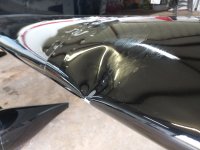
So others are using faster as safer for both better sight and means to react. There is a balance. But, then again, if you’re going to take a hit, you’d rather it be underside than leading edge and/or upper side.
As much as I don’t like Dan Gryder’s DMMS, he is correct that generally maneuvering speed should be viewed as a minimum not a maximum. Note he says he has “the solution,” no he doesn’t, he has a solution while Vac has a better solution. And in this, realize the value being a minimum is like a minimum fuel reserve; you use it when you need to.
Defined Minimum Maneuvering Speed (DMMS) is a bandaid applied to the crutch that is airspeed. As airspeed has been used as poor proxy for…

medium.com












 .
.


