
I recently finished my RV9A and about to finish my 25 hours. I notice that I am getting a nose wheel shimmy/bounce when taxing on pavement. I am on a grass strip and do not get this on grass only on the pavement. I do have the stiffener on it from anti splat. Has anybody had this issue and how did you resolve it? Thanks, Tom

Van's Air Force
You are using an out of date browser. It may not display this or other websites correctly.
You should upgrade or use an alternative browser.
You should upgrade or use an alternative browser.
Bouncing Nose Wheel
- Thread starter ten4teg
- Start date

Before I upgraded my nosegear to the elastomer system on my 6A, I had similar issues.
My primary fixes...:
Tire pressure to spec.
Breakout force of the fork to spec.
Balancing the nosewheel pant using the axel as the balance point...added weight to the front half.
I already had the nosejob2 from antisplat.
My primary fixes...:
Tire pressure to spec.
Breakout force of the fork to spec.
Balancing the nosewheel pant using the axel as the balance point...added weight to the front half.
I already had the nosejob2 from antisplat.
BoydBirchler
Well Known Member
You might check the air pressure, sometimes it can be sensitive to a few pounds difference. Also recheck the breakout force.

Tire pressure, tire out of round condition, breakout force, wheel balance, wheel bearing pre-load adjustment, and how fast you are taxiing on pavement are the variables you need to check.
If you think wheel pant balance has an effect on shimmy/bounce (I do not) then try removing the pant with everything else the same and seeing if the shimmy still happens. If it still occurs, wheel pant imbalance is not the cause.
If you think wheel pant balance has an effect on shimmy/bounce (I do not) then try removing the pant with everything else the same and seeing if the shimmy still happens. If it still occurs, wheel pant imbalance is not the cause.

Yes, pull you wheel pant and check for out of round condition. My Rv-9A has been sitting for a year on a new nosewheel tire and when I jacked it up to work on the wheel pants it was noticeably deformed out of round. So I rotated it to rest in a different location for several days but did not reshape itself. Looks like I'll be installing a new tire otherwise I'll have your issue.

Definitely check these, and consider the nose wheel bearing mod. Even with these, shimmy over 20mph is common.Tire pressure, tire out of round condition, breakout force, wheel balance, wheel bearing pre-load adjustment, and how fast you are taxiing on pavement are the variables you need to check.
If you think wheel pant balance has an effect on shimmy/bounce (I do not) then try removing the pant with everything else the same and seeing if the shimmy still happens. If it still occurs, wheel pant imbalance is not the cause.
Thanks for all the ideas. It is appreciated.Definitely check these, and consider the nose wheel bearing mod. Even with these, shimmy over 20mph is common.
Definitely check these, and consider the nose wheel bearing mod. Even with these, shimmy over 20mph is common.
No personal experience with Anti Splat Aero's nose wheel bearing mod. But I do have lots of time running Matco Manufacturing's nose wheel axle mod. Bottom line is it decouples the bearing preload adjustment from the nose wheel axle bolt torque. Each one can be set independently, to the correct preload, so neither will have an influence on wheel shimmy. Also worth looking into.


Did you end up solving this issue? I have never had gear shimmy on my 9A, but I do now after getting her back from condition inspection/maintenance. I know they repacked bearings and replaced right main rotor and pads. Suddenly I’m dealing with shimmy after landing and down to around 25-30kts. It’s an awful feeling. I do have a Beringer nose wheel.I recently finished my RV9A and about to finish my 25 hours. I notice that I am getting a nose wheel shimmy/bounce when taxing on pavement. I am on a grass strip and do not get this on grass only on the pavement. I do have the stiffener on it from anti splat. Has anybody had this issue and how did you resolve it? Thanks, Tom
Make sure they didn’t over or under tighten the bearing nut. Given this appeared out of nowhere after pulling the wheels, it is a safe bet they were not put on the same ase they were before they came off.Did you end up solving this issue? I have never had gear shimmy on my 9A, but I do now after getting her back from condition inspection/maintenance. I know they repacked bearings and replaced right main rotor and pads. Suddenly I’m dealing with shimmy after landing and down to around 25-30kts. It’s an awful feeling. I do have a Beringer nose wheel.
Thank you. Will check the torque spec for the Beringer setup.Make sure they didn’t over or under tighten the bearing nut. Given this appeared out of nowhere after pulling the wheels, it is a safe bet they were not put on the same ase they were before they came off.
I field checked breakout force yesterday and it seemed to be around 22 which I was told by Lockwood Aero is the stock spec. We tried increasing this to around 26 and decreasing the nose wheel pressure, but no joy. I have a Beringer nose wheel and I thought I read that torque does not affect friction on the nose wheel rotation.Check the breakout force of the bottom nut.
The stock wheel assembly is known to be a slow-rotation-starter. Even with the newer axel assembly. The Anti-Splat folks have a mod for that as well.
Ending up with this issue suddenly after getting her back from maintenance is very frustrating. Hopefully it is something simple! I will say that when I spun the nose wheel yesterday it did not seem very round at all, though, to my knowledge it was not changed or removed from the wheel. It did spin very freely with no noticeable friction at all.
Below is my next course of action after reading every possible thread on this:
- Check bearing preload/ front axle torque
- Wheel/tire balancing. Weights missing?
- Breakout. Retest with good scale
- Tire pressures try 35#
- Main gear axle torque spec
- Brakes/brake drag?
- Check wheel pants for weights/balance
- Nose tire out of round condition

Definitely check these, and consider the nose wheel bearing mod. Even with these, shimmy over 20mph is common.
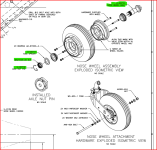
Van's has a new(er) nosewheel axle design that was released in conjunction with the elastomer nose gear leg back in June of 2019. It can also be used on the round nose gear leg aircraft.
The new U-00710 nose wheel axle allows you to setup the proper bearing preload independent of the axle bolt torque. See DWG C1, rev 5.
As a previous 6A owner, I highly recommend this mod over the older design with the bearing "mushrooms".
That is probably correct. Sorry, i was referring to the tapered roller bearings on the main wheels. Most shimmy that you can feel is coming from the mains and not the nose. I have had people on the ground tell me that my nose wheel is wobbling around like crazy on TO roll but have never felt anything. I would be looking at your mains if you are feeling a shimmy.I have a Beringer nose wheel and I thought I read that torque does not affect friction on the nose wheel rotation.
I’m really leaning toward the mains at this point, and this statement kind of solidifies my gut feeling. I watched video from inside the cockpit during my landing last night and it seems that there was shimmy as soon as the mains touched in a nose high attitude which worsened as I decreased speed, lowered the nose and got on the brakes. Also, I lifted the nose one last time before losing elevator authority and the shimmy didn’t seem to stop as soon as I lifted the nose.That is probably correct. Sorry, i was referring to the tapered roller bearings on the main wheels. Most shimmy that you can feel is coming from the mains and not the nose. I have had people on the ground tell me that my nose wheel is wobbling around like crazy on TO roll but have never felt anything. I would be looking at your mains if you are feeling a shimmy.

Yes -- I believe the rubber seals on each side of the noise wheel need to have grease applied where they contact the bearing race. Otherwise, they can bind-up and bounce the noise wheel. These seals will loosen-up over time, but proper axel bolt torque is also important. I run 28-psi in my noise tire, which helps give the 9A noise gear a better spring-damper effect (more dapping) -- too much nose tire pressure, and it will start hopping. The pull-out torque on the 9A noise wheel changes frequently at first, and then settles-in after a while, so adjustment of that is necessary.I recently finished my RV9A and about to finish my 25 hours. I notice that I am getting a nose wheel shimmy/bounce when taxing on pavement. I am on a grass strip and do not get this on grass only on the pavement. I do have the stiffener on it from anti splat. Has anybody had this issue and how did you resolve it? Thanks, Tom
Last edited:
I think 28 psi on the nose wheel is a mistake. First, this increases rolling resistance and leads to many issues. You can research nose gear leg issues on RVs. Second, tube tires do not do well with low pressure. Once you get down to around 25 psi, your risk of flats goes up substantially. I swapped a nose tube for a guy last year. He said it looked a little low on the pre flight but decided to fix it when he got home. Flat tire on landing. We have been spoiled with tubeless tires in our cars that can take extreme abuse. Tube tires cannot. Some of the younger folks have never even used them and don’t appreciate their delicate nature when under inflated.Yes -- I believe the rubber seals on each side of the noise wheel need to have grease applied where they contact the bearing race. Otherwise, they can bind-up and bounce the noise wheel. These seals will loosen-up over time, but proper axel bolt torque is also important. I run 28-psi in my noise tire, which helps give the 9A noise gear a better spring-damper effect (more dapping) -- too much nose tire pressure, and it will start hopping. The pull-out torque on the 9A noise wheel changes frequency at first, and then settles-in after a while, so adjustment of that is necessary.
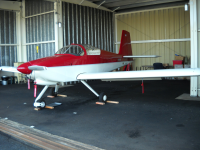
I have been doing this for 21-years now on my RV-9A, and it works extremely well for me. I have not seen any of the issues you described even after 1200 flight hours. I agree that owners need to keep checking the noise tire pressure to maintain 28-psi, which I do regularly since I don't have wheel fairing so I can, but the recommended 32-psi is simply too high and becomes obvious, especially with the RV-9A design.I think 28 psi on the nose wheel is a mistake. First, this increases rolling resistance and leads to many issues. You can research nose gear leg issues on RVs. Second, tube tires do not do well with low pressure. Once you get down to around 25 psi, your risk of flats goes up substantially. I swapped a nose tube for a guy last year. He said it looked a little low on the pre flight but decided to fix it when he got home. Flat tire on landing. We have been spoiled with tubeless tires in our cars that can take extreme abuse. Tube tires cannot. Some of the younger folks have never even used them and don’t appreciate their delicate nature when under inflated.
Last edited:
If it works thats great. As a counter point, i have run 50 psi for 1400 hours on my 6A and also have no issues. I find there is plenty of dampening in the spring steel gear leg. Zero bouncing of the nose.I have been doing this for 21-years now on my RV-9A, and it works extremely well for me. I have not seen any of the issues you described even after 1200 flight hours. I agree that owners need to keep checking the noise tire pressure to maintain 28-psi, which I do regularly since I don't have wheel fairing so I can, but the recommended 32-psi is simply too high and becomes obvious, especially with the RV-9A design.
View attachment 86844
That's really high -- that would rattle my teeth out during taxi on the Central Ramp at Paine Field WA. The RV-6A must be a very different airplane than the RV-9A. Keeping the noise light for takeoffs, landings and taxi is important on the RV-9A and probably other RV-A's. I set the trim sufficiently noise-light to keep the weight off of the noise, and I keep the stick back for takeoffs and landings for the same reason. I feel that these noise tire and front gear issues are probably more from too much noise-down trim. Approach to landing trim seems to work great for doing this on my RV-9A!If it works thats great. As a counter point, i have run 50 psi for 1400 hours on my 6A and also have no issues.


Last edited:
Another item I’m curious about pertaining to the mains. Has anyone ever rotated a main wheel tire and kept on the same side? Mine was worn down on the outside so they removed it from the wheel and rotated it 180 degrees. Wondering if that could cause vibration due to uneven wear and being flipped.

I keep my nose wheel at 40 lbs. I know it has gone to 30-35 before but I check it pretty regularly. Here is a video of my landing last week showing no bounce or shimmy. It was a T&G so I didnt get below 30 mph or so but no sign of bounce. This has to be the best landing I ever made! You can skip to :20 for the touch down.
I always do it this way. Usually three times over the tires life. Never have balance issues.Another item I’m curious about pertaining to the mains. Has anyone ever rotated a main wheel tire and kept on the same side? Mine was worn down on the outside so they removed it from the wheel and rotated it 180 degrees. Wondering if that could cause vibration due to uneven wear and being flipped.
Your landing looks very stable! However, I still use Van's recommendations for 28-psi min to 32-psi max in the nose tire and 24-psi to 26-psi max in the mains. There's an excellent write-up in Van's RV-9A builder's manual regarding the engineering behind their landing gear system, especially regarding the effects of proper nose tire pressure. It's a spring-dampers system on the original gear design, where proper tire pressure sets the actual damping affect, and the gear leg sets the spring force affect much like a shock absorber would. I always followed Van's instructions and recommendations with very few expectations because I feel their engineering is top-notch, and I fully trust and understand it being an engineer myself. Your lighter nosewheel trim probably had more to do with the smoothness of your landing. However, taxi on a rough airport ramp (like Paine Field) and that's were you notice the gear bouncing the most. Now -- Van's new nose gear design has independent damping built-in with the rubber donuts and new hinged nose gear leg, so nose tire pressure doesn't matter much with their newer nose gear design. I completed my RV-9A over 20-years ago, so I don't have that system nor do I feel I need it. In addition, with such high tire pressure (assuming the mains are over inflated too), a strong cross-wind might just skid your airplane sideways during a takeoff or landing.I keep my nose wheel at 40 lbs. I know it has gone to 30-35 before but I check it pretty regularly. Here is a video of my landing last week showing no bounce or shimmy. It was a T&G so I didnt get below 30 mph or so but no sign of bounce. This has to be the best landing I ever made! You can skip to :20 for the touch down.
Last edited:
Good points. I have never done a grass landing and most of the airports I go to have been pretty smooth. I am getting ready to change out my mains with Wilkerson retreads and will try them at a lower pressure to see if it makes a difference. With a camera it is easy to get instant results. I have only been licensed for a couple years and have no ego in my knowledge and always ready to learn something!Your landing looks very stable! However, I still use Van's recommendations for 28-psi min to 32-psi max in the nose tire and 24-psi to 26-psi max in the mains. There's an excellent write-up in Van's RV-9A builder's manual regarding the engineering behind their landing gear system, especially regarding the effects of proper nose tire pressure. It's a spring-dampers system on the original gear design, where proper tire pressure sets the actual damping affect, and the gear leg sets the spring force affect much like a shock absorber would. I always followed Van's instructions and recommendations with very few expectations because I feel their engineering is top-notch, and I fully trust and understand it being an engineer myself. Your lighter nosewheel trim probably had more to do with the smoothness of your landing. However, taxi on a rough airport ramp (like Paine Field) and that's were you notice the gear bouncing the most. Now -- Van's new nose gear design has independent damping built-in with the rubber donuts and new hinged nose gear leg, so nose tire pressure doesn't matter much with their newer nose gear design. I completed my RV-9A over 20-years ago, so I don't have that system nor do I feel I need it. In addition, with such high tire pressure (assuming the mains are over inflated too), a strong cross-wind might just skid your airplane sideways during a takeoff or landing.
If I ever have to take my engine off I will put the new motor mount - front gear system on. The guy I rent my hangar space from is building a 9A and it looks really nice.
While I hold Vans in very high regard and fully trust their engineering, they are not perfect. There were accidents in the past where the NTSB cited the nose gear design as a cause and vans made modifications to the design and issued an SB. There continue to be incidents with the nose gear when pilots ask too much of it. Seems to usually be poor pilot technique or things like gopher holes in grass strips. It is my belief that too much tire compression (lower pressures = more compression) on the nose wheel puts the threaded leg section (what was raised in the redisgn) too low when the nose is slammed down too hard. If that threaded section catches the ground, that is what sets the whole chain of events in motion. I also believe that to a lesser degree, that increased rolling resistance (from low tire pressure) can contribute to set this in motion. It may be true that increasing pressure may change the dynamics, but we are dealing with trade offs in this area IMHO.Your landing looks very stable! However, I still use Van's recommendations for 28-psi min to 32-psi max in the nose tire and 24-psi to 26-psi max in the mains. There's an excellent write-up in Van's RV-9A builder's manual regarding the engineering behind their landing gear system, especially regarding the effects of proper nose tire pressure. It's a spring-dampers system on the original gear design, where proper tire pressure sets the actual damping affect, and the gear leg sets the spring force affect much like a shock absorber would. I always followed Van's instructions and recommendations with very few expectations because I feel their engineering is top-notch, and I fully trust and understand it being an engineer myself.
Have no desire to change your mind or anyone elses. I do, however, encourage each owner to do their research on this subject and reach their own conclusions. Much written here on this subject. I also encourage owners to research how inflation pressures can contribute to pinched tubes, as 24 is lower than I believe fully prevents that. It may be that 24 is safe, but doubt it is far from the unsafe pressure and that leaves little margin for undetected leakage. I am talking about rough landings here where the tire compresses more than normal. Getting a flat on landing, especially on a tail dragger is not going to be fun; Far worse than shimmy. Again, my opinion only.
Last edited:
From my analysis of such nose gear failures and reading the FAA's write-ups on these failures, the FAA finally deemed the nose gear was strong enough and safe enough to meet or exceed FAA standards as designed by Vans Aircraft, and they determined the accidents were more from pilot mishandling. Just look at the Cirrus SR20 and SR22 nose gear design, which uses exactly the same type of donut damper system that Van's newest nose gear design uses. In the NTSB accident reports, there have been many Cirrus nose gear failures too due to porpoised landing or simply putting too much load on the nose gear during landing and takeoffs. In addition, Van's had flown their RV-6A from their old grass strip for many years and many hours and around the country to many fly-ins and shows and has never experienced this issue. Their 9A was also flown for many years and hours to many fly-ins and shows with the original nose gear design (the one I use) and tire pressure and never had any problems there either -- it's all in the technique, keeping the nose gear light on ALL takeoffs and landings. Van's changed to the new design because some pilots simply don't now how to fly airplanes properly because many primary trainers are so forgiving -- right? In saying this, it's also important to keep the nose gear maintained to exactly what Van's calls-out in their builder's manual, which I do. Some RV owners have "gotten egg on their faces" attempting to be smarter than Van's engineering team. And being a longtime engineer myself, I understand and trust Van's team on this!While I hold Vans in very high regard and fully trust their engineering, they are not perfect. There were accidents in the past where the NTSB cited the nose gear design as a cause and vans made modifications to the design and issued an SB. There continue to be incidents with the nose gear when pilots ask too much of it. Seems to usually be poor pilot technique or things like gopher holes in grass strips. It is my belief that too much tire compression (lower pressures = more compression) on the nose wheel puts the threaded leg section (what was raised in the redisgn) too low when the nose is slammed down too hard. If that threaded section catches the ground, that is what sets the whole chain of events in motion. I also believe that to a lesser degree, that increased rolling resistance (from low tire pressure) can contribute to set this in motion. It may be true that increasing pressure may change the dynamics, but we are dealing with trade offs in this area IMHO.
Have no desire to change your mind or anyone elses. I do, however, encourage each owner to do their research on this subject and reach their own conclusions. Much written here on this subject. I also encourage owners to research how inflation pressures can contribute to pinched tubes, as 24 is lower than I believe fully prevents that. It may be that 24 is safe, but doubt it is far from the unsafe pressure and that leaves little margin for undetected leakage. Again, my opinion only.
BTW -- pinched tubes are more from installation errors or not using talcum powder before installing the tube -- there's Vans instructions for that, too.
Last edited:
Steve Iacoviello
Well Known Member
I have a little over 1,000 hours on my RV-9A. I inflate all my tires to 50 psi. Works for me.From my analysis of such nose gear failures and reading the FAA's write-ups on these failures, the FAA finally deemed the nose gear was strong enough and safe enough to meet or exceed FAA standards as designed by Vans Aircraft, and they determined the accidents were more from pilot mishandling. Just look at the Cirrus SR20 and SR22 nose gear design, which uses exactly the same type of donut damper system that Van's newest nose gear design uses. In the NTSB accident reports, there have been many Cirrus nose gear failures too due to porpoised landing or simply putting too much load on the nose gear during landing and takeoffs. In addition, Van's had flown their RV-6A from their old grass strip for many years and many hours and around the country to many fly-ins and shows and has never experienced this issue. Their 9A was also flown for many years and hours to many fly-ins and shows with the original nose gear design (the one I use) and tire pressure and never had any problems there either -- it's all in the technique, keeping the nose gear light on ALL takeoffs and landings. Van's changed to the new design because some pilots simply don't now how to fly airplanes properly because many primary trainers are so forgiving -- right? In saying this, it's also important to keep the nose gear maintained to exactly what Van's calls-out in their builder's manual, which I do. Some RV owners have "gotten egg on their faces" attempting to be smarter than Van's engineering team. And being a longtime engineer myself, I understand and trust Van's team on this!
Can I ask where this 50-psi number comes from? Cleveland wheels also call-out the same numbers as Van's Aircraft for tire inflation pressure, so this puzzles me??I have a little over 1,000 hours on my RV-9A. I inflate all my tires to 50 psi. Works for me.
Just for fun -- I ask ChatGPT AI the following question "is having higher than normal tire pressure better or worse for tube tires?"
Having higher than normal tire pressure in tube tires is generally worse, and here's why:
Having higher than normal tire pressure in tube tires is generally worse, and here's why:
- Tube tires are more sensitive to pressure extremes. Overinflation puts more stress on both the tube and the tire casing, increasing the risk of a sudden blowout, especially if the tire hits a sharp object or pothole.
- Excessive pressure reduces the tire's contact area with the ground, which can lead to poor traction, especially on wet or uneven surfaces.
- Higher pressure results in a stiffer ride, transmitting more vibration and shock to the rider, which can be uncomfortable and potentially harmful on rough terrain.
- While pinch flats are more commonly associated with underinflation, excessive pressure can also make the tube more prone to damage when it’s compressed suddenly—like hitting a curb or rock—because the tube can’t deform as easily.
- Overinflated tires tend to wear more in the center of the tread, leading to uneven tire wear and shorter tire life.
Best
- Stick to the recommended pressure range listed. Use a quality pressure gauge to check regularly.
Steve Iacoviello
Well Known Member
Walt Aronow, well known on this forum, suggests 50. Fifty is also the max pressure rating allowed for these tires. Fifty gives me a safety factor if I don’t check the pressure as often as I should. I do lose about 10 psi when I check 3 - 4 months later. I have not had a flat in my 1,000 plus hours. As I said, works for me.Can I ask where this 50-psi number comes from? Cleveland wheels also call-out the same numbers as Van's Aircraft for tire inflation pressure, so this puzzles me??
Sorry, but don't buy that for a second. Please post an expert reference to back that up, as that is counter to all of my research and experience patching and replacing tubes as a kid. Fully agree that improper installation can cause this, but not that it is the only thing. Again, not trying to change your opinion, just looking out for all the others that come by and read this and think they should drop their psi down to 24 as "that is better." I just want those folks to do their own research and come to their own conclusion.BTW -- pinched tubes are more from installation errors or not using talcum powder before installing the tube -- there's Vans instructions for that, too.
Ok then, I guess I must be wrong. Certainly can't argue with the expertise of an internet AI bot. BTW, given that this is all about "normal" pressure, what does the bot say is the "recommended" or "normal" pressure for an RV-9A nosewheel?Just for fun -- I ask ChatGPT AI the following question "is having higher than normal tire pressure better or worse for tube tires?"
Having higher than normal tire pressure in tube tires is generally worse, and here's why:
- Tube tires are more sensitive to pressure extremes. Overinflation puts more stress on both the tube and the tire casing, increasing the risk of a sudden blowout, especially if the tire hits a sharp object or pothole.
- Excessive pressure reduces the tire's contact area with the ground, which can lead to poor traction, especially on wet or uneven surfaces.
- Higher pressure results in a stiffer ride, transmitting more vibration and shock to the rider, which can be uncomfortable and potentially harmful on rough terrain.
- While pinch flats are more commonly associated with underinflation, excessive pressure can also make the tube more prone to damage when it’s compressed suddenly—like hitting a curb or rock—because the tube can’t deform as easily.
- Overinflated tires tend to wear more in the center of the tread, leading to uneven tire wear and shorter tire life.
Best
- Stick to the recommended pressure range listed. Use a quality pressure gauge to check regularly.
For the record, I NEVER recommended over inflation or exceeding the tire or tubes max pressure rating.
So, it appears that wheel fairing inhibit RV owners from checking their tire pressure more frequently. I don't use wheel fairings for that reason and many other reasons too! And wheel fairing only add 3-knots improvement to speed anyway over just having leg fairing. I use the stock Cleveland hubcaps and made a nose cone for improved aerodynamic performance -- there's a photo of my RV-9A in a previous post above (red and cream color). I check my tire pressure more often, and I can visually inspect my tires and brakes before every single flight! I've also been flying my 9'er for nearly 21-years now and have never had a tire go flat.Walt Aronow, well known on this forum, suggests 50. Fifty is also the max pressure rating allowed for these tires. Fifty gives me a safety factor if I don’t check the pressure as often as I should. I do lose about 10 psi when I check 3 - 4 months later. I have not had a flat in my 1,000 plus hours. As I said, works for me.
I don't know, but I do know that Van's Aircraft calls out 28-psi to 32-psi for the nose tire and 24-psi to 26-psi for the mains, and that's my "gold standard". I'm NOT a younger guy (retired now) but have found ChatGPT to have some highly accurate answers for most topics.Ok then, I guess I must be wrong. Certainly can't argue with the expertise of an internet AI bot. BTW, given that this is all about "normal" pressure, what does the bot say is the "recommended" or "normal" pressure for an RV-9A nosewheel?
Okay -- here's the AI answer, but you're not going to like it.
AI Overview
The recommended tire pressure for the RV-9A nosewheel is between 25 and 35 PSI. A slightly lower pressure (closer to 25 PSI) can actually help dampen shimmy, as it increases tire drag. While some owners experiment with higher pressures (like 40 PSI or even 50 PSI), the standard recommendation and many experienced builders find the 25-35 PSI range to be effective and safe.
Last edited:
All of this is very true......... for cars and trucks.Just for fun -- I ask ChatGPT AI the following question "is having higher than normal tire pressure better or worse for tube tires?"
Having higher than normal tire pressure in tube tires is generally worse, and here's why:
- Tube tires are more sensitive to pressure extremes. Overinflation puts more stress on both the tube and the tire casing, increasing the risk of a sudden blowout, especially if the tire hits a sharp object or pothole.
- Excessive pressure reduces the tire's contact area with the ground, which can lead to poor traction, especially on wet or uneven surfaces.
- Higher pressure results in a stiffer ride, transmitting more vibration and shock to the rider, which can be uncomfortable and potentially harmful on rough terrain.
- While pinch flats are more commonly associated with underinflation, excessive pressure can also make the tube more prone to damage when it’s compressed suddenly—like hitting a curb or rock—because the tube can’t deform as easily.
- Overinflated tires tend to wear more in the center of the tread, leading to uneven tire wear and shorter tire life.
Best
- Stick to the recommended pressure range listed. Use a quality pressure gauge to check regularly.
You can't treat the RV nose wheel like a Warrior nose wheel. You can apply brakes with the wheel in the air during roll out. Dropping the nose and hitting the brakes, loads the nose wheel. As you apply brakes, keep bringing the stick back to not let the tire touch the ground, it will come down when you run out of lift.I’m really leaning toward the mains at this point, and this statement kind of solidifies my gut feeling. I watched video from inside the cockpit during my landing last night and it seems that there was shimmy as soon as the mains touched in a nose high attitude which worsened as I decreased speed, lowered the nose and got on the brakes. Also, I lifted the nose one last time before losing elevator authority and the shimmy didn’t seem to stop as soon as I lifted the nose.
I’d like it if everyone giving tire pressure specs would include the tire they’re using. Very interested to know, thanks! Not sure which tires to go with next.Walt Aronow, well known on this forum, suggests 50. Fifty is also the max pressure rating allowed for these tires. Fifty gives me a safety factor if I don’t check the pressure as often as I should. I do lose about 10 psi when I check 3 - 4 months later. I have not had a flat in my 1,000 plus hours. As I said, works for me.
That procedure is not how I normally fly. I was trying to test whether any felt vibrations were intensified with the nose wheel making contact. I treat every take off and landing as a soft field procedure. However, I do generally soften back pressure just before losing elevator authority to ensure it is a controlled event.You can't treat the RV nose wheel like a Warrior nose wheel. You can apply brakes with the wheel in the air during roll out. Dropping the nose and hitting the brakes, loads the nose wheel. As you apply brakes, keep bringing the stick back to not let the tire touch the ground, it will come down when you run out of lift.
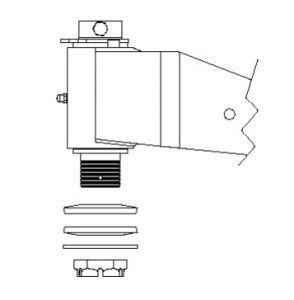
Here's the technical document that Van's Aircraft actually recommends to address nose gear shimmy. This is also listed in the RV assembly manuals.
 www.vansaircraft.com
Nose Gear Shimmy - Van's Aircraft Total Performance RV Kit Planes
My nose gear shimmies… What can I do about it? A builder can reduce or eliminate nose/main wheel shimmy by paying close attention to the factors that can aggravate it. Keep in mind that almost all RV models will exhibit limited nose/main gear/wheel shimmy during certain taxi conditions, even the...
www.vansaircraft.com
Last edited:
It seems we have remedied the issue. Possible contributing factor, I set all three tire pressures to 35#. Removed main wheels and balanced the side where the tire was rotated. Re-tightened the main axle nuts just enough to eliminate any wobble, then advanced to the very next hole to secure with cotter pin. The wheels certainly had less resistance than before. No vibration since then.
It really felt like the nose to me initially. If you have vibration, stick a camera under your wing and watch what each gear leg is doing. It’ll help you pinpoint your issue. You may be redirected and given an area to focus on!
It really felt like the nose to me initially. If you have vibration, stick a camera under your wing and watch what each gear leg is doing. It’ll help you pinpoint your issue. You may be redirected and given an area to focus on!
Glad you got it figured out and updated your thread. Agree- a camera under the wing or a 360 on a pole sure can help figure out what is going on down there! Have fun!

Av8torTom
Well Known Member
I have the nose wheel mod and have been shimmy free.I recently finished my RV9A and about to finish my 25 hours. I notice that I am getting a nose wheel shimmy/bounce when taxing on pavement. I am on a grass strip and do not get this on grass only on the pavement. I do have the stiffener on it from anti splat. Has anybody had this issue and how did you resolve it? Thanks, Tom
What is the nose wheel mod? I still have the shimmy. Thanks, Tom Contacts: [email protected] or 252-205-7017I have the nose wheel mod and have been shimmy free.
I don't have a shimmy on takeoff or landing, only when I taxi on pavement. I live on a grass strip and don't have any shimmy there.What is the nose wheel mod? I still have the shimmy. Thanks, Tom Contacts: [email protected] or 252-205-7017
Av8torTom
Well Known Member
I had Alan from Antisplat replace the wheel bearing with a non tapered bearing and balance the wheel. Never had a shimmy.I recently finished my RV9A and about to finish my 25 hours. I notice that I am getting a nose wheel shimmy/bounce when taxing on pavement. I am on a grass strip and do not get this on grass only on the pavement. I do have the stiffener on it from anti splat. Has anybody had this issue and how did you resolve it? Thanks, Tom
