Van's Air Force

The definitive Van's Aircraft support community! Buying, building or flying an RV? Join our exclusive family of mentors and enthusiasts!

Blind vs solid Rivets

Sully73

Active Member
Patron
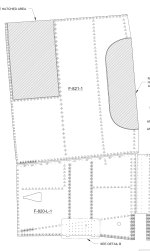
I am getting ready to rivet the top forward skin (F-821-1) and the plans call for solid rivets. Unfortunately many of these rivets will be difficult to access without removing the instrument panel, wiring , etc.... My question is: . 1) can I use blind rivets to hold the top skin? 2) is there any reason not to use blind rivets in this area? 3) If blind rivets are ok which rivet design is best for this?

IMG_5947.jpeg
[ed. Added graphic. v/r,dr]
 
Last edited by a moderator:
Anytime you cannot access the backside, an approved structural pull rivet is an acceptable replacement.

Structural rivets have an internal mechanism that locks the pin (or mandrel) into the body of the rivet after installation. This permanently retained stem is the key to their high strength and prevents it from loosening over time.

Cherry max is probably the most common. The biggest difference between individual cherry max rivets vs a pound of AN rivets is the price
 
I’m guessing you decided to do all the panel wiring and such with the top skin off - as this provides a boat load of access. I offer however that this will bite you down the road. Think about panel maintenance, panel upgrades, modifications and such - planing on removing the top skin to do that?

As I’ve posted in the past, the RV-8 is perfectly suited to support a fully removable panel. I built my RV-8A, RV-8 and RV-10 following this design objective, all had the top skin riveting is done before the first wire was run. The panel comes out in ~15 minutes as an assembly, the rest of the wires and breakers stay in the plane as they are not mounted on the removable portion of the panel.

So, take the time now to do this or kick the can down the road and do the pop rivet bandaid?

The rule, never on your back with your head under the panel.

Carl
 
I’m guessing you decided to do all the panel wiring and such with the top skin off - as this provides a boat load of access. I offer however that this will bite you down the road. Think about panel maintenance, panel upgrades, modifications and such - planing on removing the top skin to do that?

As I’ve posted in the past, the RV-8 is perfectly suited to support a fully removable panel. I built my RV-8A, RV-8 and RV-10 following this design objective, all had the top skin riveting is done before the first wire was run. The panel comes out in ~15 minutes as an assembly, the rest of the wires and breakers stay in the plane as they are not mounted on the removable portion of the panel.

So, take the time now to do this or kick the can down the road and do the pop rivet bandaid?

The rule, never on your back with your head under the panel.

Carl
Possibly too late for the OP but I very much agree with this. Friends don’t let friends build RV8’s without removable instrument panels.
 
Vans at one time said these were ok (Structurally) to use for wing skins but probably inpractical due to cost. I know of a builder that used them to rivet the top panel on a 6, 25 years ago and it still looks great. Not a personal recommendation, just an option to consider, ask Vans. 48 cents each. 3/32 head requires a drill out to IIRC to 7/64


Screenshot 2025-09-09 at 4.19.49 PM.png
 
Pop rivets, blind fasteners, pull rivets have steel stem which is strong. Down side clamping force and hole filling is less.

Solid rivets are far less expensive and lighter than pop/blind/pull rivets. You have to use a blind / pull rivet you have to use them.

Cherrymax are aerospace grade and very expensive and have to be sized very carefully and do not need special tool to install. Not true of Cherrylock structural "blind bolts", which require special puller.
 
My RV-8 build was over twenty years ago, but I remember that Vans allowed a few CherryMax 3214-4 rivets at the top of the gear tower where the top skin meets the side skin - but that was not a blanket approval for the entire skin to be attached with pulled rivets. That’s a lot of rivets, a lot of area - I wouldn’t trust any random opinions on the internet (including mine) for such an extensive mod - I’d recommend checking with Vans engineering and doing something else while waiting on a response.

If I was a future buyer and saw a large number of pulled rivets that were supposed to be solid, I’d ask to see a letter from Vans saying it was an acceptable modification.
 
I’m guessing you decided to do all the panel wiring and such with the top skin off - as this provides a boat load of access. I offer however that this will bite you down the road. Think about panel maintenance, panel upgrades, modifications and such - planing on removing the top skin to do that?

As I’ve posted in the past, the RV-8 is perfectly suited to support a fully removable panel. I built my RV-8A, RV-8 and RV-10 following this design objective, all had the top skin riveting is done before the first wire was run. The panel comes out in ~15 minutes as an assembly, the rest of the wires and breakers stay in the plane as they are not mounted on the removable portion of the panel.

So, take the time now to do this or kick the can down the road and do the pop rivet bandaid?

The rule, never on your back with your head under the panel.

Carl
This thinking also applies to firewall installations... Anything that you can mount with the engine in place, CAN BE REPLACED with the engine in place.
 
Vans at one time said these were ok (Structurally) to use for wing skins but probably inpractical due to cost. I know of a builder that used them to rivet the top panel on a 6, 25 years ago and it still looks great. Not a personal recommendation, just an option to consider, ask Vans. 48 cents each. 3/32 head requires a drill out to IIRC to 7/64


View attachment 97090
Vans also told me these are acceptable substitutes in structural areas. Said they are almost as strong as a rivet. I have used a few of them.

Suggest following other posters recommendations for removable panel. It solves two issues.
 
My RV-8 build was over twenty years ago, but I remember that Vans allowed a few CherryMax 3214-4 rivets at the top of the gear tower where the top skin meets the side skin - but that was not a blanket approval for the entire skin to be attached with pulled rivets. That’s a lot of rivets, a lot of area - I wouldn’t trust any random opinions on the internet (including mine) for such an extensive mod - I’d recommend checking with Vans engineering and doing something else while waiting on a response.

If I was a future buyer and saw a large number of pulled rivets that were supposed to be solid, I’d ask to see a letter from Vans saying it was an acceptable modification.
What you said plus...not every pop rivet is the same. There are steel stems, aluminum stems and various combinations. I have a guide that gives me the makeup and characteristics of the assorted part numbers in tension and shear. Just saying not all pop/pull rivets are alike and Van's engineers should have a say in when and where they are used...but I'm sure you all knew that.
danny
 
What you said plus...not every pop rivet is the same. There are steel stems, aluminum stems and various combinations. I have a guide that gives me the makeup and characteristics of the assorted part numbers in tension and shear. Just saying not all pop/pull rivets are alike and Van's engineers should have a say in when and where they are used...but I'm sure you all knew that.
danny
Danny, if possible, could you please share the name of this guide and where we could find it? Many thanks.
 
Danny, if possible, could you please share the name of this guide and where we could find it? Many thanks.
Sure, I keep it at the hangar. I'll look tomorrow. I'm not positive but it may even be in AC43.13.
danny
 
The rule, never on your back with your head under the panel.
This. The builder of my 9A did a fine job but he did not follow this rule. Replacing an old AHRS was like building a ship in a bottle while being tortured on the rack.

I have left instructions that, when I fly west, I am to be buried with my head stuck under an instrument panel, because that is likely what will have killed me. 🤣
 
Danny, if possible, could you please share the name of this guide and where we could find it? Many thanks.
I actually have a couple. One is a good article in the December 2016 Kit planes. Another is an old hardware catalogue from Spencer Aircraft. Either one might be next to impossible to find. I also have some info at my hangar but I didn't make it out there today. Hopefully tomorrow.
danny
 
I’m guessing you decided to do all the panel wiring and such with the top skin off - as this provides a boat load of access. I offer however that this will bite you down the road. Think about panel maintenance, panel upgrades, modifications and such - planing on removing the top skin to do that?

As I’ve posted in the past, the RV-8 is perfectly suited to support a fully removable panel. I built my RV-8A, RV-8 and RV-10 following this design objective, all had the top skin riveting is done before the first wire was run. The panel comes out in ~15 minutes as an assembly, the rest of the wires and breakers stay in the plane as they are not mounted on the removable portion of the panel.

So, take the time now to do this or kick the can down the road and do the pop rivet bandaid?

The rule, never on your back with your head under the panel.

Carl
I've been trying to determine if the RV8 that I bought has a removable panel- I've studied the vans drawings, and checked availability of panel blanks and the associated part numbers.

It appears the center panel (Vans part # F803A-1) is removable from the L/R subpanels with the screws on the face. Is this what you're referring to?
 
I've been trying to determine if the RV8 that I bought has a removable panel- I've studied the vans drawings, and checked availability of panel blanks and the associated part numbers.

It appears the center panel (Vans part # F803A-1) is removable from the L/R subpanels with the screws on the face. Is this what you're referring to?
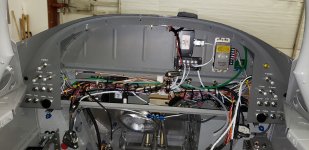
That is where you start. The design approach is to first divide the wiring world into what says in the plane when the panel is removed and what comes out with the panel.

Examples:
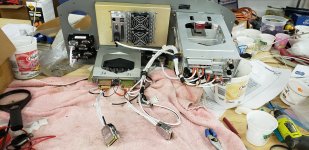
- The only breakers on the panel are for the GTN-650 (2) and the audio panel, plus a spare if needed in the future. These breakers get power via a molex plug. Three D connectors feed the GTN-650 and audio panel, and a connector for the GTN-650 to the ARINC module.
- The other breakers for stuff like the remote XPDR, both EFIS displays, remote Comm #2, ADS-b receiver an such get mounted on the panel are”side wings” and say in the plane. The EFIS displays and such disconnect via provided D connector and such.
- Also on the side wings other stuff that stays in the panel include both Master switches, both avionics switches, both ignition switches and such.
- All the other non panel switches are on the right side fuselage panel. Stuff like landing lights, alternator VR, pitot heat, boost pump and such.

Attached photos show most of this.

For a retro fit, if you have stuff already on the panel side wings (like a vent, clock, g-meter, etc.) do not try to replace the wings as it will mess up your paint job. Use some 0.032” or so aluminum and make an overlay of the existing side wings. Drill new holes for switches and breakers. I did this on an RV-8A and you cannot tell it was done once the panel is in.

Carl

 

Attachments

  • 20210729_135426.jpeg
    20210729_135426.jpeg
    1.9 MB · Views: 74
  • IMG_0680.jpeg
    IMG_0680.jpeg
    545 KB · Views: 72
  • IMG_0678.jpeg
    IMG_0678.jpeg
    741.3 KB · Views: 72
Cherry max is probably the most common. The biggest difference between individual cherry max rivets vs a pound of AN rivets is the price
There are more differences than just price. Cherry rivets are heavier and stronger and there are places that a cherry rivet is not suitable in place of a pounded rivet, at least according to VANS tech support.
 
There are more differences than just price. Cherry rivets are heavier and stronger and there are places that a cherry rivet is not suitable in place of a pounded rivet, at least according to VANS tech support.
It’s an economics thing. A pound of solid rivets about $80 bucks for 5-6,000 rivets, they are Light and pretty strong. One hundred cheryymax’s will vary in cost depending on length and style but Aircraft Spruce will sell 100 cherrymax’s for about $125.00

As an A&P mechanic a cherrymax was almost always a viable and legal replacement, particularly if only one side was accessible.
 
That is where you start. The design approach is to first divide the wiring world into what says in the plane when the panel is removed and what comes out with the panel.

Examples:
- The only breakers on the panel are for the GTN-650 (2) and the audio panel, plus a spare if needed in the future. These breakers get power via a molex plug. Three D connectors feed the GTN-650 and audio panel, and a connector for the GTN-650 to the ARINC module.
- The other breakers for stuff like the remote XPDR, both EFIS displays, remote Comm #2, ADS-b receiver an such get mounted on the panel are”side wings” and say in the plane. The EFIS displays and such disconnect via provided D connector and such.
- Also on the side wings other stuff that stays in the panel include both Master switches, both avionics switches, both ignition switches and such.
- All the other non panel switches are on the right side fuselage panel. Stuff like landing lights, alternator VR, pitot heat, boost pump and such.

Attached photos show most of this.

For a retro fit, if you have stuff already on the panel side wings (like a vent, clock, g-meter, etc.) do not try to replace the wings as it will mess up your paint job. Use some 0.032” or so aluminum and make an overlay of the existing side wings. Drill new holes for switches and breakers. I did this on an RV-8A and you cannot tell it was done once the panel is in.

Carl

Hi Carl,

That is a beautiful setup, and one I would like to emulate. Is there any concern or issues with the harnesses flopping around or scuffing behind the panel once in place?
 
Hi Carl,

That is a beautiful setup, and one I would like to emulate. Is there any concern or issues with the harnesses flopping around or scuffing behind the panel once in place?
None. That is what the big adel clamps are for, to hold the wire bundle.

Carl
 
Back
Top