Van's Air Force

The definitive Van's Aircraft support community! Buying, building or flying an RV? Join our exclusive family of mentors and enthusiasts!

Anyone else in a panic after reading Budd Davidsson's Sport Aviation article? :)

subpar_bucker

Well Known Member
Patron
It's from the December 2025 edition. Here's the quote that got my attention: "Where a #30 drill bit for holes to be filled with AD4 solid rivets is standard, that's too big for blind rivets. A #30 hole measures 0.1285 inches. However, most blind rivets supplied for most kits aren't that big. They'll range from 0.1230 to 0.1250. This means a 1/8-inch drill bit that's 0.125 inch should be used for hole preparation, not a #30 drill bit."

I doubt this any any applicability to the -12, but it did catch my attention.
 
Here's a table for Cherry "N" and "Q" rivets on the Aircraft Spruce website. I don't claim this is universally applicable, but it supports the idea that many/most 1/8" rivets get plugged into a #30 hole. See also the Cherrymax Process Manual, which says nominally 1/8" Cherrymax rivets go in a #30 hole. (See p. 7, "Hole Preparation".)

My eyebrows went halfway to my hairline when I read that in Budd's article.

Follow the instructions in the RV-12 KAI. If they call for #30, use #30. If the rivet manufacturer has specific instructions, follow those.
 
Last edited:
It's from the December 2025 edition. Here's the quote that got my attention: "Where a #30 drill bit for holes to be filled with AD4 solid rivets is standard, that's too big for blind rivets. A #30 hole measures 0.1285 inches. However, most blind rivets supplied for most kits aren't that big. They'll range from 0.1230 to 0.1250. This means a 1/8-inch drill bit that's 0.125 inch should be used for hole preparation, not a #30 drill bit."

I doubt this any any applicability to the -12, but it did catch my attention.
I do not know either the rivet manufacturer called out for the -12 construction, but I can tell you from the Pop Fasteners catalog (a division of Stanley Tools) that all their callouts, except one, for a -4 conventional type pulled rivet, spec drill size #30 & acceptable hole size .129-.133", the one exception is the Multi-Grip Blind Rivet (Avex type), which doesn't specify drill size, but allows for holes from .130-.142 ...

HFS
 
Last edited:
Keep in mind that the rivet swells to fit the hole to a certain point, and each time you drill out a rivet there's a good chance you are enlarging the hole as well however unless you really bugger up the hole to the next size the rivet will do its job...
 
Full disclosure, I didn't read the article, but isn't it irresponsible of a well known aviation writer to suggest something contrary to what both the kit and rivet manufacturer recommend without any engineering backup? If someone uses the incorrect drill size it could negatively impact the structural integrity of the final part.
 
Full disclosure, I didn't read the article, but isn't it irresponsible of a well known aviation writer to suggest something contrary to what both the kit and rivet manufacturer recommend without any engineering backup? If someone uses the incorrect drill size it could negatively impact the structural integrity of the final part.
If you do read the article, it's even worse and Daviddson almost seems to be intentionally misleading. He specifically references this forum in the paragraph where he posts the misinformation on appropriate drill bits and rivet diameters. The OP in this thread left it open to interpretation that he may be talking about some other kits, or just general guidelines. By referencing Van's it implies that he's talking about the RV-12 kit.

A paragraph later he closes the article by saying that he expects to get some comments for this one. It seems like he's trolling. Based on this thread, especially the title, he got what he was looking for and a few more of us have been prompted to read his article.
 
Keep in mind that in standard drill bit sizing, the next smaller bit diameter from a #30 is a 1/8.

The LP4-3 rivet used as the primary rivet fastener in the RV-12 will just barely insert into a hole drilled #30, but it can not be inserted into one drilled 1/8. So why is Budd suggesting a 1/8" diameter drill should be used???

Sure.... Because of dimensional tolerance variation from one individual rivet to the next, occasionally one might insert into a 1/8" hole but the majority of the time it will be a struggle, but in my opinion this would have been risking a much higher chance of a sub standard rivet joint because of the slight deformation of the skin and sub structure material used on the RV-12 (primarily .020") while fighting to insert the rivet, causing a high probability of gaps between the material layers. Gaps between layers would be of much greater concern than a looser hole clearance than might be otherwise necessary.
Especially when the rivet manufacturer specifies that a #30 be used, and that that is the size hole present on all static test articles when the testing was done by the kit manufacturer :unsure:
 
Budd's excuse will be that he hadn't had his second cup of coffee. The biggest source of bad information in aviation.
 
I would trust the spec from the rivet manufacturer. Strength allowables published by them is based on their hole size.
 
Last edited:
The other day, I was using blind 1/8" rivets to repair a non-aeronautical thing (cat carrier). It's made of plastic that is soft enough that I wanted to add a washer on each side, so that the rivet would not pull through. Probably not the ideal way to do that repair, but I didn't have enough small bolts/screws with matching nuts and washers, or enough epoxy...

The 1/8" rivet would not fit through the .125" hole in the washer.

I vaguely recalled that these blind rivets (not just the ones in RVs but the similar ones in other kitplanes/LSAs, and also the cheap-o ones that do not belong in an airplane) are designed to an IFI standard, and some quick Googling took me to IFI-114.

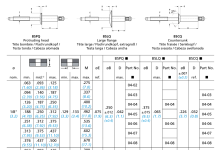
As you can see in the attached excerpt, the standard requires that size 4 (eighth-inch) break-mandrel (blind) rivets should have a body diameter between .122" and .128" and fit a hole between .129" and .133", specifically recommending a #30 hole.

I have enjoyed (and trusted) Budd Davisson's columns for many years (since the year I got my PPL and started to learn about airplanes that are more fun than a 172), and I vaguely remember hearing that he had started out as an engineer who worked on rivets (maybe he said that in a Green Dot podcast? Or am I imagining things?). In any case; I was very surprised to see him get something like this wrong!

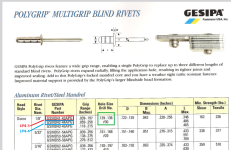
By the way, here's yet another small way in which we have it really good and might not even appreciate it. As you know, the "grip range" of a rivet is the range of allowable thicknesses in the stack-up being riveted, for which the rivet will have the required strength. (Thinner or thicker stack-ups may still work, but the strength will be reduced). As you can see in the IFI standard - and as is true in the vast majority of blind rivets that exist out in the world - a "...4-1" rivet should have a grip range from .020" to .062", a "...4-3" rivet should have a grip range from .126" to .187", a "...4-4" rivet should have a grip range from .188" to .250", etc. So, as with solid rivets, a slight increase in thickness might require changing the rivet to the next length up. However, if you look at the table in the first reply: When it comes to the Gesipa rivets that we use (and there is maybe one other manufacturer that can pull this off... I had to research rivet suppliers once at work, as you might be able to tell...), the LP4-3 has a range from .039" to .197" (i.e. from the middle of the standard "...4-1" range to beyond the upper limit of the standard "...4-3" range), and the LP4-4 has a range from .059" to .256" (i.e. from near the upper end of the standard "...4-1" range to beyond the upper limit of the standard "...4-4" range). In other words, these rivets are exceptionally versatile, and each size can handle a far greater range of stack-up thicknesses than the industry standard requires as a minimum. Just the LP4-3 and LP4-4 cover a huge range of thicknesses (from .039" to .256") and their ranges overlap quite a bit (i.e. you can often use either one or the other), so you can use just those two rivets for almost everything in a light airplane (assuming they have enough strength) instead of having to go find a rivet of just the right length for each stack-up, the way you do with solid rivets and with other manufacturers' blind rivets. (And, along similar lines, the standard requires a size-4 blind rivet to fit in any hole with diameter from.129" to .133", but the Gesipa rivets are good for holes up to .136", another small advantage, not requiring the holes to be cut as precisely).

 

Attachments

Last edited:
However, if you look at the table in the first reply: When it comes to the Gesipa rivets that we use (and there is maybe one other manufacturer that can pull this off... I had to research rivet suppliers once at work, as you might be able to tell...), the LP4-3 has a range from .039" to .197" (i.e. from the middle of the standard "...4-1" range to beyond the upper limit of the standard "...4-3" range), and the LP4-4 has a range from .059" to .256" (i.e. from near the upper end of the standard "...4-1" range to beyond the upper limit of the standard "...4-4" range).
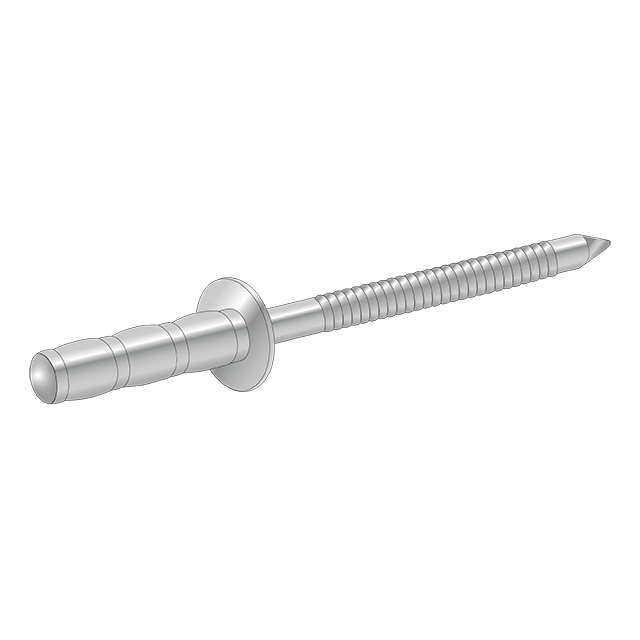
The Gesipa rivets are specifically "Multi-grip Blind Break stem rivets". The multi-grip designation indicates the little crimps along the body of the unpulled rivets and the Michelin Man appearance of a pulled rivet.

Goebel and Avdel/POP both offer an equivalent fastener

LP4-3 :
- Gesipa : GSMD41-43APG
- Avdel/POP : AD41-43BS
- Goebel : ABS-41-43MGCT
 
The Gesipa rivets are specifically "Multi-grip Blind Break stem rivets". The multi-grip designation indicates the little crimps along the body of the unpulled rivets and the Michelin Man appearance of a pulled rivet.

Goebel and Avdel/POP both offer an equivalent fastener

LP4-3 :
- Gesipa : GSMD41-43APG
- Avdel/POP : AD41-43BS
- Goebel : ABS-41-43MGCT
Are the Avdel and Goebel really equivalent? Looking at the spec sheets they seem to have significantly lower shear and tensile strength than the Gesipa rivets. Unless I'm reading something wrong, the Goebel seems to be about 40% weaker than the Gesipa for example (165 vs 270 lbs shear, and 230 vs 382 lbs tensile.)
 
Are the Avdel and Goebel really equivalent? Looking at the spec sheets they seem to have significantly lower shear and tensile strength than the Gesipa rivets. Unless I'm reading something wrong, the Goebel seems to be about 40% weaker than the Gesipa for example (165 vs 270 lbs shear, and 230 vs 382 lbs tensile.)
I'm not sure where you are getting 270 shear and 382 tensile from.

The spec sheet in the second post shows 162 and 236.

Avdel has 150 and 220 ( ~93% )
Goebel has 165 and 230 ( ~102% and 97%)

An even better alternative is the "Bayfast" brand that Bay Supply sells.
I am fairly certain that it is just Gesipa rivets sold as a "Store Brand" (For way less).
 
I'm not sure where you are getting 270 shear and 382 tensile from.

The spec sheet in the second post shows 162 and 236.

Avdel has 150 and 220 ( ~93% )
Goebel has 165 and 230 ( ~102% and 97%)

An even better alternative is the "Bayfast" brand that Bay Supply sells.
I am fairly certain that it is just Gesipa rivets sold as a "Store Brand" (For way less).
You are absolutely right. I glanced away and looked back at the wrong table. Those numbers are for steel rivets, GSMD41-43SPG (not "43APG"). And thank you for the alternatives. That's going to be very useful.
 
Back
Top