Van's Air Force

The definitive Van's Aircraft support community! Buying, building or flying an RV? Join our exclusive family of mentors and enthusiasts!

another sticky valve question

sansoneservices

Well Known Member
We agree the IO-360 angle valve (exhaust) valve has a sticking issue. #2 cylinder to be specific. CHT too hot bad, too cold bad, like Goldilocks and the bears. Does anyone no a sweetspot for cruise CHT? peak exhaust temp is where I set mixture, is LOP better for preventing the valve sticking? I pull the jug when I get sticky valve sickness because I like to inspect the cam lobe. There's many discussions regarding Mysterious Red Magic but it should not be necessary
 
Nobody knows.... seriously. Not even Lycoming knows why this happens. Everyone has anecdotes that they adopt as a theory.
 
i think Lycoming might have some hints, when I did the factory tour last year I asked about this and was told its one of the reasons Lycoming raised their max "green" oil pressure to a higher value. The thought is that higher oil pressures (i run 85 psi at cruise) help get more oil to the valve guides.
 
i think Lycoming might have some hints, when I did the factory tour last year I asked about this and was told its one of the reasons Lycoming raised their max "green" oil pressure to a higher value. The thought is that higher oil pressures (i run 85 psi at cruise) help get more oil to the valve guides.
Maybe the best suggestion/recommendation so far.
 
My theory:
The #2 cyl is the only one where the injector is forward facing and subject to high velocity cooling air from the cowl inlet. This potentially can cause the #2 injector to have a lower static pressure at its air inlet compared to the other cylinders. With lessened bleed air flow, atomization for that one injector suffers resulting in poor fuel burn etc.

At full throttle there is very little pressure differential between the intake manifold and the pressure in the upper deck of the cowl.

Easy fix would be closing the throttle a touch in cruise to restore fuel injector atomization by increasing bleed air thru the injector. Im guessing it would run a little smoother.
 
Last edited:
I still believe the core issue is inadequate oil flow to the rocker box to cool the exhaust valve. When the guide gets too hot, the oil turns to coke, the black deposits that build up. Best fix is to plumb additional oil to the valve for cooling , but a decent amount of work, though surprisingly not that hard (I created a design a decade ago, but neither of my engines have that problem, so never implemented) Second best option is to reduce the temperature of the exhaust valve and therefore the guide. How hot the valve gets is directly related to the combustion gas temperatures. Egt is a direct reflection of the combustion gas temps. Therefore running the coolest egt that you can, in theory, should minimize the guide temps and therefore coking. Obviously much cheaper to do this on the lean side. I run 100 lop.

The guide dissipates heat through the head. I would speculate that something about the positioning of the #2 is reducing air flow around the portion of the head near the exhaust valve and that is why that cylinder has more issues dissipating heat from the guide than the others. Little experience with AV cylinders, so never really assessed why and can’t say why that is.
 
Last edited:
Nobody knows.... seriously. Not even Lycoming knows why this happens. Everyone has anecdotes that they adopt as a theory.
Lycoming knows why it happens. They have some smart people over there . The fact that they don’t share it with others doesn’t mean they don’t know. They know they have an exhaust valve temp issue. They have released several different versions of exhaust valves with all sorts of exotic fillers to address it . They also know they have an oil flow problem to the rocker box, as they tell some folks to run higher oil pressure to overcome the issue. For some reason, they refuse to redesign the lifter / plunger assembly to flow more oil. I always assumed it was a liability thing. Maybe they are just proud or stubborn. Lycoming is about the only engine produced in the last 80 years that does not have a bypass channel in its lifters to send oil to the valves via the pushrod. That alone should help understand the core issue.
 
Last edited:
i think Lycoming might have some hints, when I did the factory tour last year I asked about this and was told its one of the reasons Lycoming raised their max "green" oil pressure to a higher value. The thought is that higher oil pressures (i run 85 psi at cruise) help get more oil to the valve guides.
I do this for the same reasons - 90 psi at higher rpms.
 
I've previously heard the advice to run higher oil pressure and I think we will make that adjustment at condition inspection this winter. Our engine is at 75psi in cruise currently and so we have some headroom.
 
I'm grateful for all the input here. Frustrating that such an expensive engine has such poor company support in regards to such a common problem. Some folks here never experience the problem and it seems we would have a solution of our own. I'm considering adding a little synthetic 2-stroke oil to the fuel and raising the oil pressure. The deposit in the guide was black. I'm using aerosh w100+ which contains the Lycoming recommended additive
 
I'm grateful for all the input here. Frustrating that such an expensive engine has such poor company support in regards to such a common problem. Some folks here never experience the problem and it seems we would have a solution of our own. I'm considering adding a little synthetic 2-stroke oil to the fuel and raising the oil pressure. The deposit in the guide was black. I'm using aerosh w100+ which contains the Lycoming recommended additive
Fuel additives would be no help here, uncombusted fuel will never see the exh valve guide. An oil additive could possibly help, but have no data to back that up. Also, because so little oil gets to the guide, it is not likely to do anything.
 
I still believe the core issue is inadequate oil flow to the rocker box to cool the exhaust valve. When the guide gets too hot, the oil turns to coke, the black deposits that build up. Best fix is to plumb additional oil to the valve for cooling , but a decent amount of work, though surprisingly not that hard (I created a design a decade ago, but neither of my engines have that problem, so never implemented)
Larry, could you elaborate a little on your design for adding oil plumbing to the rocker boxes please. I would imagine accessing a pressured supply and run small diameter lines to a squirter brazed/welded into the rocker covers? Effects on engine oil pressure?

I like the idea of immediate oil delivered to the rockers rather than slow migration up the pushrod.

Thanks Larry, only if you don’t mind, I would be interested.

Russell
 

I appreciate good scientific data, so the link above is a three part article on why deposits accumulate on exhaust valves when cold and hot. It does not answer the OP question which is an approved CHT cruise envelop. Lycoming Flyer reprints also has data on exhaust valve build up.

Both sources say LOP reduces buildup.

Cold temps at idle combined with rich idle mixtures suggests that brutally leaning during taxi is prudent. I lean so far that the lean mixture reduces idle rpms. There is no risk of takeoff with mixture left that lean because the engine won’t run even at run-up rpm’s. I’m either full rich or full lean on the ground to prevent that error.

A good interview about engine oil from Cam Guard inventor.
 
Larry, could you elaborate a little on your design for adding oil plumbing to the rocker boxes please. I would imagine accessing a pressured supply and run small diameter lines to a squirter brazed/welded into the rocker covers? Effects on engine oil pressure?

I like the idea of immediate oil delivered to the rockers rather than slow migration up the pushrod.

Thanks Larry, only if you don’t mind, I would be interested.

Russell
Thats pretty much it, but also considered drilling a hole in the casting and tapping for 1/16" NPT. The rocker cover is less permanent and easy to go back. You can easilly use the cleanout plugs from the main galley for the source. The engineering work is in sizing the squirter nozzles. You don't need a lot of flow here to achieve the objective and should have 0 impact on oil pressure. You would be pulling less oil than the squirters routinely installed in the case. The oil pump delivers far more than is used in engines with healthy bearings.
 
Fuel additives would be no help here, uncombusted fuel will never see the exh valve guide. An oil additive could possibly help, but have no data to back that up. Also, because so little oil gets to the guide, it is not likely to do anything.
I only considered a fuel additive because there's members here that claim MMO prevents their valve issue. Lycoming's oil additive was available for purchase until aeroshell started putting it in their oil. On my (don't kill me) certified plane I'm not supposed to add anything to the fuel or oil. Camguard is approved but it's intended to protect the cam, and aeroshell now includes the extreme pressure additive LW-16702
 
Last edited:
just do the wobble test and know whats going on with your exhaust valves. this is the one thing with the lyc that will take you down. whats so difficult about that. it works. if you want to tinker with other stuff just have fun with it.
 
I only considered a fuel additive because there's members here that claim MMO prevents their valve issue. Lycoming's oil additive was available for purchase until aeroshell started putting it in their oil. On my (don't kill me) certified plane I'm not supposed to add anything to the fuel or oil. Camguard is approved but it's intended to protect the cam, and aeroshell now includes the extreme pressure additive LW-16702
I use MMO to diagnose the sticking valve issue...you add MMO...sticking goes away...get the reamer out...fix the problem.

for now.
 
Hey there,

Lots of theories in here...

Generally speaking, valve sticking is a result of oil coking in between the valve guide and valve. Eventually it builds up enough that the valve stem is pushed against the guide hard enough that it will friction weld itself to the guide. This seems to be accelerated by excess heat or excess debris in the oil. Heat cokes the oil faster and dirt increases friction which increases heat. Reducing either of those things does seem to improve the situation. As others have stated, Lycoming 388 and Lycoming 1425 give guidance on how to help check and repair it. Here is a bit more narrative on it.

Lycoming also has done pressure lubricated exhaust valves where it was necessary. Check out the TIO-540-AF1B in the old eclectic Mooney TLS Bravo. The primary cooling action for valves in Lycomings is the contact cooling through the seat into the head and off the fins, most engines aren't expecting to rely much/at all on oil for cooling of the valve stem.

As far as heat is concerned. Contrary to what many believe, the front cylinders are often the worst cooled cylinders. Airflow coming from the front of the cowl ski jumps over the the front cylinder and ends up cooling the back ones better because it hits the baffling and is forced down through the back fins. Think of the direction the air is flowing into the cowl, it's not straight in. It's at an upwards angle, aimed at the top of the cowling because of the aircraft's AOA. It's also interesting to note that some airframes specifically have higher sticking occurrences than others; which would indicate that it is not an inherent engine design issue and more of a installation/cooling issue. The #2 cylinder has the exhaust side facing back, so if air is skipping over the top that cylinder, that side of the head will be hottest. That's why you likely see it on the #2 and not #1. Lycoming tried to help with this by giving that side of the head significantly more fin area; look down at the head from the top of the engine, the fins are way bigger on the exhaust side. But if air isn't going over that side of the head, it won't matter.

As far as dirt is concerned. I would recommend doing oil analysis (Lycoming 171). It's not a perfect indicator of engine health but it has good merit. From my experience, if you have a high silicon result, you have a much higher propensity for valve sticking. The silicon is dirt/sand that is making it into your oil somehow. Usually this is via an induction leak somewhere behind the filter; stated differently, your engine is ingesting dirty, unfiltered air somehow. Find and fix those leaks!

For homebuilders. Before you go modifying your engine with something that will affect your oil pressure (don't do that, please); you could have unexpected pressure drop issues as you go up in temperature or up in altitude that you don't see on ground testing. I'd recommend adjusting some things on the baffling. You could try building a vane or a scoop that directs some air down across the exhaust valve side of the cylinder you're experiencing issues with. A lot of the helicopter OEMs do this because their installations tend to have the least amount of available cooling air (fan vs airspeed).

I don't personally believe that oil pressure, as long as it is in the green range, has any significant effect on valve sticking.

Hope that helps.

 
For homebuilders. Before you go modifying your engine with something that will affect your oil pressure (don't do that, please); you could have unexpected pressure drop issues as you go up in temperature or up in altitude that you don't see on ground testing. I'd recommend adjusting some things on the baffling. You could try building a vane or a scoop that directs some air down across the exhaust valve side of the cylinder you're experiencing issues with. A lot of the helicopter OEMs do this because their installations tend to have the least amount of available cooling air (fan vs airspeed).
.
lycoming routinely adds oil squirters to their engines with 0 impact on oil pressure. How can you say that what I suggested will create oil pressure problems when i didn’t even specify an orifice size or flow rate?
 
We agree the IO-360 angle valve (exhaust) valve has a sticking issue. #2 cylinder to be specific. CHT too hot bad, too cold bad, like Goldilocks and the bears. Does anyone no a sweetspot for cruise CHT? peak exhaust temp is where I set mixture, is LOP better for preventing the valve sticking? I pull the jug when I get sticky valve sickness because I like to inspect the cam lobe. There's many discussions regarding Mysterious Red Magic but it should not be necessary
I use Aeroshell 15w50 with AvBlend in my oil and MMO (0.4 oz per gallon) in my fuel. After using this combination in multiple Lycoming engines over many years, including the IO-360, I have not experienced a stuck valve since 1998--and that's a whole lot of flying! I also see very smooth start-ups (never any "morning sickness") and consistently smooth operation while maintaining high and even compression. I don't know, but something there is really working! (y):cool:(y)
 
I didn’t say will, I said could. I wasn’t poking as you.

I know because I have 13 years of daily dedicated engine specific experience with a very in depth knowledge of the hundreds of configurations, certified or not. I’ve seen things that work and things that don’t; both in testing and things people have tried. VAF has a wide spectrum of expertise (That’s what makes it great). As I’ve always stated, my purpose for being here is to advise the community to have safer, more reliable airplanes by helping to convey some of my experience.

But again. It’s your engine and your risk tolerance. You can do as you please. I was cautioning you and everyone that read your post that I don’t recommend doing a modification that will use available oil pressure when it’s not needed and can likely be solved with a much lower risk solution. I don’t think your idea will have the intended result, though.

If this was an engine design problem, it wouldn’t repeatedly happen on one cylinder in a specific location. Every cylinder on the engine is the same part number. Nothing specific makes a #2 cylinder. So if #2 is the one with the most issues, it’s because it’s being treated differently than the rest.

My intent is not to argue with anyone, just to provide recommended safe practices. On that note though, I’ll step out of this one. Anyone can feel free to reach out to me in DMs for more specific help on valve sticking. I’ll try and help as best I can.

As YouTuber Scott Manley says, fly safe.
 
I use Aeroshell 15w50 with AvBlend in my oil and MMO (0.4 oz per gallon) in my fuel. After using this combination in multiple Lycoming engines over many years, including the IO-360, I have not experienced a stuck valve since 1998--and that's a whole lot of flying! I also see very smooth start-ups (never any "morning sickness") and consistently smooth operation while maintaining high and even compression. I don't know, but something there is really working! (y):cool:(y)
I re tie my shoes before each flight and have not had a sticking valve in over 2000 hours across two planes. Don’t mean to be a smart a$$, but it is almost impossible to correlate cause and effect with personal experiences like this. Just too many variables in play, all without sound evidence of which of those variables changes the occurrence. I am sure we can find another person that used mmo in the fuel and DID get sticky valves. Will again argue that there simply is no path for that mmo in the fuel to ever get to an exhaust valve guide. Intake guide, sure. Mmo in the oil, well that is a possibility, as at least the mmo gets to the guide.
 
Last edited:
I re tie my shoes before each flight and have not had a sticking valve in over 2000 hours across two planes. Don’t mean to be a smart a$$, but it is almost impossible to correlate cause and effect with personal experiences like this. Just too many variables in play, all without sound evidence of which of those variables changes the occurrence. I am sure we can find another person that used mmo in the fuel and DID get sticky valves. Will again argue that there simply is no path for that mmo in the fuel to ever get to an exhaust valve guide. Intake guide, sure. Mmo in the oil, well that is a possibility, as at least the mmo gets to the guide.
I feel the combination of AvBlend in the oil and MMO in the fuel makes a HUGE difference compared to not, but many people don't agree like youself. However, these are generally people who have never tried this combination. I use it in everything motors (cars, motorcycles, lawn mowers, slow blower and several different airplanes). If I didn't notice a big difference, I wouldn't waste the money on them. Exhaust valves stick due to carbon build-up, and both MMO and AvBlend clean and/or dissolve carbon, so there is logic behind that.
 
Last edited:
As far as heat is concerned. Contrary to what many believe, the front cylinders are often the worst cooled cylinders. Airflow coming from the front of the cowl ski jumps over the the front cylinder and ends up cooling the back ones better because it hits the baffling and is forced down through the back fins. Think of the direction the air is flowing into the cowl, it's not straight in. It's at an upwards angle, aimed at the top of the cowling because of the aircraft's AOA.
And yet, a modification I see on many, many RV's is to add a small fence in front of cylinder #1 and #2 to rob the front cylinders of some air and leave that air for the rear cylinders. I've done this as well, #1 and #2 were always cooler than #3 and #4. I experimented with strips of foil tape of varying widths across the front of the cylinders to block frontal airflow, and that had the effect of raising front cylinder temps and lowering rear cylinder temps.

I question the AOA claim as well. The propellor is sweeping the air up on one side, but down on the other. The air flowing over your cylinders is more affected by inlet geometry than by AOA, IMO.
 
My theory:
The #2 cyl is the only one where the injector is forward facing and subject to high velocity cooling air from the cowl inlet. This potentially can cause the #2 injector to have a lower static pressure at its air inlet compared to the other cylinders.

Higher, but not by much, at least on my airplane. Values are inches of water, so the differences are very small. This is a bubble rock at #2. I had the same on all four.

Bubble Rock #2.jpg

Pressure Tap Data.jpg

Measure your local pressures to be sure. I'd be more inclined to look into the airflow issue Chris outlined above, with thermocouples.

A later photo, with turbo nozzle shrouds and a pitot rail. #2 and #4 are on the same rail, so nozzle bleed pressure will be very similar.

Nozzle Bleed Air Pitot.jpg

Second best option is to reduce the temperature of the exhaust valve and therefore the guide. How hot the valve gets is directly related to the combustion gas temperatures. Egt is a direct reflection of the combustion gas temps. Therefore running the coolest egt that you can, in theory, should minimize the guide temps and therefore coking.

Given the issue is coking, reduced stem and guide temperature would be beneficial. That said, I've been running peak EGT cruise over 1000 hours now, and the recent wobble check was perfect. Sample of one of course.
 
Last edited:
I am curious more if oil type may or may not contribute to the problem. For example Aeroshell vs Phillips.
I used Phillips many years ago, just before they were hit with a class-action lawsuit for their previous standard blend and then again for their full-synthetic blend attempt, which mostly affected larger displacement engines for not breaking down carbon. I had a new Lycoming O-360 go "south" mid-time while using the previous Phillips standard (non-synthetic) multi-weight blend--that was in 1998. After switching to Aeroshell 15w50 and adding AvBlend at each oil change and also adding MMO to the fuel (0.4 oz per gallon), life has been really good in terms of engine reliability, performance and meeting full TBO. I also wonder about the same thing--if CamGuard added to Phillips oil was such a good combination, then why are so many low-time engines getting stuck valves?
 
Last edited:
I use Aeroshell 15w50 with AvBlend in my oil and MMO (0.4 oz per gallon) in my fuel. After using this combination in multiple Lycoming engines over many years, including the IO-360, I have not experienced a stuck valve since 1998--and that's a whole lot of flying! I also see very smooth start-ups (never any "morning sickness") and consistently smooth operation while maintaining high and even compression. I don't know, but something there is really working! (y):cool:(y)
This is what I referred to in a previous post. Some members like additives, some don't. I mentioned adding a little 2-stroke oil to the fuel (or MMO) to lubricate the valve stem but only the area near the valve head would receive any benefit. One member mentioned Camguard (or avblend) in the oil. I briefly experienced morning sickness and did the wobble test, had to ream, now flying again. Many excellent opinions here and I'm very grateful
 
Given the issue is coking, reduced stem and guide temperature would be beneficial. That said, I've been running peak EGT cruise over 1000 hours now, and the recent wobble check was perfect. Sample of one of course.
Hence my comments about in theory. Still many mysteries surrounding this issue. Cannot seem to isolate variables between engines/operators where all appears similar and yet some get it and some don't. I don't believe it is luck of the draw, but withoput a whole bunch of data across many planes, not sure we will ever be able to isolate them.
 
Hence my comments about in theory. Still many mysteries surrounding this issue. Cannot seem to isolate variables between engines/operators where all appears similar and yet some get it and some don't. I don't believe it is luck of the draw, but withoput a whole bunch of data across many planes, not sure we will ever be able to isolate them.
Agreed, many engineer types here, all willing to share, and still the sticky issue remains for some of us. I don't believe in luck, and I'm not risking another cam tolerating brief stickiness
 
Given what they are saying about Swift 100R, it will be interesting to see if this new UL fuel will prevent or even eliminate valve sticking given it's cleaner burning characteristic. Also worth mentioning regarding MMO -- from my experience, you will notice cleaner spark plugs using MMO in the fuel.
 
i think Lycoming might have some hints, when I did the factory tour last year I asked about this and was told its one of the reasons Lycoming raised their max "green" oil pressure to a higher value. The thought is that higher oil pressures (i run 85 psi at cruise) help get more oil to the valve guides.
Good point -- and, AvBlend was specifically designed to penetrate and reach down into valve guides and dissolve carbon -- works the same with piston rings. Back in the late 90's, most of us aircraft owners were giddy about AvBlend becoming FAA approved and also working as advertised. And, MMO was used by the military (by the 50 gallon drum) in the old piston days to prevent valve sticking when they were using 130-octane high-leaded fuels. So, this is why I use both products!
 
Last edited:
I have to agree with many here and what is trying to be conveyed....I ran MMO in my last 6 with an O-320 and had sticking valves three times in 4 years...None of us really know what causes it...some engines have it, some don't.

since that engine and airplane was subseqently sold and later ran off the runway basically ending it...I've run two O-360's and an IO-540 in the Rocket...and havent' had but one instance and I DON'T run MMO anymore...I did try Deklin a while back which is a lead scavenger...but I don't think it does anything.

I'm with Larry on the notion that IF...you could add a bit more oil volume flow...it might solve the problem. Worth a try...

All the hand wringing in the world isn't worth one brave guy saying...Heck....I'm trying it.

we sometimes forget...it's called Experimental for a dang reason!!
 
My CHT's all are close comparatively, and 320°F in cruise. Piper Arrows have one giant opening in front to allow squirrels to nest. Maybe too cold is bad, too hot is bad, where's GoldiLocks when you need her
 
I have to agree with many here and what is trying to be conveyed....I ran MMO in my last 6 with an O-320 and had sticking valves three times in 4 years...None of us really know what causes it...some engines have it, some don't.

since that engine and airplane was subseqently sold and later ran off the runway basically ending it...I've run two O-360's and an IO-540 in the Rocket...and havent' had but one instance and I DON'T run MMO anymore...I did try Deklin a while back which is a lead scavenger...but I don't think it does anything.

I'm with Larry on the notion that IF...you could add a bit more oil volume flow...it might solve the problem. Worth a try...

All the hand wringing in the world isn't worth one brave guy saying...Heck....I'm trying it.

we sometimes forget...it's called Experimental for a dang reason!!
You're absolutely right! Everyone here should run what they feel works best for them! And, your O-320 with sticking valves might have even been from running too rich without even knowing it, causing carbon and lead to built-up behind the valves in excess. I had that happen with three separate floats in three deferent Lycoming driven airplanes years ago, which was very common with these older floats. My point was not the use of MMO alone but using AvBlend in the oil to solve this much like running a higher volume of oil behind the valves. In the meanwhile, I have trusted my life for many years now to this combination and wouldn't fly without it or without the blue epoxy carburetor float -- these things keep me and my wife much safer than we had in the past! (y):cool:(y)
 
Reply to post #34 “The thought is that higher oil pressures (i run 85 psi at cruise) help get more oil to the valve guides.”

Really ? Pull a pushrod & use an oil can & pump it several times to inject oil into the hole in the rocker - where does the oil go ? It just hits the rotator cap on the valve stem & is unable to get anywhere near the valve guide.
Where does the valve guide get its oil ‘cooling’ from ? It’s the oil that runs down the pushrod shroud tube .
The amount of oil, coming down the shroud tube, is due to the clearance between the engine case & cam follower. If you have a ‘tight’ follower ( difference between min & maximum clearance is ~ 4 thou, from memory) you will have valve guide sticking issues & if the gap is on the loose end then you’re unlikely to experience any sticking issues. This is totally different to the Lyc SB388C ? (Valve wobble test) problem.
 
Reply to post #34 “The thought is that higher oil pressures (i run 85 psi at cruise) help get more oil to the valve guides.”

Really ? Pull a pushrod & use an oil can & pump it several times to inject oil into the hole in the rocker - where does the oil go ? It just hits the rotator cap on the valve stem & is unable to get anywhere near the valve guide.
Where does the valve guide get its oil ‘cooling’ from ? It’s the oil that runs down the pushrod shroud tube .
The amount of oil, coming down the shroud tube, is due to the clearance between the engine case & cam follower. If you have a ‘tight’ follower ( difference between min & maximum clearance is ~ 4 thou, from memory) you will have valve guide sticking issues & if the gap is on the loose end then you’re unlikely to experience any sticking issues. This is totally different to the Lyc SB388C ? (Valve wobble test) problem.
Brilliant, what now ?
 
Brilliant, what now ?
Read post #7, & note the last sentence- that is telling & Lycoming, IMO & from some outside knowledge, did have some expertise up to about the mid 90’s. Apparently the ‘bean counters’ went through the place & some people who had that expertise left with that knowledge.
For me the journey all started with a new certified (we did not have the “Experimental aircraft category here at that time) 0-320 Lycoming which developed compression loss by 100hrs resulting in the #3 exhaust valve & seat needing redoing. That was the start of my engine issues & fault finding with the help from a friend in the US.
The story can be continued if anyone wants to know more. It covers fuel flow, rocker box oil, valve guides & lifters.
 
i think Lycoming might have some hints, when I did the factory tour last year I asked about this and was told its one of the reasons Lycoming raised their max "green" oil pressure to a higher value. The thought is that higher oil pressures (i run 85 psi at cruise) help get more oil to the valve guides.
In the new Lycoming scheme, the working pressure would be even higher than the 85 indicated. The sensing location was moved from the pump discharge to the oil galley closeout at the front of the engine. Wouldn't be surprised if the associated losses where > 10 psi at operating conditions; but, you can guess where that estimate was pulled from.

FWIW
 
I used Phillips many years ago, just before they were hit with a class-action lawsuit for their previous standard blend and then again for their full-synthetic blend attempt, which mostly affected larger displacement engines for not breaking down carbon. I had a new Lycoming O-360 go "south" mid-time while using the previous Phillips standard (non-synthetic) multi-weight blend--that was in 1998. After switching to Aeroshell 15w50 and adding AvBlend at each oil change and also adding MMO to the fuel (0.4 oz per gallon), life has been really good in terms of engine reliability, performance and meeting full TBO. I also wonder about the same thing--if CamGuard added to Phillips oil was such a good combination, then why are so many low-time engines getting stuck valves?
I could be wrong, but I believe it was Mobil AV-1 synthetic aviation oil that was taken off the market due to class action lawsuits. Here's a couple of links.
Mobil AV-1 lawsuit link
Settlement link
 
In the new Lycoming scheme, the working pressure would be even higher than the 85 indicated. The sensing location was moved from the pump discharge to the oil galley closeout at the front of the engine. Wouldn't be surprised if the associated losses where > 10 psi at operating conditions; but, you can guess where that estimate was pulled from.

FWIW
The original location was not at the pump discharge. It was on the accy case just before the relief, which is at the opposite end of that same galley you are referring to. I doubt the pressure is a whole bunch different in the new location. I suspect that measuring before and after the relief does make a diffence, but would need a science guy to figure that out. Never studied flow mechanics.
 
I could be wrong, but I believe it was Mobil AV-1 synthetic aviation oil that was taken off the market due to class action lawsuits. Here's a couple of links.
Mobil AV-1 lawsuit link
Settlement link
Okay -- I believe you're correct regarding that fully synthetic lawsuit, so most guys switched away from fully synthetic AvOil because it wasn't dissolving carbon deposits properly, especially in larger displacement engines. And, many of us started using the AvBlend oil additive, which does a great job at dissolving carbon. Most guys noticed their engine oil turning black shortly after starting AvBlend and then cleaner for longer in subsequent oil changes.

However, most of the guys in the mid to late 90's also stopped using Phillips AvOil and switched to Aeroshell 15W50 due to this Phillips lawsuit:

Lawsuit and FAA notice regarding Phillips aviation oil
  • FAA notice: In 1993, the Federal Aviation Administration (FAA) issued a notice regarding contaminated Phillips 66, 20W50 X/C Aviation Oil. The notice stated that the company was recalling certain production runs of the product after reports of contamination.
  • Aircraft incidents: The FAA notice was prompted by reports of engine problems in aircraft that used the contaminated oil. The affected product was primarily distributed through distributors and service providers.
  • Settlement: The recall and FAA involvement indicate that potential claims and settlements for damages and repairs likely occurred with affected customers.
 
Last edited:
Reply to post #34 “The thought is that higher oil pressures (i run 85 psi at cruise) help get more oil to the valve guides.”

Really ? Pull a pushrod & use an oil can & pump it several times to inject oil into the hole in the rocker - where does the oil go ? It just hits the rotator cap on the valve stem & is unable to get anywhere near the valve guide.
Where does the valve guide get its oil ‘cooling’ from ? It’s the oil that runs down the pushrod shroud tube .
The amount of oil, coming down the shroud tube, is due to the clearance between the engine case & cam follower. If you have a ‘tight’ follower ( difference between min & maximum clearance is ~ 4 thou, from memory) you will have valve guide sticking issues & if the gap is on the loose end then you’re unlikely to experience any sticking issues. This is totally different to the Lyc SB388C ? (Valve wobble test) problem.
I wonder what it would be like if I could crawl inside the case with the engine running at 2300 rpm , and experience the oil that sprays out from those cam bearings with a pressure set at the low side of green like 65 and compare it with the volume of oil that sprays out at 85 psi.

Does a higher volume of oil shoots out from those gaps no matter the tolerances?

Does oil volume flowing down the pushrod tubes increase?

I don’t know where to go with creativity. Can we fabricate a clear cover and watch? Is this even the issue to sticky valves?

I like data. It would be nice to collect 100,000 samples and see what oil and additives result in better performance.

I’m bumping up my oil pressure up a tad and considering future oil and additive purchases.
 
The original location was not at the pump discharge. It was on the accy case just before the relief, which is at the opposite end of that same galley you are referring to. I doubt the pressure is a whole bunch different in the new location. I suspect that measuring before and after the relief does make a diffence, but would need a science guy to figure that out. Never studied flow mechanics.
Yes Sir. You’re right, as usual, regarding the original pick-up. I’m still asserting the pressure loss will be quite noticeable; if solely based on the anecdote alone. It’s rare to see one of the big aviation companies change something without significant reason to do so.
Thanks for correcting my mistake.
 
I'm grateful for all the input here. Frustrating that such an expensive engine has such poor company support in regards to such a common problem. Some folks here never experience the problem and it seems we would have a solution of our own. I'm considering adding a little synthetic 2-stroke oil to the fuel and raising the oil pressure. The deposit in the guide was black. I'm using aerosh w100+ which contains the Lycoming recommended additive
All very good points!

I increased my oil pressure to 75 psi and re-safety wired the oil relief valve, so it won't back-off. It's also important to differentiate engine wear, corrosion and carbon build-up, which are all bad things. I'm also an advocate of a little top-end lubrication, so I use MMO for that -- MMO was invented by Marvel Schebler, who invented the modern-day aviation carburetor. Carbon build-up is also important, so I use the AvBlend oil additive for that purpose. In terms of internal corrosion, there's no substitute for maintaining fresh oil to prevent highly corrosive combustion acids from building-up, so I change my oil every 25-hours. And, getting oil to vital engine parts quickly after startup greatly reduces internal wear, especially during cold weather start-ups, so that's why I use Aeroshell 15W50, which also contains the Lycoming recommended additive LW-16702, where the 50-weight (hot) in Aeroshell 15W50 equates to the same viscosity as Aeroshell or Phillips 100 -- so, thin while cold and thick while hot.
 
Last edited:
....

I increased my oil pressure to 75 psi and re-safety wired the oil relief valve, so it won't back-off.

How did you adjust your cruise oil pressure? Just the oil relief valve adjustment? If so I'm confused, based on others posts that should only adjust the peak oil pressure (like after cold startup).

Signed,
ConfusedInNJ :D
 
Yes Sir. You’re right, as usual, regarding the original pick-up. I’m still asserting the pressure loss will be quite noticeable; if solely based on the anecdote alone. It’s rare to see one of the big aviation companies change something without significant reason to do so.
Thanks for correcting my mistake.
I wish I could agree with your statement that the big aviation companies don't change without significant reason...I guess the issue would be the term "significant"...
from what I see...most significant to them is profit. above all else...which as a capitalist, I'm fine with...but not at the expense of cheapening this product.

They have demonstrated time and again their willingness to attempt to..."press urine out of a thinly coined copper disc" promise everything, deliver less, at higher cost.

Seems to me these days there's way more engines not making it to tbo than 30 years ago. Part of that is the economics...part of it is that back when I started homebuilding...noone had a clue what a factory new engine was...you bought a mid time engine and ran it...you bought a runout and rebuilt it at home, subbing out what you needed to.

all the fanciness that has pervaded and everyone now "needs" is part of it...clearly everyone needs a Lycon fire breathing Beast Maximus on the nose of an RV...

not knocking it...and to each their own...
 
Last edited:
How did you adjust your cruise oil pressure? Just the oil relief valve adjustment? If so I'm confused, based on others posts that should only adjust the peak oil pressure (like after cold startup).

Signed,
ConfusedInNJ :D
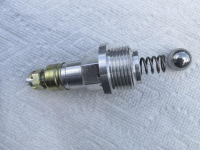
The oil pressure relief valve (or oil pressure regulator) is located on the top right side of the crankcase; behind the number three or the number five cylinder, depending on whether it’s a four- or six-cylinder engine. The oil pressure relief valve is very basic in its method of relieving excessive oil pressure. It consists of an aluminum housing with a strong spring, which presses against a steel ball, where the spring keeps the ball seated. As oil pressure builds beyond the amount the spring is adjusted to maintain, the ball is forced off its seat by the excessive pressure. This exposes a passageway (bypass) that directs excess oil back to the sump, relieving some of the oil pressure, so that's how it regulates oil pressure. I adjusted mine by trial-n-error to achieve 75 to 76 psi at cruise rpm and 190 degrees F for oil temp (i.e. with oil flowing though the oil cooler). Note safety wire not shown in photo below.

1760715264264.png 1760716063229.png
 
Back
Top