Van's Air Force

The definitive Van's Aircraft support community! Buying, building or flying an RV? Join our exclusive family of mentors and enthusiasts!

An RV it is, now which one??

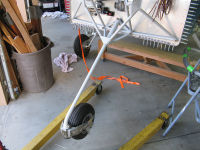
I highly doubt that misalignment is from the bolt. The gear leg slides into a 6" long socket and that holds it together. The bolt just keeps the gear from falling out of the socket. It could be a bend in the leg up near the socket, as it appears straight in the pic. However, the leg tapers and becomes thicker near the top, so bends should occur lower on the leg. Most likely the socket was not positioned properly in the jig when your engine mount was welded. Would only need to be a degree or two off to create this minor misalignment.
Yeah, something like that.
 
That's really odd--my nosewheel axle is perfectly straight with no issue, and others I know are straight, too. Wonder if your nose gear leg actually got bent somehow? Did you build your RV or buy it already flying? Some might also argue that Cirrus nose gear legs are their weak-point for exactly the same reason, but again technique is what it's all about. Seen many a pilot bend and tear off Cessna, Pipers and Grumman nose gear over my years of flying. And, please remember--that's just my opinion, and you can have your own opinion on VAF, too--right?

Actually that's not unheard of -- a number of years back there a few Nose gear legs that weren't drilled straight & parallel -- once bolted up to the motor mount, you could see that the axle was pointed a little to the left IIRC.

I think they figured out that the gear either twisted during heat treating or the whole thing shifted in the jig, resulting in the hole being an RCH off...
 
Granted very different engines: the RV7's was a low compression Aerosport O-375 (chosen expecting the demise of 100ll...) spinning a perhaps-underpitched Catto 3blade fp. The RV14s is a TB IO-390-exp134 spinning a 2blade CS composite Hartzell that idle lopes like a cam'd hotrod. Cold weather solo climb rates went from 1800 to 3000fpm while crosscountry TAS went from 144 to 170kts. Best 7500' DA, 4way top speed thus far has been 189ktas. I'm certainly happy with it.
 
Actually that's not unheard of -- a number of years back there a few Nose gear legs that weren't drilled straight & parallel -- once bolted up to the motor mount, you could see that the axle was pointed a little to the left IIRC.

I think they figured out that the gear either twisted during heat treating or the whole thing shifted in the jig, resulting in the hole being an RCH off...
Hadn't heard of that before--but in such a case, I would expect the gear leg itself to appear straight up-until the bend, which accommodates the nosewheel fork given the straight design of the RV-A nose gear legs. I do know that it's not uncommon for them to get bent if enough load is applied. However, they can be rechecked and straightened by Langaire Aircraft Parts, who actually manufactured them.
 
Last edited:
Hadn't heard of that before--but in such a case, I would expect the gear leg itself to appear straight up-until the bend, which accommodates the nosewheel fork given the design of the RV-A nose gear leg. I do now that it's not uncommon for them to get bent. However, they can be rechecked and straightened by Langaire Aircraft Parts, who actually manufactures them.

I was talking about a deflection as viewed from the front of the aircraft, not a "bow" of the gear leg as viewed from the side of the aircraft.

If the mounting hole, either in the gear leg or in the motor mount gear leg socket, isn't aligned with the "vertical" axis of the front axle, the axle will be defected to one side or the other, affecting the CAMBER angle of wheel/tire (not the CASTER or TOE angle).

Remembering a bit more, the solution for this aircraft was to weld-over and re-drill the motor mount socket hole a degree or two off center.
 
Actually that's not unheard of -- a number of years back there a few Nose gear legs that weren't drilled straight & parallel -- once bolted up to the motor mount, you could see that the axle was pointed a little to the left IIRC.

I think they figured out that the gear either twisted during heat treating or the whole thing shifted in the jig, resulting in the hole being an RCH off...
Yes...exactly this. I've had a couple of long-time and well-known VAF Engineers holding my hand as I flesh out the problem and this is what was imparted to me. My nose wheel is indeed off-camber and consistent with the direction that the strut is canted. My rudimentary trigonometric application here is consistent with the root issue being at the strut socket. Neither the builder nor the second owner used a tug, which is what uncovered the issue. A Bogert tow bar wouldn't tip you off but a very precise Best Tug does. I've had the plane for 5 years but started investigating this when recently laser-marking my nose gear wheel pant for drilling new axle access holes demonstrated the problem.
 
Last edited:
I was talking about a deflection as viewed from the front of the aircraft, not a "bow" of the gear leg as viewed from the side of the aircraft.

If the mounting hole, either in the gear leg or in the motor mount gear leg socket, isn't aligned with the "vertical" axis of the front axle, the axle will be defected to one side or the other, affecting the CAMBER angle of wheel/tire (not the CASTER or TOE angle).

Remembering a bit more, the solution for this aircraft was to weld-over and re-drill the motor mount socket hole a degree or two off center.
I don't recall seeing any SB's for the newer RV-7A, 8A nor 9A models applying to that. However, i do recall some basic recommendations when the gear mounting hole gets oversized and/or oblong or when the shoulder bolt is not long enough. If there is one, could you please reference it?

According to Vans assembly manual, the engine mount and gear leg are precision jigged and match-drilled together as a set and go out as a matched pair.
 
Last edited:
700 hrs, RV-14A. Lots of grass strips. Wheel pants still look brand new and painted. (Evoke). I chose the A based on insurance rates for seniors AND resale as I knew I would be selling it to fly my 10 until I can't. (My 14A has a very good insurance rate and that probably helped) There is a serial builder down here who is converting a non-A to A for resale.

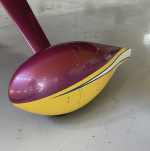
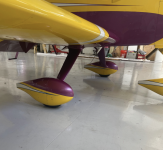
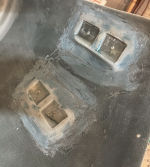
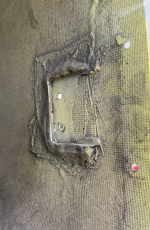
The key to keeping wheel pants nice, is (In my view) properly inflated tires, soft field landing technique, speed and superior airmanship 🙄. One other item that is relatively straight forward is proper reinforcement of the fiberglass around the mounting brackets. Wheel pants take a beating and is easily the worst part of your paint a few years into flying. Note the non-use of Tinnerman washers which everyone says is a must. (Yes, living on the edge)

Screenshot 2025-09-21 132457.pngScreenshot 2025-09-21 132441.png
Screenshot 2025-09-21 132637.pngScreenshot 2025-09-21 132613.png
 
Last edited:
"Control feel"
The -7 is a 'sports car with wings'. Small, fun, and agile.
The -14 isnt quite "an SUV with wings', but more in that direction. More docile controls.

That said, I have a flying -7 (love it) and building a -14 (go figure).
 
I highly doubt that misalignment is from the bolt. The gear leg slides into a 6" long socket and that holds it together. The bolt just keeps the gear from falling out of the socket. It could be a bend in the leg up near the socket, as it appears straight in the pic. However, the leg tapers and becomes thicker near the top, so bends should occur lower on the leg. Most likely the socket was not positioned properly in the jig when your engine mount was welded. Would only need to be a degree or two off to create this minor misalignment.
With the RV-A legacy nose gear legs, they are actually the same diameter util going into the socket and then get larger as seen in the photo below. However, the main gear legs taper all the way up and into the socket.

1758482800625.png
 
I don't recall seeing any SB's for the newer RV-7A, 8A nor 9A models applying to that. However, i do recall some basic recommendations when the gear mounting hole gets oversized and/or oblong or when the shoulder bolt is not long enough. If there is one, could you please reference it?

According to Vans assembly manual, the engine mount and gear leg are precision jigged and match-drilled together as a set and go out as a matched pair.
There isn't an SB that I'm aware of; just reporting on two instances that I observed on the RV-7A, circa 2005/6 and 2015/16.

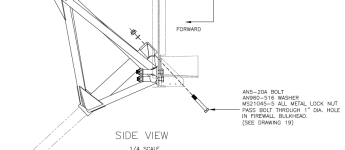
...And the attach bolt isn't a "Shoulder Screw" -- It's an AN5-20A -- see attached:

Screenshot 2025-09-21 at 3.06.27 PM.png
 
With the RV-A legacy nose gear legs, they are actually the same diameter util going into the socket and then get larger as seen in the photo below. However, the main gear legs taper all the way up and into the socket.

View attachment 97815
That picture is very explanatory, thank you. My investigation thus far is preliminary to the extent that I haven't even de-cowled my airplane yet, nor have I reviewed my plans. I've only looked at the Van's thumb drive but that only shows the "new" suspension version nose gear.

My apologies to OP for the ongoing thread hijack, but I gotta know....so...can Langaire just bend my nose gear strut back to the correct camber?
 
That picture is very explanatory, thank you. My investigation thus far is preliminary to the extent that I haven't even de-cowled my airplane yet, nor have I reviewed my plans. I've only looked at the Van's thumb drive but that only shows the "new" suspension version nose gear.

My apologies to OP for the ongoing thread hijack, but I gotta know....so...can Langaire just bend my nose gear strut back to the correct camber?
If it were me, I would take the fiberglass leg fairing off and check for overall straightness (perhaps use a plumb-bob placed behind the gear leg itself with your ship level). Might even want to remove the wheel fork to see everything better. Take a few more detailed photos of the leg, and then contact Langaire for their opinion. They advertise gear leg straightening right on their website for experimental gear legs, and they are the gear leg experts!
 
700 hrs, RV-14A. Lots of grass strips. Wheel pants still look brand new and painted. (Evoke). I chose the A based on insurance rates for seniors AND resale as I knew I would be selling it to fly my 10 until I can't. (My 14A has a very good insurance rate and that probably helped) There is a serial builder down here who is converting a non-A to A for resale.

The key to keeping wheel pants nice, is (In my view) properly inflated tires, soft field landing technique, speed and superior airmanship 🙄. One other item that is relatively straight forward is proper reinforcement of the fiberglass around the mounting brackets. Wheel pants take a beating and is easily the worst part of your paint a few years into flying. Note the non-use of Tinnerman washers which everyone says is a must. (Yes, living on the edge)

View attachment 97805View attachment 97806
View attachment 97807View attachment 97808

Well, dang. I do the first three, I think it’s too late in my aviation career to get number four….but I know a guy….
 
If it were me, I would take the fiberglass leg fairing off and check for overall straightness (perhaps use a plumb-bob placed behind the gear leg itself with your ship level). Might even want to remove the wheel fork to see everything better. Take a few more detailed photos of the leg, and then contact Langaire for their opinion. They advertise gear leg straightening right on their website for experimental gear legs, and they are the gear leg experts!
Sounds like a good project for that two or three day period here between Fall and dead-on sub-zero Winter
 
With the RV-A legacy nose gear legs, they are actually the same diameter util going into the socket and then get larger as seen in the photo below. However, the main gear legs taper all the way up and into the socket.

View attachment 97815
Yes, the taper happens starting around 6-12” from the banded area going into the socket. The other posters leg looks straight in the untapered area, so if there is a bend we are not seeing in the pic it would be in the taper area. The leg is far more likely to bend in the thinner diameter area, so speculated there is not a bend in the unseen area in the pic.
 
Currently working on my nosewheel pant again. This was from (unwisely) attending a fly-in at what is generally regarded as "the nicest grass strip in the state". The runway was fine but in parking, I got my nosewheel marshaled right into a little ditch.
Well thats really unlucky and sorry to hear it!
 
700 hrs, RV-14A. Lots of grass strips. Wheel pants still look brand new and painted. (Evoke). I chose the A based on insurance rates for seniors AND resale as I knew I would be selling it to fly my 10 until I can't. (My 14A has a very good insurance rate and that probably helped) There is a serial builder down here who is converting a non-A to A for resale.

The key to keeping wheel pants nice, is (In my view) properly inflated tires, soft field landing technique, speed and superior airmanship 🙄. One other item that is relatively straight forward is proper reinforcement of the fiberglass around the mounting brackets. Wheel pants take a beating and is easily the worst part of your paint a few years into flying. Note the non-use of Tinnerman washers which everyone says is a must. (Yes, living on the edge)

View attachment 97805View attachment 97806
View attachment 97807View attachment 97808

One thing we opted to do (and I'm really glad we did) was to use truss head An526 screws instead of countersinking AN507s for the main attach points. I feel this is a big advantage and similar in nature to using tinnerman washers (but better?).
 
Back to the original question, I have spent time in 6, 7, and 8s. I found the forward visibility on the ground significantly better in the 8 to the point where I can see without any S turns. I wouldn't consider that an issue in the 8.If you generally fly alone, the center position makes more of an impact than I would have expected. It just feels different (better) in the center of rotation.

Oh, and the 14 may be effected by Mosaic rules differently than the 6, 7, 8, or 9 due to stall speed dirty of 61 kts. In local discussions, that might prohibit sport pilots from being able to fly it. I'm not even close to an expert in Mosaic so I would confirm this.

I have a friend with a 14A whose insurance prohibits grass. Just something you may want to discuss with your insurance agent. Of course, I didn't discuss it with anyone and just did what I thought I wanted and I'm pretty satisfied with my choices. Have fun and good luck on your project. I'm not sure where you are but, if you are in the mid-Florida region, you can certainly come see mine and we have a 6, 7, 9, 10, and 14A on the field. I could probably get you a sit-in in some or all of them.
 
Last edited:
I have time in the 6A and own a 9A. My understanding is the 7/7A and 9/9A have the same interior volume, seat layout etc., and the 7 improved the seating on the 6 but only slightly. My wife and I have no comfort issues with up to 4hr legs in the 9A; bladder becomes an bigger concern. I'm 190lbs and she's 165lbs. The Grumman Tiger we flew before was less comfortable (but plenty of space for bags). Still, we fit everything we need for a weeks active vacation in the 9A, and the 6/7 would be the same.

If you go used airplane shopping, aren't primarily operating off of grass, and are moderately sized adults, I would be looking for a 6A or 7A; that's primarily due to the fairly large delta in price between a good 7 and a good 14; I couldn't justify the extra $100k, and ended up with a top tier 9 that I'm super happy with. I considered the tailwheel, but for all the reasons mentioned above the tricycle won out. I'm especially thankful on IFR cross-countries and windy days.

Building new: the time saved alone on a 14 over a 7 build is worth it; from a cost perspective, you're likely to put the same avionics in either (so a wash), baseline kit price is comparable, so that leaves the engine. You could put a IO-360 in the 14 to save some $$, but no one is doing that because we all like more performance! The only other thing with the 14 over the 6/7/9 is the lack of a slider canopy. Its manageable, but when loading in the rain (yuck) and wind, I am very happy to have the slider.
 
I had time in Dad's -6 before starting my build, and my wife had been up with me a couple times.

I really wanted a -4 based on looks, but was leaning towards an -8. Wife said "if you want me to fly with you I'm sitting next to you" and that made the decision. The -14 had just been announced when I started and it was out of my price range. Couldn't find a good deal on a partially built -6, so -7 it was.

Make sure you and your wife try on the airplane for a bit before you commit. I found that 30 minutes or so is about all I can take sitting in the back of an -8; the seating position means I can't move my legs around as much and I'm about climbing the walls after a short time because I feel trapped. It would not be good to finish a long build only to find out she feels the same way...

I went with a taildragger slider because that's what I was used to.
I forgot to mention... Dad and I are both 6ft and about 210lb. We fit ok in his -6. The almost-a-14 mod made a big difference in his airplane; holding off on installing it in mine for now.
 
I forgot to mention... Dad and I are both 6ft and about 210lb. We fit ok in his -6. The almost-a-14 mod made a big difference in his airplane; holding off on installing it in mine for now.
I'm a huge believer in Anti-Splat's Almost-A-14 mod. I certainly don't need it, but my son is 6' 5" and 250 and he can make it work. If he was a pilot, I'd have to move the rudder pedals a bit for his knees to work with the lower dash edge, but he doesn't fly.
 
I'm a huge believer in Anti-Splat's Almost-A-14 mod. I certainly don't need it, but my son is 6' 5" and 250 and he can make it work. If he was a pilot, I'd have to move the rudder pedals a bit for his knees to work with the lower dash edge, but he doesn't fly.
If you are above average size, that is a significant consideration. I'm currently teaching a 6'7" student his Private Pilot in his RV-14A. At 6'7" he had to modify his seat position and seat cushions in his purchased airplane to fit comfortably inside it! I don't think he would fit in a 6 or 7.
 
If you are above average size, that is a significant consideration. I'm currently teaching a 6'7" student his Private Pilot in his RV-14A. At 6'7" he had to modify his seat position and seat cushions in his purchased airplane to fit comfortably inside it! I don't think he would fit in a 6 or 7.
6' 7" would really be pushing it. My son is pretty proportionate, leg-length vs torso, and I gotta believe that at 6' 5" he's at the very upper limit.
 
Sounds like a good project for that two or three day period here between Fall and dead-on sub-zero Winter
Alex Peterson flew up. We had breakfast at the field followed by an informative nose-gear tutorial and identification of my misalignment problem. In the interest of not hijacking's this thread further, I post this in the old "Nose Gear Lessonl Learned" thread. Bottom line TLDR, there is slop in the nose gear bolt-hole allowing a little rotation along the long axis of the nose gear leg. Moving toward the "close-tolerance-bolt" solution
 
Last edited:
If you are above average size, that is a significant consideration. I'm currently teaching a 6'7" student his Private Pilot in his RV-14A. At 6'7" he had to modify his seat position and seat cushions in his purchased airplane to fit comfortably inside it! I don't think he would fit in a 6 or 7.
Hey, we just did his first dual XC in his RV-14A. I am impressed with his cruise numbers. With a new Thunderbolt IO-390, cold air induction, and 2 E-Mags, his airplane gave us 168 KTAS at 23 squared power at 8500 MSL on 10.5 gph. We had two big adults, full fuel, no bags. Not bad at all!
 
Hey, we just did his first dual XC in his RV-14A. I am impressed with his cruise numbers. With a new Thunderbolt IO-390, cold air induction, and 2 E-Mags, his airplane gave us 168 KTAS at 23 squared power at 8500 MSL on 10.5 gph. We had two big adults, full fuel, no bags. Not bad at all!
That’s impressive. As a comparison, you can probably carry the same load, meet those speeds, and do this on 8.5gph in a 7. (7 owners can chime in.)
More room, if needed, and comfort has its price, but that’s still only $12/hr more, ish.
Pretty good exchange if you’re a bigger person or simple want the elbow room. Better delta than coach to first class by a long shot.
 
That’s impressive. As a comparison, you can probably carry the same load, meet those speeds, and do this on 8.5gph in a 7. (7 owners can chime in.)
More room, if needed, and comfort has its price, but that’s still only $12/hr more, ish.
Pretty good exchange if you’re a bigger person or simple want the elbow room. Better delta than coach to first class by a long shot.
I'm a SAVVY customer (mostly for engine trend analysis); as part of this, they put a report card together. I'm comparing my 9A to the 7A, because we have the same engine. At least for the O-360's, my average cruise speed is smack in the middle of the pack at 146ktas; reality is, at 9000', throttle back a little, I'm doing 152-155ktas on 9.5-10gph. Up at 11,000ft, I can do 162KTAS on that same fuel burn. Lower down, I tend to throttle back a bit and cruise in the 8-9gph range at that 146ktas. 14-15 nm/gal low, up to 22 nm/gal with a tailwind and cruising in the low flight levels. I don't think a 7 is going to be as efficient up high as the 9. Subtract 0.5-1 gal/hr if you have a well tuned IO-360 and are running LOP.

My point really is that the 14 and the 10 are faster machines than the older 6's/7's. Weight, drag cleanup, generally higher finish quality, more horsepower and more efficient composite propellers all play a role. Folks also tend to overstate the true performance of their RV; the Vans numbers basically assume a factory built aircraft on the light end of the weight range.

That being said, I think the 7's represent a sweet spot in the marketplace if you want the acro capability and fit comfortably. Our 9 is more comfortable than premium economy on any mainline carrier and you cannot beat the convenience! All of these wonderful machines provide the RV grin :)
 
This thread veered off topic, but I will add that I've built an -8 and now am mostly complete on a -14...the difference between the two is night and day. I have a friend who built a -7 and has helped me greatly on the -14 and he gets pi$$ed off all the time time because of how easy the -14 goes together. It really is amazing. Stuff just fits. I tell everyone I'm not building a plane, I'm assembling one.
 
My point really is that the 14 and the 10 are faster machines than the older 6's/7's. Weight, drag cleanup, generally higher finish quality, more horsepower and more efficient composite propellers all play a role. Folks also tend to overstate the true performance of their RV; the Vans numbers basically assume a factory built aircraft on the light end of the weight range.

:)
Hmmmm -
I’ve never heard anybody say 14’s and 10’s are faster than a 7 or designed better.
Weight? Drag Cleanup? Built to a higher quality? Where are you getting this stuff?

Vans numbers -
7 -217mph
14-216mph
10-211mph

The 6 is VNe limited to 210mph but there are many of us that can/could exceed that in level flight.
Again, never seen anybody argue these performance aspects between models in this way before. Doesn’t make sense.
 
Hmmmm -
I’ve never heard anybody say 14’s and 10’s are faster than a 7 or designed better.
Weight? Drag Cleanup? Built to a higher quality? Where are you getting this stuff?

Vans numbers -
7 -217mph
14-216mph
10-211mph

The 6 is VNe limited to 210mph but there are many of us that can/could exceed that in level flight.
Again, never seen anybody argue these performance aspects between models in this way before. Doesn’t make sense.
Agree that comparably powered 6/7 will fly just as fast as a 10/14. The trade of is size / comfort for efficiency. My 6 does 165 kts @ 8.5 and the 10 does 165 @ 10.5-11. I don’t go anywhere near the 180 speed, as it is just too much gas consumption for my taste.
 
Hmmmm -
I’ve never heard anybody say 14’s and 10’s are faster than a 7 or designed better.
Weight? Drag Cleanup? Built to a higher quality? Where are you getting this stuff?

Vans numbers -
7 -217mph
14-216mph
10-211mph

The 6 is VNe limited to 210mph but there are many of us that can/could exceed that in level flight.
Again, never seen anybody argue these performance aspects between models in this way before. Doesn’t make sense.
The average 14 is built better than the average 7, which again is built better than the average 6. That translates to higher top in end speed; power required is directly proportional to zero lift drag coefficient; for a given weight the induced drag on these airplanes is going to be equivalent, so the delta is parasitic drag. Parasitic drag is directly related to how clean the airplane is assembled. Cooling drag is a pretty big deal too and Vans spent effort here on the 14 design with the IO390.

Vans speed numbers assume Vans weights-spartan interiors and minimal panels. The 14A is a bit of an exception to that rule, as the factory demonstrator has a dual G3X/GTN750 and reasonable interior-building the equivalent will net the equivalent. Many of the older birds with modern interiors/upgrades etc. are not as light as the Vans factory equivalent.
 
Not sure here you are geting that info. Van’s shows performance data for both lightweight weight (solo for the two-seaters) and at gross weight. See the following performance data from Van’s:

RV-8: https://www.vansaircraft.com/rv-8/#aircraft-details-2

RV-7: https://www.vansaircraft.com/rv-7/#aircraft-details-2

RV-14: https://www.vansaircraft.com/rv-14/#aircraft-details-2

RV-10: https://www.vansaircraft.com/rv-10/#aircraft-details-2

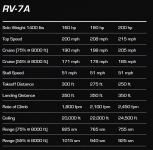
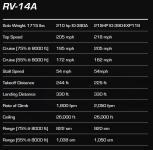
Like to better understand how 5 additional hp translated to 10 mph speed increase in the 14 and 20 additional hp translates to 8 then 7 mph in the 7A.

Screenshot 2025-10-01 151833.pngScreenshot 2025-10-01 151912.png
 
It's a drag thing.
It's a drag that the new design apparently did not work for one well documented build: See link below.
  • Zero performance change measured. In fact, my power, fuel flow and RPM settings yield exactly the same results as before, per the performance table I built before the engine modification.
He does mention the engine sounds better. ;)

 
to the OP, of course nothing beats an RV-6.9I, trouble is there's only one worldwide, and it ain't for sale...

This being said, have a look here at the RCT (RV Comparison Table), which might be running long in the tooth by now as the -15 ain't included yet, but still provides some reference.
Most advice in previous posts are valid with some caution, caveat emptor, as usual ;)
Good luck hunting!
 
Back
Top