Van's Air Force

The definitive Van's Aircraft support community! Buying, building or flying an RV? Join our exclusive family of mentors and enthusiasts!

An RV it is, now which one??

Flyforfood

I'm New Here
The kids are mostly grown, I’ve done the classic car thing, time for a new project…. I’ve decided on an RV but need some thoughts and insight on which one between the 8, 8A, 7, 7A and 14, 14A.

First, why an A? I have plenty of time in tail wheel acft, they look cool, so why should I build an “A”? Are there reasons like insurability or something that I may not be aware of?

14 vs 7, Looks like the 14 is 3” wider than the 7 so I get the “its more comfortable” argument. But that’s an expensive 3”, not to mention the more limited, more expensive, engine selection (that might just be my perception). Is the 14 faster/easier to build?

The 8 looks like it be a kick in the pants… However, would the wife be ok sitting in the back on an extended cross country? Is it tight? How is the visibility?

I appreciate any thoughts anyone can provide!!
 
I did what Mike sugguested and defined my mission.

Most of my flying was by myself or with one person (eliminated the -10 - for now). My wife likes to fly as well and I enjoy sitting next to her, so that narrowed it to the side by sides. I figured i would enjoy a few aerobatics now and again, so that eliminated the -9. And to your point, the taildraggers look cool, so that brought me to the -7 or -14. At the time i started my kit (nearly 10 years ago) i didn't have much money, so that was the reason i went with the -7.

My understanding is that -14 is measurably easier to build than the -7, and if i could go back in time I likely would probably pick the -14 now, not only for that reason, but also the comfort aspect, but i have zero regrets choosing the -7. I like that it is smaller, more nimble, and a lighter weight machine (my empty came in at 1055 lbs).

What is true, is no matter what kit you choose, you'll love it.
 
I do formation and aerobatics so an 8/8A for me. I’ve ridden in all the models you list. The 14 vs 7 were essentially the same just slightly bigger. The 8 and 8A are harder for passengers to get into compared to the 7/14 and obviously you don’t get a seat to put things into. When by myself I use the foot wells on either side to put drinks/snacks. As for riding in the back of an 8. I’m 5’11 and 190 lbs. I’ve been on trips from NC to southern Florida or Delaware in one hop, I was comfortable the entire time. My wife always falls asleep even when side by side so I’m always solo. Lol. But in all honesty, find an 8 and 7 your wife can sit in. If you can get her a flight even better. Either way, enjoy and you can’t go wrong!
 
As others have said, define your mission. Go and sit in each of the models you are looking at. If you are an XL sized pilot, that will tell you what you need to know. If your wife is going to fly with you, make sure she gets to sit, too. Mine did not like the tandem configuration.

These things are true regardless of which model you choose:

It will cost more than you think.

I will take longer than you think.

IF you finish, it will be worth it!
 
Are you going to buy this plane or build it? It makes a difference as the 14 is reportedly easier to build than the 7 or 9. As to differences in flying, I think there are differences well beyond just the larger cockpit in the 14. Make no mistake...the 6, 7, and 9 tend to be a bit cramped. Less of an issue for smaller husband/wife combinations but definitely tight quarters for most "modern Americans".
 
I do formation and aerobatics so an 8/8A for me.
At one point in time there was only one person who could issue an FFI sign off that was in the RV world. He flew a 6. I’m not sure how many of us in the 50 ship record flight were in side by sides but it was a bunch of us.
I wouldn’t disqualify a 7, but if your serious about aerobatics to the point your going to compete, might be a different story.
I don’t believe 14’s are being accommodated by FFI but that something to check if formation is key.

I get nauseous in the back of an 8. Weird, as I don’t get air sick or sea sick. So, you’ll want to put your wife back there and make sure all is good. My wife hated it, but I know many who felt comfortable enough to snooz away….
 
Easier to fly makes for a safer flying machine, especially in challenging conditions. And, cross-country flying many times presents very challenging conditions, even upon arrival back into your home airport. Even wife's who hold a pilot's license much prefer smooth rides in stable flying machines.
 
Last edited:
Some thoughts:
- The RV-14 is the faster build (compared to the 7, 8, or 10). The 10 is the longest and most complicated build.
- The RV-14 is the highest cost for what you get. Example here is the relatively small incremental cost to go from a 14 to a 10 and the 10 opens up a new world of capability (thus the reason I’m building another one).
- The rear passenger in an 8 or 8A has more hip room than the side by sides (other than the 10). I’ve flown several 4+ hour legs in the back of the 8A and with a quality seat it was comfortable.
- My current ride (RV-8) is used 90% of the time for 800nm cross county commuting. With a good autopilot (I have the Dynon SkyView system) I find it to be a superb IFR plate form. That said, I consider the autopilot as a must have for all RVs on trip other than a short, local hop. The point, any RV that is properly equipped is a very good cross country IFR machine.
- For fun flying the RV-8 wins compared to the 14 or 10. The 14 controls are a little heavier than the 8, but lighter than the 10. That said, the 10 is by no means less of a blast to fly.

If you want a two seat and your GIB is ok with the RV-8, done. My GIB just does her paper work for four hours so is fine with the ride.

If you want a side by side and have the money, the RV-14 is it for ease of build, resale value and capability. I have no experience with the 7 or 9 so I’ll defer to others.

If you want the Cadillac of RVs, have the time and money, the RV-10 is it. You will not be disappointed.

On tail dragger vs nose gear, decide what you want but consider future pilots that might fly the plane. The 8A has a slight speed penalty compared to the 8, but I set a higher cross wind landing limit in the 8A. The 8 may be a little higher insurance cost, but assuming you have some tailwheel time it is not bad. Pros and cons on resale between the two, but I see very few tail dragger 14s. My neighbor is building one but he is a long time tail dragger guy.

Pick one - there is no bad choice….

Carl
 
I get nauseous in the back of an 8. Weird, as I don’t get air sick or sea sick. So, you’ll want to put your wife back there and make sure all is good. My wife hated it, but I know many who felt comfortable enough to snooz away….
Tell the person up front to put their feet on the rudder pedals and do their job!

My wife has over 2,000 hours in the back of our 8. Knits, sleeps, reads. Enjoys it..
 
Some thoughts:
- The RV-14 is the faster build (compared to the 7, 8, or 10). The 10 is the longest and most complicated build.
- The RV-14 is the highest cost for what you get. Example here is the relatively small incremental cost to go from a 14 to a 10 and the 10 opens up a new world of capability (thus the reason I’m building another one).
- The rear passenger in an 8 or 8A has more hip room than the side by sides (other than the 10). I’ve flown several 4+ hour legs in the back of the 8A and with a quality seat it was comfortable.
- My current ride (RV-8) is used 90% of the time for 800nm cross county commuting. With a good autopilot (I have the Dynon SkyView system) I find it to be a superb IFR plate form. That said, I consider the autopilot as a must have for all RVs on trip other than a short, local hop. The point, any RV that is properly equipped is a very good cross country IFR machine.
- For fun flying the RV-8 wins compared to the 14 or 10. The 14 controls are a little heavier than the 8, but lighter than the 10. That said, the 10 is by no means less of a blast to fly.

If you want a two seat and your GIB is ok with the RV-8, done. My GIB just does her paper work for four hours so is fine with the ride.

If you want a side by side and have the money, the RV-14 is it for ease of build, resale value and capability. I have no experience with the 7 or 9 so I’ll defer to others.

If you want the Cadillac of RVs, have the time and money, the RV-10 is it. You will not be disappointed.

On tail dragger vs nose gear, decide what you want but consider future pilots that might fly the plane. The 8A has a slight speed penalty compared to the 8, but I set a higher cross wind landing limit in the 8A. The 8 may be a little higher insurance cost, but assuming you have some tailwheel time it is not bad. Pros and cons on resale between the two, but I see very few tail dragger 14s. My neighbor is building one but he is a long time tail dragger guy.

Pick one - there is no bad choice….

Carl
Define your mission, what do you want in a plane then go get one or build it
 
I get nauseous in the back of an 8. Weird, as I don’t get air sick or sea sick. So, you’ll want to put your wife back there and make sure all is good. My wife hated it, but I know many who felt comfortable enough to snooz away….
Maybe a little Dutch Roll'ing?
 
Thank you all! Yes, while I didn’t specifically spell out how I narrowed it down to the models I questioned, I have narrowed it down to the 3, all of which are 2 seats, aerobatic and capable of cross country flying. That is the mission.

I will be looking at a 14 project this next week and hope to find the other models as a comparison. At this moment I don’t plan to do any competition flying, but who knows what the future holds. I definitely need to get the wife in the back of an 8.

Is there data to quantify how much of a time savings there is on the average build between the 7 & 14? Are we talking 5% or 30%?
 
My two cents. My first demo ride in an RV was with Van. He had an RV6A at a local airport here in the Denver area. I was building an RV6 at the time and as we taxied out I asked him why he wasn’t flying one of the tail draggers? He said when he would travel, and would be at a number of unfamiliar airports, he really liked the visibility on an A model.
I finished and flew my RV6 for fourteen years and had my share of taxi challenges due to limited tail dragger visibility, but I looked cool.
 
I must have side x side seating or the wife won't fly. I've noticed over many years if the wife enjoys the plane, she won't complain about the $20k prop we want
 
All A/C are a trade off. Make what YOU want as your priority👍
I’ve driven most of the Vans range except the 10. I’m a conventional U/C guy so style/looks is important to me. side by side reminds me of a fancy Cherokee especially with the trainer wheel version! I’ve owned the 8 & 4, the later the best of the whole range👍 I fly for fun and like that fighter feel only a tandem can give👍
Each to their own but think of resale also, the little wheel at the back still has the ‘boogy-man’ factor to it😂
 
I've got 600 or 800 hours tailwheel and went with a nosewheel for two reasons: one is that in a gusty crosswind at the end of a long day, the nosewheel would be more tolerant of skills degradation from pilot fatigue. Second is better visibility taxiing. (When I've been in a side by side RV, ground visibility was not all the good on my side of the plane and terrible on the other. Nosewheel meant less hassle on the ground.) Also, almost all my tailwheel time has been centerline seating: RV-4, RV-8, and AirCam.

I read that the RV-9/A was the factory's favorite plane for X-C. And since I fly a lot of practice IFR, that handling difference was expected to be of value, and side by side meant a bigger panel (which was easy to fill) and the safety pilot / CFII had better visibility. Speed difference? Basically inconsequential as far as I was concerned.

As others have commented, back seaters in my RV-8/A did not like the Dutch rolling (fish tailing) in turbulence. And although I've only had a little RV-14 time, I think that the -9/A flies a little nicer.

My mission, my values. As others have said, go make your best decision.
 
At one point in time there was only one person who could issue an FFI sign off that was in the RV world. He flew a 6. I’m not sure how many of us in the 50 ship record flight were in side by sides but it was a bunch of us.
I wouldn’t disqualify a 7, but if your serious about aerobatics to the point your going to compete, might be a different story.
I don’t believe 14’s are being accommodated by FFI but that something to check if formation is key.

I get nauseous in the back of an 8. Weird, as I don’t get air sick or sea sick. So, you’ll want to put your wife back there and make sure all is good. My wife hated it, but I know many who felt comfortable enough to snooz away….
And my intention was not to say you can’t in a 7 or 14. We had team members with each. Just, my preference was tandom and a non-vernier throttle.
 
And my intention was not to say you can’t in a 7 or 14. We had team members with each. Just, my preference was tandom and a non-vernier throttle.
Understood. Vernier throttles are not allowed in FFI by the way but I’m sure you’re meaning standard push pull knob vs quadrant.
Is FFI accommodating 14’s? I have seen some clinic advertisements that exclude them. Curios to know.
 
First, why an A? I have plenty of time in tail wheel acft, they look cool, so why should I build an “A”? Are there reasons like insurability or something that I may not be aware of?
My RV-6A is by far the coolest airplane at my airport.

I've got 600 or 800 hours tailwheel and went with a nosewheel for two reasons: one is that in a gusty crosswind at the end of a long day, the nosewheel would be more tolerant of skills degradation from pilot fatigue.
same here. I have lots of C-140 tail wheel time but choose the A model just for maybe slightly easier gusty weather and cross winds.

One other factor, in my opinion, on gear selection is runway conditions. If I flew a lot off grass runways I would have probably gone tail wheel.
 
Understood. Vernier throttles are not allowed in FFI by the way but I’m sure you’re meaning standard push pull knob vs quadrant.
Is FFI accommodating 14’s? I have seen some clinic advertisements that exclude them. Curios to know.

Unsure about FFI, the group I’m while using RPA and I started in a Yak-52. We have no exclusion that would disqualify a 14. I’ve also done formation in the 14. Really the only critique for it is, compared to the other RV’s it’s obviously bigger and people on the ground really notice when it’s not in position.
 
Unsure about FFI, the group I’m while using RPA and I started in a Yak-52. We have no exclusion that would disqualify a 14. I’ve also done formation in the 14. Really the only critique for it is, compared to the other RV’s it’s obviously bigger and people on the ground really notice when it’s not in position.
I don’t think FFI by itself excludes them, but finding a clinic that allows them to play with smaller guys might be tougher. Good to know there are other options for the 14 crowd.
 
I had time in Dad's -6 before starting my build, and my wife had been up with me a couple times.

I really wanted a -4 based on looks, but was leaning towards an -8. Wife said "if you want me to fly with you I'm sitting next to you" and that made the decision. The -14 had just been announced when I started and it was out of my price range. Couldn't find a good deal on a partially built -6, so -7 it was.

Make sure you and your wife try on the airplane for a bit before you commit. I found that 30 minutes or so is about all I can take sitting in the back of an -8; the seating position means I can't move my legs around as much and I'm about climbing the walls after a short time because I feel trapped. It would not be good to finish a long build only to find out she feels the same way...

I went with a taildragger slider because that's what I was used to.
 
My wife didn’t want to checkout in a tailwheel and so we got a 6A. Depending on your age insurance will be less expensive in the long run for a nose wheel. I'm 81 and no insurance increases yet. I still fly over a 100 hours a year.
 
It might be instructive for OP to review Flight Chops' YouTube series. IIRC he did a pretty good job of documenting his team-build of the very nice RV-14 that he flies. His RV-14 Build Status Vlog series seems pretty comprehensive.


1758371693542.png
 
My thought pattern:
1). I’m building once and I want to fly it as long as I can. I have a friend or two that have given up flying tail wheels as they got older. So an “A” it is.
2) if my wife won’t fly with me then I should just save the time and money. The 14A being bigger would help with that.
3) build time, Van’s says 1000-1300 hours for a 14, and 1500-1800 for a 7.

So, 14A it was for me.

For what it is worth, I have a few friends who built 7s who have commented that they would build the 14 if building now because of the changes/improvements.

Pick one and get started….
 
As many have already mentioned, go sit in one, and not just a few minutes. Sit there and absorb the overall comfort/feel for a decent amount of time.
I was set on getting an RV9/9A until I brought my wife along so we could both set in one for awhile and see how she liked it. Ironically, she much preferred the tandem of the RV8 we had sat in previously. After sitting in the 9, we again sat in another RV8 while at Oshkosh and she again stated she liked it best. Neither of us is large by any means (me@170 and her@140) but do not like being cramped. Lucky me!! I prefer tandem anyways. So bring the lady along, especially if she will eventually be flying with you. While I may still end up with a 9/14 in the future, my recent RV8 purchase will be the test to see if she really prefers the tandem. I only wanted an RV for long cross country flights after flying all over the US in a 172, RANS S7, and recently acquired Murphy Rebel. When I get down to just one aircraft, the Rebel will probably be the one I hold onto.

Oh, the other item I failed to mention is that I was mainly looking at TW aircraft due to most of my flying is in and out of grass strips, including my own. While the nose wheel version can and are used on grass, I feel the TW is the better option if you are going to be utilizing grass strips often.
 
Oh, the other item I failed to mention is that I was mainly looking at TW aircraft due to most of my flying is in and out of grass strips, including my own. While the nose wheel version can and are used on grass, I feel the TW is the better option if you are going to be utilizing grass strips often.
I agree with this. The nosewheel on Van's legacy side-by-sides is a notorious and well-known weak point in the design. I understand that it was re-designed 5 or 6 years ago but that doesn't help me and I treat my nose gear very tenderly. I do stay away from grass strips, partly for that reason but mainly because I'm tired of fiberglass work on my wheel pants.
 
We fly our 14A off grass with some frequency. If the field is reasonable well kept and you land on speed, there's no problem.
 
I agree with this. The nosewheel on Van's legacy side-by-sides is a notorious and well-known weak point in the design. I understand that it was re-designed 5 or 6 years ago but that doesn't help me and I treat my nose gear very tenderly. I do stay away from grass strips, partly for that reason but mainly because I'm tired of fiberglass work on my wheel pants.
Some perspective on this--I have been flying with the original noise gear and wheel for 21-years (an early model RV-9A), and if you fly any noise wheel airplane like you should, then you won't run into problems. I didn't use wheel pants and only sacrifice 3-knots, but we still have the original stock RV-9A noise gear and wheel. Vans did make the noise gear stronger after moving from the RV-6A to the -9A, -7A and -8A models, but Vans flew their original RV-6A from their previous grass farm field location for years without any issues. In addition, the FAA determined that Vans original noise gear design and strength for the -9A, -7A and -8A models actually exceeded FAA Part 43 standards. Trim noise light, holding some back pressure on takeoffs, and always land on your mains, never forcing the nosewheel down, and your fine.
 

Attachments

  • 46 - Flying 14 years.jpg
    46 - Flying 14 years.jpg
    548 KB · Views: 20
Last edited:
We fly our 14A off grass with some frequency. If the field is reasonable well kept and you land on speed, there's no problem.
Currently working on my nosewheel pant again. This was from (unwisely) attending a fly-in at what is generally regarded as "the nicest grass strip in the state". The runway was fine but in parking, I got my nosewheel marshaled right into a little ditch.
 
It might be instructive for OP to review Flight Chops' YouTube series. IIRC he did a pretty good job of documenting his team-build of the very nice RV-14 that he flies. His RV-14 Build Status Vlog series seems pretty comprehensive.


View attachment 97722
And in Flight Chops last video, he landed on a grass strip for his first and last time ever--sounds like similar wheel pant concerns. Snow, ice and rocks getting into his wheel pants caused some broken fiberglass in two other Flight Chops videos.
 
Some perspective on this--I have been flying with the original noise gear and wheel for 21-years (an early model RV-9A), and if you fly any noise wheel airplane like you should, then you won't run into problems. I didn't use wheel pants and only sacrifice 3-knots, but we still have the original stock RV-9A noise gear and wheel. Vans did make the noise gear stronger after moving from the RV-6A to the -9A, -7A and -8A models, but Vans flew their original RV-6A from their previous grass farm field location for years without any issues. In addition, the FAA determined that Vans original noise gear design and strength for the -9A, -7A and -8A models actually exceeded FAA Part 43 standards. Trim noise light, holding some back pressure on takeoffs, and always land on your mains, never forcing the nosewheel down, and your fine.
Nevertheless, the nose gear is a well-known weak spot on RV-A models, as has been discussed here on VAF many times over the last couple of decades.

I'm currently dealing with nose gear issues, other than wheel pants, that sort of reinforces the weak-nosegear thing. I've noticed that my nosewheel axle isn't horizontal, making attachment of my tug problematic. Discussion with a couple of well-known Van's gurus leads me to suspect that the culprit is the nosegear socket, which was apparently the basis of the nosegear re-design several years ago (couple of old threads here). I still have some investigation to do, but I do have a dog in the nosegear fight.
 
The kids are mostly grown, I’ve done the classic car thing, time for a new project…. I’ve decided on an RV but need some thoughts and insight on which one between the 8, 8A, 7, 7A and 14, 14A.

First, why an A? I have plenty of time in tail wheel acft, they look cool, so why should I build an “A”? Are there reasons like insurability or something that I may not be aware of?

14 vs 7, Looks like the 14 is 3” wider than the 7 so I get the “its more comfortable” argument. But that’s an expensive 3”, not to mention the more limited, more expensive, engine selection (that might just be my perception). Is the 14 faster/easier to build?

The 8 looks like it be a kick in the pants… However, would the wife be ok sitting in the back on an extended cross country? Is it tight? How is the visibility?

I appreciate any thoughts anyone can provide!!

I have lots of time in all the RV models except the -15, both taildragger and nosedragger versions.

First answer is the most pertinent: pick any of them and you will love it. They are all simply wonderful airplanes and you will not be disappointed.

With that said, my preferences:
If you are a tailwheel pilot, get a taildragger version. They all, in my personal opinion, fly better than the same model with a much heavier and draggier nosewheel underneath the nose. Plus the nosewheel is a little more problematic if you like grass runways. You will hear differing opinions, of course, and that's fine; but that's mine. Put the little wheel in back where God intended it to be.

I've flown both the -6/-7s and the -14. This will be purely a personal choice. There is no wrong answer. The best thing you can do is get rides in both and see which is more pleasing to you. The -14 does have more room and is easier to build. The -7 has more head and leg room than the -6. The -6 or -7 will be faster on the same power. In subjective handling I like the -6/-7 better than the -14. It has the subjective feel of a quick, light, responsive airplane more than the -14. For formation and aerobatics I prefer the -6/-7. For cross country the -6/-7 will go farther and faster on the same gallons of fuel, but the -14 carries more gallons. You will have more room for you and more space to carry stuff in the -14.

The subjective answer of what pleases you most is the defining point. There is no wrong answer. Get as many rides in the actual airplanes as you can find.
 
Ask you insurance broker about the TW vs. NW relative premiums. Some report little difference... I've also heard +50% or more.
 
@Flyforfood If I had to do it over again, I'd do the -14.

The 7/8/9 are 25+ years old and they were designed to accommodate the "state of the art" avionics and systems back-in-the-day.

The 14 is only 10 years old, and designed to easily integrate an electrical system, modern avionics.

The 14 build is more of an assembly process. There's almost no "Obtain Bauxite ore, smelt, extrude a piece of angle measuring 1 & 3/128" x 4 & 63/64" B.S. in the plans :)

and...I know of a kit that's 80% percent finished, and has engine and prop. DM me and I can hook you up with the seller.
 
I've built both a 7A and a 14A and can highly recommend the latter in terms of being significantly quicker/easier building, better room/visibility and surprisingly over 20kts faster cruising
 

Attachments

  • 20241123_074503.jpg
    20241123_074503.jpg
    1.6 MB · Views: 21
Nevertheless, the nose gear is a well-known weak spot on RV-A models, as has been discussed here on VAF many times over the last couple of decades.

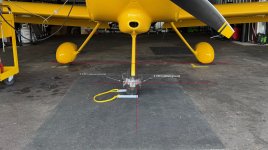
I'm currently dealing with nose gear issues, other than wheel pants, that sort of reinforces the weak-nosegear thing. I've noticed that my nosewheel axle isn't horizontal, making attachment of my tug problematic.
That's really odd--my nosewheel axle is perfectly straight with no issue, and others I know are straight, too. Wonder if your nose gear leg actually got bent somehow? Did you build your RV or buy it already flying? Some might also argue that Cirrus nose gear legs are their weak-point for exactly the same reason, but again technique is what it's all about. Seen many a pilot bend and tear off Cessna, Pipers and Grumman nose gear over my years of flying. And, please remember--that's just my opinion, and you can have your own opinion on VAF, too--right?

 
Last edited:
I've built both a 7A and a 14A and can highly recommend the latter in terms of being significantly quicker/easier building, better room/visibility and surprisingly over 20kts faster cruising
I'm only just curious, but what makes the RV-14A quicker/easer to build than say an RV-7A? They are certainly wonderful airplane for sure! (y):cool:(y)
 
I've built both a 7A and a 14A and can highly recommend the latter in terms of being significantly quicker/easier building, better room/visibility and surprisingly over 20kts faster cruising
Specs are identical for speeds, with the 7 slightly faster. You built a really slow 7 or a really fast 14, or perhaps both….
Never heard of a 14 being faster. Doesn’t make sense.
The other points are relevant.
 
I'm only just curious, but what makes the RV-14A quicker/easer to build than say an RV-7A? They are certainly wonderful airplane for sure! (y):cool:(y)
Having only built the -7 I can say looking at the 14 detailed plans and the amount of pre fabrication on the 14, that significant improvements have been made to make the build easier, as noted above by Mr Decker, the 7 detail instructions sort of conclude half way through the fuselage built with the assumption you have learnt all you need to know so just go finish the airplane:D. The -7 however is a great airplane and can still be built at a reasonable price, and there are significant lessons learned on this site, and modifications etc. that will make the build much easier than the early adopters.
Bottom line though is build what rings your bell.
Figs
 
That's really odd--my nosewheel axle is perfectly straight with no issue, and others I know are straight, too. Wonder if your nose gear leg actually got bent somehow? Did you build your RV or buy it already flying? Some might also argue that Cirrus nose gear legs are their weak-point for exactly the same reason, but again technique is what it's all about. Seen many a pilot bend and tear off Cessna, Pipers and Grumman nose gear over my years of flying. And, please remember--that's just my opinion, and you can have your own opinion on VAF, too--right?
It's always been that way since I've had it. Not really visible to the eye but since I've had it it's been difficult to get the vertically mis-aligned axle bolt into the arms of my Best Tug Alpha 2. Otherwise, nothing appears amiss. If the nose gear strut is bent, it's bent side-to-side. The strut is secured in the engine mount with a single bolt holding it in double shear, I'm told. Some of these were apparently mis-drilled leaving the strut off-axis side-to-side. I first need to see if the strut has play in that direction. Haven't had a chance to get to it yet.

1758405324355.jpeg
 
The beauty about the Vans range is they cater for pretty much everyone’s taste, if you want that ‘Cherokee’ look then the ‘A’ is a no brained but if you want that sporty fast look then a conventional U/C is where you should be😉
 
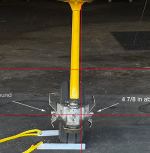
Don't know, but in blowing-up the photo, this might be the case. These guys make Vans round gear legs, and they can check and straighten them.


View attachment 97757
I'm not sure this proves anything. If you look closely at the original photo, it appears that the camera might be slightly "off center". Look at the aft end of the main wheel pants and the gap between the flaps and the fuselage. A VERY small misalignment here will cause the deviation shown with the laser lines.
 
I'm not sure this proves anything. If you look closely at the original photo, it appears that the camera might be slightly "off center". Look at the aft end of the main wheel pants and the gap between the flaps and the fuselage. A VERY small misalignment here will cause the deviation shown with the laser lines.
My methodology was just quick and dirty. The fundamental problem, measurable, is that the front wheel axle is not parallel to the ground. The right side axle nut is about 5/16 inch higher than the left one preventing the arms on my tug from closing on both nuts evenly. It’s a nuisance. My investigation thus far is centered around figuring out why the nosewheel axle is off-level. Leading candidates are…nosewheel carrier being “off“, nose gear strut being bent, the nose gear strut socket being tweaked, or the nose gear strut socket bolt being drilled offkilter. Maybe other things, but that’s as far as my knowledge of the nose gear anatomy will let me go. My hypothesis, unproven so far, is that the nose gear strut socket in the engine mount is problematic since that apparently has been a known issue in the past. Bent nose gear was my first thought,. I haven’t had a single remotely “exciting“ landing on that airplane since I’ve owned it so I don’t think that I have damaged it, but in 500 hours I’m the third owner.
 
The kids are mostly grown, I’ve done the classic car thing, time for a new project…. I’ve decided on an RV but need some thoughts and insight on which one between the 8, 8A, 7, 7A and 14, 14A.

First, why an A? I have plenty of time in tail wheel acft, they look cool, so why should I build an “A”? Are there reasons like insurability or something that I may not be aware of?

14 vs 7, Looks like the 14 is 3” wider than the 7 so I get the “its more comfortable” argument. But that’s an expensive 3”, not to mention the more limited, more expensive, engine selection (that might just be my perception). Is the 14 faster/easier to build?

The 8 looks like it be a kick in the pants… However, would the wife be ok sitting in the back on an extended cross country? Is it tight? How is the visibility?

I appreciate any thoughts anyone can provide!!

I found great value in doing a Vans factory tour. At the end of the tour they present each/most of the models and invite people to sit in them. It is a beautiful part of the country and we enjoyed our nearly two weeks up there.

It was the most expensive free tour I've ever been on. No regrets.
 
It's always been that way since I've had it. Not really visible to the eye but since I've had it it's been difficult to get the vertically mis-aligned axle bolt into the arms of my Best Tug Alpha 2. Otherwise, nothing appears amiss. If the nose gear strut is bent, it's bent side-to-side. The strut is secured in the engine mount with a single bolt holding it in double shear, I'm told. Some of these were apparently mis-drilled leaving the strut off-axis side-to-side. I first need to see if the strut has play in that direction. Haven't had a chance to get to it yet.

View attachment 97755
I highly doubt that misalignment is from the bolt. The gear leg slides into a 6" long socket and that holds it together. The bolt just keeps the gear from falling out of the socket. It could be a bend in the leg up near the socket, as it appears straight in the pic. However, the leg tapers and becomes thicker near the top, so bends should occur lower on the leg. Most likely the socket was not positioned properly in the jig when your engine mount was welded. Would only need to be a degree or two off to create this minor misalignment.
 
Last edited:
Back
Top