Van's Air Force

The definitive Van's Aircraft support community! Buying, building or flying an RV? Join our exclusive family of mentors and enthusiasts!

AFP filter check

erich weaver

Well Known Member
Patron
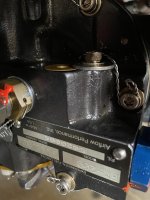
IMG_0996.jpegI have an AFP FM-200 fuel injection system on my -7A. I occasionally check the filter that is mounted with the fuel boost pump but according to the manual there is an additional screen at the fuel inlet of the throttle body, which I have never removed and checked for debris since installation 12 years ago. Should I?

I’ve only ever found a very minimal amount of debris on the boost pump filter so seems like I should be good. Looks like I will have to remove the throttle body and a bunch of safety wire to pull the throttle body filter, so would rather avoid it if I can. Don’t recall any previous discussion of people doing this, so thought I would ask. Attached photo shows the fuel inlet. What’s weird is that the manual discusses the boost pump filter and says “No other filters are necessary in the system”, but then in the very next paragraph describes the filter at the inlet to the fuel controller. What are others doing?
 
My FM-200 has a filter and the manual says it should be inspected and cleaned. My inlet looks different from yours, and is easy to open up and inspect. I'd double-check with Don to get guidance on your particular unit. It could be that due to the orientation and the fact that yours is vertical, there are differences in the filter. My inlet and filter are under what looks like a blue nut at the bottom of your FM-200.
 
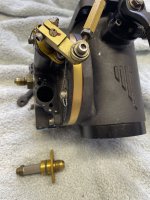
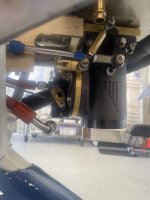
Here are a couple of photos I just took of my FM-200 which might help explain what I wrote above.


FM-200 HB-YMM 2025-03-16.jpg

FM-200 HB-YMM 2025-03-16 close.jpg
 
Yes check it. It is very fine and I sometimes find small amounts of debris that make it past the airframe fuel filter. I check this filter every 100 hrs max. IIRC certified aircraft with the Bendix RSA servo also has this filter and the Maint Instruction requires it to be checked periodically.
 
I would like to stress the importance of checking this filter. The fuel tank is NOT the only place you can pick up debris! A couple years ago I had two near dead stick landings due to clogged injectors. I had to replace both my mech fuel pump and all rubber lines FWF due to a bunch of buildup / debris that developed inside the fuel pump (best guess is a bad batch(s) of fuel caused it). Rubber can flake off your lines and various other issues creating debris downstream of the main filter and this finger strainer is a critical last line of defense. It should be cleaned at each CI and the fluid fromm the cleaning checked for debris load, to catch problems early, when possible. Also helped a 9 owner with a no start and the strainer was LOADED with white fibrous material (speculate he was getting fuel from a place that wasn't changing their paper filters on the fueling rig); He had never cleaned it. He also had one of those andair filters that can't be cleaned and that was totally clogged at 350 hours; Also never replaced.

While I have never really seen much of anything when cleaning my main filter, they can load up FAST in some situations. So annual cleaning is critical.
 
Last edited:
yeah, I knew all along that advice was coming😏. Just wish the access was better so that I didn’t have to remove the whole throttle body and control cable linkages. Grin and bear it I guess. Predicting a clean filter but never know til ya look.
 
yeah, I knew all along that advice was coming😏. Just wish the access was better so that I didn’t have to remove the whole throttle body and control cable linkages. Grin and bear it I guess. Predicting a clean filter but never know til ya look.
never used the FM series, but suspect that Don used the bendix approach where either side of the filter chamber can either be a cap or the AN fitting. You can probably pull the cap from the opposite side to get access to the filter. take a look at the manual or call afp.

EDIT: actually, it looks like you just remove those two hex head bolts and the fitting will pull right out and expose the filter. Likely there is an oring on that fitting to seal. probably best to confirm with afp.
 
Got the job done without too much trouble. As expected, not a speck of debris in the throttle body filter. But now I know😏
 

Attachments

  • IMG_1003.jpeg
    IMG_1003.jpeg
    1.8 MB · Views: 70
Wouldn’t be a bad idea to replace that O-ring considering how many years it’s been in there. Check with Don.
By the way, you might ask if he has a recommended calendar time for an overhaul.
 
Wouldn’t be a bad idea to replace that O-ring considering how many years it’s been in there. Check with Don.
By the way, you might ask if he has a recommended calendar time for an overhaul.
My AFP manual says overhaul at recommended engine TBO, not to exceed 2000 hrs. I’m not there yet, and no sign of any FI related problems
 
View attachment 82888I have an AFP FM-200 fuel injection system on my -7A. I occasionally check the filter that is mounted with the fuel boost pump but according to the manual there is an additional screen at the fuel inlet of the throttle body, which I have never removed and checked for debris since installation 12 years ago. Should I?

I’ve only ever found a very minimal amount of debris on the boost pump filter so seems like I should be good. Looks like I will have to remove the throttle body and a bunch of safety wire to pull the throttle body filter, so would rather avoid it if I can. Don’t recall any previous discussion of people doing this, so thought I would ask. Attached photo shows the fuel inlet. What’s weird is that the manual discusses the boost pump filter and says “No other filters are necessary in the system”, but then in the very next paragraph describes the filter at the inlet to the fuel controller. What are others doing?
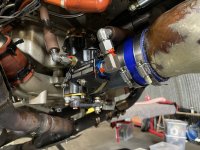
I’m glad that you checked that fuel inlet screen, yes it’s an important maintenance check that you should do every year. Looks like you could have checked it without removing the whole throttle body after all. I would suggest that you add larger washers to the throttle and mixture controls. Look at other installs, there has been instances where the ball falls out of the rod end, and the larger washer is able to prevent the rod end from fully detaching.
 
Looks like you could have checked it without removing the whole throttle body after all. I would suggest that you add larger washers to the throttle and mixture controls.
Darn near impossible to redo the safety wire without removing the throttle body. No room to maneuver back there. Thanks for the tip regarding using large washers.
 
My AFP manual says overhaul at recommended engine TBO, not to exceed 2000 hrs. I’m not there yet, and no sign of any FI related problems
Your manual might need updated. There is a 12 year calendar time listed now. Don did my Silverhawk at 14 hours. And it has the same 12 calendar years. It also was running well, but had a discussion with Don and in it went in for rebuild.
 
never used the FM series, but suspect that Don used the bendix approach where either side of the filter chamber can either be a cap or the AN fitting. You can probably pull the cap from the opposite side to get access to the filter. take a look at the manual or call afp.

Got the job done without too much trouble. As expected, not a speck of debris in the throttle body filter. But now I know😏
That’s life. Feel good though cause the flip side of luck is that you don’t check and it’s loaded with crap.
 
Darn near impossible to redo the safety wire without removing the throttle body. No room to maneuver back there. Thanks for the tip regarding using large washers.
If you think that is tough, I would like you to come and safely wire the oil sump cover on my 6a. Then you will truly appreciate a difficult safety wire job. ;-). Have never done it without drawing blood.
 
Darn near impossible to redo the safety wire without removing the throttle body. No room to maneuver back there. Thanks for the tip regarding using large washers.
I'd redo the safety wire so that only those two bolts (filter mounts) are involved with each other.
 
Back
Top