Van's Air Force

The definitive Van's Aircraft support community! Buying, building or flying an RV? Join our exclusive family of mentors and enthusiasts!

A unique Red Cube failure mode - and a vulnerability for worse

Bill Boyd

Well Known Member
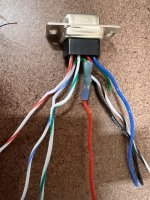
In the process of tracking down possible causes for serial EI Red Cube sensor failures, with much-appreciated customer support from Advanced Flight, I was able to determine that the apparent loss of at least two of my last 3 cubes (I didn't save the first one after it "died") was not a failure of the cube itself but a flaw in the wiring harness. The brand new cube I was about to install tested "bad" before installation, which led to the discovery of missing voltage on the red wire. This was traced back to a jumper connection in the Sky View Network cabling having an intermittent (probably a cold solder joint in a solder sleeve inside the 9-pin D-sub going to the SV EM 220 engine monitor module). Once this was rectified with a new plug and jumper more robustly made, I was shocked to discover that my avionics no longer worked at all - red X's all over the EFIS display, annunciators saying the ADHRS units were both offline as were all the remote avionics - GPS, comm radios, engine instruments, ADS-B, everything was T/U. Unplugging the SV Network cable to the SV-220 engine monitor box brought everything back again; plugging it in again killed everything, back and forth. Clearly a short somewhere, of which the system was thankfully only temporarily intolerant.

Turned out after a little head-scratching that I had forgotten to finish terminating the wiring harness leads to the red cube - the bare ends of the red, white and black wiring harness extension wires were left twisted together, from yours truly pushing them back through cable support clamps along its route firewall forward (I mount my cube between spider and servo, suspended by the fuel hoses). This created a hard fault condition (well, no kidding!) that pulled the 8 volts on the red wire (and probably throughout the AFS avionics environment) to zero, taking out everything dependent on the SV network to function. Once the resident dummy untwisted those wires everything came back to life as before. Perhaps unsurprisingly, the two previous red cubes I still had in the junk box that had "died" in the previous hundred flight hours tested good, as did the new one I was about to install (and am now returning). Their supposed deaths were apparently due to the cold joint in the wiring harness vibrating randomly in flight and depriving the cube of its operating voltage. Customer support had alluded to this possibility on my first phone call, so it may be something that has happened to someone else before - not sure.

I report this for two reasons - it's a starting point for anyone else troubleshooting the loss of a red cube in the Advanced Flight environment. I understand this jumper, from pin 5 to pin 7 on the 9-pin D-dub on the SV-220 box that internally supplies 8V to pin 15 on the 37-pin D-sub to the engine probes, is a workaround that is not needed in an all-Dynon (vs. AFS) avionics suite. If you have red cubes acting intermittent or failing outright in an AFS system, I suggest verifying there is no 8V where it should be on the red lead before ripping out plumbing and saying bad words - the fault may not be in the cube but the harness; you're going to be replacing wire in some uncomfortable cockpit yoga positions depending on where you mounted the avionics modules.

Second, and much more of a safety concern, is the demonstrated vulnerability of the entire avionics suite to shut-down from a ground-fault anywhere along the length of the red wire supplying the cube's power. Any builder not using the tunnel location in the RV-10 for the cube will likely need to extend the factory wiring harness as I did (although I'm sure AFS will supply a longer pigtail on request when they first build your system. If this extension wire bundle is not made with a tough, sheathed tefzel cable and carefully supported along its length, an eventual abrasion and short-to-ground scenario would take all the EFIS/avionics functionality offline until it rectified itself. This is a failure mode not addressable in flight, and could be catastrophic in IMC (or VFR-on-top) without robust, independent backups. As I said, in my panel both ADHRS were taken offline along with all comms, A/P and GPS. The redundancy of dual ADHRS, three display screens and two GPS receivers was moot. (I neglected to note whether my Avidyne IFR navigator was affected, as it was not powered-up during this accidental experiment).

Please treat the +8V red wire going to your red cube with the same care as the wires coming from your electronic ignition flywheel Hall sensor. If that wire is compromised via short to ground, it could lead to a very bad day.
 
Last edited:
In the process of tracking down possible causes for serial EI Red Cube sensor failures, with much-appreciated customer support from Advanced Flight, I was able to determine that the apparent loss of at least two of my last 3 cubes (I didn't save the first one after it "died") was not a failure of the cube itself but a flaw in the wiring harness. The brand new cube I was about to install tested "bad" before installation, which led to the discovery of missing voltage on the red wire. This was traced back to a jumper connection in the Sky View Network cabling having an intermittent (probably a cold solder joint in a solder sleeve inside the 9-pin D-sub going to the SV EM 220 engine monitor module). Once this was rectified with a new plug and jumper more robustly made, I was shocked to discover that my avionics no longer worked at all - red X's all over the EFIS display, annunciators saying the ADHRS units were both offline as were all the remote avionics - GPS, comm radios, engine instruments, ADS-B, everything was T/U. Unplugging the SV Network cable to the SV-220 engine monitor box brought everything back again; plugging it in again killed everything, back and forth. Clearly a short somewhere, of which the system was thankfully only temporarily intolerant.

Turned out after a little head-scratching that I had forgotten to finish terminating the wiring harness leads to the red cube - the bare ends of the red, white and black wiring harness extension wires were left twisted together, from yours truly pushing them back through cable support clamps along its route firewall forward (I mount my cube between spider and servo, suspended by the fuel hoses). This created a hard fault condition (well, no kidding!) that pulled the 8 volts on the red wire (and probably throughout the AFS avionics environment) to zero, taking out everything dependent on the SV network to function. Once the resident dummy untwisted those wires everything came back to life as before. Perhaps unsurprisingly, the two previous red cubes I still had in the junk box that had "died" in the previous hundred flight hours tested good, as did the new one I was about to install (and am now returning). Their supposed deaths were apparently due to the cold joint in the wiring harness vibrating randomly in flight and depriving the cube of its operating voltage. Customer support had alluded to this possibility on my first phone call, so it may be something that has happened to someone else before - not sure.

I report this for two reasons - it's a starting point for anyone else troubleshooting the loss of a red cube in the Advanced Flight environment. I understand this jumper, from pin 5 to pin 7 on the 9-pin D-dub on the SV-220 box that internally supplies 8V to pin 15 on the 37-pin D-sub to the engine probes, is a workaround that is not needed in an all-Dynon (vs. AFS) avionics suite. If you have red cubes acting intermittent or failing outright in an AFS system, I suggest verifying there is no 8V where it should be on the red lead before ripping out plumbing and saying bad words - the fault may not be in the cube but the harness; you're going to be replacing wire in some uncomfortable cockpit yoga positions depending on where you mounted the avionics modules.

Second, and much more of a safety concern, is the demonstrated vulnerability of the entire avionics suite to shut-down from a ground-fault anywhere along the length of the red wire supplying the cube's power. Any builder not using the tunnel location in the RV-10 for the cube will likely need to extend the factory wiring harness as I did (although I'm sure AFS will supply a longer pigtail on request when they first build your system. If this extension wire bundle is not made with a tough, sheathed tefzel cable and carefully supported along its length, an eventual abrasion and short-to-ground scenario would take all the EFIS/avionics functionality offline until it rectified itself. This is a failure mode not addressable in flight, and could be catastrophic in IMC (or VFR-on-top) without robust, independent backups. As I said, in my panel both ADHRS were taken offline along with all comms, A/P and GPS. The redundancy of dual ADHRS, three display screens and two GPS receivers was moot. (I neglected to note whether my Avidyne IFR navigator was affected, as it was not powered-up during this accidental experiment).

Please treat the +8V red wire going to your red cube with the same care as the wires coming from your electronic ignition flywheel Hall sensor. If that wire is compromised via short to ground, it could lead to a very bad day.
I wonder if anyone has seen an FMEA on the systems? Sounds like a really good failure mode to add.
 
In the process of tracking down possible causes for serial EI Red Cube sensor failures, with much-appreciated customer support from Advanced Flight, I was able to determine that the apparent loss of at least two of my last 3 cubes (I didn't save the first one after it "died") was not a failure of the cube itself but a flaw in the wiring harness. The brand new cube I was about to install tested "bad" before installation, which led to the discovery of missing voltage on the red wire. This was traced back to a jumper connection in the Sky View Network cabling having an intermittent (probably a cold solder joint in a solder sleeve inside the 9-pin D-sub going to the SV EM 220 engine monitor module). Once this was rectified with a new plug and jumper more robustly made, I was shocked to discover that my avionics no longer worked at all - red X's all over the EFIS display, annunciators saying the ADHRS units were both offline as were all the remote avionics - GPS, comm radios, engine instruments, ADS-B, everything was T/U. Unplugging the SV Network cable to the SV-220 engine monitor box brought everything back again; plugging it in again killed everything, back and forth. Clearly a short somewhere, of which the system was thankfully only temporarily intolerant.

Turned out after a little head-scratching that I had forgotten to finish terminating the wiring harness leads to the red cube - the bare ends of the red, white and black wiring harness extension wires were left twisted together, from yours truly pushing them back through cable support clamps along its route firewall forward (I mount my cube between spider and servo, suspended by the fuel hoses). This created a hard fault condition (well, no kidding!) that pulled the 8 volts on the red wire (and probably throughout the AFS avionics environment) to zero, taking out everything dependent on the SV network to function. Once the resident dummy untwisted those wires everything came back to life as before. Perhaps unsurprisingly, the two previous red cubes I still had in the junk box that had "died" in the previous hundred flight hours tested good, as did the new one I was about to install (and am now returning). Their supposed deaths were apparently due to the cold joint in the wiring harness vibrating randomly in flight and depriving the cube of its operating voltage. Customer support had alluded to this possibility on my first phone call, so it may be something that has happened to someone else before - not sure.

I report this for two reasons - it's a starting point for anyone else troubleshooting the loss of a red cube in the Advanced Flight environment. I understand this jumper, from pin 5 to pin 7 on the 9-pin D-dub on the SV-220 box that internally supplies 8V to pin 15 on the 37-pin D-sub to the engine probes, is a workaround that is not needed in an all-Dynon (vs. AFS) avionics suite. If you have red cubes acting intermittent or failing outright in an AFS system, I suggest verifying there is no 8V where it should be on the red lead before ripping out plumbing and saying bad words - the fault may not be in the cube but the harness; you're going to be replacing wire in some uncomfortable cockpit yoga positions depending on where you mounted the avionics modules.

Second, and much more of a safety concern, is the demonstrated vulnerability of the entire avionics suite to shut-down from a ground-fault anywhere along the length of the red wire supplying the cube's power. Any builder not using the tunnel location in the RV-10 for the cube will likely need to extend the factory wiring harness as I did (although I'm sure AFS will supply a longer pigtail on request when they first build your system. If this extension wire bundle is not made with a tough, sheathed tefzel cable and carefully supported along its length, an eventual abrasion and short-to-ground scenario would take all the EFIS/avionics functionality offline until it rectified itself. This is a failure mode not addressable in flight, and could be catastrophic in IMC (or VFR-on-top) without robust, independent backups. As I said, in my panel both ADHRS were taken offline along with all comms, A/P and GPS. The redundancy of dual ADHRS, three display screens and two GPS receivers was moot. (I neglected to note whether my Avidyne IFR navigator was affected, as it was not powered-up during this accidental experiment).

Please treat the +8V red wire going to your red cube with the same care as the wires coming from your electronic ignition flywheel Hall sensor. If that wire is compromised via short to ground, it could lead to a very bad day.
Bill and others. Since we started plumbing solutions for the FT60 flow transducer, we had always heard that there were some 'strange' failures. Thats one of the reasons we undertook 2 different plumbing solutions. What was strange to us, was we could have several installs of the same type and no issues and longevity, and others would have some crazy anomalyies. ( how about only failing around 4000AGL, not 4500 and above, not 3800 and below, 4000) . We were really stumped, since we knew the plumbing was good, and the testing we had done on flying aircraft doing aerobatics didnt have the anomalies. We theorized that it had to be electrical somehow, but couldnt prove it. Thats because all the installs were done by different builders, with different skill levels, tools, procedures, etc. We pretty much proved that pushing fuel through it under pressure was better, and in the case of our mounting at the flow divider, pushed the fuel vertically, and at the same time any potential air bubbles that might have been present. With many of those installs flying with no anomalies, we were convinced it was electrical. I even had a conversation with Dave Arata at EI about this--(Dave if youre out there, Hey!). That conversation was mainly about trandsducer orientation, and the 'wires up' guidelines. (What happens when you are in a 45* or 90* bank, or inverted: the wires arent up, and the unit continues to work just fine).

Our friend Dan Hortons wonderful autopsy of a FT60, convinced use that the anomalies HAD to be electrical. The VERY small wires (about .025 with twisted) might be creating the issues, especially if there was not sufficient strain relief in the harness, and actually breaking the wires underneath the heat shrink at the cube body. I DONT KNOW THAT FOR A FACT, but on 2 failures that was the case. So we suspected the wire connections into an airframe harness was the most probable root cause of the anomalies. And not necessarily the location, or the plumbing, (although some obviously better than others). As for plumbing, again, we found that pushing fuel under pressure through the transducer was better that pulling it through on the suction side, where air bubbles or any other disruption in flow could create a signal variance. We knew that the stock RV10 had the unit in the tunnel downstream from the boost pump, and upstream from the mechanical pump. We once the boost pump was deactivated, the flow changed to a suction function for the mechanical pump, and it 'could' have some variances due to age, diaghrams, check valves, loose connections, etc. So we made an optional change to move the transducer out of the tunnel to a location downstream from the mechanical pump, so fuel would be under constant pressure. We had RV10/IO540 builder ask why we didnt put the transducer at the flow divider like our 4 cylinder version. Pretty simple----different flow divider mounts made it difficult to know what each engine builder used, and we didnt want each customer to potentially have to change all the injector plumbing around. So we chose a location near the mechanical pump, that ANY engine or induction system could use. The electrical was still up to the builder to assure of positive connections and sufficent strain relief in the cube harness.

Tom
 
With all due respect, your title is misleading. This is NOT a Red Cube failure mode, it is an installation failure mode. The device itself did not contribute to the failure.
 
Just replaced one on a 182. Appeared to be an electrical failure since nothing else was obvious.
danny
 
I hear you, Greg, but to the builder/pilot replacing them one after another, it's perceived/researched on VAF/reacted to in the hangar as a red cube failure - until the electrical issue that CAN underlie it becomes obvious.

Thanks for the detailed reply and context, Tom. You are one helpful guy, always have been.

Also note that the failure I experienced, while electrical in nature, was not in any portion of the cube or its own wiring. See photo of the culprit. Intermittent connection inside the solder sleeve documented - cold joint, vibrating just enough at times...IMG_0064.jpeg
 
Last edited:
I hear you, Greg, but to the builder/pilot replacing them one after another, it's an overall red cube failure until the electrical issue that CAN underlie it becomes obvious.

Thanks for the detailed reply and context, Tom. You are one helpful guy, always have been.

Also note that the failure I experienced, while electrical in nature, was not in any portion of the cube or its own wiring. I should take and post a macro photo of the faulty d-sub plug and jumper...
How about more appropriately a 'sub system failure' of the fuel flow readouts. You smart guys know how to word it better than me--
 
Back
Top