

Van's Air Force
You are using an out of date browser. It may not display this or other websites correctly.
You should upgrade or use an alternative browser.
You should upgrade or use an alternative browser.
A/P roll servo install
- Thread starter Kenman
- Start date

Norman CYYJ
Well Known Member
Sorry don't have any pictures of the servo install but when I built a F1 I put in the box section where the joy stick is and attached it to the base of the joy stick.Greetings: I am in the process of populating the "basement" of my Rocket.
I searched for ideas / photos of autopilot roll sevo installs and didn't find what I was looking for.
Thanks for your time,
Ken

There are 4 common locations for actuation. The following describes the attach point of the servo’s actuator rod. The servo is mounted so as to achieve the actuation point described.
-in the wing (I’ve not considered this)
-under floor to the weldment below the fwd stick attach point; fwd of the spar
-under floor to the aileron pushrod attach point; aft of the spar
-under floor further aft to a tab on the torque tube.
Here’s a link that addresses them:
If you search the -4 forum there is a lot more archived info available.
-in the wing (I’ve not considered this)
-under floor to the weldment below the fwd stick attach point; fwd of the spar
-under floor to the aileron pushrod attach point; aft of the spar
-under floor further aft to a tab on the torque tube.
Here’s a link that addresses them:
G3X roll servo
Hello all, Has anyone put the G3X roll servo in the wing? If so, do you have any photos available? What is the experience from those having the roll servo near the stick? Do you induce a pitch moment? Many thanks in advance Marcel
vansairforce.net

rpigeek
Active Member
I'm in the middle of doing this right now now, and planning on doing this approach.-under floor to the aileron pushrod attach point; aft of the spar
I'm just finishing up my pitch servo & trim and yaw servo & trim and was planning to do roll next as it looked straight forward without needing anything custom from Send Cut Send.

Great documentation here:
Dynon Avionics | Autopilot Components Documentation
Dynon Avionics' Autopilot Components Documentation Installation Manuals.
dynonavionics.com

I’m planning to install a roll servo in my Rocket this winter. By the looks of it, it should fit nicely next to the pilot’s control stick. I’ll probably mount the bracket using hi-lok fasteners through the bottom of the fuselage. I have considered just gluing the bracket to the floor with 3M 2216, but with such a critical component, I’d sleep better at night knowing that there are some mechanical fasteners in place.
Edited…. I see now that my label is wrong. It should say ‘extra wire for ROLL servo.’ I also have problems distinguishing left from right.
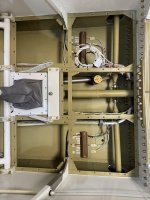
Edited…. I see now that my label is wrong. It should say ‘extra wire for ROLL servo.’ I also have problems distinguishing left from right.
My thanks to all that replied! I'm glad I asked. R, KenI’m planning to install a roll servo in my Rocket this winter. By the looks of it, it should fit nicely next to the pilot’s control stick. I’ll probably mount the bracket using hi-lok fasteners through the bottom of the fuselage. I have considered just gluing the bracket to the floor with 3M 2216, but with such a critical component, I’d sleep better at night knowing that there are some mechanical fasteners in place.
Edited…. I see now that my label is wrong. It should say ‘extra wire for ROLL servo.’ I also have problems distinguishing left from right.
View attachment 101287
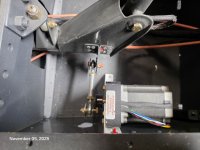
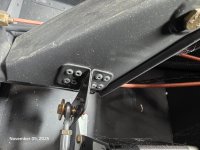
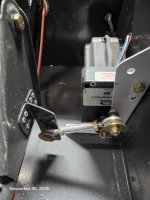

Copied mine from Finnflyer, IIRC. Used Garmin actuators.
My initial concerns with other methods =
Attachment at the aileron push tube location would require uneven servo force depending on actuation direction. This approach since been validated.
Attachment via Dynon method would require an attachment band fabrication or welding an attach point to the control column.
The Finnflyer approach afforded balanced, required servo forces in each direction, a decent moment arm at the actuation attach point (easier on the actuator), and mainly easy custom fabrication. Only had to brake a single piece of metal and attach via common fasteners.
Lots of validated options available to you but consideration of your available tools and skill set before proceeding is warranted.
Enjoy this part of your journey.
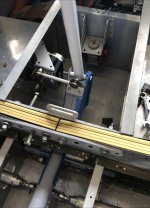
My initial concerns with other methods =
Attachment at the aileron push tube location would require uneven servo force depending on actuation direction. This approach since been validated.
Attachment via Dynon method would require an attachment band fabrication or welding an attach point to the control column.
The Finnflyer approach afforded balanced, required servo forces in each direction, a decent moment arm at the actuation attach point (easier on the actuator), and mainly easy custom fabrication. Only had to brake a single piece of metal and attach via common fasteners.
Lots of validated options available to you but consideration of your available tools and skill set before proceeding is warranted.
Enjoy this part of your journey.
Last edited:
rpigeek
Active Member
What do you mean by validated, that the uneven force is validated, or that many planes have worked in this configuration? I can't imagine the push tube force is too uneven. On our RV7 it was in the wing, and also against the push tubes. Maybe the geometry is better in the wing as there is less rotation.Attachment at the aileron push tube location would require uneven servo force depending on actuation direction. This approach since been validated.
Validation means exactly that. The implementation works as intended.What do you mean by validated, that the uneven force is validated, or that many planes have worked in this configuration? I can't imagine the push tube force is too uneven. On our RV7 it was in the wing, and also against the push tubes. Maybe the geometry is better in the wing as there is less rotation.
Ideally, the actuator would be at its null point and the linkage 90 degrees to the arm. Same for the connection at the other end of the linkage.
On the applications I’ve witnesses that utilize the same connection point as the p-p tube, the geometry deviates from the aforementioned. The resulting kinematics would require different forces for equal displacements on either side of null. As I didn’t know of a flying aircraft with that configuration, I didn’t go that way.
Reference the penultimate sentence in my post. It’s just another option for the OP.

Minor detail, best practice.
When installing a cantilevered single shear bolt, put the threads on the outer end, not in the arm or structure. If forced to place the threads at the base of the cantilever, use a slightly longer bolt so the shank extends all the way through the arm enough that the root thread is above the surface, then take up the excess with as many as three washers.
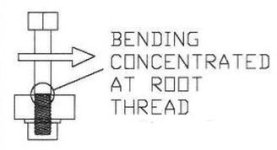
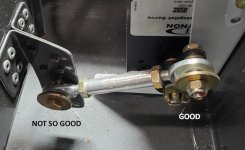
When installing a cantilevered single shear bolt, put the threads on the outer end, not in the arm or structure. If forced to place the threads at the base of the cantilever, use a slightly longer bolt so the shank extends all the way through the arm enough that the root thread is above the surface, then take up the excess with as many as three washers.
Minor detail, best practice.
When installing a cantilevered single shear bolt, put the threads on the outer end, not in the arm or structure. If forced to place the threads at the base of the cantilever, use a slightly longer bolt so the shank extends all the way through the arm enough that the root thread is above the surface, then take up the excess with as many as three washers.
View attachment 101485
View attachment 101483
No comment about (blind) rivets being subjected to tensile loads?
No comment about (blind) rivets being subjected to tensile loads?
That and more, but I limited to one.
This is the thread/post referred to.
RV-4 Autopilot
I am building a new panel and would like to include pitch and roll autopilot from Garmin. I've done some searching and although pitch servo mount and brackets are available for the 4 through Vans, nothing I can find for the roll mode. Any 4 drivers out there using a pitch and roll autopilot...
vansairforce.net
And I’m convinced your approach (and Scott Hersha and others) bests other’s in the majority of applications. Was gonna go the shared P-P tube attachment point originally. Still an elegant solution in the right application but there would have been a lot of related arranging/configuring/etc. of potential interference between pending footwells, vent SCAT, pending harness runs etc. not to mention the aforementioned uneven force-balance concern; though the latter turned out to be non-issue.This is the thread/post referred to.
RV-4 Autopilot
I am building a new panel and would like to include pitch and roll autopilot from Garmin. I've done some searching and although pitch servo mount and brackets are available for the 4 through Vans, nothing I can find for the roll mode. Any 4 drivers out there using a pitch and roll autopilot...vansairforce.net
The dead space near the forward part of the control column never entered my mind. Very convinced the knowledge you guys shared here saved me a lot of time and potentially associated grief.
Thanks again.

Here's pics of my application - aft of the spar. I subsequently removed the aileron trim, it is completely unnecessary in mine (EVO wing) and just adds to the aileron stick force. I also changed out the Trutrak autopilot and its servos for the Garmin units, again reducing the aileron stick forces.
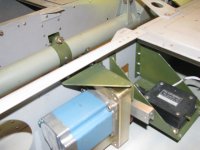
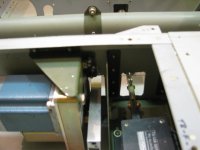
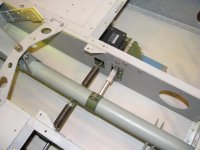
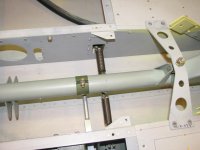

Minor detail, best practice.
When installing a cantilevered single shear bolt, put the threads on the outer end, not in the arm or structure. If forced to place the threads at the base of the cantilever, use a slightly longer bolt so the shank extends all the way through the arm enough that the root thread is above the surface, then take up the excess with as many as three washers.
View attachment 101485
View attachment 101483
Thanks Dan....easy fix.
