Van's Air Force

The definitive Van's Aircraft support community! Buying, building or flying an RV? Join our exclusive family of mentors and enthusiasts!

...

That is for the flutter analysis results. Flight flutter testing is done to Vd (i.e., 10% above Vne). Read all of CFR 23.629.

Well, there ya go...the two cases that we *know* were possibly caused by flutter demonstrated, via test if you will, that that requirement was well met. In one case, over *20* percent above Vne.
 
Reading some of the posters on this thread leaves me with the feeling that if I accidentally exceed VNe, then I deserve the consequences. The reason why I got a 7 kit was its ability for aerobatics. I may never do aerobatics but I like the fact that it can.

Back when I was learning to fly in a 150, on my first solo I decided to practice some stalls. I probably had about 10 hrs total by that time. The power off stalls went fine but when I did the power on, it flipped right into a spin. I just turned loose and it kept spinning. (never reduced the power) I probably did about 4 or 5 turns before I remembered an article on uncontrolled flight... Opposite rudder. It popped right out but leaving the throttle wide open, I maxed out at 135 mph in the pullout. I climbed back up and did it again but recovered as soon as it started the spin. I decided to ask someone about that. I never asked anyone but reading about stalls that night told me that the instructor had been applying right rudder.

Unexpected things do happen and something as simple as a roll can be screwed up. I don't need more restrictions in life. After 60 years of flying, I find out that VNe is TAS. Why didn't I have a TAS gauge in my aircraft? Reading the Canadian accident report tells me that extra paint on my rudder decreases the margin of flutter significantly. An airplane coming apart is the worst possible penalty for screwing up. After reading the Canadian report, it was an easy decision to change to the 8 rudder. If you don't have one, the kit price for the 8 rudder is $375.
 
jask;1629964 After 60 years of flying said:
Vans are the only planes that I know of that VNE is TAS. All others that I know of are IAS. Please correct me if I’m wrong,
 
Vans are the only planes that I know of that VNE is TAS. All others that I know of are IAS. Please correct me if I’m wrong,

When something like a 172 has it's Vne marked in indicated airspeed, that number will keep you out of trouble at any corresponding TAS, i.e. the limiting corresponding TAS is incapable of being reached below that indicated airspeed. It would be redundant to publish them both

However, there are lots of airplanes that aren't that way, not just Vans.

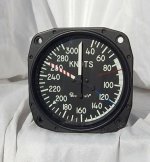
Here's a quick screen grab of an old King Air airspeed indicator. The barber pole represents Vne and it moves by itself as your altitude changes to effectively show you Vne as a true airspeed.
 

Attachments

  • s-l500.jpg
    s-l500.jpg
    38.2 KB · Views: 261
That is for the flutter analysis results. Flight flutter testing is done to Vd (i.e., 10% above Vne). Read all of CFR 23.629.

Again, Post #154 has details.

I realize analysis and testing is to 1.2 X Vd, not Vne. In any case, Van's doesn't flight test to this criteria. GVT may have been done to this level in simulation.
 
Last edited:
When something like a 172 has it's Vne marked in indicated airspeed, that number will keep you out of trouble at any corresponding TAS, i.e. the limiting corresponding TAS is incapable of being reached below that indicated airspeed. It would be redundant to publish them both

However, there are lots of airplanes that aren't that way, not just Vans.

Here's a quick screen grab of an old King Air airspeed indicator. The barber pole represents Vne and it moves by itself as your altitude changes to effectively show you Vne as a true airspeed.
That is incorrect. King Air Vmo (airspeed) does not change until the crossover altitude between airspeed and mach number at approximately 27'000' (FL270) Below that altitude Vmo is a constant indicated airspeed with no correction to true airspeed.
 
Does it matter? If the aircraft designers and engineers tell you it's in IAS, then use that. If they (e.g., Van's) tell you it's in TAS, then that's what you should use.

FAR 91.103 Each pilot in command shall, before beginning a flight, become familiar with all available information concerning that flight.

I'd say knowing the airspeed limitations of the aircraft itself would fall in that category of information.
 
That is incorrect. King Air Vmo (airspeed) does not change until the crossover altitude between airspeed and mach number at approximately 27'000' (FL270) Below that altitude Vmo is a constant indicated airspeed with no correction to true airspeed.

Thanks for correcting me- a little counting on my fingers tells me it's been somewhere around 28 years since I've been in king air so my memory is a little fuzzy on the details.

Anyway, point being, Vne on a little airplane isn't the only gospel out there.
 
RV14 rudder on RV7

Can anyone confirm whether an RV14 rudder would fit without modification on an RV7? Has anyone done it? What level of confidence is there that this configuration would provide adequate spin recovery and better flutter margin vs the RV9 rudder currently supplied?
Thanks,
 
Can anyone confirm whether an RV14 rudder would fit without modification on an RV7? Has anyone done it? What level of confidence is there that this configuration would provide adequate spin recovery and better flutter margin vs the RV9 rudder currently supplied?
Thanks,

Can you define "better"? What particular type of behavior are you trying to fix?
 
Can you define "better"? What particular type of behavior are you trying to fix?

He had a great question, the -14 rudder...with the answers to your question(s) in his post. It's debate bait AndyWW. Nothing wrong with debates, you get to see both sides. Always question everything, that's how we improve.

Originally Posted by AndyWW View Post
Can anyone confirm whether an RV14 rudder would fit without modification on an RV7? Has anyone done it? What level of confidence is there that this configuration would provide adequate spin recovery and better flutter margin vs the RV9 rudder currently supplied?
Thanks,
 
Spins

I will break this down so the most uninformed person MIGHT understand. If someone offered to let me fly an RV7 with the small tail I would accept the offer and then do a lot of spins and form an opinion of the spin recovery. If someone offered me the keys to their RV7 with RV9 rudder I would politely say no than you.
I have taken a brief look at RV7 spin videos with what appears to be small rudder and I can't see any issues with spin recovery. No one has said that spin recovery is a problem with the 7 with small rudder, just that it wasn't quite what was expected.
I will be watching more videos and trying to establish exactly when recovery controls are applied.
 
It's disappointing that Van's has not issued an SB or SL addressing their change of that critical safety-of-flight information. Many RV pilots are unaware that Vne is now in terms of TAS, instead of IAS. At higher altitudes RV pilots may operate above Vne without realizing it.
It appears to be irrelevant for most of these accidents... Where the aircraft were being flown beyond even the IAS limits. No SB would have stopped that.
 
Can you define "better"? What particular type of behavior are you trying to fix?

Seems fairly obvious in this context - "better" means that the rudder ideally doesn't fail with any greater frequency than those of the other RV aircraft. 8 accidents related to this issue in 12 years is definitely statistically significant, especially compared with the very good record of the other similar but different models. I'm not saying Vans is at fault, just that a quest for continuous improvement is a defining characteristic of the human race...
 
Seems fairly obvious in this context - "better" means that the rudder ideally doesn't fail with any greater frequency than those of the other RV aircraft. 8 accidents related to this issue in 12 years is definitely statistically significant, especially compared with the very good record of the other similar but different models. I'm not saying Vans is at fault, just that a quest for continuous improvement is a defining characteristic of the human race...

Fair enough - but the rudder failures are a symptom - not a cause. By masking the symptom you're just transferring the problem somewhere else. The root cause here is flying the aircraft beyond the flight envelope.
 
Statistically significant?

According to Vans there are 1906 flying RV7s. With 8 accidents that is less than 1% of the flying fleet (0.4). We don’t know the build quality of those rudders. Maybe it was excellent or maybe not. We don’t know if there was damage prior to the accidents, like what just happened at AirVenture. The damage may have been internal, not viewable during preflight, and hidden by the damage of the accident. We do know there was some issues with exceeding recommended speeds.

Somehow this thread has taken on the thought process that the RV-7/9 rudder should be condemned and replaced. I don’t believe the data supports that conclusion. But it’s your aircraft, order a RV-8 rudder and install it if that makes you more comfortable.
 
Let's look closer at the supposed data that shows 8 rudder failures causing accidents, based on the list in the first post:

1. Preliminary report only, cause undetermined yet.
2. Preliminary report only, in-flight break-up, weather involved, cause undetermined yet.
3. Exceeded Vne by > 20% (44 knots).
4. "There were no clear indications that any of the [empennage] components that fractured in overstress did so before ground impact or independently of the bird strike."
5. "damage to the horizontal stabilizers and elevators that was consistent with a downward failure in positive overload. The loads required to fail the horizontal stabilizers and elevators cannot be generated from normal flight or
control movements. Such failures would have required an abrupt pull back on the stick and corresponding movement of the elevator to a trailing-edge-up position, at speeds greater than the airplane's maneuvering speed."
6. Probable cause undetermined because wreckage was not recovered (sunk in 500' of water).
7. "At the time of the inflight breakup, the airplane was traveling 20 knots above the published never exceed speed."
8. Exceeded Vne by 34 knots.

Not one of those indicates to me that the rudder was the initial cause of the failure. Two of those specifically cite rudder failure, both at speeds far in excess of Vne.

Tell me again why the rudder is a problem here?

 
Let's look closer at the supposed data that shows 8 rudder failures causing accidents, based on the list in the first post:

1. Preliminary report only, cause undetermined yet.
2. Preliminary report only, in-flight break-up, weather involved, cause undetermined yet.
3. Exceeded Vne by > 20% (44 knots).
4. "There were no clear indications that any of the [empennage] components that fractured in overstress did so before ground impact or independently of the bird strike."
5. "damage to the horizontal stabilizers and elevators that was consistent with a downward failure in positive overload. The loads required to fail the horizontal stabilizers and elevators cannot be generated from normal flight or
control movements. Such failures would have required an abrupt pull back on the stick and corresponding movement of the elevator to a trailing-edge-up position, at speeds greater than the airplane's maneuvering speed."
6. Probable cause undetermined because wreckage was not recovered (sunk in 500' of water).
7. "At the time of the inflight breakup, the airplane was traveling 20 knots above the published never exceed speed."
8. Exceeded Vne by 34 knots.

Not one of those indicates to me that the rudder was the initial cause of the failure. Two of those specifically cite rudder failure, both at speeds far in excess of Vne.

Tell me again why the rudder is a problem here?

Because the accident reports state rudder flutter….yes with an over speed. Again and again and again…..easy to say don’t exceed any flight envelope….that states the obvious but accidents and incidents happen….you cannot assume absolutely no RV8’s have NOT exceeded VNE and possibly by quite a margin….yet no accidents attributed to rudder flutter….that begs the question of a rudder designed for a slower aircraft stuck on the back of a faster one and flight tested to be acceptable within the normal envelope is actually weaker and more prone to destructive flutter than the 8 rudder….doesn’t it?
 
Acccident #4

This is a very misleading statement by the investigators. The rudder and vertical stabilizer were one mile from the main wreckage.
In the NJ accident the lower half of the rudder and the fin were the first items in the accident path.
 
would suggest it’s the speed.
We all know speed is the killer.

Is there a argument that the -7 is slipperier than the -6 & -8, thus easier to bust Vne when distracted? If not, then the -7s are more likely to come apart flown by the same average group of pilots...and thats the point, not speed.

The second point, IMHO, is how do we make the -7 match the inflight break-up rate of the -6 and -8 (which is zero). Hence the talk of smaller rudders.
 
you cannot assume absolutely no RV8’s have NOT exceeded VNE and possibly by quite a margin….yet no accidents attributed to rudder flutter

Now you're just guessing. There's now way to know if, nor how many, nor at what speeds, any RV-8 pilots have exceeded Vne. Might be none, might be all of them. But there's no data, so any figure you have is merely a PIFMA value.
 
how do we make the -7 match the inflight break-up rate of the -6 and -8 (which is zero). Hence the talk of smaller rudders.

Training? Education?

3/8 accidents in the list involved flight well in excess of Vne. Remove those 3 and the rest appear to be overstress in reaction to possible bird strike, something maybe to do with flying into bad weather, and so on.

I don't now how much more you can teach people not to fly VFR into IMC, or to get aerobatic training if you're going to do aerobatics, etc.
 
Red corvettes are more likely to be involved in wrecks than blue ones. It must be the paint. We need to change the paint. Why isn't anybody changing the paint?
 
Now you're just guessing. There's now way to know if, nor how many, nor at what speeds, any RV-8 pilots have exceeded Vne. Might be none, might be all of them. But there's no data, so any figure you have is merely a PIFMA value.

PIFMA? Please define.
 
Well said Michael!

This thread reminds me of the old saying "You can lead a horse to water but you can't make him drink!"

Something else needs to be said also.
The 8 rudder just looks way better than that big 9 rudder:D

Mark


We all know speed is the killer.

Is there a argument that the -7 is slipperier than the -6 & -8, thus easier to bust Vne when distracted? If not, then the -7s are more likely to come apart flown by the same average group of pilots...and thats the point, not speed.

The second point, IMHO, is how do we make the -7 match the inflight break-up rate of the -6 and -8 (which is zero). Hence the talk of smaller rudders.
 
Now you're just guessing. There's now way to know if, nor how many, nor at what speeds, any RV-8 pilots have exceeded Vne. Might be none, might be all of them. But there's no data, so any figure you have is merely a PIFMA value.

Not guessing….assuming. It’s quite different. We are to think all 8 pilots are perfect and not all 7 pilots cannot fly within the envelope…let’s just think for a moment how likely that scenario is.

The 8 should be more slippery compared to the 7 just by way of frontal area. The difference in these two aircraft is the rudder….and it appears to be an area of concern in several accidents.

And yes to the guy that said the8 rudder looks cooler….yup….it’s better looking for sure. Fits the aircraft’s look better. :D
 
The 8 should be more slippery compared to the 7 just by way of frontal area. The difference in these two aircraft is the rudder
One of many differences.
- Frontal area, which you mention, is also different.
- Canopy configuration, affecting airflow around the tail, is also different.
- Landing gear configuration, which affects airflow around the wing enough that people put little flow guides ahead of the wing on the fuselage, something not needed on the -7.
I'm sure there are others.
 
Resolution

So how does this get resolved short of destroying two airplanes with flutter testing?

Can this be resolved by analysis? or does it turn into an endless debate like the primer wars?
 
Last edited:
Does that 8 have the same tendency for the rudder to get damaged in heavy winds from the elevator like the 7 does? I know ours had slight damage and had previously been replaced because of the same issue. I also saw one at Oshkosh was damaged in the storm in the same fashion.
 
Testing

The standard is ground vibration testing, not inflight testing with the risk of losing the airplane and possibly the test pilot. Ground vibration testing is very expensive.
 
The standard is ground vibration testing, not inflight testing with the risk of losing the airplane and possibly the test pilot. Ground vibration testing is very expensive.

Kermit Weeks has a great video doing this to his GeeBee..
 
Flutter Testing

Kermit got involved in flutter testing after the loss of a close friend in a flutter accident in a aerobatic monoplane. After the recommended modifications, similar airplanes were trouble free except for one accident in a airplane with a bigger engine and different wing.
A description of the testing and the fix was published in Sport Aerobatics, I think in the early 80's.
 
Gee Bee

The first racing Gee Bee was the Z. The original was lost in a fatal accident during a speed record attempt. After years of speculation it is now believed, as a result of the testing that Kermit had done, that it was aileron flutter. Kermit also owns the Gee Bee R which was built by Delmar Benjamin and Steve Wolf.
Another R is getting close to completion in AZ.
 
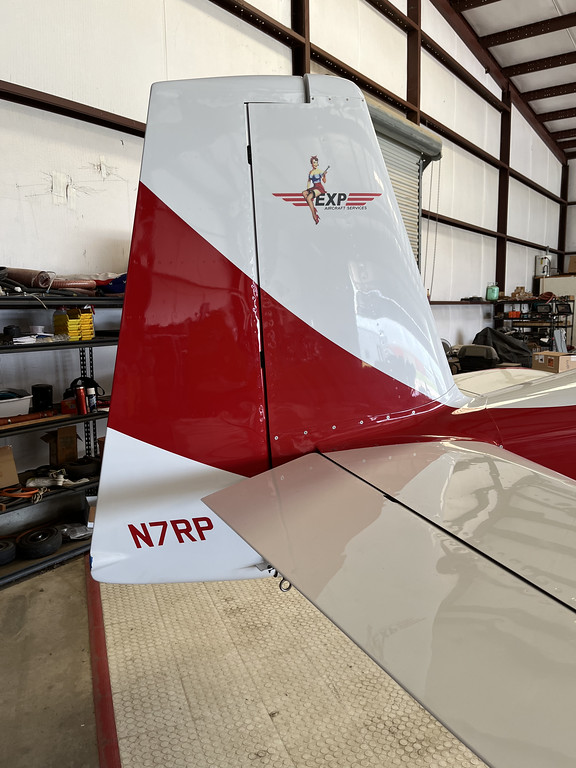
As promised, original 7/8 rudder installed.
If nothing else I do think the smaller size looks better!

.
2022090319075883--1131765071990880778-IMG_1905-XL.jpg
 
Last edited:
Round and round we go.

Any luck Bill.

When the insurance company asks if the -7 was built with any non Vans approved mods, it would be helpful to say no.

Then just say no. But making the prove-in-court case is a little more difficult.

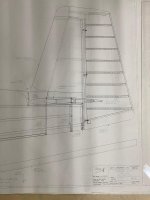
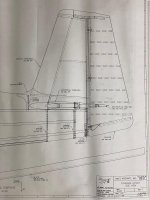
Attached is a general fuselage drawing of the early 7. One is with the originally shipped short rudder and the other the replaced tall rudder. Look at the information blocks. They are all the same. I was not impressed with the Vans (publicly available) drawing history control, but it may have been by design for reverse engineering purposes. I have all the other dwg's at the airport and have the short rudder information. The timeline is that the 6 came first. It progressed to a counterweighted rudder with .020 skin. That was the last 6 rudder sold, and the first 7 rudder sold. To actually prove they are the same requires a list of detail dimensions, and materials, and is not available. So you might say the 8 rudder is really the late 6 rudder. I will post the 7PP, 7 and the 6 drawing if I have them.

All straight now?

IMG_6654.jpg

IMG_6653.jpg
 
Can someone with the RV-8 rudder drawing send me a pdf of it (drop me a PM and I'll send my email address)? Maybe I missed it in this massive thread. Would like to get the part numbers off of it. Thanks!
 
Walt, been flying with it yet? How does it feel/handle?

Handles just fine, I did tend to use too much rudder pressure at first, so less pressure required to offset yaw. Kinda like Mark said earlier, power steering.

Any luck Bill.

When the insurance company asks if the -7 was built with any non Vans approved mods, it would be helpful to say no.

The 8 rudder was originally provided with the kit, Van's offered to supply the 9 rudder at no charge if you wanted it, but it was optional, not a required mod.
 
Handles just fine, I did tend to use too much rudder pressure at first, so less pressure required to offset yaw. Kinda like Mark said earlier, power steering.


The 8 rudder was originally provided with the kit, Van's offered to supply the 9 rudder at no charge if you wanted it, but it was optional, not a required mod.

Thanks for the update Walt.

I doubt an insurance company would care.

Thanks for that perspective.
 
Back
Top