Van's Air Force

The definitive Van's Aircraft support community! Buying, building or flying an RV? Join our exclusive family of mentors and enthusiasts!

QuickBuild RV-8 Fuel Tank Leaks Showing Up as Paint Bubbles Around Rivets

Carlosanlley

Member
Friend
I’m looking for some advice regarding a fuel tank issue on my RV-8.

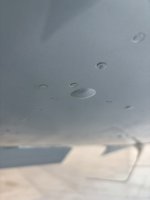
My fuel tanks came assembled as part of the QuickBuild wings. About three months after I first started adding fuel for tank calibration and testing (before the airplane ever flew), I began noticing paint bubbles forming on one of the fuel tanks.

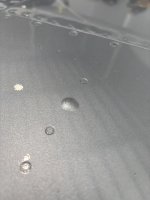
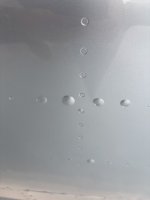
The bubbles appear to contain fuel and are forming between the tank skin and the paint. Most of them are centered around rivet locations, which leads me to believe that I may have a tank that was not properly sealed during assembly. The opposite tank shows no symptoms whatsoever.

I’m attaching photos of what I’m seeing. At this point I probably have 10–12 affected spots, with some of the bubbles reaching up to about 1/2 inch in diameter.

My question is: Is there any proven method to seal leaks like these without having to work from inside the tank? I understand that I’ll need to completely drain and defuel the tank, but I would really like to avoid disassembling or opening it if possible.

Has anyone successfully repaired this type of leak from the outside, perhaps using an approved sealant injection method or another technique?

Any experiences or recommendations would be greatly appreciated.

Thanks!
1781120514633.jpeg1781120525265.jpeg1781120540276.jpeg
 
It’s an observation that goes way back. Good luck.
 
Has anyone successfully repaired this type of leak from the outside, perhaps using an approved sealant injection method or another technique?

Single data point for you-----green locktite worked for me, but it was on a top skin rivet.

Dan Horton did a deep dive (typical Dan) on this problem a while back and you can find his results via search.
 
I had a couple if leaks. The green Locktite did not get it.

Somewhere on this forum someone suggested I try MarineTex. It's an epoxy putty that is highly regarded in the marine world. Sand very smooth like bondo. It has worked very well for me. No more leaks.
 
Ugh, that stinks. I feel for you. I'm currently building my tanks (still...) and using plenty of tank goo to cap each rivet tail as well as a type A sealant after applying the normal type B.

Wonder if Vans would send you a new tank?

I swear someone should start a business of just building RV tanks. I'd pay the premium had I not already started on mine.
 
Green loctite didnt work for me. I found a guy selling specific blind rivets that worked. Drilled old ones out. Covered new ones in proseal and got lucky. Ill try to find contact info.
 
When were those tanks produced?

Pull the tank, cut an access hole in rear web, replace the affected rivets and reseal. Not that difficult to do and it is the proper way to seal your rivet leaks.

Dave's re-formed rivet works fine, but if you have more than a few with blisters, chances are you also have some waiting to happen. May as well bite the bullet...

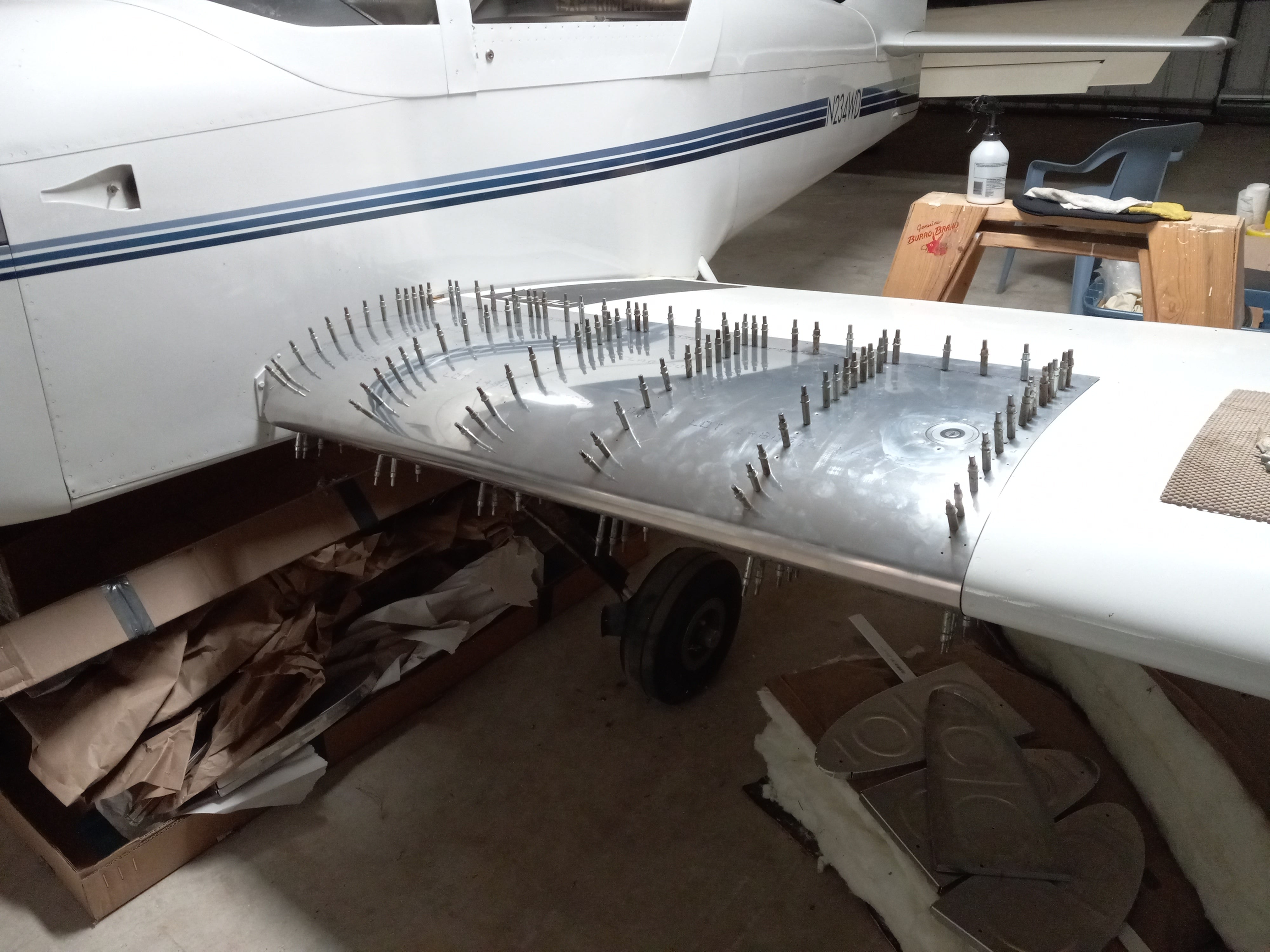
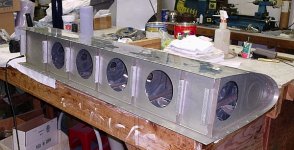
Access holes; four rear, one end web, and the sender hole..

P8080003.JPG

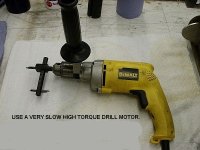
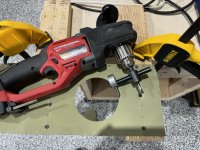
Sharp fly cutter works fine.

P8080002.JPG

Closed end rivets.

Closed End Rivets.JPG

Sealant under the flange, pull the rivets, then overcoat.

P1220002.JPG

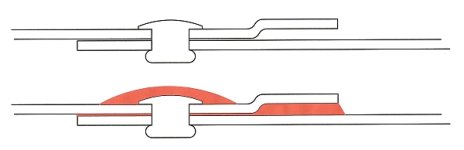
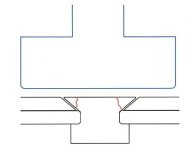
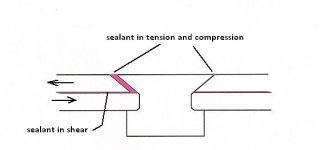
I recommend a joggled cover plate. It's insurance, relating to the 200-300% elongation spec for proseal. Without it, a 0.001" thick sealant layer under the flange can fail with a 0.003" shear strain. There is also a tension load on the rivet.

Joggle Seal.jpg
 
When were those tanks produced?


Dave's re-formed rivet works fine, but if you have more than a few with blisters, chances are you also have some waiting to happen. May as well bite the bullet...

Access holes; four rear, one end web, and the sender hole..

View attachment 120254

Sharp fly cutter works fine.

View attachment 120255

Closed end rivets.

View attachment 120256

Sealant under the flange, pull the rivets, then overcoat.

View attachment 120257

I recommend a joggled cover plate. It's insurance, relating to the 200-300% elongation spec for proseal. Without it, a 0.001" thick sealant layer under the flange can fail with a 0.003" shear strain. There is also a tension load on the rivet.

View attachment 120258

What’s the best way to form that joggle?
 
I've cut the hole with a fly cutter as well. Go slow, sub 10 RPM. After I made practice cuts with the fly cutter and hole saw, I made the real hole with the fly cutter.

I'm also a big fan of type A ProSeal over top of the type B.
 

Attachments

  • IMG_0907.jpeg
    IMG_0907.jpeg
    4.7 MB · Views: 31
I’m looking for some advice regarding a fuel tank issue on my RV-8.

My fuel tanks came assembled as part of the QuickBuild wings. About three months after I first started adding fuel for tank calibration and testing (before the airplane ever flew), I began noticing paint bubbles forming on one of the fuel tanks.

The bubbles appear to contain fuel and are forming between the tank skin and the paint. Most of them are centered around rivet locations, which leads me to believe that I may have a tank that was not properly sealed during assembly. The opposite tank shows no symptoms whatsoever.

I’m attaching photos of what I’m seeing. At this point I probably have 10–12 affected spots, with some of the bubbles reaching up to about 1/2 inch in diameter.

My question is: Is there any proven method to seal leaks like these without having to work from inside the tank? I understand that I’ll need to completely drain and defuel the tank, but I would really like to avoid disassembling or opening it if possible.

Has anyone successfully repaired this type of leak from the outside, perhaps using an approved sealant injection method or another technique?

Any experiences or recommendations would be greatly appreciated.

Thanks!
View attachment 120205View attachment 120206View attachment 120207
Carlos,

I see this often during Condition Inspections. Can't say whether it is associated with QB tanks.
My -8 has slow built tanks and occasionally the paint bubbles at the rivets like yours. My guess on cause is either a very small fuel droplet leaking at the rivet gassing under the paint, or solvent trapped during paint prep that also gases under the paint.

I suggest trying this before thinking of repaint, I have taken a very fine pointed awl or straight pin and carefully prick a hole on the trailing edge of the bubble. As close to the separation point as possible. The paint often shrinks and flattens out. You may have to give it a few days to a week. This has fixed 6-8 rivets on my tanks and other aircraft as well.

Good Luck!
 
I've cut the hole with a fly cutter as well. Go slow, sub 10 RPM. After I made practice cuts with the fly cutter and hole saw, I made the real hole with the fly cutter.
One tip when cutting thin metal with a fly cutter or hole saw, after the center drill bit has made it through, switch to a smooth rod to guide the tool.

The drill bit flutes will tend to auger out the guide hole and allow the outer cutter whether fly cutter or hole saw to wander around, and sometimes grab.

Sometimes you can just extend the pilot drill out enough so the flutes are not still in the sheet metal, sometimes you need to remove the drill and insert a piece of round stock.

Either way, safer and better quality of big hole production.
 
Several ideas discussed as interim approaches in this thread:

Applying sealant using light external pressure, via a syringe, window repair tool, or other tool, seems like a low risk, easy to try fix.

If that doesn't work, you can still go the tank removal and access plate method.

One advantage of waiting to do the full repair, is that the number of leaky rivets will likely increase over time, and it would be annoying to pull the tank, and fix the currently leaking rivets, only to have more do the same shortly after.

Parking the plane in the sun, might make more problem areas come to light sooner.
 
No thin film solution will work for very long due to the nature of the problem.

I see this often during Condition Inspections. Can't say whether it is associated with QB tanks.

The primary factors are (1) excessive countersink depth or oversize dimples, combined with (2) vapor-impermeable paint coatings. There are a number of lesser factors, and the mechanics are interesting.

Roughly 20 years ago Philippine QB tanks were taking a well-deserved reputation hit, but the issue was also showing up with slow build tanks assembled using the same methods. Since then things have changed...which is why I asked when the OP's tanks were assembled.
 
I used Weeps No More several years ago. I had QB tanks and didn't want to take the chance. I've not had any issues yet. In for paint at Evoke right now, so hope this doesn't happen to the high end paint job.
 
Some good tips in this thread. I'm a week or so away from cutting and installing all of these access plates on my new build tanks.
 
Roughly 20 years ago Philippine QB tanks were taking a well-deserved reputation hit, but the issue was also showing up with slow build tanks assembled using the same methods. Since then things have changed...which is why I asked when the OP's tanks were assembled.

😬 That's where and when mine were built, and I've got a little leak. So far just one rivet, and I'll be using Steve Melton's kit to see if I can fix it. I tried the green locktite and it worked for a few months, but just started leaking again. I'm in no rush to get medieval on my tanks, but perhaps it can't be avoided.
 
No thin film solution will work for very long due to the nature of the problem.


The primary factors are (1) excessive countersink depth or oversize dimples, combined with (2) vapor-impermeable paint coatings. There are a number of lesser factors, and the mechanics are interesting.

Roughly 20 years ago Philippine QB tanks were taking a well-deserved reputation hit, but the issue was also showing up with slow build tanks assembled using the same methods. Since then things have changed...which is why I asked when the OP's tanks were assembled.
So I take it you're not a fan of the slightly oversized tank dimple dies then?
 
Carlos,

I see this often during Condition Inspections. Can't say whether it is associated with QB tanks.
My -8 has slow built tanks and occasionally the paint bubbles at the rivets like yours. My guess on cause is either a very small fuel droplet leaking at the rivet gassing under the paint, or solvent trapped during paint prep that also gases under the paint.

I suggest trying this before thinking of repaint, I have taken a very fine pointed awl or straight pin and carefully prick a hole on the trailing edge of the bubble. As close to the separation point as possible. The paint often shrinks and flattens out. You may have to give it a few days to a week. This has fixed 6-8 rivets on my tanks and other aircraft as well.

Good Luck!
I have "fixed" several rivet bubbles recently the same way. If it was solvent paint creating these seems they could occur also on rivets not associated with the tanks? I have never seen this in non-tank areas. I also wonder what the root cause is. Mine seems to not have anything in them as they flattened with no blue stains. I even injected alcohol in the bubble hoping to see some blue when I flattened it and nothing. (alcohol did come out) Could it be Proseal vapors? Seemed to occur when the airframe was left in the hot sun for the day but does not reappear when I leave the plane outside again for the day.
 
The issue has nothing to do with paint solvent, or solvent used for cleaning at any time prior to paint, or the toluene vapor in fresh proseal.

Seemed to occur when the airframe was left in the hot sun for the day but does not reappear when I leave the plane outside again for the day.

Good observation Dwight.

Some time ago, much of the community bought into the idea that enlarged dimples and countersinks were necessary to provide extra space for sealant under the rivet head. There is no aerospace standard to support that belief, and in fact, the sealant manufacturers want a film of 0.001" or less, essentially metal-to-metal. However, very good RV builders supported the idea of extra space, and it grew.

Everyone knows what happens when a rivet isn't fully expanded to fill the hole. Sooner or later it allows relative movement between itself and the aluminum around it. The telltale is "smoke" and cracked paint around the head. It doesn't matter if the extra space is due to an oversize die or too much countersinking. It also doesn't take a lot of unfilled space; a recess only 0.003" deeper than necessary to set a perfectly flush rivet enlarges the width of the recess by 0.007". The extra width can also result in cracked heads, as there is no support under the outer portion of the head when squeezed or driven.

Head Cracking2 Dwg.jpgSealant Strain2 Dwg.jpg

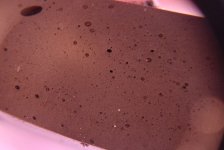
Cured polysulfide is a sponge, riddled with microscopic air bubbles. The sealant material itself is not vapor proof, and those voids fill with vapor.

Sealant at 10x.jpg

So imagine a rivet in an oversize recess, surrounded by a sponge full of fuel vapor. Apply a shear load, or the combined shear and tension of nested dimples. The rubber-filled joint allows a tiny relative movement. The sponge is compressed, pressurizing the vapor voids, while at the same time the relative movement stresses the paint film adhesion. The combined forces work to separate the paint from the surface, at the point of maximum strain, generally the edge of the rivet head.

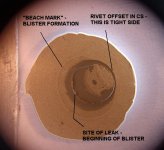
Underside of a blister bubble:

INSIDE.jpg

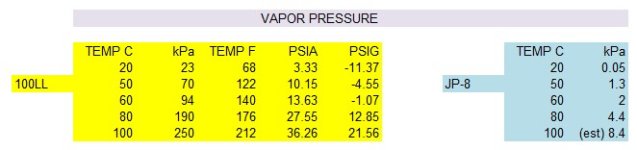
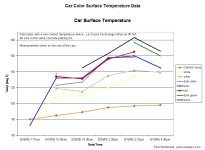
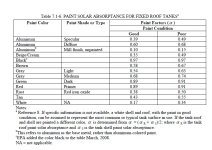
Bring on the sunshine. Ever look at a vapor pressure chart for 100LL? Pressure applied to the inside of a blister (the PSIG value) rises very rapidly as surface temperature goes up. Once the stressed paint starts separating, a few trips into the hot sun has vapor expanding out of the sealant, blowing the bubble. Why a bubble? Unlike proseal, current paint formulations are pretty close to vapor proof.

ScreenHunter_3327 Jun. 17 14.43.jpg

While you're there, look at jet fuel. With vastly lower vapor pressure, the problem doesn't pop up (sorry, couldn't resist).

Surface temperature vs color:

ScreenHunter_3328 Jun. 17 15.39.jpg

Solar Heating .jpg
 
Back
Top