


Van's Air Force

The definitive Van's Aircraft support community! Buying, building or flying an RV? Join our exclusive family of mentors and enthusiasts!

Stuck Trim Tab

My 2011 RV12 trim button isn't working. I went out to the plane this morning and after I started the engine and was going through my checklist my trim stabilator trim wouldn't work. I shut the engine off and kept pushing the button and there was nothing. I couldn't hear any sound coming from the servo or anything. I took the cover off and didn't see anything disconnected. My next step was going to be looking behind the instrument panel but I wiggled the switch a little bit and it started working. So, I thought I had found my problem, I figured it was a loose connection on the switch. Then it quit working again. You can hear the servo now when you push the switch but there is no movement. I'm still going to look behind the panel to see but i don't think it's a loose connection because the servo is obviously getting power. Any troubleshooting help would be helpful.
 
The switch is directly soldered to the main circuit board. It is possible to replace. Search VAF for switch replacement PN. FWIW.... I asked ChatGPT for switch PN and was given OTTO Controls P/N K2ABMAAAAA.
 
Last edited:
The switch is directly soldered to the main circuit board. It is possible to replace. Search VAF for switch replacement PN. FWIW.... I asked ChatGPT for switch PN and was given OTTO Controls P/N K2ABMAAAAA.
Rdockery:
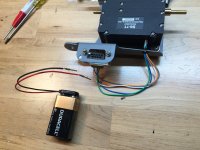
Before doing open heart surgery on the board, I recommend more research. In case you are not the original builder; there was a Safety Directive (SD-00001) issued by Van's aircraft in 2020, regarding inspection and replacement of the trim servo. Also, it is possible to run the trim servo with a 9 volt battery to determine if the servo is INOP, or if the problem is actually with the trim switch or wiring.

IMG_2168.jpeg
 
The trim switch applies a “ground” signal. The center contact is grounded. When you toggle the switch the ground is applied to either outside connection. You can jumper the switch with no fear of burning up anything.
The trim servo motor in the back is a small cheap 12 volt brushed motor with a gear train. The motor changes direction depending on the polarity of the input voltage. They are rated at well over 1000 hours so it’s possible but unlikely that it is the motor.
 
Do you guys think it would be the switch if the servo is making noise when you push the switch though? When I push the switch the servo sounds like it is trying to work but it's almost like it's in a bind. I am not the original builder and after researching that service bulletin I'm leaning toward that being the problem, but I'm new to plane ownership so I'm new any advice. Here in a few days when I have more time to look at it I'm going take the panels off again and take a more in depth look at the servo. What should I be looking for when it comes to that service bulletin?
 
Do you guys think it would be the switch if the servo is making noise when you push the switch though? When I push the switch the servo sounds like it is trying to work but it's almost like it's in a bind.
In your opening post you said “I couldn't hear any sound coming from the servo or anything.”

If you want targeted help you need to be consistent about your observations.
 
In your opening post you said “I couldn't hear any sound coming from the servo or anything.”

If you want targeted help you need to be consistent about your observations.
I couldn't hear anything at first. I only started hearing a sound after it started working again and then proceeded to stop working. Sorry if I wasn't clear.
 
My 2011 RV12 trim button isn't working. I went out to the plane this morning and after I started the engine and was going through my checklist my trim stabilator trim wouldn't work. I shut the engine off and kept pushing the button and there was nothing. I couldn't hear any sound coming from the servo or anything. I took the cover off and didn't see anything disconnected. My next step was going to be looking behind the instrument panel but I wiggled the switch a little bit and it started working. So, I thought I had found my problem, I figured it was a loose connection on the switch. Then it quit working again. You can hear the servo now when you push the switch but there is no movement. I'm still going to look behind the panel to see but i don't think it's a loose connection because the servo is obviously getting power. Any troubleshooting help would be helpful.


We had this happen on an RV12iS down here with the Dynon package AP package. It could also happen on Garmin I guess.

We thought the Vans controller board was the fault at first but tracked it back to the 15 pin D-Sub connector going to the SV AP Panel, The harness builder who used to make these harnesses had heat shrunk the wires that tightly that a pin that was not seated properly was being pulled back out of the connector enough to give you the tiniest fraction of contact, it would not work, or it would just work enough to make a sick noise, and then randomly work properly. Once I found that power pin and fixed it and relieved all the stress on the wires from the heat shrink......been perfect since.

The few RV12iS aircraft harnesses we have seen here have all had varying issues from the factory. I believe they now have brought this in house so maybe, hopefully QC improves.

Check that and report back.
 
We had this happen on an RV12iS down here with the Dynon package AP package. It could also happen on Garmin I guess.

We thought the Vans controller board was the fault at first but tracked it back to the 15 pin D-Sub connector going to the SV AP Panel, The harness builder who used to make these harnesses had heat shrunk the wires that tightly that a pin that was not seated properly was being pulled back out of the connector enough to give you the tiniest fraction of contact, it would not work, or it would just work enough to make a sick noise, and then randomly work properly. Once I found that power pin and fixed it and relieved all the stress on the wires from the heat shrink......been perfect since.

The few RV12iS aircraft harnesses we have seen here have all had varying issues from the factory. I believe they now have brought this in house so maybe, hopefully QC improves.

Check that and report back.
This is the repair David spoke of....

RV-12 Intermittent Trim
 
He said it was a 2011. Probably a D180 or one of the early Skyviews. Uls carb’s .like Seagull said, check with a 9V battery back at the servo motors first. That’s why the SB was issued
 
He said it was a 2011. Probably a D180 or one of the early Skyviews. Uls carb’s .like Seagull said, check with a 9V battery back at the servo motors first. That’s why the SB was issued
Good point, as I read the symptoms described I had missed that point. Confirmation bias is a tricky thing and my brain said 2021.
 
Another possible cause is excessive friction has built up in the linkage mechanism that connects the servo motor to the anti-servo tab.

The speed control for the servo motor is a PWM controller, to try and maintain good motor torque, but it still has its limits so if there is much friction resistance in the mechanical part of the system it can prevent the motor from moving it.
 
Another possible cause is excessive friction has built up in the linkage mechanism that connects the servo motor to the anti-servo tab.

The speed control for the servo motor is a PWM controller, to try and maintain good motor torque, but it still has its limits so if there is much friction resistance in the mechanical part of the system it can prevent the motor from moving it.
If this is the cause, what would the fix for that be? Would adjusting the speed pot possibly allow it to break free since it would be giving it a little more power?
 
Last edited:
If this is the cause, what would the fix for that be?
The proper fix would be correcting the friction problem and getting it back to the way that it was/is supposed to be.

Confirm that all of the bolts with cotter pins can be rotated with a finger pressure. This is an indication that they are free enough for the joint to pivot freely.
These (and the pivot points at the long bolt at the bottom of the control arm) should also periodically be lubricated with some spray lube, such as LPS – 2
 
Back
Top
