I think people should have a better understanding of where the moisture comes from that causes the corrosion when a Lycoming is left sitting for prolonged periods.
It is NOT the ambient moisture in the environment. It does not matter if the plane is sitting in the Pacific Northwest, Or the Deep South, or the middle of the Mojave Desert.
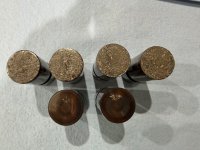
The moisture is in the crankcase at engine shut down. It gets there from combustion gas blow-by. It is in the form of saturated steam (vapor). As soon as the engine starts to cool off, all that saturated vapor starts to condense. It forms condensation droplets on lots of things. The tappets seem to be the most prone to corrosion, partly because of the type of steel, and partly because the wiping action of the cam leaves very little oil film protection. Water droplets condensing on the tappets starts corrosion pretty quickly, but running the engine every few weeks keeps them polished smooth. Letting the engine sit a few months lets the corrosion get a toe-hold and start forming pits in the surface.
The only way to prevent this entire process is to purge the moisture out of the crankcase after shut-down with dry air.
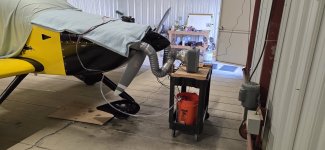
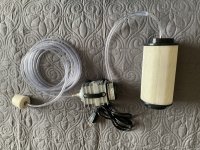
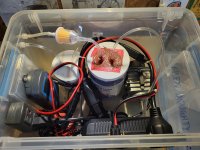
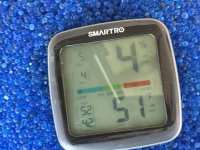
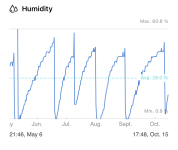
There are threads on this forum describing very inexpensive engine dryers -- less than $50. It is not necessary to have a continuous purge flow. If you purge out the moisture and replace it with dry air, that's all you need to do. I hook up my dryer, turn the timer to one hour, and walk away.
It is NOT the ambient moisture in the environment. It does not matter if the plane is sitting in the Pacific Northwest, Or the Deep South, or the middle of the Mojave Desert.
The moisture is in the crankcase at engine shut down. It gets there from combustion gas blow-by. It is in the form of saturated steam (vapor). As soon as the engine starts to cool off, all that saturated vapor starts to condense. It forms condensation droplets on lots of things. The tappets seem to be the most prone to corrosion, partly because of the type of steel, and partly because the wiping action of the cam leaves very little oil film protection. Water droplets condensing on the tappets starts corrosion pretty quickly, but running the engine every few weeks keeps them polished smooth. Letting the engine sit a few months lets the corrosion get a toe-hold and start forming pits in the surface.
The only way to prevent this entire process is to purge the moisture out of the crankcase after shut-down with dry air.
There are threads on this forum describing very inexpensive engine dryers -- less than $50. It is not necessary to have a continuous purge flow. If you purge out the moisture and replace it with dry air, that's all you need to do. I hook up my dryer, turn the timer to one hour, and walk away.