Van's Air Force

The definitive Van's Aircraft support community! Buying, building or flying an RV? Join our exclusive family of mentors and enthusiasts!

Best RPM to Dynamically Balance Prop RV-12iS.

jackking123

Well Known Member
Patron
Engine to Prop Ratio is 2.43 to 1. What ENGINE RPM did you use to dynamically balance prop?

Max Static RPM WOT is about 4800 RPM (rounded down). Prop would be 1975 RPM at WOT. That is upper limit.
Most pilots wind up their Rotax to 5000-5500 in cruise. Although 4900 RPM is a good econ With that said, all these are more than WOT Max Gnd Static.

Question does it make a big difference balancing prop at Engine 4000 RPM (1646 Prop) vs 4800 RPM (1975 Prop). What RPM did you use.

RPM RPM
Engine Prop
3500 1440
3600 1481
3700 1522
3800 1564
3900 1605
4000 1646
4100 1687
4200 1728
4300 1770
4400 1811
4500 1852
4600 1893
4700 1934
4800 1975 Max Static
 
Balance it at the RPM you use the most. In other words your cruise RPM somewhere in the range of 5200 - 5400.
If you are only getting 4800 static you need to address prop pitch first. Balancing should come last.
 
Last week I did a sling with the 915/3 blade anything above about 1800-1900 prop rpm readings started getting erratic. For some reason this seems to be somewhat ‘normal’ for Rotax powered aircraft. It’s not always the case but I’ve seen this more than a few times.
I normally see very little difference at higher rpm’s.
 
Last week I did a sling with the 915/3 blade anything above about 1800-1900 prop rpm readings started getting erratic. For some reason this seems to be somewhat ‘normal’ for Rotax powered aircraft. It’s not always the case but I’ve seen this more than a few times.
I normally see very little difference at higher rpm’s.
Some of the thin three blade props will tip stall at higher RPM’s with no forward airspeed especially if there is any side wind hitting it. In those cases there is no choice but to use a lower RPM. Usually the tips stalling does not cause lateral movement that the accelerometer will pick up.
 
Balance it at the RPM you use the most. In other words your cruise RPM somewhere in the range of 5200 - 5400.
If you are only getting 4800 static you need to address prop pitch first. Balancing should come last.

Let me start with thanking you for taking time to respond, while I pick you comment apart. 😁 Your advice which is sage advice, well understood. I did not say I was getting 4800 Static RPM, my poor communication. Let me try again. I said: "Max Static RPM WOT is about 4800 RPM (rounded down)."

I don't know what WOT Static is not my plane, but 4900-5200 RPM (according to Google). depending on conditions, density altitude, engine condition (airport 500' MSL, summer density altitude can be +1500 ft, engine 100 hrs, 86/87, new plugs, oil, all sensor scan good.).

Why round down? Several reasons:
1)
Prop Balancer wants you to specify the RPM and you need to make it and be stable at that RPM. You make a good point I will check his static RPM. Not my plane, but should be checked. Roger that. As a CFI having given owner instruction in this RV-12iS, never did a WOT static run, but look on takeoff roll, and it's good. Will do a WOT Static RPM check Saturday when we go at the Prop balance. I arbitrarily set 4800 RPM as a max, knowing I could will get there. I think 4500-4600 RPM engine will be fine as well, may be better than 4800 RPM?

2) WOT static for a prop balance, my opinion, preference, not right or wrong, is not the gold standard. Regardless of Eng/Prop RPM you get a solution or balance. even if not at your normal cruse RPM. You will gain smoother operations over all if balanced at lower RPM. It is not practical or possible to check cruise RPM on the ground sometimes.

3) Some "shops" do full-power balance (all engines) assuming it covers the entire RPM range, tying down aircraft, running at maximum static RPM. Not true. This causes strain, compressed isolators, risks overheating engine and unnecessarily uncomfortable for technician.

Bottom line with the engine straining on the engine mounts, aircraft shaking at MAX WOT STATIC RPM, I submit it is NOT cruise conditions.
It may be fine, "work" great, but something a little lower will work just as well, may be better, in my opinion. In some cases it is not practical or possible to get near cruise RPM on the ground. I am going to shoot for 4600-4800 RPM, prop 1900-1975 RPM.

Cessna 152 Type Certificate Data Sheet and the Pilot’s Operating Handbook, the acceptable static RPM range is 2,280 to 2,380 RPM. Red line is ~2550 RPM and common to run 2300-2550 RPM in cruse at altitude. This is stock. The C-152 I balanced has STC prop and STC Engine (Sparrow Hawk) with Min. The minimum static is 2450 RPM, red line of 2700 rpm (max continuous 2550 rpm). I balanced it at 2300 RPM and it was fine. It is technique. I picked a number, stuck with it. You get "A" solution. I can say the C-152 I balanced was noticeably smoother after first run (1.04 to about 0.7). In flight higher RPM's 2550 RPM it feels even smoother. Likely dumb luck. but feel no regret about doing balance at 2300 and not 2450 RPM.

A survey or spectrum of vibration over the full range of RPM's would be best. In the case of ROTAX you get gear case harmonics below 2000-2200 RPM I recall. That is why you idle higher, I use 2000-2200 as my Min RPM on ground, unless for taxi reasons I need to pull the reins in on that mighty 100 poneys.

Some prop/engine combos have YELLOW or stay out RPM/MP... Vibration can be tricky. I don't think there is one perfect number for the Rotax RV-12iS. A balanced prop to "A" RPM is better than no balance at all, as long as it is in level flight RPM range.

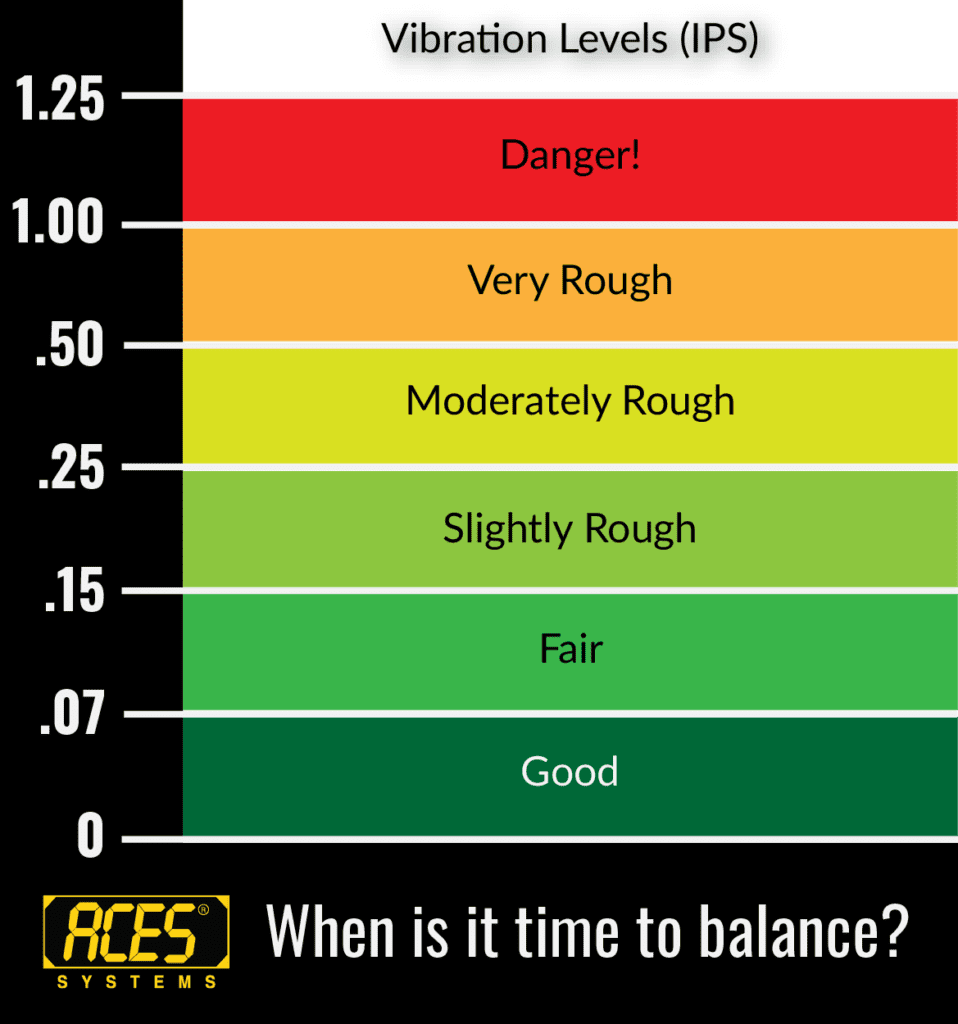
Ground dynamic prop balances do NOT represent cruise conditions, but approximate. NO true way to do an inflight cruse condition prop balance on the ground. Bottom line is take out gross imbalance, shoot for 0.07 ips or less at a reasonable RPM. Depending on airplane max static is well below cruise. Just deal with it. If you want to be a "rocket surgeon or brain scientist" :rolleyes: you would check MANY different RPM's, make a chart and find your best harmonics. Nope not going to do that, at least on this RV-12iS. They do have test equipment that does this for a "mo better" solution. The helicopter guys are experts at balancing rotary wings. aka big props.

Fun fact your engine may be out of balance? The engine and prop prop combo interaction also may be an issue, at one RPM and not another. "Professionals" put one or two additional accelerometers (Lycoming) on engines case and accessory case. All you can hope for is the engine was balanced statically per the overhaul manual, and the prop was statically balanced. What we are doing if fine tuning and making sure there is no gross imbalance of prop or engine or the combo thereof.

The RV-12iS - did one test run got 0.12 ips**, acceptable but not great. The C-152 I balanced started as1.04 ips!
Proud to say a flight club's C-152 I am a CFI for, on which I did the prop balance, that started at 1.04 ips, after 4 iterations and splitting weights, 0.04 ips !!!!!

** RV-12iS Did two test runs,
one while warming up engine for oil change and got erratic RPM (See Note below). After changing optical sensor location, did 2nd run to check for oil leaks. For grins and giggles, used 4000 rpm / 1646 prop. 0.12 ips. Not balancing at 4000 RPM, just testing. prop balancer equip and set up. 0.12 ips is typical as I understand it for a Rotax 12iS. That is OK, not good or great, just OK and room to improve.

I knocked off the RV-12iS prop balance late in day, hot and exhausted from finishing up a condition inspection. I just want to see it was working. Saturday will start fresh and go through the process of balancing prop. You use spinner back plate attach screws to add washers, until you get your balance. Than you add final weight in back spinner (bolt/nut/washer) in hole you drill. Hole must be burr free, net fit. You have to ratio up the weight due to change or radius. I recall the spinner OD is about 9.75" or 4.875R. The location of permanent weight (bolt, nut, washer) in the backing plate, has 1" less radius I guess (have to measure). I will report the results.

NOTE: Got erratic RPM on first run - I used back of spinner for reflective tape. It worked but got a message it was erratic. I suspect the unpainted aluminum spinner backing plate (not shinny but mat) did not provide the contrast with the reflective tape needed. It "worked" but poorly. I could have painted it black, use tape (changing weight bal) to increase contrast. Nope. On the C-152 prop I balanced in the morning, I used ridged foam blocks, attached with metal tape to engine mount, with optical sensor on top. Reflective tape on back of prop blade. Worked the trick. Fix the RV-12iS RPM issue doing the same, moving it up, and placing reflector on back of prop. Second run RPM was stable. Not use to geared engine, ratio 2.43 : 1. You specify PROP RPM in test Equp, set engine RPM to get prop RPM specified. Not hard but different than a direct drive Lyc.

 
Last edited:
jackking123, I’m not trying to be argumentative, but, your first post came across as though you were asking for advice. Your last post indicates you have done a lot of your own research and are fairly set in what you believe is best.
You spent a lot of time referencing WOT, for the record you were the only one that mentioned it.
 
Fun fact your engine may be out of balance? The engine and prop prop combo interaction also may be an issue, at one RPM and not another. "Professionals" put one or two additional accelerometers (Lycoming) on engines case and accessory case. All you can hope for is the engine was balanced statically per the overhaul manual, and the prop was statically balanced. What we are doing if fine tuning and making sure there is no gross imbalance of prop or engine or the combo thereof.

Fun Fact: This is completely irrelevant and does not apply. You have a hunting gearbox. The engine does not stay in consistent phase with a relative prop position. You are not balancing squat on the engine on a 9 series Rotax. It's not really a 'dynamic balance', it's just balancing a turning prop and spinner combo.

Your habit of asking a question then using AI slop to argue back is not doing yourself or your student any favors.
 
Fun Fact: This is completely irrelevant and does not apply. You have a hunting gearbox. The engine does not stay in consistent phase with a relative prop position. You are not balancing squat on the engine on a 9 series Rotax. It's not really a 'dynamic balance', it's just balancing a turning prop and spinner combo.

Your habit of asking a question then using AI slop to argue back is not doing yourself or your student any favors.
Sounds reasonable…. my E-Prop came dynamically balanced from the factory. Runs extremely smooth on my 1000+TT 912ULS…
 
Fun Fact: This is completely irrelevant and does not apply. You have a hunting gearbox. The engine does not stay in consistent phase with a relative prop position. You are not balancing squat on the engine on a 9 series Rotax. It's not really a 'dynamic balance', it's just balancing a turning prop and spinner combo.

Your habit of asking a question then using AI slop to argue back is not doing yourself or your student any favors.

Fair enough but I am talking Lycoming not Rotax. Yes the vibrations of the engine are factor. It gives you a bigger picture.

"Using two or more accelerometers is a highly recommended practice in advanced dynamic propeller balancing. It helps pinpoint exact imbalance sources, separates propeller-induced vibrations from engine-firing impulses, and ensures the smoothest weight solution" Kit Plane

Story time: My 1990's RV-4, O-320 w/ compact Hartzell Constant Speed Prop (M2YR extended hub to use with fixed pitch cowls using hub extension). Engine used "Conical " not "Dynafocal" engine mounts. Vibration was an issue. First guy to try to balance had a basic tester, single accelerometer. It did not help. Went to helicopter guy (and piston and turboprop aircraft), and he was getting solutions, at different RPM's, Prop off low pitch stop, and 3 accelerometers. The solution (added weights on prop hub) was sewing machine smooth, night and day.

I took a vibration course in undergrad 40 yrs ago. Understand that the gear box 2.43 to 1 ratio makes it more complex. The Rotax is a small displacement high RPM (frequency) engine, so it is not driving or coupling with 1st, 2nd or higher order prop vibrations, like a Lycoming. The power pulses are smaller amplitude and x2.43 frequency.
 
Last edited:
jackking123, I’m not trying to be argumentative, but, your first post came across as though you were asking for advice. Your last post indicates you have done a lot of your own research and are fairly set in what you believe is best.
You spent a lot of time referencing WOT, for the record you were the only one that mentioned it.
I asked for what is a good practical RPM. The comment was RPM you use in cruise, which is not practical for fixed pitch props. With fixed pitch props that is above static RPM in many planes, or requires WOT Static to get close to inflight cruise RPM. My point was it is not necessary or practical sometimes. Asking for advice does not mean I don't have a clue. Ha ha.

CONSTANT SPEED PROP, you can run whatever RPM you want. Read my post N8DAV8R above. The prop balance I had done on my RV-4 with C/S Prop, the technician, had me take the prop off the low pitch stops, use different RPM/MAPS from low cruise to takeoff RPM's, as well as using several accelerometers. It is a bit of art balancing a prop. With FIXED PITCH Prop there is less control of RPM and MAP.
 
Last edited:
Why are we discussing dynamic balancing of Lycoming's in the RV-12 thread? Rotax is a different beast. As Nate points out the crank is isolated by a slipper clutch and 30 degree ramps. The purpose is to balance the prop and spinner, nothing more. Out of the box, pistons, wrist pin, circlips, and rod are typically within a gram of one another. That's another difference pointed out before, the manufacturing tolerances of the Rotax are very tight compared to Lycoming. Lets compare apples to apples not grapefruit.
 
Why are we discussing dynamic balancing of Lycoming's in the RV-12 thread? Rotax is a different beast. As Nate points out the crank is isolated by a slipper clutch and 30 degree ramps. The purpose is to balance the prop and spinner, nothing more. Out of the box, pistons, wrist pin, circlips, and rod are typically within a gram of one another. That's another difference pointed out before, the manufacturing tolerances of the Rotax are very tight compared to Lycoming. Lets compare apples to apples not grapefruit.
Why not? Why are asking Why? Why did I bring it up, because I want to. It is good to compare for education. Read the reason Lycoming came up. We are talking about affect of gear box on Rotax and prop and engine power pulses. That is why it came up. If it does not make sense to you that is OK.

Your comment about tolerances is irrelevant. One is air-cooled one is water cooled. Tolerances in Lycoming are by design. Manufacturing techniques, processes, QC of Lycoming is second to none, more advanced than Rotax, a small boutique uncertified engine. Not Rotax hater, just rather own, maintain and fly a Lycoming. My 180 HP at 2700 RPM no time limit. Rotax 912iS is 100 HP at 5800 RPM limited to 5 min, 5500 RPM continuous making 94 HP. Lycoming is aerobatic with hydraulic constant speed prop, Rotax is not aerobatic and can NOT use hydraulic prop. YEP apples and grapefruits.

Doing the condition inspection and prop balance on this RV-12iS, had to deal with a pile of Rotax SB's on fuel pumps, oil squirter blockage, ignition coil wiring harness, cotter pin.... Fortunately this engine dodged the serial number lottery, kind of. I fly them but own one no.
 
jacking123,
When I answer questions on this forum it is more for the information for the silent readers than the OP. With that said I have balanced 100’s of airplane props. Many direct drive and many geared, many of the geared were Rotax. They all are balanced as close to cruise RPM as possible and prop pitch setting (if applicable). The time spent at high RPM is 5-10 seconds to get a reading, overheating is not an issue.
Can you balance at a lower RPM, yes, but it doesn’t always mean it will be perfectly balanced at cruise.
I always watch the balance and clock position during the run up to the test RPM many times I see the balance and position wander.
If you have practical experience, not theory please share that, don’t muddy the process otherwise.
 
Why not? Why are asking Why? Why did I bring it up, because I want to. It is good to compare for education. Read the reason Lycoming came up. We are talking about affect of gear box on Rotax and prop and engine power pulses. That is why it came up. If it does not make sense to you that is OK.

Your comment about tolerances is irrelevant. One is air-cooled one is water cooled. Tolerances in Lycoming are by design. Manufacturing techniques, processes, QC of Lycoming is second to none, more advanced than Rotax, a small boutique uncertified engine. Not Rotax hater, just rather own, maintain and fly a Lycoming. My 180 HP at 2700 RPM no time limit. Rotax 912iS is 100 HP at 5800 RPM limited to 5 min, 5500 RPM continuous making 94 HP. Lycoming is aerobatic with hydraulic constant speed prop, Rotax is not aerobatic and can NOT use hydraulic prop. YEP apples and grapefruits.

Doing the condition inspection and prop balance on this RV-12iS, had to deal with a pile of Rotax SB's on fuel pumps, oil squirter blockage, ignition coil wiring harness, cotter pin.... Fortunately this engine dodged the serial number lottery, kind of. I fly them but own one no.

😂😂😂😂😂😂😂😂😂😂😂😂😂😂
 
Sounds reasonable…. my E-Prop came dynamically balanced from the factory. Runs extremely smooth on my 1000+TT 912ULS…
According to E-Prop documentation they static balance. (never heard of a prop manufacturer dynamically balancing their props).
They describe their static balancing process in the manual.

Of course I don't agree with them, I believe EVERY engine/prop manufacturer these days recommends Dynamic balancing.

"E-PROPS propellers are well known to generate very few vibrations, due to their very light weight and to their very precise balancing. When propellers are light, a good balancing, with low tolerance, is enough to avoid the perception of vibrations, or the vibrations consequences. In this case, a dynamic balancing should not bring anything."
 
Last edited:
According to E-Prop documentation they static balance. (never heard of a prop manufacturer dynamically balancing their props).
They describe their static balancing process in the manual.

Of course I don't agree with them, I believe EVERY engine/prop manufacturer these days recommends Dynamic balancing.

"E-PROPS propellers are well known to generate very few vibrations, due to their very light weight and to their very precise balancing. When propellers are light, a good balancing, with low tolerance, is enough to avoid the perception of vibrations, or the vibrations consequences. In this case, a dynamic balancing should not bring anything."
I just put a E-Prop on mine. It does run smooth. I have not put the balancer on it because it is in “testing mode”. When I get it all dialed in I will dynamically balance it and
report back about my findings.
 
WELL IT WAS A LONG DAY.... My some what frustrating RV-12iS Prop Balance. (by the way I used Prop 1950 RPM, Eng 4800 RPM)

It started at 0.35 ips. With spinner off, after 3 runs and split weights, 0.02!!!!! OH JOY!!! Put the permanent weights, screws, washer, nut in holes drilled in backing plate. Put spinner on... now verification.

First problem it took so long and the ACES battery was low the session timed out or I did some fat finger error, it started a new session and telling me to add weight. So I did using spinner screws and washers. Second run it was not going well. I decided to start over.

Starting over, took spinner off, took weights off, put spinner back on. Long and short of it, after 2 or 3 iterations, with spinner on, got down to 0.15 ips and said no further improvement is possible. OK, put a single weight in backing plate now in new location. Again battery low, doing verification run it started a new session. I did get 0.15 ips, Late, tired, hot.... I stopped.

EDIT: Today, fresh battery I went at it with permanent weight still installed. Started balancing, as if I was starting anew. Few iterations, no further improvement. add 0.0 g at 0.0 degree. Job Complete 0.12 IPS @ 76 Deg. So we are in the ball park and this is a good improvement over 0.35 ips.
 
Last edited:
After balance limit is typically defined as 0.10 ips or less.
Hey Walt see my post above. Best I can do is 0.12 IPS.... Fair. That is acceptable and an improvement over 0.35 IPS. If not familiar with RV-12iS Van's put out a SL and a SB that is prop balance related. On some RV-12iS they break the brackets on the radiator or oil cooler, in part due to vibrations and cowl to radiator touching. This RV-12iS had no interference or cracks. With the Prop x3 better. I think there is improvement to be made, but it would take separate balance of spinnr, which is contributing 0.05 IPS to 0.10 IPS.

ALSO WEIRD FUN FACT - The RV-12iS Pitot tube comes out the center of the spinner. The spinner has a hole in the middle. it goes through a hollow shaft and out the back of the gear box. There is a nylon fitting on back of gearbox, to hold the tube. Funnier fact the original was aluminum. It was wearing, so it went Stainless. The spinner could be checked and fine tuned.. The spinner at the nose, has hole and bushing, may be a phenolic material. Van's has discontinued this and gone to a Pitot mast with Pitot and AOA I believe. The AOA Pop rivet in leading edge was not great, the tube came off this RV-12iS... It is glued on a short pop rivet shank...

[
Vibration-Chart-01-958x1024.png
 
Last edited:
ALSO WEIRD FUN FACT - The RV-12iS Pitot tube comes out the center of the spinner.
Unsolicited Advice: Turn away any request to perform maintenance on an RV-12 and any other aircraft utilizing a Rotax power plant (and there are MANY). You wear your disdain (and deep misunderstanding) of the Rotax on your sleeve. Taking on a Rotax task would be a disservice to your clients.
 
WELL IT WAS A LONG DAY.... My some what frustrating RV-12iS Prop Balance. (by the way I used Prop 1950 RPM, Eng 4800 RPM)

It started at 0.35 ips. With spinner off, after 3 runs and split weights, 0.02!!!!! OH JOY!!! Put the permanent weights, screws, washer, nut in holes drilled in backing plate. Put spinner on... now verification.

First problem it took so long and the ACES battery was low the session timed out or I did some fat finger error, it started a new session and telling me to add weight. So I did using spinner screws and washers. Second run it was not going well. I decided to start over.

Starting over, took spinner off, took weights off, put spinner back on. Long and short of it, after 2 or 3 iterations, with spinner on, got down to 0.15 ips and said no further improvement is possible. OK, put a single weight in backing plate now in new location. Again battery low, doing verification run it started a new session. I did get 0.15 ips, Late, tired, hot.... I stopped.

EDIT: Today, fresh battery I went at it with permanent weight still installed. Started balancing, as if I was starting anew. Few iterations, no further improvement. add 0.0 g at 0.0 degree. Job Complete 0.12 IPS @ 76 Deg. So we are in the ball park and this is a good improvement over 0.35 ips.
The spinner is part of the propeller rotating assembly.
A correctly done balancing process is done with the spinner in place.
 
"The RV-12iS Pitot tube comes out the center of the spinner. ..."

FUNNER FACT- The BF109F series and beyond stuck an entire machine gun through the spinner. ;)

Sadly we can only fit a .22 through ours, which has limited the RV12's effectiveness in air combat and slowed military sales. :(

AI might have hallucinated on that last part... But it was a fun fact .
 
Unsolicited Advice: Turn away any request to perform maintenance on an RV-12 and any other aircraft utilizing a Rotax power plant (and there are MANY). You wear your disdain (and deep misunderstanding) of the Rotax on your sleeve. Taking on a Rotax task would be a disservice to your clients.

You are stalking me and bashing me across several threads making personal attacks and false accusations. Stop. Thank you.

I have NO distain for ROTAX or RV-12iS. It is not my personal plane. I will not lie, I enjoy my Lyc powered RV-7 more, aerobatics one reason, speed second, tail wheel third. Why does that upset you? I'm learning ROTAX and RV-12iS after 40 yrs of flying, 35 building and flying Van's RV's, as a CFI-I-ME/ATP. I ask to learn. RV-12iS is a great S-LSA or E-LSA.. OK. Relax. BTW I often help people FREE... 40 yrs experience, masters in engineering, experienced builder.... FREE... So there.

I just had 1.5 hr flight in the RV-12iS. It was smooth with prop balance. I flew to airport 50 miles away, and back. 2000 ceiling, flew at 1500 ft, under class B, around class D, and through a forest of antenna towers, many 1400 to 1600 feet AGL. Visibility was excellent so not hard to see them, but the Garmin G3X called them out. The 2-Axis autopilot made threading the needle easy. I loved it. Flew back, typical TAS around 114-118 kts, often burning 4.5 to 4.6 gph, What is there not to love? So relax.
 
Oh Scott, you have yet to catch on to how it works with this guy so I made an example for you below.
You and Amadeus are harassing me. Stop. That is a good snip. Now you tell me. :rolleyes: :ROFLMAO: Guess better late than never.

FYI:
The spinner was already off for touch up. So I elected to see how prop balanced with it off. It balanced great. What I did not expect was such a large change for a tiny fiberglass spinner.

PITOT tube (fixed) goes through nose of spinner has about .06" gap I recall, may be less. Don't get mad but Van's even recognized this is not ideal for reasons (like it sawed into aluminum pitot tube, SS version now installed), and Van went to wing mounted pitot. Facts are not hate. Don't get mad.

Prop balance was 0.35 ips and now 0.12 ips (with spinner on). Totally acceptable. Thanks for your help.
 
Last edited:
. Facts are not hate.
I don’t know why I am even bothering to respond to this, but facts also aren’t always what you think they mean……

The fact that the pitot tube is being moved to the wing is for a totally different reason than the one that fits your narrative ( not to mention that the pitot tube location is totally irrelevant to doing a dynamic propeller balance on an RV-12).

The only reason the pitot tube is moving to the wing is to accommodate having a heating function to take advantage of the approval of actual IFR operations under the new mosaic rules.
 
Engine to Prop Ratio is 2.43 to 1. What ENGINE RPM did you use to dynamically balance prop?

Max Static RPM WOT is about 4800 RPM (rounded down). Prop would be 1975 RPM at WOT. That is upper limit.
Most pilots wind up their Rotax to 5000-5500 in cruise. Although 4900 RPM is a good econ With that said, all these are more than WOT Max Gnd Static.

Question does it make a big difference balancing prop at Engine 4000 RPM (1646 Prop) vs 4800 RPM (1975 Prop). What RPM did you use.

RPM RPM
Engine Prop
3500 1440
3600 1481
3700 1522
3800 1564
3900 1605
4000 1646
4100 1687
4200 1728
4300 1770
4400 1811
4500 1852
4600 1893
4700 1934
4800 1975 Max Static
What system/tools are you using for this?
Everything I am reading says to follow that systems directions.
What do those directions say to do?

In other words, why isn’t just read the rules good enough?
 
Back
Top