Van's Air Force

The definitive Van's Aircraft support community! Buying, building or flying an RV? Join our exclusive family of mentors and enthusiasts!

Superior IO-360 crankshaft gear failed 2x in less than 140 hrs

burbrbe

I'm New Here
I have had a second failure of a crankshaft gear in 140 hours on my RV-7A's Superior XP-IO-360-B1AA2 with 383.6 hrs TT. I would appreciate advice on how to proceed as replacing the gear again without establishing root cause does not seem prudent.

Background
RV-7A N876RV was built in 2006 in Tennessee. A new Superior Air Parts XP-IO-360-B1AA2 (S/N A06839) was delivered 3/2006. First flight was 9/2007.​
N876RV was purchased from the builder around Aug 2009 with approximately 123 hrs TT and then moved to Jacksonville FL (where it was always hangered). Unfortunately it only saw 12 hrs in 7 years (and was not pickled).​
I purchased the airplane 6/2016 with approximately 136 hours TT and moved it to Concord, CA where it has been tied down in a shade hanger.​

First Crankshaft Gear Failure
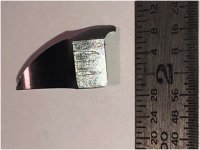
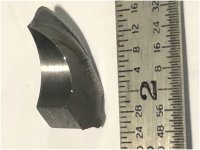
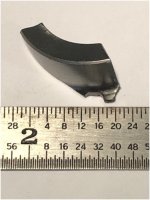
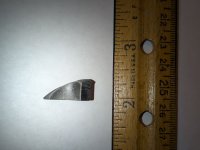
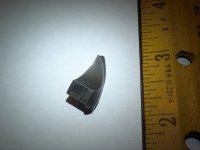
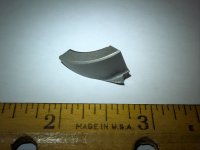
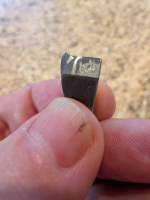
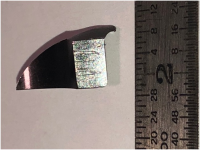
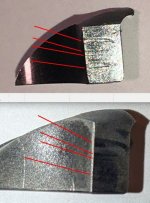
During the condition inspection that began October 2018 at 243.6 hrs TT, a piece of metal was found in the oil screen:​
1776291948573.jpeg 1776291966791.jpeg 1776291978922.jpeg
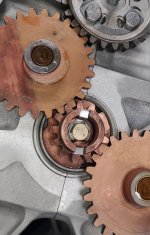
Given the distinctive shape, it was possible to identify it as a fragment from the crankshaft gear; fragment origin is outlined in red on the crankshaft gear below.​
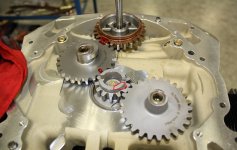
1776292014869.jpeg
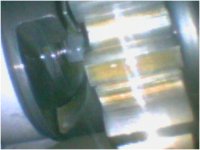
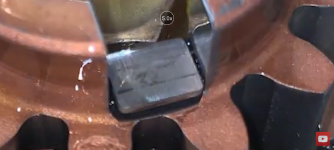
The borescope image of the crankshaft gear and the oil pump tabs is shown below. Note that the crankshaft bolt lockplate appears to be in the slot where the failure occurred.1776292140478.jpeg
Superior Air Parts sent a replacement crankshaft gear in return for the failed gear and metal fragment for metallurgical analysis. Superior concluded that the part was not defective, that it must have been overstressed. Given the location of the failure, it seems to have been stressed in the CCW direction (opposite the normal CW direction of the prop). As no prop strike and no backfire had occurred (to my knowledge), root cause was never determined. The new crankshaft gear was installed and the aircraft returned to service.​

Second Crankshaft Gear Failure
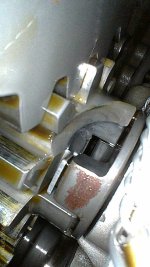
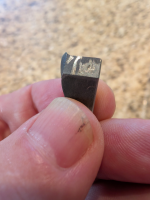
During the March 2026 condition inspection at 383.6 hrs TT, the oil was changed and a nearly identical piece of metal was discovered in the oil screen:​
1776292468253.jpeg 1776292480716.jpeg 1776292492395.jpeg
Given that the small flake of the top of the gear teeth is slightly different, it is likely that this fragment is from the other side (180 degrees opposite) of the crankshaft gear (outlined in blue below):​
1776292595049.jpeg
It is also appears that the failure occurred in the CCW direction as before.​
The borescope confirmed the piece came from the suspected place on the crankshaft gear and that as before it failed where the lockplate tab was inserted. The face of the fragment shows where it was pressured by the lockplate tab.​
1776292663382.jpeg 1776292676797.png
The oil had last been changed at 353.6 hrs TT; therefore the failure could have occurred at any time in preceding 30.0 hours. This means that the crankshaft gear installed in 2019 failed between 110 hrs and 140 hrs time-in-service. There were no prop strikes or backfires in this interval. No significant metal was observed in the oil filter, and the oil analysis was reported as 'normal'.​
Superior has once again offered a replacement gear in return for the fractured part (in order to perform metallurgical analysis). I am reluctant to merely replace the gear again without establishing root cause (I have already dodged two bullets!).​
 
The first thing that comes to my mind is to ask if there is anything atypical about this engine in regards to non standard compression, the propeller and or ignition system that is installed.

Electronic ignition systems that have variable timing capability have the potential to induce torsional dynamic action that is outside of what is intended for the propeller and mechanical drive system of the engine.

This was discovered many years ago while doing some in-flight certification testing on a new design Hartzel propeller. As part of the testing, a number of different ignition systems were evaluated. I saw some significant eyebrow, raising on some engineers faces while evaluating the test data.
 
Last edited:
Could a kickback during engine start do this? I had a kickback during start up, and it broke a couple teeth off my starter ring gear. I don’t know if that’s related, but it was an IO-360 (9:1 pistons) with a light weight prop and electronic ignition. I changed the start ignition to fire at a couple degrees after TDC for starting. I also changed the plumbing on my sniffle valve to make sure everything was draining out of the intake sump at the behest of my engine builder (cool air induction). Previously it wasn’t.
Maybe some things to consider. It takes a lot of shock to break a good crankshaft gear. If you get a prop strike, changing the crankshaft gear is required if you’re following the Lycoming service instruction and AD. Not required for us but should be.
 
Unfortunately, you did not photograph the fracture face itself. The photograph with the 12:51:51 time stamp seems to show some "tidal lines" which may indicate fatigue but they are very faint and not photographed in an ideal way. What does the slot drive ? It seems quite a large drive feature so should have a substantial torque capability. It appears, from the very much non ideal photographs, that the initiation point is the square inside corner of the slot. Im no forensic engineer but with my history in non destructive testing I have observed a great many broken objects and read many failure analysis. If you would care to send me the gear and fragment I can do an independent non destructive analysis of it and take some better pictures and then send it back so you can send it to the manufacturer. Im in SE Michigan, so an in-person visit would not be feasible I think...
 
The first thing that comes to my mind is to ask if there is anything atypical about this engine in regards to non standard compression, the propeller and or ignition system that is installed.

Electronic ignition systems that have variable timing capability have the potential to induce torsional dynamic action that is outside of what is intended for the propeller and mechanical drive system of the engine.

This was discovered many years ago while doing some in-flight certification testing on a new design Hartzel propeller. As part of the testing, a number of different ignition systems were evaluated. I saw some significant eyebrow, raising on some engineers faces while evaluating the test data.
Nothing atypical - Slick mags, compression in the 70s, fixed-pitch Sensenich prop...
 
Unfortunately, you did not photograph the fracture face itself. The photograph with the 12:51:51 time stamp seems to show some "tidal lines" which may indicate fatigue but they are very faint and not photographed in an ideal way. What does the slot drive ? It seems quite a large drive feature so should have a substantial torque capability. It appears, from the very much non ideal photographs, that the initiation point is the square inside corner of the slot. Im no forensic engineer but with my history in non destructive testing I have observed a great many broken objects and read many failure analysis. If you would care to send me the gear and fragment I can do an independent non destructive analysis of it and take some better pictures and then send it back so you can send it to the manufacturer. Im in SE Michigan, so an in-person visit would not be feasible I think...
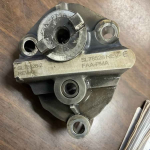
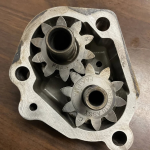
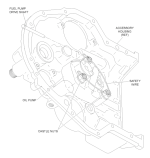
I appreciate the offer but am out of the country for a month and have yet to remove the gear. The slot drives the oil pump which I believe looks similar to:

1776307638197.png 1776307659465.png 1776307697895.png
 
Just spit-balling here…..

Since the only thing that slot drives is the oil pump, I’ve got to wonder about the condition of said pump…and if it swallowed something large enough to momentarily jam it. Since this happened TWICE, I’d say that maybe the pump has an alignment problem, a gear problem, clerance issues - something that has twice made it jam…..
 
Has to be something related to the oil pump. It is certainly a bit odd that the fractures occur on the non driven side of the slot. One would logically conclude that this would have to be from some type of crank reversal, but have to wonder if there are things that can cause the pump to reverse itself due to some type of stress or problem. Something drags, then releases and the pump gear accelerates coming out of it. Way beyond my pay grade, but have to wonder.

Either you are insanely unlucky or there is something not right in the oil pump or the oil distribution system. I suspect the latter. No way i would just install a third gear and hope. You need to find the root cause, otherwise you’ll likely get to do it for a third time.
 
Last edited:
Has to be something related to the oil pump. It is certainly a bit odd that the fractures occur on the non driven side of the slot. One would logically conclude that this would have to be from some type of crank reversal, but have to wonder if there are things that can cause the pump to reverse itself due to some type of stress or problem.

Either you are insanely unlucky or there is something not right in the oil pump or the oil distribution system.
Reminds me of an old hot rodder story. Back in the day, the oil pump was driven off the distributor gear. It had a slot, like the lyc, but the male was on the gear and female on the pump. The more is better mindset took over and everyone was installing high pressure oil pumps as upgrades. Major rash of distributor gear failures was the result. Unlike gears, there is a lot of slop in the slot arrangements, allowing reversals. Not a failure analyst, but have to wonder if there are things going on in that interface that I don’t understand.
 
I would check the oil pump and the gear lash in your entire train. I’ve put together engines that had all new gear parts and found that I was out of tolerances on the teeth engagement lash because the older gear posts where not drilled in the correct spot. And it could be possible that the oil pump has tolerance issues as Paul suggested.
 
Just spit-balling here…..

Since the only thing that sot drives is the oil pump, I’ve got to wonder about the condition of aid pump…and if it swallowed something large enough to momentarily jam it. Since this happened TWICE, I’d say that maybe the pump has an alignment problem, a gear problem, clerance issues - something that has twice made it jam…..
That is what is so puzzling. If it was a jam in the pump, one would expect the driven side of the slot to fail, yey it is occurring on the non driven side. A real head scratcher.
 
That is what is so puzzling. If it was a jam in the pump, one would expect the driven side of the slot to fail, yey it is occurring on the non driven side. A real head scratcher.
I recall the instructors at Lycoming school spent an inordinate amount of time getting us move the oil pump housing around on the accessory case with the bolts slightly loosened until we had very smooth motion on the drive shaft. When you have ti perfect, you tighten the bolts - and that binds things up again … frustrating! If you don’t do this, things can wear and bind - perhaps this wasn’t set up properly….
 
“…a piece of metal was found in the oil screen…”
“Now that is a ‘piece’ of metal” - Crocodile Dundee

I’m siding with Paul Dye on the oil pump housing as it also relates design wise to the distributor/oil pump housing post (I remember those issues). I also remember my Dad showing me a time where we turned a shaft, tapped the housing as we tightened the bolts in a crisscross fashion. (Sorta like aligning sintered bronze bearings)
 
I have had a second failure of a crankshaft gear in 140 hours on my RV-7A's Superior XP-IO-360-B1AA2 with 383.6 hrs TT. I would appreciate advice on how to proceed as replacing the gear again without establishing root cause does not seem prudent.

Background
RV-7A N876RV was built in 2006 in Tennessee. A new Superior Air Parts XP-IO-360-B1AA2 (S/N A06839) was delivered 3/2006. First flight was 9/2007.​
N876RV was purchased from the builder around Aug 2009 with approximately 123 hrs TT and then moved to Jacksonville FL (where it was always hangered). Unfortunately it only saw 12 hrs in 7 years (and was not pickled).​
I purchased the airplane 6/2016 with approximately 136 hours TT and moved it to Concord, CA where it has been tied down in a shade hanger.​

First Crankshaft Gear Failure
During the condition inspection that began October 2018 at 243.6 hrs TT, a piece of metal was found in the oil screen:​
Given the distinctive shape, it was possible to identify it as a fragment from the crankshaft gear; fragment origin is outlined in red on the crankshaft gear below.​
The borescope image of the crankshaft gear and the oil pump tabs is shown below. Note that the crankshaft bolt lockplate appears to be in the slot where the failure occurred.View attachment 115253
Superior Air Parts sent a replacement crankshaft gear in return for the failed gear and metal fragment for metallurgical analysis. Superior concluded that the part was not defective, that it must have been overstressed. Given the location of the failure, it seems to have been stressed in the CCW direction (opposite the normal CW direction of the prop). As no prop strike and no backfire had occurred (to my knowledge), root cause was never determined. The new crankshaft gear was installed and the aircraft returned to service.​

Second Crankshaft Gear Failure
During the March 2026 condition inspection at 383.6 hrs TT, the oil was changed and a nearly identical piece of metal was discovered in the oil screen:​
Given that the small flake of the top of the gear teeth is slightly different, it is likely that this fragment is from the other side (180 degrees opposite) of the crankshaft gear (outlined in blue below):​
It is also appears that the failure occurred in the CCW direction as before.​
The borescope confirmed the piece came from the suspected place on the crankshaft gear and that as before it failed where the lockplate tab was inserted. The face of the fragment shows where it was pressured by the lockplate tab.​
The oil had last been changed at 353.6 hrs TT; therefore the failure could have occurred at any time in preceding 30.0 hours. This means that the crankshaft gear installed in 2019 failed between 110 hrs and 140 hrs time-in-service. There were no prop strikes or backfires in this interval. No significant metal was observed in the oil filter, and the oil analysis was reported as 'normal'.​
Superior has once again offered a replacement gear in return for the fractured part (in order to perform metallurgical analysis). I am reluctant to merely replace the gear again without establishing root cause (I have already dodged two bullets!).​
This seems logical to me. I see little to no radius in the corner where this crack initiated. It failed at a point almost exactly where you would expect a crack to propagate from. It is definitely odd that it didn’t fail on the primarily load side, but the engine has distinct acceleration/decelerations on a very small scale, almost non-stop.

In order to really digest this, it would be nice to ask the specific alloy, the heat treat schedule prescribed, the actual Rockwell C scale results for the gear itself and perhaps the most important.…what is done in terms of nitriding,, carburizing or case hardening, along with what type of post heat treatment procedures such as shot-peening and also which style plating is used such as Cad, or Hard Chrome or..?

The way that piece cracked right out, demonstrated virtually no deformation, just a fracture at the crystalline level, which to me implies too hard of a heat treat. Parts like this should typically be heat treated in the real of 36-42 ish Rockwell C,

That crack you are looking at looks more like what I’d expect to see on a Rockwell 55-60 piece of tool steel…say….A2, or D2, rather than a gear made of something more like 4330 or 4340…or even stainless in the 17-4, 15-5 or 13-8 ph range.

If you were able to find any of the specific details on metallurgy, heat treat and processing, it would be much easier to get into the weeds with this.
 
The question is "Why the non-driven side?"

There may be some merit to a misalignment theory. For example, assume the crankshaft and pump shaft are misaligned in the vertical (one closer to 12 o'clock, one closer to 6 o'clock). No problem when the slots and tabs are vertical, but it would apply a side load when the slots and pump tabs rotated to horizontal. The unusual load would be equal on the driving and not driving sides of the slots, but the driving side is always under some normal constant load. So, it would be a classic high cycle stress reversal at once per crank rev, but the stress ratio would be worse on the non-driven side.

Spitballing, but the theory works, and if true would leave some physical clues.
 
Assuming 2400 rpm, thats 144 000 cycles per hour x 140 hours = 20 million+ cycles. Nothing for a properly functioning system but that can be a big number if something is misaligned and generates a lot of stress at a particular rotational position.
OP, in the short term you could mail me the fragment to look at, it will basically be a mirror image of the surface on the gear.
You can look at my work on the Viking 110 drive flange failures in this thread:
 
I recall the instructors at Lycoming school spent an inordinate amount of time getting us move the oil pump housing around on the accessory case with the bolts slightly loosened until we had very smooth motion on the drive shaft. When you have ti perfect, you tighten the bolts - and that binds things up again … frustrating! If you don’t do this, things can wear and bind - perhaps this wasn’t set up properly….
I didn't go to that school, but came to the same conclusion. The clearances were tight and there are no pins to create a precise position. One shaft support is in the accy and the other in the pump case, so easy to get a mis aligment; Very odd, as most everything I have seen like that had dowel pins for alignment. I did the same method as you and remember spinning that assembly quite a bit to be sure there was no binding, as I could see how it could happen. However, I still would expect binding to cause stress on driven side of the gear slot. Just cannot imagine in my head how the non driven side got stressed.

As a side note, I believe that if you get this wrong, it will conform quickly via wear, as the shaft is steel and both of the shaft supports are aluminum. While there would be stress, I suspect it would wear to conformance by 100 hours or less. That is just a guess though.
 
Last edited:
This seems logical to me. I see little to no radius in the corner where this crack initiated. It failed at a point almost exactly where you would expect a crack to propagate from. It is definitely odd that it didn’t fail on the primarily load side, but the engine has distinct acceleration/decelerations on a very small scale, almost non-stop.

In order to really digest this, it would be nice to ask the specific alloy, the heat treat schedule prescribed, the actual Rockwell C scale results for the gear itself and perhaps the most important.…what is done in terms of nitriding,, carburizing or case hardening, along with what type of post heat treatment procedures such as shot-peening and also which style plating is used such as Cad, or Hard Chrome or..?

The way that piece cracked right out, demonstrated virtually no deformation, just a fracture at the crystalline level, which to me implies too hard of a heat treat. Parts like this should typically be heat treated in the real of 36-42 ish Rockwell C,

That crack you are looking at looks more like what I’d expect to see on a Rockwell 55-60 piece of tool steel…say….A2, or D2, rather than a gear made of something more like 4330 or 4340…or even stainless in the 17-4, 15-5 or 13-8 ph range.

If you were able to find any of the specific details on metallurgy, heat treat and processing, it would be much easier to get into the weeds with this.
Interesting ideas. However, this is not really a common problem and if they had issues with heat treat, I believe this would be more common. Also, OP got the gears years apart, so no issues of a bad batch. While I agree they may have issues that create some sensitivity to stresses, the fact that this problem is rare makes me think something else has to be off in this installation to put the stress levels beyond the norm, as anecodately, normal stress levels don't seem to create fractures in this part.
 
Just curious. I have a superior XP-IO-360-A1AA2, delivered 01/2006. Do/did you have the Ryton Sump on your model?
Superior sent me an aluminum replacement due to wasted spark issues with the Ryton.
 
OP, in post #1, the photograph of your crankshaft drive gear engaged in your oil pump looks like the oil pump drive lugs are straight cut. You show in post #6 oil pump drive tabs are chamfered, if you used the same oil pump with a new crankshaft gear, there may be a connection. Possibly these sharp edges, along with the misalignment that has been suggested are a factor in the gear breaking.
 

1776346464832.png

As I look at this part, I see typical wear marks on the right 3/4 that are consistent with the tab on the pump making regular contact. Other than the pitting (likely an earlier trauma that has smoothed out over time), look fairly normal (dull shade and well formed contact patch). However, the two marks on the left side (middle one has normal contact wear then transitions to fresh irregular wear beyond the normal contact patch) are above where the tab contacts (should look like the rest of the untouched casting) and look fresh and from something more traumatic - non straight pattern, scratch like and deeper, creating much higher stress levels. Have to wonder what made contact there, as it would appear to me that is the stressor that broke the part. Did a bit of metallic debris fall in there and create the stress? Seems the most logical from this event.
 
Last edited:
View attachment 115289

As I look at this part, I see typical wear marks on the right 3/4 that are consistent with the tab on the pump making regular contact. Other than the pitting (likely an earlier trauma that has smoothed out over time), look fairly normal (dull shade and well formed contact patch). However, the two marks on the left side (middle one has normal contact wear then transitions to fresh irregular wear beyond the normal contact patch) are above where the tab contacts (should look like the rest of the untouched casting) and look fresh and from something more traumatic - non straight pattern, scratch like and deeper, creating much higher stress levels. Have to wonder what made contact there, as it would appear to me that is the stressor that broke the part. Did a bit of metallic debris fall in there and create the stress? Seems the most logical from this event.
I'm looking at those deep elongated pits of each of the two broken pieces. Is that normal?
1776354546071.png
 
Just because you haven’t found other parts in the screen, doesn’t mean they’re not lurking somewhere else….just means you haven’t found them yet. Looking at that again…it seems highly likely something caused a jam and broke that tooth.i do agree the wear pattern looks typical other than the much bigger mark. It doesn’t seem logical to have happened with the same gear two different batches and same result, without it being related to something else.while alignment during assembly is definitely important…if it survived the first 5-10 hours, you’d expect normal burnishing to resolve any minor discrepancies, which leads me to agree with the notion that something has gone through those gears and my guess would be something harder than the gear, like a ball or needle of a bearing…or fod…that warrants teardown inspection till you find a more logical source of the problem.
 
I'm looking at those deep elongated pits of each of the two broken pieces. Is that normal?
View attachment 115293
I would say no. Looks like something got in there and under pressure between the parts created the gouge. Would be interesting to see if there is similar evidence on the mating surface.. It really looks like this engine is making metal, but not really enough evidence to draw that conclusion from what we have. If my engine, I would want a tear down for full inspection, though I have to think that the metal likely came from somewhere in the accesory case. Something large and hard enough to do that kind of damage likely wasn't floating around in the oil distribution system. Also, no direct oil exit ports in that area. Only ports inside gear bushings and flow coming from cam journal. Evidence could easilly be sitting on pan bottom with nothing in the screen.
 
Last edited:
I have no background whatsoever in this area, so for "recreation and education" purposes, I searched the web to understand how this locking tab is used etc

Here is what I found.

I """think""" these are the parts in question ???

Gear

Lockplate


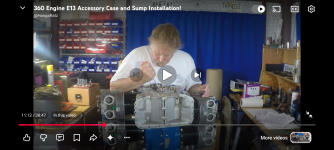
Video that shows installation of all of this.

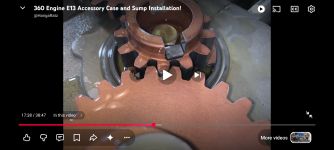
Screen grabs from that video.
One part 11:12 shows bending the lockplate's washer against the flat face of the bolt.
I think this 17:38 is the lockplate tab in the OPs photos from a different angle???

So my question for the hive.

If the torque on the bolt was low enough that the lockplate tab came into play, would the lockplate tab bear up against the face of the gear that failed? (I can't visualize the rotation directions.) Or is there a dowel that prevents rotation of this gear and bolt?
 

Attachments

  • Screenshot_20260416-121842.png
    Screenshot_20260416-121842.png
    2.3 MB · Views: 85
  • Screenshot_20260416-122031.png
    Screenshot_20260416-122031.png
    1.8 MB · Views: 88
  • Screenshot_20260416-122129.png
    Screenshot_20260416-122129.png
    1.6 MB · Views: 89
  • Screenshot_20260416-130106 (1).jpg
    Screenshot_20260416-130106 (1).jpg
    273.4 KB · Views: 75
Last edited:
I have no background whatsoever in this area, so for "recreation and education" purposes, I searched the web to understand how this locking tab is used etc

Here is what I found.

I """think""" these are the parts in question ???

Gear

Lockplate


Video that shows installation of all of this.

Screen grabs from that video.
One part 11:12 shows bending the lockplate's washer against the flat face of the bolt.
I think this 17:38 is the lockplate tab in the OPs photos from a different angle???

So my question for the hive.

If the torque on the bolt was low enough that the lockplate tab came into play, would the lockplate tab bear up against the face of the gear that failed? (I can't visualize the rotation directions.) Or is there a dowel that prevents rotation of this gear and bolt?
I wonder the same thing - granted it's only 2 out of 2 times, but both failures were on the side with the lockplate...
 
Any chance you have the wrong part number for the lockplate, resulting in the tab pressing on the gear slot?
 
That is a pretty thick part made of hardened steel. Unsure if through hardened or surface hardened. I can’t see how a thin pice of sheet metal can cause it to break off a large chunk. This is a pretty rare problem and there are 1000’s of engines with that lock plate. I suspect if that were they cause, we would have figured that out in the last 50 years.

Hardened steel is brittle and therefore more susceptible to traumatic events, like a piece of steel debris getting between teeth, but that same hardening prevents wear from something like that sheet metal.
 
I'm thinking I would want to see the oil pump before I installed another crankshaft gear, myself.
 
I'm thinking I would want to see the oil pump before I installed another crankshaft gear, myself.

To reiterate: it sure seems likely something has gone through that gear. Since two have broken in same place… I’d assert the gears are breaking at a visible weakness point…which is not the point. The point is that a chunk of hard material like a ball bearing, or needle or similar, is in your engine… and has made it through at least twice.

It’s really time to stop worrying and take it apart and find whatever it is.
 
Just spit-balling here…..

Since the only thing that slot drives is the oil pump, I’ve got to wonder about the condition of said pump…and if it swallowed something large enough to momentarily jam it. Since this happened TWICE, I’d say that maybe the pump has an alignment problem, a gear problem, clerance issues - something that has twice made it jam…..
This ^^ .. I have seen oil pump housings installed slightly off, creating momentary "jamming" of the gears. They only seize momentarily, unnoticeable. If it happens more than once it can cause a stress fracture. When installing new oil pumps I hand rotate the gears both directions to check for binding. Often I have to play with the housing a little and re-check for binding
 
Mystery material between accessory case gear teeth doesn't fit the evidence. The gear teeth, as presented, don't show any sign of damage. More telling, jamming the gears with something would tend to pop the crank-to-gear shear pin, break the crank bolt, or bend a mag gear shaft.

Nor does it appear to be jammed pump gears. The broken section is an oil pump drive lug, and as noted previously, the break is not on the driving side.
 
The OP is unbelievably lucky that the chunk that broke off (twice) managed to NOT get jammed between the gear teeth. I would certainly not expect to get so lucky the next time. I have to believe that something about the drive mechanism / oil pump is radially misaligned generating cyclic stress as it rotates. The pump may survive this due to the internal oil pressure providing effective lubrication to the pump shaft. Without the oil feed any other rotating assembly would have bound up or worn out the bearings and failed.
 
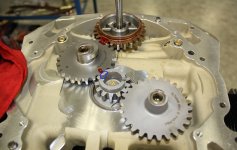
Started doing the oil pump AD on flight school Cherokees in 76. We did them in place since there is enough room to get the accessory case on and off. Saw a fellow mechanic struggle with the oil pump drive alignment when reassembling. Next oil change on that bird I slid the finger screen out and felt something heavy flopping around inside. The metal chunk looked just like the pics at the beginning of this thread. Looks like the gear slot walls can be broken if it’s side loaded during install. If we playing the odds of never having to do this again I would certainly send the oil pump and accessory case to a reputable engine O/H shop for a dimensional inspection and look over.


Don Broussard A&P/IA/ATP
RV9 Rebuild in Progress
57 Pacer
 
FAILED PARTS SHOULD BE SENT OUT FOR Metallurgical exam, electron scanning microscope. The fracture is telling a story.

I am speechless. God bless you, that you are OK.
Good on you for doing a good condition inspection.
Accessory case gear failures typically is loss of power and/or catastrophic engine failure.
The fact this is X2 is hard to comprehend.

Throwing out wild guesses tear engine down and inspect all components, crank, case, gears.
To say this is not normal is a massive understatement.
Possible you got two gears with manufacture defect in a row?
 
Started doing the oil pump AD on flight school Cherokees in 76. We did them in place since there is enough room to get the accessory case on and off. Saw a fellow mechanic struggle with the oil pump drive alignment when reassembling. Next oil change on that bird I slid the finger screen out and felt something heavy flopping around inside. The metal chunk looked just like the pics at the beginning of this thread. Looks like the gear slot walls can be broken if it’s side loaded during install. If we playing the odds of never having to do this again I would certainly send the oil pump and accessory case to a reputable engine O/H shop for a dimensional inspection and look over.


Don Broussard A&P/IA/ATP
RV9 Rebuild in Progress
57 Pacer
Don, I've seen/done the same in early '70's @ embry riddle Daytona.
 
FAILED PARTS SHOULD BE SENT OUT FOR Metallurgical exam, electron scanning microscope. The fracture is telling a story.

I am speechless. God bless you, that you are OK.
Good on you for doing a good condition inspection.
Accessory case gear failures typically is loss of power and/or catastrophic engine failure.
The fact this is X2 is hard to comprehend.

Throwing out wild guesses tear engine down and inspect all components, crank, case, gears.
To say this is not normal is a massive understatement.
Possible you got two gears with manufacture defect in a row?
Maybe a bad batch of gears. The op says superior confirmed the gear had no defects 🤔
 
Mystery material between accessory case gear teeth doesn't fit the evidence. The gear teeth, as presented, don't show any sign of damage. More telling, jamming the gears with something would tend to pop the crank-to-gear shear pin, break the crank bolt, or bend a mag gear shaft.

Nor does it appear to be jammed pump gears. The broken section is an oil pump drive lug, and as noted previously, the break is not on the driving side.
There is clear evidence of gouging on the female lug face on the broken part in post 1. Certainly can’t explain why it is on the non driven side, but the trauma is obvious IMO. The curving pattern is not normal wear and seems to point to something getting between the lug faces that created that gouge and likely produced the force to break it off.

I also think that the oil pump binding is unlikely as that would do damage to the driven lug face. While just speculation, my feeling is that the sintered iron gear teeth would break before the gear lug in question and binding at the wall would just shred the alum case wall before snapping off a chunk of the gear, but that is just a guess.
 
Last edited:
There is clear evidence of gouging on the female lug face on the broken part in post 1.

Yes, there is, but it's not evidence of a foreign object introduced between gear teeth.

Certainly can’t explain why it is on the non driven side,...

A viable theory has to incorporate one-time or cylical overload of the non-driven side.

...but the trauma is obvious IMO.

Perhaps less obvious is that both broken parts have exactly the same marks.

ScreenHunter_3210 Apr. 28 07.06.jpg

The curving pattern is not normal wear and seems to point to something getting between the lug faces that created that gouge and likely produced the force to break it off.

Introduction of a foreign object doesn't happen exactly the same way twice.
 
  • Like
Reactions: Mel
How about a screw driver or cold chisel slightly too wide with a hammer to bend locking tabs? Symmetrical, would place loads on both faces, same tool used twice?
 
The question is "Why the non-driven side?"...........
......A viable theory has to incorporate one-time or cyclical overload of the non-driven side.
What y'all are overlooking is the effects of torsional vibration (TV) of the crank. Each combustion stroke acts as a hammer blow, causing the crankshaft to twist forward, then spring back (rebound) in the opposite direction, which happens 2x per revolution on a 4-cyl. One end of the crank has the propeller which acts as a flywheel, forcing the crank to rotate (relatively) smoothly, so most of the TV ends up at the accessory end where the geartrain has much less mass. The speeding up/slowing of the crank causes the crank gear to bang into the oil pump drive lugs, back and forth, 2x per rev. That's why there's wear on the non-driven side.

My guess is there's too much clearance between the drive slots of the gear and driven lugs of the pump, either due to wear or a mis-machined driven member, which would increase the amplitude of the impacts.

I learned about TV the hard way with my A/C project where I drive the compressor off the vac pump drive. My first design was using a COTS (commercial off-the-shelf) vacuum pump plastic spline drive like the aux alternators use. Those drives break at ~35 lb-ft, so they are quite stout for plastic. My compressor takes ~4 lb-ft to turn, yet anytime engine speed went below 1000 rpm, the drive would shear immediately. Picture a dog with a rag doll, jerking it back and forth. That's what's going on here. I designed a very torsionally-soft coupling which is still in use today. A good demonstration of TV is when turning on my compressor: the accessory gear train has clearance between the teeth, and because they're straight-cut, there is some rattle. When the compressor adds load on the last gear of the train, that rattle goes away, which you can hear in the cockpit. Normally the gear train rattle is part of the background noise, so you don't notice it, but when it suddenly disappears, it's noticeable.
 
What y'all are overlooking is the effects of torsional vibration (TV) of the crank. Each combustion stroke acts as a hammer blow, causing the crankshaft to twist forward, then spring back (rebound) in the opposite direction, which happens 2x per revolution on a 4-cyl. One end of the crank has the propeller which acts as a flywheel, forcing the crank to rotate (relatively) smoothly, so most of the TV ends up at the accessory end where the geartrain has much less mass. The speeding up/slowing of the crank causes the crank gear to bang into the oil pump drive lugs, back and forth, 2x per rev. That's why there's wear on the non-driven side.

My guess is there's too much clearance between the drive slots of the gear and driven lugs of the pump, either due to wear or a mis-machined driven member, which would increase the amplitude of the impacts.

I learned about TV the hard way with my A/C project where I drive the compressor off the vac pump drive. My first design was using a COTS (commercial off-the-shelf) vacuum pump plastic spline drive like the aux alternators use. Those drives break at ~35 lb-ft, so they are quite stout for plastic. My compressor takes ~4 lb-ft to turn, yet anytime engine speed went below 1000 rpm, the drive would shear immediately. Picture a dog with a rag doll, jerking it back and forth. That's what's going on here. I designed a very torsionally-soft coupling which is still in use today. A good demonstration of TV is when turning on my compressor: the accessory gear train has clearance between the teeth, and because they're straight-cut, there is some rattle. When the compressor adds load on the last gear of the train, that rattle goes away, which you can hear in the cockpit. Normally the gear train rattle is part of the background noise, so you don't notice it, but when it suddenly disappears, it's noticeable.
That all makes a lot of sense, but this isn't a plastic gear. It is a pretty robust chunk of likely alloyed steel. Thousands of these things out in the wild all with similar TV signatures. Why would this one fail twice in the same way and all the others very rarely. This seems to be a pretty isolated problem. I really struggle to see how relatively normal loads, torsional or otherwise can cause this repeatedly in a very isolated case. logic would say something has to be different here than all the others. Certainly not saying TV isn't involved, but it would seem that there has to be something else aggrevating it or working against it. Given two different broken parts, purchased years apart, it is hard to call it a defective part. Once, sure; but twice?
 
Last edited:
That all makes a lot of sense, but this isn't a plastic gear. It is a pretty robust chunk of likely alloyed steel. Thousands of these things out in the wild all with similar TV signatures. Why would this one fail twice in the same way and all the others very rarely. This seems to be a pretty isolated problem. I really struggle to see how relatively normal loads, torsional or otherwise can cause this repeatedly in a very isolated case. logic would say something has to be different here than all the others. Certainly not saying TV isn't involved, but it would seem that there has to be something else aggrevating it or working against it. Given two different broken parts, purchased years apart, it is hard to call it a defective part. Once, sure; but twice?
It's not the drive gear, since he's had two of them with the same outcome. I'm saying the driven member has possibly too much clearance, or has a machining error in some other way. We've never seen photos of that part yet. Maybe one lug is thinner than the other on the non-driven side, so that all of the force is on one lug? Who knows until he inspects that part.

To break off a chunk of hardened steel like that takes significant, and repeated impact force. Think impact driver tool. And having the oil pump slightly misaligned like was suggested earlier isn't going to achieve that force.
 
Back
Top