Van's Air Force

The definitive Van's Aircraft support community! Buying, building or flying an RV? Join our exclusive family of mentors and enthusiasts!

Another heavy wing thread...

Gino230

Well Known Member
Patron
My RV8 (bought not built) has a slightly heavy right wing- (about 3 gallons worth which Vans considers minor). But there's a few other factors at play- the right wing, everything lines up nicely- Flap is UP (measured by straightedge on bottom of wing), aileron clamped to flap, aileron aligned with wingtip.

But the left side, the flap is a bit low (measured by straightedge on the bottom of the wing), the aileron outboard edge appears a bit high, and the wingtip doesn't match perfectly.

In flight, the ailerons find their equilibrium and are not symmetrical to the flaps or wingtip. They are displaced a little to the left- i.e. holding up the right wing. All of this while I'm holding a tiny bit of right rudder, maybe 1/2 a ball in cruise. There are no trim tabs installed on any control surface.

I've read about 10 threads on this- so my first inclination is to try raising the left flap (might require bending the inboard lower skin of the flap- right now it sits flush against the belly skin). Then see where we are at. Maybe I can then lower the left aileron and finally see about matching up the wingtip?

I would have loved to talk to the builder about this stuff, but an online search shows he passed back in November.

While it's not a show plane, it's quite well built and so far everything I have seen is to plans. So I'm guessing this current setup is not an accident, he may have raised the left aileron for a reason. I have not measured the angle of incidence or the sweep, maybe I'll get some plumb bobs and do this first?

Also being a novice, I don't want to screw up a good flying airplane, but I am a perfectionist so there's that. There's always some more projects I can tackle to make it mine- so maybe I should fly on and push this a little further down the list?

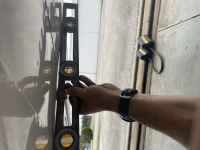
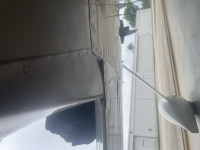
Right Flap:
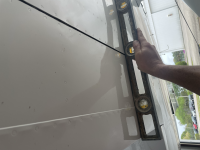
tempImage7IWMpV.png

Left Flap:tempImagewujpw9.pngtempImage5MyTSe.png
 
I spent some time on the phone with Carl Froehlich here on VAF. He had me make a spreadsheet mapping wing sweep, wing incidence, and angle. Particularly to map the upper and lower flap in trail to the wing.

I discovered the problem while trying to install new wingtips and the Vans instructions just didn’t work. I subsequently spoke with the son of the builder (deceased) and he affirmed the aileron rigging had been ‘adjusted’ to make it fly less bad.

After all that work. The thing that popped out from all that work and all those numbers. In my case the issue was my left flap had an issue. While flush and fully retracted, was actually 1/4” lower than the right side.
 
I read those same threads and came away with the impression it was rarely the flaps. It is not uncommon for the flaps to end up that low on an RV8 rigged correctly according to the plans . The Vans fix is to bend the end of the flap to meet the fuselage skin. Usually the ailerons and typically the alignment of the surface of the wing to the aileron corrected by moving the aileron hinge up or down by moving the bolt holes. Did you try laying a straight edge on the wing/aileron?
 
Last edited:
I'd want to recheck the rigging on both wings, per the sequence in the manual. Align the aileron to the line defined by the tooling holes in the outboard rib, then align the flap to the aileron, then align the wingtip.

You need to start from a known, defined and *correct* alignment of both left and right aileron, flap and wingtip positioning. Otherwise, you're just going to be chasing the problem with semi-random changes to various components.
 
I spent some time on the phone with Carl Froehlich here on VAF. He had me make a spreadsheet mapping wing sweep, wing incidence, and angle. Particularly to map the upper and lower flap in trail to the wing.

I discovered the problem while trying to install new wingtips and the Vans instructions just didn’t work. I subsequently spoke with the son of the builder (deceased) and he affirmed the aileron rigging had been ‘adjusted’ to make it fly less bad.

After all that work. The thing that popped out from all that work and all those numbers. In my case the issue was my left flap had an issue. While flush and fully retracted, was actually 1/4” lower than the right side.
I read those same threads and came away with the impression it was rarely the flaps. It is not uncommon for the flaps to end up that low on an RV8 rigged correctly according to the plans . Usually the ailerons and typically the alignment of the surface of the wing to the aileron corrected by moving the aileron hinge up or down by moving the bolt holes. Did you try laying a straight edge on the wing/aileron?
I actually did, but I didn't photograph it because I'm not sure where the flat spot should be- due to the curvature of the upper wing surface. The left aileron is noticeably higher.

I also did not check the tooling holes, which would have been easy with the wingtips off for CI last month.

I spent some time on the phone with Carl Froehlich here on VAF. He had me make a spreadsheet mapping wing sweep, wing incidence, and angle. Particularly to map the upper and lower flap in trail to the wing.

I discovered the problem while trying to install new wingtips and the Vans instructions just didn’t work. I subsequently spoke with the son of the builder (deceased) and he affirmed the aileron rigging had been ‘adjusted’ to make it fly less bad.

After all that work. The thing that popped out from all that work and all those numbers. In my case the issue was my left flap had an issue. While flush and fully retracted, was actually 1/4” lower than the right side.
I'm guessing I will have to do this too....... although it's probably going to be more of a research project into the WHY more than anything- Everything I have found is pretty nicely done so my thoughts are that this airplane is the way it is for a reason. Although if it can be corrected, I would like to do it.
 
I have found the same as what Mike said, but only after going through a number of things first. Level the fuselage horizontally using a digital level. Then check the wing incidence on both using a digital level. Using the W730 aileron bell crank gauge set both ailerons to the gauge and clamp them there. Set both flaps to the ailerons and check they are the same with the level. Check the aileron and flap trailing edges and make sure they have the same radius and are flat along the top surface. Now you have a good starting place. Fly the plane and see what it does. If you have a yaw issue fix it first before working on the heavy wing if it is still there.
 
I have found the same as what Mike said, but only after going through a number of things first. Level the fuselage horizontally using a digital level. Then check the wing incidence on both using a digital level. Using the W730 aileron bell crank gauge set both ailerons to the gauge and clamp them there. Set both flaps to the ailerons and check they are the same with the level. Check the aileron and flap trailing edges and make sure they have the same radius and are flat along the top surface. Now you have a good starting place. Fly the plane and see what it does. If you have a yaw issue fix it first before working on the heavy wing if it is still there.
No, you do NOT set the flaps to the ailerons before setting the *ailerons* to the tooling holes. You don't "set both ailerons to the *gauge*". It's not a gauge, it's a jig to fix the bellcrank in place so you can adjust both pushrods that go to it.

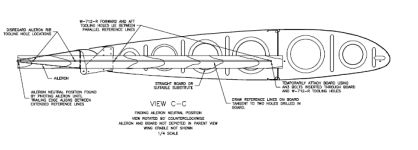
From the construction manual, in the section on Wings:
Use the W-730 bellcrank jig provided to set the bellcrank in the correct neutral position. Use the alignment tool you built at the beginning of the wing construction to
position the aileron in the neutral position. Clamp the aileron in this position and adjust the rod end bearings on the W-818 push rod until the pivot bolts at the bellcrank slip in smoothly.
1775508892892.png
 
No, you do NOT set the flaps to the ailerons before setting the *ailerons* to the tooling holes. You don't "set both ailerons to the *gauge*". It's not a gauge, it's a jig to fix the bellcrank in place so you can adjust both pushrods that go to it.

From the construction manual, in the section on Wings:

View attachment 114388
Yes, thank you for the correction. My error in relying on my erratic memory. My apologies!
 
In addition to starting from ground zero with the tooling holes, you’ll have to disconnect the springs from the aileron trim. The springs need to be disconnected when evaluating whether you have a heavy wing or not.

Wheel pants, gear leg fairings, and wing tips can all have a significant effect on yaw and roll.

Also, simply adjusting one of the ailerons up or down with the pushrods/rod end bearings doesn’t work because the ailerons will simply find a new equilibrium.
 
So steps should be:

1. level the plane and measure angle of incidence and sweep. So we are making sure angle of incidence is equal.
2. Check aileron placement with tooling holes, then placement of flap to aileron, wingtip to aileron
3. match everything up and go fly on full tanks with the springs disconnected- see if the heavy wing still exists?
 
Almost.

0. Read the construction manual and review the plans.

I'm not sure what you'd do about either angle of incidence or sweep at this point, other than just knowing what they are. Either way, you still need to go through the rigging on both wings.
 
I don’t need the bell crank gauge on a flying airplane. Set them to the tooling holes as in post #8 with a board on both sides with the stick is in the middle you are good to go. Then check the aileron/wing hinge offset.
The thing about measuring the wing rigging (incidence, sweep, etc) is it has been shown to be insensitive and there is nothing that you can do about it without rebuilding the plane. Once the rear spar is drilled you are pretty much committed.
 
Almost.

0. Read the construction manual and review the plans.

I'm not sure what you'd do about either angle of incidence or sweep at this point, other than just knowing what they are. Either way, you still need to go through the rigging on both wings.
I don’t need the bell crank gauge on a flying airplane. Set them to the tooling holes as in post #8 with a board on both sides with the stick is in the middle you are good to go. Then check the aileron/wing hinge offset.
The thing about measuring the wing rigging (incidence, sweep, etc) is it has been shown to be insensitive and there is nothing that you can do about it without rebuilding the plane. Once the rear spar is drilled you are pretty much committed.
I understand the above, but I thought the measuring process might reveal why the outboard aileron is higher / flap lower and the plane is rigged the way it is- there may be a reason for it? Since the builder is gone, we'll never know. He left alot of documentation on the build, but no notes on his flight testing.

I want to make it as good / pretty as possible, but I also don't want to screw up a good flying airplane just because a trailing edge doesn't match by 1/8" or something. The wing "heaviness" is only 3 gallons worth of gas- easily overcome now that I installed the elec. aileron trim.

I'm sure we have builders here with all kinds of opinions on what's good, great, and acceptable. I really don't know any better as this is pretty much the only RV I've ever flown and only the 3rd that I looked at.

Will do some measuring, check the tooling holes and go from there.
 
I had a heavy left wing experience with my first RV which was a flying RV4 with 300 hrs on it. I found the wing incidence was 0 on the left and 1.5* on the right. After going through the rigging and measuring it still flew with a heavy left wing. There was no aileron trim installed. I slotted the outer left aileron hinge about 1/2 the diameter of the bolt holes to lower the aileron which solved the problem. She flew level with no more heavy wing after that and no bad tendencies in spite of the incidence issues. I ordered an undrilled bracket from Vans and replaced the slotted one with holes drilled in the correct location. I did install the spring bias aileron trim later to compensate for fuel imbalance. Had great fun in that plane for 4 years and 450 hrs. FWIW.
 
Is the trim force required to offset a 3 gallon fuel imbalance enough to be considered a heavy wing?
 
My experience comes from chasing my tail trying to figure out why my ailerons were so far off from the alignment holes on the outer most rib when trying to install VXI wingtips on my -7.

The way I understand it. If everything was built correctly, the plans have the builder install the aileron jig and verify the trailing edge of the aileron is centered on the straight edge.

From there; wingtips are installed and flaps are aligned with the adjacent aileron.

I had been working on installing the VXI wingtips, with the wings in a cradle when I made the discovery. Because my ailerons were mis-rigged so badly. I took the deep dive down the rabbit hole.
I ended up reinstalling both wings and locking down the controls and flaps, to do the full wing mapping. Which lead to the discovery that my left flap was manufactured far enough different than the right one that the builder just mis-rigged the ailerons to make it fly less bad.

Wing mapping wasn’t a fun week. I ended up with lots of masking tape on both sides of both wing making lines and carefully measuring and marking distances. But in terms of sorting out what the real issue was. I would never have gotten to the root cause.

If your flight control surfaces on your wing, are not properly ‘in trail’ with the rest of the wing. There is going to be an issue.
 
Is the trim force required to offset a 3 gallon fuel imbalance enough to be considered a heavy wing?
As it turns out, no it’s not. It takes 18 lb fuel imbalance to be considered a heavy wing.
 
Last edited:
I don't see it mentioned.
It sounds like you've reviewed Vans "Heavy Wing" document. As others mentioned, use the tooling holes and check the aileron bearing alignment both sides. The Vans document mentions it.
Check the right aileron. Three of us on our hangar row had a heavy wing. Two all 7s. Two rights. My 7A left. Mine was about 10 gallons. 60lbs. I could fly it, but it wasn't a lot of fun and took quite a bit of trim till the left tank was burned down.
It was barely noticeable, but looking foreward/aft, my left aileron was a tiny bit higher (hinges) then the right. After discussing with the other two pilots we all agreed. Left was definately higher. Theirs were high right.
I removed the left aileron and slotted the brackets 1/16". Reassembled and it flies perfectly straight. I did buy the hinges, but I want to make absolutely sure I have it perfect before swapping them. Yes, I check them every preflight.
Just another thing to check.
 
I think it is around 6.02 or so at std temp, so just OVER 18 pounds.
We don't have to split hairs over the exact weight, the stick I made to measure fuel is probably +/- a gallon anyway. The point is it's manageable but not perfect. (y)

It's supposed to rain all week so I may get some projects done like measuring.
 
You should also consider Van's sage advice from the very document you reference...
1. Check the rigging of the entire airframe:


  • Set longerons in the flying level condition.
  • Recheck the angle of incidence of the wings.
  • Recheck the vertical stabilizer. Is it up the middle of the airframe? Is it twisted somehow?
  • Use the wing template to cross-check the aileron and flap alignment.

If any of the above are wrong, FIX ‘EM.


2. Is the “BALL” out in level cruise flight (75% power)? It is the first thing to fix! If so, fit a trim tab to the rudder. Start with a big one and trim it down until the ball is
centered at cruise speeds.


3. Now back to the ailerons!...
Since you said
All of this while I'm holding a tiny bit of right rudder, maybe 1/2 a ball in cruise.
(An amount I would not consider "tiny", but others can disagree), you should add that to the list.
 
We don't have to split hairs over the exact weight, the stick I made to measure fuel is probably +/- a gallon anyway. The point is it's manageable but not perfect. (y)

It's supposed to rain all week so I may get some projects done like measuring.
It's not that there's some formal definition of "heavy wing"...you have a heavy wing, just not "real heavy".

You can either fix the rigging issues (including the rudder) and fly the plane "in rig", efficiently and knowing it's correct, or you can accept it being incorrect.
 
It's not that there's some formal definition of "heavy wing"...you have a heavy wing, just not "real heavy".

You can either fix the rigging issues (including the rudder) and fly the plane "in rig", efficiently and knowing it's correct, or you can accept it being incorrect.
Agree and that's why I'm here- I want to make it as close to perfect as possible. I already flew with the wheel pants off to see if that helped center the ball, but no joy.

I'm cautious about putting a trim tab on the rudder, when I'm landing and at idle everything is centered up- even low power settings. It's only high RPM- and only a few lb of right rudder pressure at cruise. The 66" Catto is a big prop.
 
Well, I don't know what to tell ya...you've gotten all sorts of good advice on how to proceed from this forum and from Van's. It's up to you if you want to actually accept it or not.
 
Well, I don't know what to tell ya...you've gotten all sorts of good advice on how to proceed from this forum and from Van's. It's up to you if you want to actually accept it or not.
Absolutely and I appreciate all of the advice. The first step is to measure everything and see if anything jumps out. Checking the aileron and flap alignment with the tooling holes is pretty straightforward.

Since the wheel pants aren't the cause of the yaw, I guess adding the rudder trim tab should be next. I already reinforced the tail light mount based on some other advice I got on here a few months ago, but I never put the tab on. (Having too much fun flying)
 
Absolutely and I appreciate all of the advice. The first step is to measure everything and see if anything jumps out. Checking the aileron and flap alignment with the tooling holes is pretty straightforward.

Since the wheel pants aren't the cause of the yaw, I guess adding the rudder trim tab should be next. I already reinforced the tail light mount based on some other advice I got on here a few months ago, but I never put the tab on. (Having too much fun flying)
Not necessarily. There's more rigging to check.
Remove the empennage fairing first. Check that the builder installed the VS per plan. It should be offset a tiny bit. Seems like maybe 1/4" at the forward bracket from centered. the bracket is obvious. Some builders think they know more than Vans engineers and install the VS centered. It could result in yaw force you describe. The other is making sure the engine mount wasn't shimmed. It also has a tiny bit of yaw correction. I think.
Mine flies pretty much hands and feet off. Obviously little gusts blow me around and require correction. A full power short field takeoff requires a lot of right leg.
 
Not necessarily. There's more rigging to check.
Remove the empennage fairing first. Check that the builder installed the VS per plan. It should be offset a tiny bit. Seems like maybe 1/4" at the forward bracket from centered. the bracket is obvious. Some builders think they know more than Vans engineers and install the VS centered. It could result in yaw force you describe. The other is making sure the engine mount wasn't shimmed. It also has a tiny bit of yaw correction. I think.
Mine flies pretty much hands and feet off. Obviously little gusts blow me around and require correction. A full power short field takeoff requires a lot of right leg.
1775598395326.png
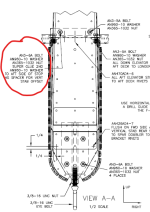
And from the construction manual
Note that the F-781 has a joggle built into it that will offset the front of the vertical stabilizer slightly to the
left. Proper offset places the bottom of the leading edge of the vertical stabilizer ¼ inch to the left of the fuselage
centerline.
1775598640487.png
 
The OP has an RV8. There is no such VS offset in the design. The other difference is RV7 gas tanks are a foot further apart than a -8. Makes the 7 more sensitive to trim than an RV8.
 
Last edited:
Ah, good to know. Interesting that there isn't one on an -8, but there is on a -7. I wonder why.

Anyway, that simplifies things and the OP can move on to the rest of the things to check, like pushrods and adding a (temporary) rudder trim tab, etc.
 
The OP has an RV8. There is no such VS offset in the design. The other difference is RV7 gas tanks are a foot further apart than a -8. Makes the 7 more sensitive to trim than an RV8.
Oops. Nevermind. I committed the one VAF sin I hate. People who post without reading thoroughly.
 
Last edited:
So with the ball a bit out to the Right, will adding a washer to increase the off set center the ball? What kinds of issues with fully constructed ships if a washer is added? how much will it affect the fit of the fairings? I'm messing with an RV-14A.
At 140 KT a ball out to the right can be centered pretty easy, not so easy at 170KT. Any one have any experience in this area?
 
So with the ball a bit out to the Right, will adding a washer to increase the off set center the ball? What kinds of issues with fully constructed ships if a washer is added? how much will it affect the fit of the fairings? I'm messing with an RV-14A.
At 140 KT a ball out to the right can be centered pretty easy, not so easy at 170KT. Any one have any experience in this area?
There should be a single washer on the RV14 VS rear spar already.
If it’s all constructed to plans then I’d be looking at other issues like wheel pants or rigging errors if a 14 or 10 dosent fly straight out of the box.
 
There should be a single washer on the RV14 VS rear spar already.
If it’s all constructed to plans then I’d be looking at other issues like wheel pants or rigging errors if a 14 or 10 dosent fly straight out of the box.
Yep one thin washer in place, what would 2 washers do?
 
Flaps, ailerons and wingtips all line up


Did you build it?
If you didn’t then I’d basically start from scratch (ignoring the incidence if it’s a 14)
Check the rigging. For a 14/10 that’s flaps to the upper stop, ailerons and tip to match.
Go fly. Tab the rudder if the ball isn’t in the center at cruise. If that dosent solve your problems then the next likely culprit is the wheel pants and gear leg fairings. There really isn’t anything else to mess up on a 14/10.
I believe you that they all line up. But do they line up in the right spot?

Putting an extra washer in alone will just twist the VS unless you offset the forward spar of the VS more - which will need a new forward spar attach plate and a redo of the fairing. I’m unaware of anyone ever doing this on a 14. I’d definitely exhaust all other options first.

For the OP same thing except aileron to tooling holes - flaps and tips to match.
Only then follow the vans instructions. Tab the rudder to center the ball etc etc.

I’ve honestly lost count of the number of people over the years I’ve seen (many first hand) who are adamant that all sorts of quick fixes will solve the problem so Im not surprised to see a misrigged flap as a “fix”. It’s easy to treat the symptoms. You just end up with a slow airplane.

The best advice to a non builder owner is to pretend you are a builder at the rigging stage and start there. It’s not that hard. Every builder doing for the first time dosent know what they are doing. So you can’t be any worse. Initial rigging is only a few hrs work at most.

 
Last edited:
Did you build it?
If you didn’t then I’d basically start from scratch (ignoring the incidence if it’s a 14)
Check the rigging. For a 14/10 that’s flaps to the upper stop, ailerons and tip to match.
a word of caution. flap fully up is the reference point, so critical on 10/14. My QB wings did not allow the flap to reach its full up position - hitting the spar. luckilly one was fine and noticed a difference between the two when doing the wing tips. There was some interference from other parts that had to be filled away. so be sure the flaps are trully hitting the spar before using them to set the ailerons.
 
I'm the builder of N12YY, my notes say I installed the washer, however, the VS has been on and off the plane several times since the washer was in place...I'm going to check the washer and recheck the rigging, if nothing turns up then I will glue a wedge to the rudder. Thank you all for your help here. All good advice.
 
I had the dreaded "heavy wing". It was because I had drilled the rear spar attach point making the left wing angle of incidence off a tiny bit...just enough to make the wing heavy. I put a tab on the right aileron and flew on. The point is you can spend a lot of time investigating, measuring and reworking till you're seeing double. All time you could've spent flying. My opinion is that perfection can be the enemy of progress.
Van's said nobody would even notice the tab so I polished it.
danny
 
I had the dreaded "heavy wing". It was because I had drilled the rear spar attach point making the left wing angle of incidence off a tiny bit...just enough to make the wing heavy. I put a tab on the right aileron and flew on. The point is you can spend a lot of time investigating, measuring and reworking till you're seeing double. All time you could've spent flying. My opinion is that perfection can be the enemy of progress.
Van's said nobody would even notice the tab so I polished it.
danny
This is very true, BUT, you should at least know that you measured and evaluated all the things, IN ORDER, that can cause it that are because something is not right. Pushrod length/alignment to tooling holes or whatever; fairings; flap-aileron misalignment; flap construction and aileron trailing edges; even like in your case, a slight out-of-spec alignment.

If you get to the end, and either find all the construction and alignments are ok and so forth, and it needs a trim tab, then you've done all you can and what you should do.

But *starting* there means you're ignoring possible errors in assembly.
 
This is very true, BUT, you should at least know that you measured and evaluated all the things, IN ORDER, that can cause it that are because something is not right. Pushrod length/alignment to tooling holes or whatever; fairings; flap-aileron misalignment; flap construction and aileron trailing edges; even like in your case, a slight out-of-spec alignment.

If you get to the end, and either find all the construction and alignments are ok and so forth, and it needs a trim tab, then you've done all you can and what you should do.

But *starting* there means you're ignoring possible errors in assembly.
Once I found the problem I decided to go with the remedy that didn't involve removing the wing. You're correct in the troubleshooting statement. The tab was the conclusion of the troubleshooting.
danny
 
Back
Top