
Did I have vapor lock? Still flying off my hours after condition inspection. 90 degree temperature ,no problem starting, taxi and run up normal, applied full power, the plane lifted off quickly, at about 100 feet off the ground the engine quit. Fortunately I had enough runway to get back on the ground. Was able to restart and taxi back to the hangar. I then ran the engine for 5 minutes at 2300 rpm

Van's Air Force
You are using an out of date browser. It may not display this or other websites correctly.
You should upgrade or use an alternative browser.
You should upgrade or use an alternative browser.
Engine quit
- Thread starter rwarre
- Start date

Carbed or injected? Was this the first or second flight of the day?Did I have vapor lock? Still flying off my hours after condition inspection. 90 degree temperature ,no problem starting, taxi and run up normal, applied full power, the plane lifted off quickly, at about 100 feet off the ground the engine quit. Fortunately I had enough runway to get back on the ground. Was able to restart and taxi back to the hangar. I then ran the engine for 5 minutes at 2300 rpm

Vapor lock unlikely if this was from a cold start. Even if fully heat soaked, i would expect rough running shortly after applying take off power if hot fuel was the cause. In heat soak conditions where vaporizing fuel is a problem, the idle is generally pretty rough right after starting.

If a carburetor, could be fuel starvation. Idling and even a run up a restricted fuel feed can keep the bowl full enough to run at low power. But at full power it sucks the bowl dry and engine quits. Back on the ground the bowl can fill again and idle and run at low power like nothing is wrong. Check the fuel selector and possibly a blockage in the fuel lines. Great job keeping your cool and getting it back down safely!
I would think it would be a good time to conduct a fuel flow test to ensure you have adequate fuel flow to the required components. I’d do that pretty quick.

pjc
Well Known Member
My carbed O-320 will vapor lock on winter blend autogas from only startup and taxi out in 90F ambient temps. Idles and runs fine at 1800 rpm for the mag check, experiences stumbling (and sometimes quits) at full power when the pump can no longer supply sufficient partially vaporized fuel. This is the worst time of year for MoGas, relatively high temperatures, and winter blend (high RVP) gas in most states. Worse at altitude due to lower atmospheric pressure.Vapor lock unlikely if this was from a cold start. Even if fully heat soaked, i would expect rough running shortly after applying take off power if hot fuel was the cause. In heat soak conditions where vaporizing fuel is a problem, the idle is generally pretty rough right after starting.
For the OP, I would say maybe, but unlikely on 100LL.
What fuel are you using, carbed or injected, how long running on the ground ? And do you have fuel pressure readout/history?
Pjc
In my experience, fuel starvation results in progressively worsening symptoms over many a few seconds, even if that is coughing and sputtering on wot application. A “lights out” engine stoppage would seem to point to something other than moderately low fuel flow. Though a sudden, severe blockage could certainly do that. But even then, you can hear and feel the falling off power and the coughing and sputtering as it goes lean.If a carburetor, could be fuel starvation. Idling and even a run up a restricted fuel feed can keep the bowl full enough to run at low power. But at full power it sucks the bowl dry and engine quits. Back on the ground the bowl can fill again and idle and run at low power like nothing is wrong. Check the fuel selector and possibly a blockage in the fuel lines. Great job keeping your cool and getting it back down safely!
Last edited:
And as I suggested, your vapor related issues appeared as you pushed in the throttle. Op said all was normal until 100’.My carbed O-320 will vapor lock on winter blend autogas from only startup and taxi out. Idles and runs fine at 1800 rpm for the mag check, experiences stumbling (and sometimes quits) at full power when the pump can no longer supply sufficient partially vaporized fuel. This is the worst time of year for MoGas, relatively high temperatures, and winter blend (high RVP) gas in most states.
For the OP, I would say maybe, but unlikely on 100LL.
What fuel are you using, carbed or injected, how long running on the ground ? And do you have fuel pressure readout/history?
Pjc
Have you considered debris in the fuel system?

IIRC you have pmags and and IO-360 with silverhawk. I agree with the others that it sounds like something clogged the fuel delivery system or the air intake. Assuming you did a mag check and got a drop when changing to L and R on the mags...meaning that both pmags are working well. Happy you got on the ground safely.
You might consider tying down the aircraft and doing a full power run for a while - it's scary to do that, particularly with a taildragger, but could help you identify the problem on the ground.
You might consider tying down the aircraft and doing a full power run for a while - it's scary to do that, particularly with a taildragger, but could help you identify the problem on the ground.
If this has never happened before, That's too big a coincidence. Something happened during your condition inspection.

Troubleshooting my fuel delivery first, then spark. I have the g3x so I think I can pull the data to check fuel pressure etc. Thanks for the suggestions.
You think? As in, you've never pulled data before? If so, you've been leaving an invaluable diagnostic tool on the table for as long as you've been flying with the G3X.
If you've never pulled data, I'm assuming you're not aware you can upload your data files (for free) to both Savvy and Flysto. It's insane how much you can analyze with these tools. Hopefully, you had an SD card in your GDU.
I'm a fan of Flysto's graphing but both are equally great.
Glad you got it back on the runway uneventfully.
Pull that data. If you are less than confident in analyzing it, consider signing up for Savvy. They have an excellent data analysis service that isn't expensive.

Don’t overlook checking for clogged tank vents.
Carl
Carl

I had the same experience many years ago in my Luscombe. Ended up being a small fibre floating around in the carburetor bowl. Not something to mess with. You really need to find the cause. I took my carb apart. Good luck.In my experience, fuel starvation results in progressively worsening symptoms over many a few seconds, even if that is coughing and sputtering on wot application. A “lights out” engine stoppage would seem to point to something other than moderately low fuel flow. Though a sudden, severe blockage could certainly do that. But even then, you can hear and feel the falling off power and the coughing and sputtering as it goes lean.
danny
This seems like one of those posts where there’s way more back story not being shared. Given that this sounds like fuel injection, it doesn’t sound fuel delivery related anymore to me. When fuel delivery issues present, the engine bogs down, runs like crap, farts, and all the lean related issues you’d expect.
I was assuming it was a carb, which if a stuck float, or fuel not incoming as fast as being consumed can be an issue….think fuel pump failure or blocked line…
Telling half a story ,makes it really hard to offer any solid advice…but here’s some…..get a mechanic who knows what he’s doing and don’t fly the plane till you’ve got it sorted out…
I was assuming it was a carb, which if a stuck float, or fuel not incoming as fast as being consumed can be an issue….think fuel pump failure or blocked line…
Telling half a story ,makes it really hard to offer any solid advice…but here’s some…..get a mechanic who knows what he’s doing and don’t fly the plane till you’ve got it sorted out…

If it is fuel injection... then the suck through flow test looking for bubbles is where I'd go next. In my case it wouldn't raise heck until at full power (hence max suck). I described the test elsewhere recently.
Oh, and at my airport, having it die at 100' off the runway would be a bad day.
Oh, and at my airport, having it die at 100' off the runway would be a bad day.

Agree with this possibility. Check the hose "B-nut" connections. If they are not tight, or the fuel hose coverings are wet and or blue stained, then look there.If this has never happened before, That's too big a coincidence. Something happened during your condition inspection.
Daddyman58

Mine, -14A , quit at 600' AGL after 100 hours of flying. Popping sounds and then eerily quiet.
Loooong story short.
B nut upstream of Andair fuel pump sucked air. Of course, no blue staining peri-nut.
A clear plastic line plumbed in between the engine fuel pump and the spider, revealed the air/bubbles during a full power runup.
Torque. Finger tight plus 1.5 to 2 flats did not secure that B nut.
Likely due to side strain on the Al3+ fuel line, "preventing" real finger tight, thus under-torquing.
Hope you nail down the culprit.
Loooong story short.
B nut upstream of Andair fuel pump sucked air. Of course, no blue staining peri-nut.
A clear plastic line plumbed in between the engine fuel pump and the spider, revealed the air/bubbles during a full power runup.
Torque. Finger tight plus 1.5 to 2 flats did not secure that B nut.
Likely due to side strain on the Al3+ fuel line, "preventing" real finger tight, thus under-torquing.
Hope you nail down the culprit.
Pulled the data from the Sd card on the g3x. Fuel pressure, fuel flow, showed no signs of a hiccup. Also cht’s and egt’s were within normal ranges. Readings on other sensors also showed nothing. I pulled the fuel filter and there were no chunks. My thought was something in the left tank since that was the being used. Will start up again and see if I can duplicate the issue. Tied down of course
At the end there must have been dramatic changes in many of these values - do you know which changed first? Also, perhaps upload to Savvy and share the data...Pulled the data from the Sd card on the g3x. Fuel pressure, fuel flow, showed no signs of a hiccup. Also cht’s and egt’s were within normal ranges. Readings on other sensors also showed nothing. I pulled the fuel filter and there were no chunks. My thought was something in the left tank since that was the being used. Will start up again and see if I can duplicate the issue. Tied down of course

... or upload to Fllysto, and try to see which parameter took a dive first.
A IC engine burns dyno juice, for that fire to start and sustain it needs sparks, and fuel. First identify, or try to, if the sparks were cut first, or the fuel, then work from there to deepen your TS.
Good luck
A IC engine burns dyno juice, for that fire to start and sustain it needs sparks, and fuel. First identify, or try to, if the sparks were cut first, or the fuel, then work from there to deepen your TS.
Good luck
Turbo,direct message sent.
What an adventure you have had flying these machines.
Daddyman58
AZSteve053
Well Known Member
Gosh - OP has NOT told us anything about his plane or engine - he did say he has a G3X... Ok, he's got glass & data abilities. Would sure be important to know if Carb or Injected (not an "IIRC" comment), does this plane have a fuel return to tank ?, gascolator ?, Fuel flow measurement sensor (pressure off spider or red cube) ?, tail wheel or nose wheel ?, Av gas or car gas ?, recent fuel added to tank engine was running on ?, Sump tank results ?, both fuel tank vents VERIFIED Open ?, what data rate is being collected by G3X (1 second or hi-speed) ?.
Help the VAF group Help you instead of worthless guessing.
Help the VAF group Help you instead of worthless guessing.

That was my point….Gosh - OP has NOT told us anything about his plane or engine - he did say he has a G3X... Ok, he's got glass & data abilities. Would sure be important to know if Carb or Injected (not an "IIRC" comment), does this plane have a fuel return to tank ?, gascolator ?, Fuel flow measurement sensor (pressure off spider or red cube) ?, tail wheel or nose wheel ?, Av gas or car gas ?, recent fuel added to tank engine was running on ?, Sump tank results ?, both fuel tank vents VERIFIED Open ?, what data rate is being collected by G3X (1 second or hi-speed) ?.
Help the VAF group Help you instead of worthless guessing.
Depending upon the layout of the fuel lines, fittings, and connections, you can end up with more pressure drop than you want between the fuel tank and the fuel pump. Since that is on the suction side, concern about generation of bubbles/vapor is legitimate. For example, from bench testing that I have done, a 90 degree fitting can create half as much pressure drop as the fuel filter that came with the kit for my -10.Did I have vapor lock? Still flying off my hours after condition inspection. 90 degree temperature ,no problem starting, taxi and run up normal, applied full power, the plane lifted off quickly, at about 100 feet off the ground the engine quit. Fortunately I had enough runway to get back on the ground. Was able to restart and taxi back to the hangar. I then ran the engine for 5 minutes at 2300 rpm
I will dig up data and pictures from the testing and post later.

RV10inOz
Well Known Member
My carbed O-320 will vapor lock on winter blend autogas from only startup and taxi out in 90F ambient temps. Idles and runs fine at 1800 rpm for the mag check, experiences stumbling (and sometimes quits) at full power when the pump can no longer supply sufficient partially vaporized fuel. This is the worst time of year for MoGas, relatively high temperatures, and winter blend (high RVP) gas in most states. Worse at altitude due to lower atmospheric pressure.
For the OP, I would say maybe, but unlikely on 100LL.
What fuel are you using, carbed or injected, how long running on the ground ? And do you have fuel pressure readout/history?
Pjc
I am fortunate to have been involved with GAMI and the unleaded avgas project in a small way, plus I have a friend who is probably Australia's leading aviation fuel scientist and as a result I have an acute sense of what constitutes "fit for purpose" fuel in aircraft. I would like to see everyone stop using auto fuel in their aircraft. There is a reason the whole supply chain is tightly controlled, your safety. None of that exists in auto fuels. Despite what you may think. I have had many phone calls over the years diagnosing rough running engines that all came back to what PJC quoted above, plus the varnish gum from olefins etc.
YMMV but think why compromise safety for a few bucks.
As for the engine quitting, do not fly it until you find and positively identify the fault and fix it. It quit for a reason and until you find it for sure that thing is not an airplane anymore, its a ground based fuel burner.

What fuel are you using?Did I have vapor lock? Still flying off my hours after condition inspection. 90 degree temperature ,no problem starting, taxi and run up normal, applied full power, the plane lifted off quickly, at about 100 feet off the ground the engine quit. Fortunately I had enough runway to get back on the ground. Was able to restart and taxi back to the hangar. I then ran the engine for 5 minutes at 2300 rpm
Depending upon the layout of the fuel lines, fittings, and connections, you can end up with more pressure drop than you want between the fuel tank and the fuel pump. Since that is on the suction side, concern about generation of bubbles/vapor is legitimate. For example, from bench testing that I have done, a 90 degree fitting can create half as much pressure drop as the fuel filter that came with the kit for my -10.Did I have vapor lock? Still flying off my hours after condition inspection. 90 degree temperature ,no problem starting, taxi and run up normal, applied full power, the plane lifted off quickly, at about 100 feet off the ground the engine quit. Fortunately I had enough runway to get back on the ground. Was able to restart and taxi back to the hangar. I then ran the engine for 5 minutes at 2300 rpm
I will dig up data and pictures from the testing and post later
Many will recognize this as the fuel filter that came with my RV-10 kit. Testing showed that the “trombone” fitting resulted in 0.04 psi pressure drop at 30 GPH. The filter had 0.06 psi at 30GPH.
A 90 degree fitting created 0.04 psi at 30 GPH.
I have a video showing the creation of bubbles after the filter at higher flow rates. I will share that once I can get the file size down to something reasonable.
A 90 degree fitting created 0.04 psi at 30 GPH.
I have a video showing the creation of bubbles after the filter at higher flow rates. I will share that once I can get the file size down to something reasonable.
Attachments
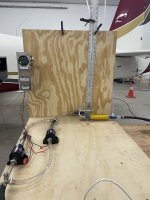
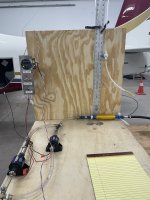
When did Van’s start to include fuel filters in the RV-10 kit?Many will recognize this as the fuel filter that came with my RV-10 kit.
I’ve always use the AFP filter in my builds:

#6 74 Micron Maintainable Fuel Filter - AIRFLOW PERFORMANCE
74 Micron Filter Element
airflowperformance.com
Carl

If the engine quit, then I would certainly expect to see a sharp drop-off in your EGT data. What is your engine type and RV model?Pulled the data from the Sd card on the g3x. Fuel pressure, fuel flow, showed no signs of a hiccup. Also cht’s and egt’s were within normal ranges. Readings on other sensors also showed nothing. I pulled the fuel filter and there were no chunks. My thought was something in the left tank since that was the being used. Will start up again and see if I can duplicate the issue. Tied down of course
I have a similar filter. A tiny nick in the housing o-ring was allowing air to be sucked in at high flow rates.Many will recognize this as the fuel filter that came with my RV-10 kit. Testing showed that the “trombone” fitting resulted in 0.04 psi pressure drop at 30 GPH. The filter had 0.06 psi at 30GPH.
A 90 degree fitting created 0.04 psi at 30 GPH.
I have a video showing the creation of bubbles after the filter at higher flow rates. I will share that once I can get the file size down to something reasonable.
Regarding this thread, not knowing if this if fuel injection or not ... we should all just hold off for key information.
