Just to play devils advocate. One thing I learned many years ago from John Deakin, Walter Atkinson, George Braly & Tim Roehl is you cannot assume what you think airflow will do is actually what it will do. In other words they found it often does the exact opposite.
Probably 30 years ago now, GAMI was wanting to solve the Bonanza cylinder 6 issue. You can read about them here
https://gami.com/liquidair/liquidair.php
The project involved GAMI tufting the entire engine bay and Walter being a dental surgeon (back before we had all the tiny digital cameras we have now) mounted controllable cameras in the engine bay and was able to record their observations. The cylinder 6 was modified to include 12 thermocouples so they could map thermal results and do modelling and FEA on the cylinders. They learned round pistons in egg shaped cylinders and distorting heads was they problem. Hence the baffle mods they developed.
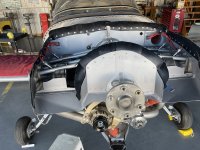
Anyway...... with this knowledge I looked at the RV10 baffle plates and realised "conventional wisdom was to be ignored. I cut ours down and generally now on customers planes we never rivet them in, saves work later. So below are my CHT's that are typical for 2400hours and an engine that was still doing great for leak downs (72-76) and could well go a few hundred more in its new home on a military experimental drone project.
C1=342 C2=333 C3=332 C4=331 C5=345 C6=346
There was no C5 baffle mods beside a washer spacer. We have learned the big oil cooler outlet affects C6 and the new engine going in will have a much better oil cooler mousetrap, that will come to market soon as part of a bigger project, but just assume there are gains to be had there.
So...........the takeaway............. ditch those stupid C1/2 air dams and then seal up other things. The way the engine cowls suck matter more than how they are force fed. Also remember that 60+% of the air that comes in the front goes back out near the spinner and over the windscreen, not through the engine. So the better you get the suck the better the cooling. How do you get that? Get the lower deck sucking and keep the high pressure above and not sneaking around.
Dan Horton has a heap of stuff on this scattered across VAF so look at those posts as well as any by Kevin Horton (no relative I think).
As always, be careful of advice, even mine, but stick to data backed facts where you can.