Van's Air Force

The definitive Van's Aircraft support community! Buying, building or flying an RV? Join our exclusive family of mentors and enthusiasts!

Large RPM drop during mag test

liuk

Active Member
Hello all, I have an RV-6A with an O-360-A1A and two Slick magnetos that has been running very well for the past few years. During run-up mag checks, I typically see a 70–90 RPM drop when one magneto is switched off. This past weekend, however, I noticed a large RPM drop (~200 RPM) with significant vibration when I switched off the left magneto. Switching off the right magneto produced a normal drop of ~50 RPM. I repeated the test several times at different RPM settings and mixture positions, and the results were consistent.

For context: I re-gapped the spark plugs three weeks ago during an oil change, and completed a 4-hour flight afterward with normal run-ups and no issues in flight.

I downloaded the engine data from Dynon hoping to identify the problematic cylinder or plug, but interestingly, all four cylinder EGTs *drop* when the left magneto is switched off. I'm wondering whether this points to a faulty right magneto rather than a plug or cylinder issue. I'd appreciate any thoughts. Here is the savvy link to the engine data: https://apps.savvyaviation.com/flights/shared/flight/10490645/bed5f66b-6fb9-408f-a115-c285ce65191a. You can see I did multiple mag test over 10 minutes. The first test starts at 4:37 (left mag off), and 4:45 (right mag off).

Correction: all 4 EGTs drop instead of rise...
 
Last edited:
Based on your description, then yeah, it sounds like you've got an issue with the right mag. I think checking the timing on your magnetos is probably where I'd start.
 
Last edited:
All four cylinder EGTs should rise when either magneto is switched off (grounded), then drop back when both ignitions are on again. That's normal and ideally would be watched during every run-up, assuming you have the instrumentation to do so. Maybe I'm misunderstanding the data, but it looks like your EGTs drop when the left mag is switched off, which is contrary to what is stated. But my morning coffee hasn't kicked in yet, so maybe I'm moving the cursor incorrectly through the Savvy graphs.

I would say that if it affects all of the cylinders, then it points to an issue with the magneto. Timing would be the first thing to check, but look over all the plug wires while you're there. For clarity, when you say you switched off the left magneto, is this being done with an on/off switch or a keyed switch?
 
Yes, normal is all 4 EGT's rising then stabilizing when either mag is switched off. How many hours on the mag? Slicks should be overhauled at 500 hours, although I know of many that have run to 700+ before requiring OH.
 
Most likely timing has drifted on one or both mags. Advancing will raise RPM and retarding will drop it. Therefore an imbalance showcases that the timing is not matched left to right. Step one is to check timing. Various issues inside the mag can affect timing, so it doesn't necessarilly mean the the mag has rotated.
 
Based on your description, then yeah, it sounds like you've got an issue with the right mag. I think checking the timing on your magnetos is probably where I'd start.
I would check the easy/cheap things first. I would swap the left mag plugs with the right. If the problem follows to the other side, you know it is a plug. If it doesn’t follow it could still be a wire that went bad.

After you know it is ‘t a plug you can test wires and timing before pulling a mag for service.
 
All four cylinder EGTs should rise when either magneto is switched off (grounded), then drop back when both ignitions are on again. That's normal and ideally would be watched during every run-up, assuming you have the instrumentation to do so. Maybe I'm misunderstanding the data, but it looks like your EGTs drop when the left mag is switched off, which is contrary to what is stated. But my morning coffee hasn't kicked in yet, so maybe I'm moving the cursor incorrectly through the Savvy graphs.

I would say that if it affects all of the cylinders, then it points to an issue with the magneto. Timing would be the first thing to check, but look over all the plug wires while you're there. For clarity, when you say you switched off the left magneto, is this being done with an on/off switch or a keyed switch?
Thanks. Each mag is controlled by an on/off switch.

And yes, all 4 EGTs drop when left mag is off, I don't know why I typed wrong... Thanks for checking the data graph and correct me!
 
Last edited:
Yes, normal is all 4 EGT's rising then stabilizing when either mag is switched off. How many hours on the mag? Slicks should be overhauled at 500 hours, although I know of many that have run to 700+ before requiring OH.
Thanks. That's what I'm puzzled about. In the flight before this one I did see all EGTs rise when mag was turned off. Both mags were overhauled about 400 hours ago.
 
Most likely timing has drifted on one or both mags. Advancing will raise RPM and retarding will drop it. Therefore an imbalance showcases that the timing is not matched left to right. Step one is to check timing. Various issues inside the mag can affect timing, so it doesn't necessarilly mean the the mag has rotated.
Thanks a lot Larry! Both mags were installed by you about 400 hours ago and not touched since (other than timing check during condition inspections). I will buy a mag buzzer and check the timing and report back here.

Just a quick question, if the right mag does not look rotated but the timing is indeed off, does this mean some internal parts have slipped? Does the mag need to be serviced even if I can correct the timing?
 
Last edited:
Just a quick question, if the right mag does not look rotated but the timing is indeed off, does this mean some internal parts have slipped? Does the mag need to be serviced even if I can correct the timing?
Typically as the points wear during operation the timing will have to be checked/reset. This is one reason why timing should checked at least at every annual. If it was me I would OH one mag 50-100 hrs before the other so that both aren't done at the same time. This minimizes the chance of a double failure due to bad parts or OH. We had an engine failure on one of our club 172's last year due to a dual mag failure on 2 brand new mags. Turned out that both were manufactured at the same time and both had failure of the same part. Another had a single mag failure of the same part on another new mag. I believe the cause was identified and corrected but it can happen.
 
Thanks a lot Larry! Both mags were installed by you about 400 hours ago and not touched since (other than timing check during condition inspections). I will buy a mag buzzer and check the timing and report back here.

Just a quick question, if the right mag does not look rotated but the timing is indeed off, does this mean some internal parts have slipped? Does the mag need to be serviced even if I can correct the timing?
The most common cause of timing drift is points wearing, which slowly advances the timing. When a condensor fails, the points starting pitting and things happen much faster and the problem gets worse. It is also possoble that the holds nuts became loose (not checked at CI) and one mag has rotated. Don't trust your A&P here; You should put a wrench on those once a year to be sure they are tight when you have the cowl off.
 
The most common cause of timing drift is points wearing, which slowly advances the timing. When a condensor fails, the points starting pitting and things happen much faster and the problem gets worse. It is also possoble that the holds nuts became loose (not checked at CI) and one mag has rotated. Don't trust your A&P here; You should put a wrench on those once a year to be sure they are tight when you have the cowl off.
If the wrench moves at all, you need to double check the timing.
 
The most common cause of timing drift is points wearing, which slowly advances the timing. When a condensor fails, the points starting pitting and things happen much faster and the problem gets worse. It is also possoble that the holds nuts became loose (not checked at CI) and one mag has rotated. Don't trust your A&P here; You should put a wrench on those once a year to be sure they are tight when you have the cowl off.
A quick update: I tried the hold nuts on both mags today, and they both seem pretty snug and firm.
 
Definitely check the “external” timing with the buzz box first.

However, at 400 hrs time in service it is possible that the mag’s “internal timing” (due to point cam and/or point wear) is off. Slick’s maintenance manual will show you (or your favorite A&P) how to correctly adjust it. NB: a couple of special tools are required to do this properly. It’s possible also that the cam or points may need to be replaced.

IRAN by a magneto shop is also a reasonable course of action, as this is recommended every 500 hours. Properly done that will take care of these internal wear parts.
 
, but interestingly, all four cylinder EGTs *drop* when the left magneto is switched off.
sorry, but i missed this the first time around. Egts should ALWAYS rise when you drop one ignition if the timing is around spec. The chart is hard to read, so please confirm that the egts rose when you dropped the right mag. I also noticed one very large rpm drop. Was that from one of the mag checks or something different. Have some ideas, but would like the answers first. Also, how rough was it when the left mag was shut off. Not sure exactly what it is but needs to be pretty far out of whack for egts to drop.
 
Last edited:
So, if right mag is severely retarded and the left mag is on spec, you could see that killing the left will cause egts to drop, not because it is advancing the timing, but because it is going so far retarded that egts fall for that reason. This also explains the rough running. Killing the right will show a drop, as you eliminate the retarding effect, essentially advancing. It could show a rise, depending upon how far retarded the right is.

This is just my best geuss. Need to get a buzz box and confirm the timing of both mags. Struggling to see how an internal mag issue would cause this beyond the small plastic cam arm on the shaft that opens the points has shifted or broken. That was would cause late opening of the points, which retards timing. These are known to fail occasionally.

If the timing is off and the nuts are tight, it is probably an internal issue and needs to go in for service.
 
Last edited:
Hello all, today I finally have the buzz box delivered. I tried to measure the timing of both mags, and it was very surprising to me that the timing difference between left and right mags is with 0.5 degrees. The right mag fires right at 25 and left fires very slightly after that. Now I'm even more confused and would like to see if you have other ideas about what I could try... Thanks a lot.
 
Hello all, today I finally have the buzz box delivered. I tried to measure the timing of both mags, and it was very surprising to me that the timing difference between left and right mags is with 0.5 degrees. The right mag fires right at 25 and left fires very slightly after that. Now I'm even more confused and would like to see if you have other ideas about what I could try... Thanks a lot.
Looking at the chart, 8 events the rpm drops 200; on two of them, it drops 800&1000. Were those mag checks as well or something different. The rough running and egts dropping have me puzzled as to the cause beyond what I suggested above.
 
Hello all, today I finally have the buzz box delivered. I tried to measure the timing of both mags, and it was very surprising to me that the timing difference between left and right mags is with 0.5 degrees. The right mag fires right at 25 and left fires very slightly after that. Now I'm even more confused and would like to see if you have other ideas about what I could try... Thanks a lot.
Did you swing the prop past the impulse coupler snap and rhen go backwards before taking a reading? A common rookie mistake that woul give erroneous results.
 
Just looked further. Each time you do the one mag check, the egt drops 100, the rpm drops 200 and the FF increases almost 2 gph even though map only rises an inch. For the others, the egt drops 200, the rpm drops 1000 and FF drops 3 gph. This is all very strange and inconsistent. Egts should be rising when they are falling and FF is rising when it should be falling - sometimes.

Going to need to think on this for a bit. Struggling to see how thi ignition is causing all of this. Any wierd FF behavior observed?
 
Looking at the chart, 8 events the rpm drops 200; on two of them, it drops 800&1000. Were those mag checks as well or something different. The rough running and egts dropping have me puzzled as to the cause beyond what I suggested above.
Hi Larry, all the RPM drops when turning off left mag were pretty consistent at 200ish. The large ones were me just pulling the power to think what to do next.
 
Did you swing the prop past the impulse coupler snap and rhen go backwards before taking a reading? A common rookie mistake that woul give erroneous results.
Yes I did swing the prop until I hear the snap sound, then went back to check the reading. I tried multiple times and the result was pretty consistent.
 
Just looked further. Each time you do the one mag check, the egt drops 100, the rpm drops 200 and the FF increases almost 2 gph even though map only rises an inch. For the others, the egt drops 200, the rpm drops 1000 and FF drops 3 gph. This is all very strange and inconsistent. Egts should be rising when they are falling and FF is rising when it should be falling - sometimes.

Going to need to think on this for a bit. Struggling to see how thi ignition is causing all of this. Any wierd FF behavior observed?
Yes I noticed that as well. Again for the large RPM drops (800 & 1000) it was just me pulling the throttle back down to think about what to do next, so it's normal that the FF dropped as well. For the FF increase during the mag check, I have no idea other than a wild guess that because the engine was running very rough, it caused some turbulence in the carb and led to some anomaly in the FF.
 
I would check the easy/cheap things first. I would swap the left mag plugs with the right. If the problem follows to the other side, you know it is a plug. If it doesn’t follow it could still be a wire that went bad.

After you know it is ‘t a plug you can test wires and timing before pulling a mag for service.
Hello all, today I finally have the buzz box delivered. I tried to measure the timing of both mags, and it was very surprising to me that the timing difference between left and right mags is with 0.5 degrees. The right mag fires right at 25 and left fires very slightly after that. Now I'm even more confused and would like to see if you have other ideas about what I could try... Thanks a lot.
You really need to do more methodical troubleshooting. I have seen guys shotgun (replace) everything in the system, rather than doing any real troubleshooting.

You now have a buzz box. You know that one mag is out by half a degree. You can fix that.

You can swap spark plugs around and see if you can get the problem to swap to the other side.

There is a simple way to test a spark plug resistance with a multimeter. I have access to a spark plug tester. This is a great way to visually determine what is happening to your spark as you dial up the pressure.

If the spark plugs test out good and you cannot get the problem to swap left to right by moving spark plugs around. I think I would test the resistance of that mags plug wires before sending that mag out for IRAN.
 
Hello all, today I finally have the buzz box delivered. I tried to measure the timing of both mags, and it was very surprising to me that the timing difference between left and right mags is with 0.5 degrees. The right mag fires right at 25 and left fires very slightly after that. Now I'm even more confused and would like to see if you have other ideas about what I could try... Thanks a lot.

I'd get a 2nd set of eyes on this, it seems like there should be an easy to identify problem. Go ahead and pay for such.
 
I need you to go back and look at old logs. When you crank to start, MAP goes up to 23, which seems around normal. At idle you are showing 8, which is too low; 11-12 is normal. When you go to 1800, it is only showing 11 and that is way too low; should be around 20. Possible this is an indication problem, but could be an air obstruction issue at the carb / FAB or an issue with the throttle blade. Does it seems to run well with both mags? You can call me to discuss ideas on what to look for. Wonder if we are getting head faked with bad data from some instrumentation issue. Don't really see the engine running well at 1800 and 13"
 
Last edited:
Looked more closely at one of the events. At 1800, your FF is 4.7 (should be around 6). as you kill the Ign, RPM drops almost 300 and FF goes up to almost 7. Very strange behavior that I cannot explain. Something strange is going and not sure this can be addressed without a knowledge person hands on to diagnose. Too bad that you moved. The EGT drops are pretty consistent, so it doesn't look like an individual cyl or plug issue. Seems global.

Can you post a chart of the other mag drop for comparison? Would like to see behavior when the other mag is killed. Is there any chance you got plug wires swapped?
 
My money is on this being an electrical problem induced by spark plug work associated with the right magneto.
Magneto timed ok (but should be checked by 2nd eyes)
200 rpm drop
vibation
one of the sparks is jacked up
I'd also confirm proper spark lead placement...

Grok query follows

In a four-cylinder engine, what happens if one of the sparks doesn’t fire

If one spark plug fails to fire in a four-cylinder internal combustion engine (assuming a typical gasoline engine), that cylinder experiences a misfire. Here's what typically happens:

  • Immediate effects on engine operation: The affected cylinder won't produce power during its combustion stroke because the air-fuel mixture isn't ignited. The engine effectively runs on only three cylinders, leading to uneven power delivery. This causes rough idling, noticeable vibrations (especially at low speeds), and a stuttering or hesitant acceleration. The engine may feel "lumpy" or unbalanced, and in severe cases, it could stall if the load is high (e.g., starting from a stop or climbing a hill).
  • Performance impacts: Overall power output drops by about 25% (since one of four cylinders is out), reducing torque and top speed. Fuel efficiency worsens because the unburned fuel-air mixture is expelled into the exhaust system without contributing to work.
  • Exhaust and emissions issues: Unburned hydrocarbons enter the exhaust, potentially overheating and damaging the catalytic converter over time. This can trigger the check engine light (CEL) on modern vehicles, often with a diagnostic trouble code (DTC) like P0301-P0304 indicating a misfire in a specific cylinder. Emissions will spike, and the vehicle might fail an emissions test.
  • Long-term risks: If ignored, it could lead to fouled spark plugs in other cylinders, warped valves, or piston damage from repeated misfires. The engine's computer (ECU) might compensate by adjusting timing or fuel delivery, but this is a band-aid at best.
Diagnosis usually involves checking the ignition system (spark plugs, wires, coils, or distributor), fuel injectors, or compression in that cylinder. Always address it promptly to avoid further damage—it's not safe or efficient to drive long-term in this state.
 
Last edited:
My money is on this being an electrical problem induced by spark plug work associated with the right magneto.
Magneto timed ok (but should be checked by 2nd eyes)
200 rpm drop
vibation
one of the sparks is jacked up
I'd also confirm proper spark lead placement...

Grok query follows

In a four-cylinder engine, what happens if one of the sparks doesn’t fire

If one spark plug fails to fire in a four-cylinder internal combustion engine (assuming a typical gasoline engine), that cylinder experiences a misfire. Here's what typically happens:

  • Immediate effects on engine operation: The affected cylinder won't produce power during its combustion stroke because the air-fuel mixture isn't ignited. The engine effectively runs on only three cylinders, leading to uneven power delivery. This causes rough idling, noticeable vibrations (especially at low speeds), and a stuttering or hesitant acceleration. The engine may feel "lumpy" or unbalanced, and in severe cases, it could stall if the load is high (e.g., starting from a stop or climbing a hill).
  • Performance impacts: Overall power output drops by about 25% (since one of four cylinders is out), reducing torque and top speed. Fuel efficiency worsens because the unburned fuel-air mixture is expelled into the exhaust system without contributing to work.
  • Exhaust and emissions issues: Unburned hydrocarbons enter the exhaust, potentially overheating and damaging the catalytic converter over time. This can trigger the check engine light (CEL) on modern vehicles, often with a diagnostic trouble code (DTC) like P0301-P0304 indicating a misfire in a specific cylinder. Emissions will spike, and the vehicle might fail an emissions test.
  • Long-term risks: If ignored, it could lead to fouled spark plugs in other cylinders, warped valves, or piston damage from repeated misfires. The engine's computer (ECU) might compensate by adjusting timing or fuel delivery, but this is a band-aid at best.
Diagnosis usually involves checking the ignition system (spark plugs, wires, coils, or distributor), fuel injectors, or compression in that cylinder. Always address it promptly to avoid further damage—it's not safe or efficient to drive long-term in this state.
We're moving fwd on fuel delivery troubleshooting. Poster is at 7000'. 1800 RPM leaned 1" on red knob used to flow 7 GPH and give normal RPM drops. Now 1800 RPM at 1" delivers 4-5 GPH. This explains the EGT drop on the mag check. It is running too lean. Now at full rich it is flowing almost 7 GPH and both mag drops are normal and symmetrical. My $ is on the fuel pump. OP will test w/ boost pump and see if the FF comes back up. Apparently the filter in the gascolater has nev er been cleaned, so could be blockage. The rapid onset points to the pump though.
 
We're moving fwd on fuel delivery troubleshooting. Poster is at 7000'. 1800 RPM leaned 1" on red knob used to flow 7 GPH and give normal RPM drops. Now 1800 RPM at 1" delivers 4-5 GPH. This explains the EGT drop on the mag check. It is running too lean. Now at full rich it is flowing almost 7 GPH and both mag drops are normal and symmetrical. My $ is on the fuel pump. OP will test w/ boost pump and see if the FF comes back up. Apparently the filter in the gascolater has nev er been cleaned, so could be blockage. The rapid onset points to the pump though.
I’m not looking at any of the savvy related data

The poster talked about a mag drop excessive on the ground. That’s what I’m focused on.

I am unaware of any fuel delivery issue that would affect one magneto over another

I welcome you to explain to me the fuel flow as it impacts things for vibration and excessive mag drop on the ground

I’m only focused on the first two paragraphs I think the third paragraph is excessive information
 
A bad plug would show up on egt immediately.
Yes. Problem appears global. Would be pretty obvious if limited to one cylinder. Did more testing today. Fuel flow back to normal range and this time engine died when running only on right mag. Currently thinking there is a problem in the right mag. Fuel flow must have been a head fake. Today’s test were all 7+, which is well within normal range for 1800 rpm.

Can’t explain why data posted above was showing 4 gph. Thinking it was coincidental and possibly an intermittent sign of pump going out. I had him test with and without boost pump. He got 9 gph with and 7 without, so something is going on with fuel delivery, but seems unrelated to ignition issues.
 
Last edited:
Yes. Problem appears global. Would be pretty obvious if limited to one cylinder. Did more testing today. Fuel flow back to normal range and this time engine died when running only on right mag. Currently thinking there is a problem in the right mag. Fuel flow must have been a head fake. Today’s test were all 7+, which is well within normal range for 1800 rpm.

Can’t explain why data posted above was showing 4 gph. Thinking it was coincidental and possibly an intermittent sign of pump going out. I had him test with and without boost pump. He got 9 gph with and 7 without, so something is going on with fuel delivery, but seems unrelated to ignition issues.
Agree. 99% that’s a mag.
 
Very common to see fluctuations in fuel pressure, as fuel pump fails, surging/ starving etc.
On mechanical pump problem subsides… boost pump on fluctuations…replace.

Internal mag failure. Slicks suck!
 
Slick mags need to be removed and opened up for inspection about 400 to 500 hours. The plastic drive gears tend to wear at carbon contact tower. I’ve seen the teeth cracked and sometimes missing, burnt points, condensers leaking.

Magnetos usually run good until,they don’t.
 
Slick mags need to be removed and opened up for inspection about 400 to 500 hours. The plastic drive gears tend to wear at carbon contact tower. I’ve seen the teeth cracked and sometimes missing, burnt points, condensers leaking.

Magnetos usually run good until,they don’t.
Yes, my experience as well. Current thinking is broken teeth creating a huge gap between cap and rotor contacts or possibly the coil. Op moved away so I can’t look at them and test them like i used to. Did a fair amount of work on this guys plane, including the last iran on the mags.
 
Slick mags need to be removed and opened up for inspection about 400 to 500 hours. The plastic drive gears tend to wear at carbon contact tower. I’ve seen the teeth cracked and sometimes missing, burnt points, condensers leaking.

Magnetos usually run good until,they don’t.
To your point. On my 4 flying home one day put 5.4 hours in two flights, hauling butt….not so much as a hint of trouble. Shut down for the night….next morning the engine ran so bad it was creepy. Shaking and mag drop 300-400 rpm’s…fartin up a storm. First thought is always a fouled plug…wouldn’t burn off with mixture…shut down to analyze…

Right mag coil failure.

That’s how Slicks seem to fail…work fine one day, next day…toast!
 
LR172, your posts make it seem like you are both remote giving advice and onsite testing?
 
I guess everyone reads in what they want…but it seems crystal clear that he is remotely helping the owner diagnose the issue. Most of the time when an owner knows and understands the issue and how to help…with some advice from a knowledgeable person, the problem can get resolved.
 
I guess everyone reads in what they want…but it seems crystal clear that he is remotely helping the owner diagnose the issue. Most of the time when an owner knows and understands the issue and how to help…with some advice from a knowledgeable person, the problem can get resolved.
Correct. I know Quinn well and have done a lot of work on his 6 before he moved away. He is a very smart guy and knows his limitations and takes instruction well. Only so far I can go remotely, but will go as far as I can for him. I give him test protocols and he excutes them and we analyze the results. Not perfect, but better than sending him to an unknown mechanic that may do who knows what.

I am unconcerned that folks don't understand what I am doing here. I just posted progress as I thought it may help others in the future. Kind of a weird set of symptoms.
 
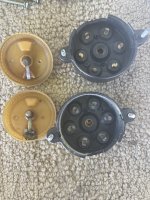
This is what happens when the internal timing slips on a mag with less than 200 hours. BTW Slick covered it under warranty and sent me a new mag😁
IMG_3210.jpeg
 
Hello all, sorry it took so long. But here is an update.

After I posted here I got a lot of very useful suggestions and I tried a second run-up to pay closer attention to the fuel flow, EGT, etc with different power and mixture settings. This time the problem was worse, turning off the left mag almost killed the engine regardless of the power/mixture, so it was pretty obvious the right mag somehow failed abruptly.

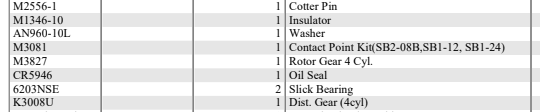
I got a lot of instructions about how to remove/install the mag from Larry (lr172) and also watched many YouTube videos. I then removed the right mag and sent it to Aircraft Magneto Services in Montana for an IRAN. The turnaround time was 3 weeks and they did an excellent job. Here is a list of the things that were replaced.

1777005244880.png

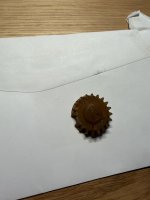
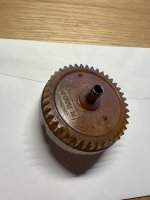
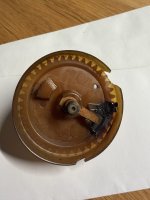
They returned the part they replaced back to me and I noticed the two gears are missing some teeth, see picture below. I'm wondering if this could be the reason for the sudden failure mode I observed (normal good flight one week before, then large RPM drop with very rough engine during the 1st run-up, right mag completely failed during the 2nd run-up a few days after).
IMG_6944.jpegIMG_6945.jpegIMG_6946.jpeg
Today I re-installed the IRAN'ed right mag and did a thorough run-up. Everything worked exactly as it should. So I would say this problem is solved and many thanks to all of you, especially Larry, for all the great help!
 
Last edited:
Missing teeth is not a good thing for mags...or people. ;) Thanks for reporting back and closing the loop for all who are interested.

 
Hello all, sorry it took so long. But here is an update.

After I posted here I got a lot of very useful suggestions and I tried a second run-up to pay closer attention to the fuel flow, EGT, etc with different power and mixture settings. This time the problem was worse, turning off the left mag almost killed the engine regardless of the power/mixture, so it was pretty obvious the right mag somehow failed abruptly.

I got a lot of instructions about how to remove/install the mag from Larry (lr172) and also watched many YouTube videos. I then removed the right mag and sent it to Aircraft Magneto Services in Montana for an IRAN. The turnaround time was 3 weeks and they did an excellent job. Here is a list of the things that were replaced.

View attachment 115889

They returned the part they replaced back to me and I noticed the two gears are missing some teeth, see picture below. I'm wondering if this could be the reason for the sudden failure mode I observed (normal good flight one week before, then large RPM drop with very rough engine during the 1st run-up, right mag completely failed during the 2nd run-up a few days after).
View attachment 115891View attachment 115892View attachment 115893
Today I re-installed the IRAN'ed right mag and did a thorough run-up. Everything worked exactly as it should. So I would say this problem is solved and many thanks to all of you, especially Larry, for all the great help!
Yes. The chipped tooth looks like it is bad enough to have caused the gear alignment to skip. That gear is aligned with a gear on the mag shaft. proper alignment insures that when a spark is created, that copper arm is properly aligned with one of 4 posts on the cap. If you skip a tooth and mess up that alignment, the gap becomes too large and the spark cannot jump the large gap and the plug doesn't fire. In bad cases, the spark can go to the wrong plug. A broken tooth was my speculation in a post above.

That black goo on the bottom side also points to other issues going on in there, but tough to say what without seeing all the other pieces. Probably heat from the excessive gap due to wear on the copper arm.

Good job getting it intalled correctly.
 
Last edited:
Back
Top