Van's Air Force

The definitive Van's Aircraft support community! Buying, building or flying an RV? Join our exclusive family of mentors and enthusiasts!

Fuel Injector cleaning

RNB

Well Known Member
Sponsor
I think I am in the final steps of my first condition inspection. I talked to an IA on the airport yesterday and he said I should clean my fuel injectors nozzles. I am reading a lot more about this, most of the information seems anecdotal, not source material.

One publication in the 2010's said it was important maintenance to. perform annually.
One from the 2020's said per the Gami guy and MB that more problems are caused by opening the fuel system and that those with engine monitors can follow data to learn of problems.

Lycoming Service instruction 1275C seems to say to perform at overhaul and as engine conditions require.

So, for those of you that maintain your own planes, what do you do and why?
Is there source material other than the service instruction that suggests I need to perform this as routine maintenance?

I have an IO-540 with engine monitoring that seems to indicate NO problems.
 
If you fly regularly, and don’t have any problems, then I wouldn’t do it either.. If you REALLY want to do it, check out the instructions on AirFlow Performance website.. basically you carefully remove the injector lines without bending them too much (remove the clamps is necessary) then remove the injector insert and I would pull the body housing if you are going to do it. Keep all injector parts numbered to go back in the same cylinder. Use a sonic cleaner, water, hoppes #9, whatever, blast everything clean with brake parts cleaner, notice the stamped “A” on one of the injector body flats, you’ll want that facing somewhat down ish (anywhere from 3 to 9 o’clock is ok. You can’t see it when installed, so mark a line on the opposite side. They recommend anti seize on the threads, I used 567 thread sealer, look up the torque. Then reinstall the insert and the line, careful not to cross thread the B-nut. Seems like a lot of work if you don’t suspect any performance issues..
 
If you fly regularly, and don’t have any problems, then I wouldn’t do it either.. If you REALLY want to do it, check out the instructions on AirFlow Performance website.. basically you carefully remove the injector lines without bending them too much (remove the clamps is necessary) then remove the injector insert and I would pull the body housing if you are going to do it. Keep all injector parts numbered to go back in the same cylinder. Use a sonic cleaner, water, hoppes #9, whatever, blast everything clean with brake parts cleaner, notice the stamped “A” on one of the injector body flats, you’ll want that facing somewhat down ish (anywhere from 3 to 9 o’clock is ok. You can’t see it when installed, so mark a line on the opposite side. They recommend anti seize on the threads, I used 567 thread sealer, look up the torque. Then reinstall the insert and the line, careful not to cross thread the B-nut. Seems like a lot of work if you don’t suspect any performance issues..

Had two different Aerostars over 25 years so 4 different 540 engines, 8000+ hrs total and only had problems with a dirty, partially plugged, injector the first or second flight after being cleaned. I have not touched them on my 390 in 5 years and 300 plus hours. My recommendation is to leave them alone unless you have an issue.
 
Had two different Aerostars over 25 years so 4 different 540 engines, 8000+ hrs total and only had problems with a dirty, partially plugged, injector the first or second flight after being cleaned. I have not touched them on my 390 in 5 years and 300 plus hours. My recommendation is to leave them alone unless you have an issue.
I agree. I’ve cleaned them before as preventative, but I don’t think the juice is worth the squeeze..
 
One issue we see in our area is clogged inlet screens on the injector nozzle. Our spring comes with yellow clouds of pine pollen for about two weeks during March/April. If flying during that time, you can easily suck enough pollen into the nozzle to partially clog it. The effects are lower atomization of the fuel and a richer mixture.
Cleaning should include blowing air through the top (with the insert removed) while blocking the exit hole. This forces air through the screen from the inside, thus clearing the clog.
 
Based on prior experience, I am in the camp of not cleaning them unless you have an indication of a clogged injector.

I’ve only had two issues in the past. One was after an annual when they were pulled and cleaned and the other was after a shop replaced a fuel line.

Opening the system seems to be the biggest risk to them becoming clogging. And if you are running 100LL, your injectors are basically soaking in solvent their entire life.

Do keep your gascolator, inlet screens, and filters clean and clear.
 
To each his own. Any time you remove depending on how much you move the lines to get them out of the way you risk work hardening the lines. Every time you remove the injectors you have the potential cross thread the injectors. I have to agree that if flown regularly they are soaking in solvent all the time. The engine monitor if installed will tell you if you have a problem.
Ryan
 
One issue we see in our area is clogged inlet screens on the injector nozzle. Our spring comes with yellow clouds of pine pollen for about two weeks during March/April. If flying during that time, you can easily suck enough pollen into the nozzle to partially clog it. The effects are lower atomization of the fuel and a richer mixture.
Cleaning should include blowing air through the top (with the insert removed) while blocking the exit hole. This forces air through the screen from the inside, thus clearing the clog.
A few minutes in the shop with a tap makes it easy to blow out the bleed air screen. https://www.danhorton.net/Articles/0814_ShopTip_NozzleCleaning.pdf
 
I agree with the frequency and risk vs. reward of cleaning too frequently. In my industrial life we were wary of preventive maintenance induced failures coming from too frequent attention. But if you do clean, Hoppe's No. 9 works pretty well. Work up to it though. 20-30 minutes, check to see if clean, repeat. It's pretty aggressive.

2 cents.
 
Last edited:
In 2700+ hours of flight time behind injected engines, I've had a partially clogged injector exactly once - and that was right after I reassembled it "for cleaning".
 
I recently had an incredibly rough running engine as I attempted to advance the throttle for run-up. Well before reaching 1800 RPM, the engine felt like it was about to shake itself off the mount. Alternating mags had no effect.

Taxied back, pulled the G3X data card and analyzed. The problem was clearly isolated to Cyl #1. Based on what I saw, it appeared to be a fuel flow issue (or lack thereof).

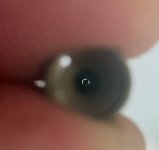
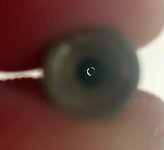
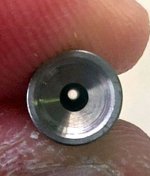
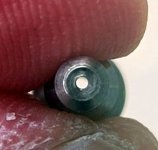
I pulled the #1 injector and found a chunk of carbon in the restrictor.

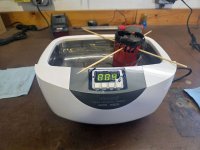
I pulled all four nozzles and restrictors and cleaned them in a soda can filled with Hoppes #9, floating in water in an ultrasonic cleaner.

As far as I could tell, all four injectors had never been removed and cleaned in 12 years/900 hours.

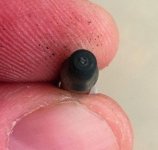
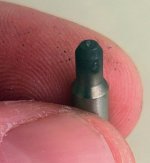
Clogged (3).jpg Clogged (4).jpg Clogged (6).jpg Clogged (7).jpg Clean (3).jpg Clean (1).jpg Ultrasonic.jpg
 
  • Like
Reactions: RNB
I recently had an incredibly rough running engine as I attempted to advance the throttle for run-up. Well before reaching 1800 RPM, the engine felt like it was about to shake itself off the mount. Alternating mags had no effect.

Taxied back, pulled the G3X data card and analyzed. The problem was clearly isolated to Cyl #1. Based on what I saw, it appeared to be a fuel flow issue (or lack thereof).

I pulled the #1 injector and found a chunk of carbon in the restrictor.

I pulled all four nozzles and restrictors and cleaned them in a soda can filled with Hoppes #9, floating in water in an ultrasonic cleaner.

As far as I could tell, all four injectors had never been removed and cleaned in 12 years/900 hours.

View attachment 111388 View attachment 111389 View attachment 111390 View attachment 111391 View attachment 111394 View attachment 111393 View attachment 111395
Great photos!
 
Back
Top