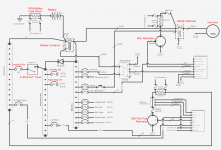
I am planning the electrical system in my RV-8A and I am looking for some feedback / sanity check on the electrical system.
The battery will be in the rear to accommodate the angle valve IO-360 and constant speed prop up front. I am planning a Dynon Skyview system, the vacuum pump will be eliminated to make room for the standby alternator.
I like the idea of a single battery dual alternator system as described in the Bob Nuckolls Z-12 design. I believe the risk of a battery failing can be minimized by using high quality batteries and replacing them religiously.
The Z-12 architecture connects the standby alternator field and regulator overvoltage sense to the main bus. the alternator B lead is connected to the starter contactor hot side. My concern here is that a master contactor failure would take both alternators offline.
I want to move the standby alternator field circuit to the endurance bus and the overvoltage sense to the battery bus. The OV sense goes to the battery bus because under normal operation the diode between the main bus and the endurance bus will cause a 1 to 1.5 volt drop which might not be ideal. I will also move the B lead from the alternator to the battery bus so that the battery can still charge if the master contactor fails.
In normal flight the E-bus alternate feed remains shut off at all times. If the primary alternator fails, the standby alternator will see the drop in voltage on the battery bus and automatically come on. The lamp outputs on the B&C regulators will be connected to inputs on the skyview system to get warning messages. I now have the option to turn on the E-bus alternate feed and shut off the master contactor for immediate load shedding.
If the master contactor dies , the entire electrical system will go dark except for the battery bus. I can restore power to the endurance bus by turning on the E-bus alternate feed which will allow the standby alternator to charge.
Concerns:
The standby alternator regulator overvoltage sense will be always hot on the battery bus, will this cause the battery to drain?
Will the 1 to 1.5 volt difference between the regulator overvoltage sense and the alt field cause a problem?
The standby alternator charge path will be rather long to get to the rear battery. I think this will require 10 gauge at least.
Bob is way smarter that me, if it made sense to design it this way he probably would have, what am I missing?
The battery will be in the rear to accommodate the angle valve IO-360 and constant speed prop up front. I am planning a Dynon Skyview system, the vacuum pump will be eliminated to make room for the standby alternator.
I like the idea of a single battery dual alternator system as described in the Bob Nuckolls Z-12 design. I believe the risk of a battery failing can be minimized by using high quality batteries and replacing them religiously.
The Z-12 architecture connects the standby alternator field and regulator overvoltage sense to the main bus. the alternator B lead is connected to the starter contactor hot side. My concern here is that a master contactor failure would take both alternators offline.
I want to move the standby alternator field circuit to the endurance bus and the overvoltage sense to the battery bus. The OV sense goes to the battery bus because under normal operation the diode between the main bus and the endurance bus will cause a 1 to 1.5 volt drop which might not be ideal. I will also move the B lead from the alternator to the battery bus so that the battery can still charge if the master contactor fails.
In normal flight the E-bus alternate feed remains shut off at all times. If the primary alternator fails, the standby alternator will see the drop in voltage on the battery bus and automatically come on. The lamp outputs on the B&C regulators will be connected to inputs on the skyview system to get warning messages. I now have the option to turn on the E-bus alternate feed and shut off the master contactor for immediate load shedding.
If the master contactor dies , the entire electrical system will go dark except for the battery bus. I can restore power to the endurance bus by turning on the E-bus alternate feed which will allow the standby alternator to charge.
Concerns:
The standby alternator regulator overvoltage sense will be always hot on the battery bus, will this cause the battery to drain?
Will the 1 to 1.5 volt difference between the regulator overvoltage sense and the alt field cause a problem?
The standby alternator charge path will be rather long to get to the rear battery. I think this will require 10 gauge at least.
Bob is way smarter that me, if it made sense to design it this way he probably would have, what am I missing?