Van's Air Force

The definitive Van's Aircraft support community! Buying, building or flying an RV? Join our exclusive family of mentors and enthusiasts!

Magnometer mounting location?

gladiator68

Active Member
Sponsor
Hi Guys,

I have a GRT system and am at the point of deciding if I mount the magnometer in the tail or at the wingtip. It appears I will have less ferrous issues with the tail as the aileron counterbalances are in the vicinity. Also what do you use to mount as ferrous bolts aren't acceptable I assume. When running the wires to the magnometer, do they have to be a separate run, or can they be with other (lighting) wiring?

Thanks for the input!
 
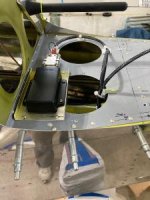
I spent some time with my local AVX shop to understand location principals when mounting my GMU11 in my RV-4. I settled for the tail, under the fairing on the deck plate. Also, the orientation of FWD/AFT/Sideways are options the GMU understands. While Ferrous metals can be a factor, the real factor is ferrous metals that "move" . In the tail, its the elevator horn and hardware. The GM11 programming has you perform a survey where you can position the unit then go through a powered up survey which has you operate lighting, radios, moving flight controls ect. if the survey passes, install permanently. What ever system you choose, I'm sure there will be a survey. You can perform that yourself. The GMU11 required its own power source and used a CANBUS to the G5 . I also found removal of the tail fairing is easier than a wingtip, and the tail plate is level with the longerons/attitude of flight. Wingtip mounts require angle compensation for dihedral.
 
I spent some time with my local AVX shop to understand location principals when mounting my GMU11 in my RV-4. I settled for the tail, under the fairing on the deck plate. Also, the orientation of FWD/AFT/Sideways are options the GMU understands. While Ferrous metals can be a factor, the real factor is ferrous metals that "move" . In the tail, its the elevator horn and hardware. The GM11 programming has you perform a survey where you can position the unit then go through a powered up survey which has you operate lighting, radios, moving flight controls ect. if the survey passes, install permanently. What ever system you choose, I'm sure there will be a survey. You can perform that yourself. The GMU11 required its own power source and used a CANBUS to the G5 . I also found removal of the tail fairing is easier than a wingtip, and the tail plate is level with the longerons/attitude of flight. Wingtip mounts require angle compensation for dihedral.
Do you have any photos you would share of where you have it mounted?
 
Do you have any photos you would share of where you have it mounted?
I didn't take any when I installed mine, so I would have to go pull my fairing off to get a pic...not planning that anytime soon, but it's pretty self explanitory.. do a search and you'll likely see other installs in the same area. If i have free time this weekend I'll try and pull it off, I can start my progressing annual.
 
Left wing, near the wingtip, with double-sided tape. Works fine. As far as possible from anything ferrous. If you have to mess with it in the future, you'll be happy it's near the wingtip, not back in the fuselage.
 
I put my GMU-11 in the right wingtip on the tip rib, splitting the difference fore and aft between the landing light and the aileron counterbalance. Moving the aileron caused the greatest deviation during the test but it still passed.
 
Hi Guys,

I have a GRT system and am at the point of deciding if I mount the magnometer in the tail or at the wingtip. It appears I will have less ferrous issues with the tail as the aileron counterbalances are in the vicinity. Also what do you use to mount as ferrous bolts aren't acceptable I assume. When running the wires to the magnometer, do they have to be a separate run, or can they be with other (lighting) wiring?

Thanks for the input!
GRT Magnetometer.
Tail.
Under fairings.
Deck Plate.
Nylon nuts and bolts.
Almost 20 years in service.

Brass nuts and bolts probably just as good if not BETTER.
 
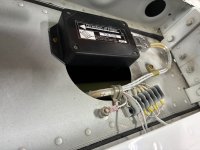
I know you said GMT, but Garmin recommends the tail deck area for their GMU11. When I did the Garmin interference test in that location, the highest interference it showed was 7% of max allowable. That was with the elevator trim running. I mounted it with stainless hardware.
 

Attachments

  • Unknown.jpeg
    Unknown.jpeg
    15 KB · Views: 73
I know you said GMT, but Garmin recommends the tail deck area for their GMU11. When I did the Garmin interference test in that location, the highest interference it showed was 7% of max allowable. That was with the elevator trim running. I mounted it with stainless hardware.
Mine is exactly the same in my RV-4. The survey was near perfect in that orientation, it did not do well in the longitudinal position test survey.
 
GRT magnetometer under tail fairing mounted with hardware store brass bolts. Calibration was easy and no heading change when moving elevators or running trim motor.
Mag.JPG
 
My Dynon magnetometer has been flying in the tail of my RV-6 for twenty years and has worked perfectly. I suggest anyone mounting a mag in this area consider the possibility of water getting past the emp fairing. I wrapped the magnetometer in a plastic bag prior to securing it to the deck.
 
My Dynon magnetometer has been flying in the tail of my RV-6 for twenty years and has worked perfectly. I suggest anyone mounting a mag in this area consider the possibility of water getting past the emp fairing. I wrapped the magnetometer in a plastic bag prior to securing it to the deck.
And probably more important than the "box" getting wet is the connector getting wet.

Once on a long trip, the plane was left outside overnight as a major thunderstorm came through. The next morning, my PFD was totally confused as the magnetometer was giving very random information until the connector got dried.

Did a better fairing seal and a plastic cover. No problems many years since.
 
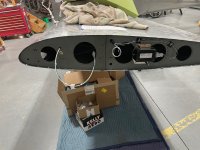
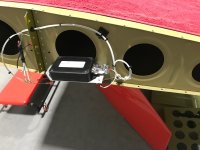
Mounted mine in the wingtip as recommended on my GRT install instructions. I’ve done that three times and all have worked well. There’s a lot of metal in the tail too, and that may work OK too. The steel needs to be pretty close to your magnetometer to have negative effect, within a foot or so. If you calibrate it properly, I don’t think you’ll have a problem in either place.

First pic is on my current RV6. Second pic is on my second RV4. Both functioned properly.
 

Attachments

  • IMG_0378.jpeg
    IMG_0378.jpeg
    4.1 MB · Views: 49
  • IMG_0379.jpeg
    IMG_0379.jpeg
    2.3 MB · Views: 47
And probably more important than the "box" getting wet is the connector getting wet.

Once on a long trip, the plane was left outside overnight as a major thunderstorm came through. The next morning, my PFD was totally confused as the magnetometer was giving very random information until the connector got dried.

Did a better fairing seal and a plastic cover. No problems many years since.
Agreed. The baggie on my plane also protects the connector.
 
I also have GRT in my 7A. I mounted a magnetometer in each wingtip on brackets I fabricated. 10 years, over 1000 hours with no problems. Sorry I couldn't find a photo to post.
 
Thanks for the replies, gentlemen. I reservation I have in the tail is I installed the Anti-Splat front spar brace on my vertical. Probably overkill on a -9, but that may be closer to the box than the aileron counterbalance if I go to the wingtip. I'll see what GRT says too.

Fair skies and thanks!
 
Thanks for the replies, gentlemen. I reservation I have in the tail is I installed the Anti-Splat front spar brace on my vertical. Probably overkill on a -9, but that may be closer to the box than the aileron counterbalance if I go to the wingtip. I'll see what GRT says too.

Fair skies and thanks!
That anti-splat brace is 301 stainless steel, which is "mostly" non ferrous. I say mostly because cold working can change that property. Try sticking a magnet to it.

You probably could do either location without issues, but just so you know, the first time I did the magnetic interference test, I had the mounting tray in my picture up in post #8 held in with clecos and it still passed.
 
That anti-splat brace is 301 stainless steel, which is "mostly" non ferrous. I say mostly because cold working can change that property. Try sticking a magnet to it.

You probably could do either location without issues, but just so you know, the first time I did the magnetic interference test, I had the mounting tray in my picture up in post #8 held in with clecos and it still passed.
Thanks Terry. Good to know. I tried to research if stainless was ferrous or not and got conflicting intel. I'm probably overthinking as we builders do at times!
 
Thanks Terry. Good to know. I tried to research if stainless was ferrous or not and got conflicting intel. I'm probably overthinking as we builders do at times!
The reason that you got conflicting intel is like because there are different alloys of stainless. A magnet will happily stick to a stainless kitchen appliance, but not so much to a more robust (and expensive) alloy.
 
Keep in mind, the magnetometers can tolerate ferrous metals that are stationary.. the parts that move are the problem makers.
 
One issue with the tail is the pull-pull cables for the rudder, being steel, can become ferrous over time. This throws off the magnetometer calibration as they are moving, and you can't calibrate them out.
 
I had mine located left mid-wing. (RV-14 plans location) Kept seeing a mis compare on my AHRS's when I turned on the landing/taxi/pitot heat etc., etc. Moved it to the wingtip (GMU-22) and quiet as a mouse. RV-10 GMU-11 mounted forward tail-cone (Showplanes composite tailcone) and also quiet as a mouse.
 
Back
Top