I looked in the archive and couldn't find an answer to this, so I'll go ahead and ask.
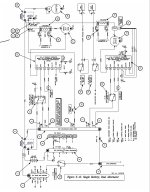
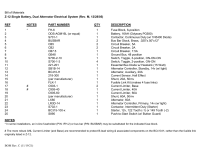
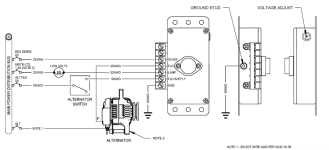
I'd like to know builders' thoughts on connecting two alternators to a single bus at the same time. My configuration will be a Main alternator (60A) and a Backup alternator (~35A), a single Battery, and single bus. The idea is to set the main alternator at, say, 14.8V and the backup at 14.4V. If the load increases to the point where the main alternator is pulled down to 14.4V then the backup alternator adds to the total load carrying capability, giving a total of about 60 + 35 = 95A.
I know builders who have done this and not had any trouble, but the Ausman book states that you shouldn't have both alternators on the bus, although there isn't a detailed explanation why. I spoke to the boss of B&C at Oshkosh once and he thought it might be a fine idea. What do the experts here think? Would the system work as described above?
One concern I would have is the case where both alternators are active on the bus, the main alternator is operating at close to its limit, say 50A output, and it fails completely. Then the entire 50A load would be instantly placed on the 35A backup alternator, causing it to ... What? Overload or fail in some way? If I used the more conventional design of only one alternator on the bus at once, and it failed, I could of course first reduce the load and only then switch to the backup alternator, thus never overloading it. Would this be important?
Thanks for your thoughts.
I'd like to know builders' thoughts on connecting two alternators to a single bus at the same time. My configuration will be a Main alternator (60A) and a Backup alternator (~35A), a single Battery, and single bus. The idea is to set the main alternator at, say, 14.8V and the backup at 14.4V. If the load increases to the point where the main alternator is pulled down to 14.4V then the backup alternator adds to the total load carrying capability, giving a total of about 60 + 35 = 95A.
I know builders who have done this and not had any trouble, but the Ausman book states that you shouldn't have both alternators on the bus, although there isn't a detailed explanation why. I spoke to the boss of B&C at Oshkosh once and he thought it might be a fine idea. What do the experts here think? Would the system work as described above?
One concern I would have is the case where both alternators are active on the bus, the main alternator is operating at close to its limit, say 50A output, and it fails completely. Then the entire 50A load would be instantly placed on the 35A backup alternator, causing it to ... What? Overload or fail in some way? If I used the more conventional design of only one alternator on the bus at once, and it failed, I could of course first reduce the load and only then switch to the backup alternator, thus never overloading it. Would this be important?
Thanks for your thoughts.