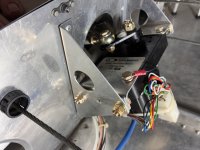
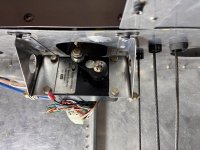
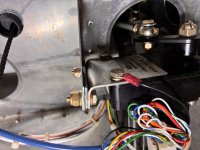
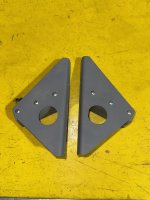
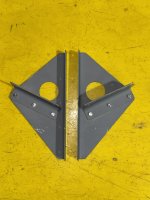
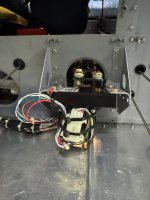
Currently working on my conditional inspection and was able to get a close look of my Servo Brackets.
2021 iS model, ELSA, 500Hrs, Garmin Servos.
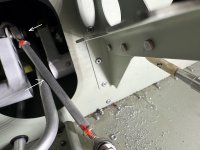
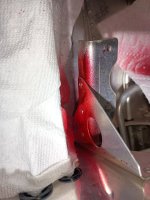
No cracks, smoking rivets, or otherwise signs of wear noted. In the spirit of experimentation I went ahead and sprayed some SKL- SP2 Dye penetrant, admittedly my first time using this product, and sprayed on the bracket on the machine head of the rivets. Photos attached. After verifying everything I went ahead and drilled out the rivets using a right angle attachment.
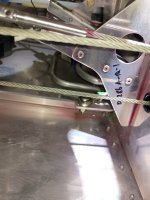
I COULD NOT for the life of my get my Cleveland main squeeze rivet squeezer in the tight quarters. The Fuel assembly among other tubes wires etc where just too constrained. Also 12 years in the military means my back cant tolerate hanging over the fuel tank into the tail cone for very long. (the Tail cone clip SB nearly killed me!!!) Furthermore, I liked the idea of using bolts instead of rivets. When you think about it, its actually easier to build back the bracket via AN bolts and nuts than it is to rivet. At least for me it is.
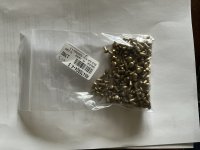
So I opted to remove as much as I could and work with it on the bench. I decided to use AN515-8R8 screws and K1000 nutplates. I also had some great looking AN525 Washer Heads, but they were just a bit too long and would have hit the servo when screwed down even with additional washers. All of this was hardware I had left over from the build. I did the whole shebang with countersinking and mounting nutplates and everything went together well...
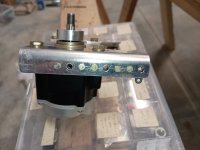
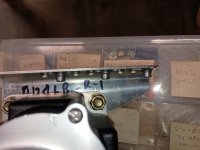
I am no engineer and am probably out of line deviating from the mothership, but i think it came out OK and it saved me from some back spasms vs trying the rivet approach. Again, I am not and engineer and I'm sure there are some weird forces at work on this servo bracket, but it seems the AN515 screws system could have AT LEAST
equivalent tensile and shear strength as the AN470 rivets probably not the Cherrymax. Bu the real goal was to use some of the leftover hardware from the original build.
I ended up running out of room on the end nut plate and just went ahead and used a corner nut plate but only driving one rivet, leaving the other rivet hole free. I nipped it off later before I reinstalled the assembly.
I like the idea of this assembly being removable with just a stubby screwdiver vs a bolt and nut system or rivets, but honestly I don't see myself every having to remove it again...