Van's Air Force

The definitive Van's Aircraft support community! Buying, building or flying an RV? Join our exclusive family of mentors and enthusiasts!

Max Efficiency the Lindbergh Way

skycop56

Member
Patron
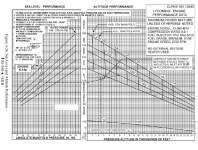
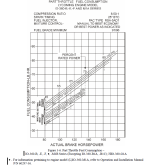
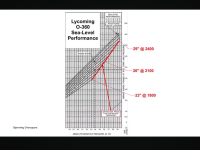
Has anyone adopted the Charles Lindbergh P38 engine management techniques of very low rpm and over square manifold pressure? I have been experimenting with this in my RV6A with Lycoming O-360 and Hartzell CS prop. I have tried as low as 1800 rpm and 21” mp. With max leaning. I only do this above about 4500’ alt. Below is a chart from Lycoming with acceptable limits.

The advantages are many from running over square at low RPM.

1. Max efficiency for engine, propeller, and airframe. (Drag increases at the square of speed). Most efficient rpm for prop is about 1800.
2. Lower CHT and EGT. Remember, heat is the enemy. Less wear on internal parts.
3. Less stress on engine and prop. Rotational forces are reduced. Friction (and the heat it makes) is reduced.
4. Quieter. Both airframe and prop make less noise. Making noise and turbulence requires energy. And noise is uncomfortable.
5. Range increased (I’ve seen fuel flow as low as 5.5 gph)

Would like to hear from anyone who uses this, and those who have good reasons not to.

John Dill

IMG_1774.png
 
Other factors to consider are the cost per hour of engine life , oil life and component life . You might save fuel but if you add 20% time each trip will add up $$$$ .
 
Hi John,

I did. I have RV14 with IO390. I've been cruising at 8000-10000, full throttle and 2100 RPM. Roughly 55% power. 9.3gph (lean of peak until engine roughs then back a little). KTAS160+
Engine seems very happy. CHTs below 380 Oil temp 205. Of course at 10000ft, MAP is around 21" so almost like I am flying 21 square anyway.

But I am taking the same approach at lower altitudes. I found that 2100 RPM is very comfortable and efficient rate lower noise and virtually no vibration..

At 6000ft, I am able to get 24MAP and 2100RPM 9.9gph, (62% power). Still KTAS 160+, CHTs below 380 and slightly higher consumption.
 
Other factors to consider are the cost per hour of engine life , oil life and component life . You might save fuel but if you add 20% time each trip will add up $$$$ .
the engine hours is actually less then full hour if you consider Tach time at 2300 as full hour. So RPM wise you would be "saving 10%' on maintenance hour. In terms of speed, at 10000ft 55% power you can make 165-170 KTAS. just 30KT below VNE.

It really doesn't make sense to fly at VNE to save maybe 10% time?

Well, this has been my personal experience with my own airplane on 4h+ cross countries. Opinions and experiences may vary.
 
Not an experimental, but I used to fly an Aerostar oversquare all the time. You will find almost any turbo charged engine runs "over square".
No idea where the OWT about running over square comes from; but I have yet to see any actual evidence of issues as long as you follow the manual from the manufacturer on the limits for the engine.

Tim
 
This assumes the prop is still operating at an RPM in its range of efficiency. On a few, long and boring cross countries I took data at constant engine setting (9K’ - 11K’, WOT, ~20 degrees LOP) and then varied the prop RPM. When dropping below 2400 or so speed dropped off faster than fuel flow (as in MPG dropped). Much more data taking and ended up with 2480 RPM as my best, fast cruise prop setting at altitude.

Note - the difference between good and not as good is small, perhaps 3%. I never explored data at slower cruise setting as this, for my flying, is just wrong.

Efficiency is not a linear function with RPM. Take your own data and find out how your airframe, engine and prop respond as a system.

Carl
 
Last edited:
This assumes the prop is still operating at an RPM in its range of efficiency. On a few, long and boring cross countries I took data at constant engine setting (9K’ - 11K’, WOT, ~20 degrees LOP) and then varied the prop RPM. When dropping below 2400 or so speed dropped off faster than fuel flow (as in MPG dropped). Much more data taking and ended up with 2480 RPM as my best, fast cruise prop setting at altitude.

This is interesting, because I found much the same thing over multiple test flights and arrived at the same RPM - 2480. IO-360-B1B, PMags, Hartzell BA prop.
 
I’m on a 3 blade fixed pitched ground adjustable and it gets to about 2450-2500 in what Sensenich calls “super cruise” pitch at 11k density altitude, 7.6-7.8 gph 160-165TAS. Also Pmags. Only difference is at or below 60% power you can run any fuel mixture you wish so I look to only see all cylinders peak and the last one to do so is where I keep the mixture setting.
 
I’m on a 3 blade fixed pitched ground adjustable and it gets to about 2450-2500 in what Sensenich calls “super cruise” pitch at 11k density altitude, 7.6-7.8 gph 160-165TAS. Also Pmags. Only difference is at or below 60% power you can run any fuel mixture you wish so I look to only see all cylinders peak and the last one to do so is where I keep the mixture setting.
very smart. makes sense. I will try next time
 
Hi John,

I did. I have RV14 with IO390. I've been cruising at 8000-10000, full throttle and 2100 RPM. Roughly 55% power. 9.3gph (lean of peak until engine roughs then back a little). KTAS160+
Engine seems very happy. CHTs below 380 Oil temp 205. Of course at 10000ft, MAP is around 21" so almost like I am flying 21 square anyway.

But I am taking the same approach at lower altitudes. I found that 2100 RPM is very comfortable and efficient rate lower noise and virtually no vibration..

At 6000ft, I am able to get 24MAP and 2100RPM 9.9gph, (62% power). Still KTAS 160+, CHTs below 380 and slightly higher consumption.
I don’t have a lot of RV-14 experience, but the few 14’s I’ve flown had much lower CHT’s - like the low 300’s. Your CHT’s seem high based on that, especially running LOP.
 
This is interesting, because I found much the same thing over multiple test flights and arrived at the same RPM - 2480. IO-360-B1B, PMags, Hartzell BA prop.
Note that Carl, Brad, and others reporting max MPG in the 2400 RPM range are running PMAGs. The PMAGS reach maximum advance at 2400 RPM. I've posted data here before showing best fuel economy at low RPM's, holding everything else constant, but that was running fixed timing magnetos. I've since installed electronic ignition, and my newer testing shows a relatively flat MPG / RPM function. So, the answer to the question really depends on ignition system.
 
I don’t have a lot of RV-14 experience, but the few 14’s I’ve flown had much lower CHT’s - like the low 300’s. Your CHT’s seem high based on that, especially running LOP.
mine are around 330-350. below 380 :)
 
Not an experimental, but I used to fly an Aerostar oversquare all the time. You will find almost any turbo charged engine runs "over square".
No idea where the OWT about running over square comes from; but I have yet to see any actual evidence of issues as long as you follow the manual from the manufacturer on the limits for the engine.

Tim
My tach displays micro-radians per fortnight and my manifold pressure displays atmospheres. What’s over-square? 🤣

Skylor
 
Note that Carl, Brad, and others reporting max MPG in the 2400 RPM range are running PMAGs. The PMAGS reach maximum advance at 2400 RPM. I've posted data here before showing best fuel economy at low RPM's, holding everything else constant, but that was running fixed timing magnetos. I've since installed electronic ignition, and my newer testing shows a relatively flat MPG / RPM function. So, the answer to the question really depends on ignition system.

Just a data point here, but I have SDS EFI&I so I can advance the spark whenever I run LOP. Makes a bit of difference :D

I have tried running WOT and down as low as 1900 RPM during phase 1, and found it worked just fine. 17 to 1 AFR, add 3 degrees timing and fuel flow down to 5.1 with speed around 105-107 MPH indicated at 8000'. Normal cruise is WOT 2300 RPM leaned and advance timing yielding 120-125 MPH indicated and 8.5 GPH.

Rans S21 with 3 big tires out in the wind------so not very comparable to specs with an RV-------but the trend follows well whatever the airframe.
 
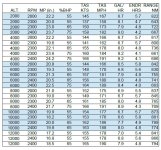
O-360 w/dual PMAGs (A timing curve), Hartzell CS prop. I have a 2000-2250 RPM restriction so the table reflects that at 55% BHP and above. The upshot for me re. this discussion is, 2000 RPM vs 2300 at equivalent (55%) BHP gives very similar economy, just slightly better at 2000 RPM or basically a wash at higher altitudes. Frankly I don't like the way things feel at 2000 RPM so I usually cruise just above the restricted range RPMs. Yes probably higher engine wear, but that's how I roll. In any case here are my numbers for anyone's edification.
n6r_cruise_performance_chart1.jpg
 
Has anyone adopted the Charles Lindbergh P38 engine management techniques of very low rpm and over square manifold pressure?
Yep, and this coupled to Carson speed gave excellent results now for more than 2Kh on my 360. My typical cruise RPM is 1900-2000, this from low down to say 12Kft, at which I might to increase RPM some to maintain Carson speed (112KIAS in my case).
Overall, and not only engine, efficiency being the name of the game. Very low fuel burn and low acoustic levels being the rewards, on top of spending more time aloft since I love flying. Easy equation really methinks ;)
 
An interesting study that validates the low prop speed is the variants of the Allison 501 turboprop. Huge four blade paddle blade props turning a constant 1020 r/m. Still in use on Lockheed C130 which first flew in 1954.
Some of the Unlimited Air Racers have also used this concept to advantage starting with the Greenameyer Bearcat in the 60's.
 
Part of what made his approach successful, was the supercharger. He lost a lot of thrust by going to low rpm and made up for it by increasing MAP. While the approach is sloid, we are more limited in gaining back power due to normal aspiration.

Big believer in going over square for efficiency, it is just more limiting without boost.
 
@Bcone1381, not sure about others, but negative for me, though we'd have to define what "issues" that would be. My CHTs are all in the 320+ range, and I usually fly year round but for in scorching Ts with my oil cooler shutter closed to maintain 180 or more.
I have to add that my present TB is, for different reasons, running hotter than its standard O-360 predecessor was.
 
On long crosscountry flights at around 10.000 ft my favourite power setting is ~20MAP/2000RPM. It gives me 50% power at slightly more than 150KTAS on 6.5GPH.
It is a low compression IO-375 with electronic ignition.
I found the speed at this power setting is 2 kts indicated more than at 50% with 2350RPM. I believe my prop (74RV) is to large for my engine and performs well at the lower RPMs.
 
Part of what made his approach successful, was the supercharger. He lost a lot of thrust by going to low rpm and made up for it by increasing MAP.
Did not think about that! The superchargers in the P-38 were amazing gadgets for sure.
 
Did not think about that! The superchargers in the P-38 were amazing gadgets for sure.
To be clear, I only assumed they were superchargers. They could have been turbochargers. I only knew that they had boost of some sort.
 
To be clear, I only assumed they were superchargers. They could have been turbochargers. I only knew that they had boost of some sort.
For once I was not being facetious! I have to confess I have no idea what the difference is between a turbocharger, a supercharger, and a… turbosupercharger. I have seen the P-38 gadget called all three.
 
For once I was not being facetious! I have to confess I have no idea what the difference is between a turbocharger, a supercharger, and a… turbosupercharger. I have seen the P-38 gadget called all three.
A turbocharger is driven by the exhaust output and a supercharger is gear driven off of the crankshaft.
 
O-360 w/dual PMAGs (A timing curve), Hartzell CS prop. I have a 2000-2250 RPM restriction so the table reflects that at 55% BHP and above. The upshot for me re. this discussion is, 2000 RPM vs 2300 at equivalent (55%) BHP gives very similar economy, just slightly better at 2000 RPM or basically a wash at higher altitudes. Frankly I don't like the way things feel at 2000 RPM so I usually cruise just above the restricted range RPMs. Yes probably higher engine wear, but that's how I roll. In any case here are my numbers for anyone's edification.
View attachment 99285
These results echo my experience of experimenting with this. In my setup (RV-7A, O-360 A1A, Hartzell BA, mag/Lightspeed combo for ignition) my best results are very similar between 2000 and 2300 rpm in terms of fuel economy and cruise speed. I have found 2300 rpm being noticeably smoother without any concern for entering a zone of operating limitation with the BA prop. Although the focus here is as high of manifold pressure as possible, I have found that with reduced MP the EGT's are more even and I can lean more (probably a quirk of the carb'ed engine) until I get high. The best key for efficiency is to get higher where WOT is achieving target MP.

I typically will run without wheelpants and can achieve cruise speeds of 130-135 knots at 2300/19 for a fuel burn of 6.5-7 gph at lower altitude, faster when higher. I lose about 5-8 knots at a minimum without wheelpants.

I am not sure an apples to apples comparison can be made with supercharged engines given their ability to achieve higher MP's overall for the same altitude and RPM's compared to NA.
 
The manual for my Hartzell propeller (HC-2YR-1BFP/F7496-2 constant speed blended airfoil) specifically says "Do not operate above 22” manifold pressure below 2350 RPM," which seems to preclude operating oversquare as you are all describing. Any idea WHY Hartzell imposes that limitation, and the ramifications of ignoring their guidance?
 
The manual for my Hartzell propeller (HC-2YR-1BFP/F7496-2 constant speed blended airfoil) specifically says "Do not operate above 22” manifold pressure below 2350 RPM," which seems to preclude operating oversquare as you are all describing. Any idea WHY Hartzell imposes that limitation, and the ramifications of ignoring their guidance?
Not sure about the "why", but it definitely depends on the engine. See https://hartzellprop.com/EXP-AIRCRAFT/Man-193-Vol-01.pdf

My IO-360-M1B w/ 8.5:1 CR using a 7497 bladed prop has no restrictions. I *think* at least some of any restriction is related to counterweights on the crankshaft or not. Others will no doubt have more definitive info.
 
Any idea WHY Hartzell imposes that limitation, and the ramifications of ignoring their guidance?

I predict that @TParker might chime in, but typically the way it works is that a manufacturer will test a set of what they consider to be normal scenarios to confirm that their product behaves correctly. They probably don't do a lot of testing outside those normal scenarios, so they can't say that their product will perform properly or is safe outside of what they have tested. It might be fine, but they can't economically test every possible combination of MP, RPM, airframe, fuel flow, density altitude, compression ratio, fuel type, crank mass, flight profile, prop controller, etc. I imagine if they did test scenario that showed a catastrophic outcome, they'd either fix it, or make sure that we know about it.
 
The manual for my Hartzell propeller (HC-2YR-1BFP/F7496-2 constant speed blended airfoil) specifically says "Do not operate above 22” manifold pressure below 2350 RPM," which seems to preclude operating oversquare as you are all describing. Any idea WHY Hartzell imposes that limitation, and the ramifications of ignoring their guidance?
That operating limitation, which is specific to the propeller, engine, and ignition system combination, is the result of in flight propeller stress measurement testing to the standards required of certified aircraft. That testing identified that operating the system in that manner, namely higher manifold pressures at lower RPMs, resulted in stresses which would negatively impact the fatigue life of the propeller and therefore requires a restriction to avoid those stresses. This means that the ramification of ignoring that limitation is the eventual fatigue failure of the propeller in flight, which would likely be catastrophic and fatal.

It's important to note that although the F7496() and the F7497() blade designs are very similar, both blended airfoils, they have different vibratory characteristics and therefore different operating limitations.

Not sure about the "why", but it definitely depends on the engine. See https://hartzellprop.com/EXP-AIRCRAFT/Man-193-Vol-01.pdf

My IO-360-M1B w/ 8.5:1 CR using a 7497 bladed prop has no restrictions. I *think* at least some of any restriction is related to counterweights on the crankshaft or not. Others will no doubt have more definitive info.
Section 4 of Manual 193, Volume 2, goes into detail on the whys of this. Whether the crankshaft has counterweights is one of factors, but by no means the only factor, that influences the stresses on the propeller during operation, and therefore the need for operating limitations to avoid damaging stresses.

I predict that @TParker might chime in, but typically the way it works is that a manufacturer will test a set of what they consider to be normal scenarios to confirm that their product behaves correctly. They probably don't do a lot of testing outside those normal scenarios, so they can't say that their product will perform properly or is safe outside of what they have tested. It might be fine, but they can't economically test every possible combination of MP, RPM, airframe, fuel flow, density altitude, compression ratio, fuel type, crank mass, flight profile, prop controller, etc.
I will since I was mentioned, so thanks for bringing this to my attention. FYI, we (Hartzell) test to cover the entire operating envelope not just "normal" scenarios; this is the requirement for certified aircraft. For Hartzell propellers, we test these systems in the same manner regardless of whether the combination is certified or experimental. So this includes things like RPM sweeps at multiple manifold pressures and multiple altitudes. This can also tie a test to particular aircraft capabilities, which makes things like aerobatic aircraft require more specific testing.

Otherwise, you're correct, we can't say much about things outside of what we've tested, especially when it comes to configuration changes. It might be safe, it might be unsafe, it might be safe but only if used with an appropriate operating restriction; can't say for sure without testing it.
 
That operating limitation, which is specific to the propeller, engine, and ignition system combination, is the result of in flight propeller stress measurement testing to the standards required of certified aircraft. That testing identified that operating the system in that manner, namely higher manifold pressures at lower RPMs, resulted in stresses which would negatively impact the fatigue life of the propeller and therefore requires a restriction to avoid those stresses. This means that the ramification of ignoring that limitation is the eventual fatigue failure of the propeller in flight, which would likely be catastrophic and fatal.

It's important to note that although the F7496() and the F7497() blade designs are very similar, both blended airfoils, they have different vibratory characteristics and therefore different operating limitations.


Section 4 of Manual 193, Volume 2, goes into detail on the whys of this. Whether the crankshaft has counterweights is one of factors, but by no means the only factor, that influences the stresses on the propeller during operation, and therefore the need for operating limitations to avoid damaging stresses.


I will since I was mentioned, so thanks for bringing this to my attention. FYI, we (Hartzell) test to cover the entire operating envelope not just "normal" scenarios; this is the requirement for certified aircraft. For Hartzell propellers, we test these systems in the same manner regardless of whether the combination is certified or experimental. So this includes things like RPM sweeps at multiple manifold pressures and multiple altitudes. This can also tie a test to particular aircraft capabilities, which makes things like aerobatic aircraft require more specific testing.

Otherwise, you're correct, we can't say much about things outside of what we've tested, especially when it comes to configuration changes. It might be safe, it might be unsafe, it might be safe but only if used with an appropriate operating restriction; can't say for sure without testing it.
Thanks, Trevor, I appreciate the thoughtful response!
 
I have also done this, in an RV-6A with an O-360 (two airplanes ago), and got very similar numbers; I was too chicken to go so close to the limit on Lycoming's chart (which you helpfully highlighted in red) so, like Dan 57, my RPM was usually in the low to mid 1900s, and I was burning 5.7 to 6 gph.

I say "too chicken" because there is one down-side that no one has mentioned yet on this thread: The more over-square you are, the more torque you're exerting on the drive-shaft/prop-shaft. So, yes, less friction and less wear and less heat and less fuel burn, all true and worthwhile positives, but the shaft stresses do go up, and I didn't want them all the way at the max. Those limits ("red lines") are probably there for good reason!
 
The manual for my Hartzell propeller (HC-2YR-1BFP/F7496-2 constant speed blended airfoil) specifically says "Do not operate above 22” manifold pressure below 2350 RPM," which seems to preclude operating oversquare as you are all describing. Any idea WHY Hartzell imposes that limitation, and the ramifications of ignoring their guidance?
In my case I do not operate in the restricted region of operating parameters. The fuel burn I quoted of 6.5-7 gph is at typical settings of 2300-2350 rpm/19 inches... Well below the manifold pressure maximum quoted. As a byproduct this also runs very smoothly. The best way to get your manifold pressure down below 22 inches is to get HIGH.

When speaking with an engine tech at Continental regarding a counter-weighted vs non-counter-weighted crankshaft for one of their O-370's, they explained to me that the counter-weight crank added weight to the engine but did remove some of the operating RPM/manifold pressure limitations, although not all. My assumption from this was that it was combination of torque loads as well as harmonic/vibration considerations that resulted in this. Which of course agrees completely with Trevor.
 
I wish we'd quit using the phrase "over-square". It's a meaningless expression.
I don't understand. I'm relatively new to piston engines, but in my albeit limited experience, I've seen many references to flying "25 Square" (2500 RPM and 25" MAP) or "24 Square," and understood "Over-square" to refer to settings where the MAP (in inches of Mercury) exceeds the RPM (in hundreds of RPM). Is this not a good way to quickly and simply explain where you're operating, similar to saying "the back side of the power curve" or "lean of peak"? Sure, it is imprecise and covers a lot of conditions, but it's easily understood. What alternative do you recommend?
 
I don't understand. I'm relatively new to piston engines, but in my albeit limited experience, I've seen many references to flying "25 Square" (2500 RPM and 25" MAP) or "24 Square," and understood "Over-square" to refer to settings where the MAP (in inches of Mercury) exceeds the RPM (in hundreds of RPM). Is this not a good way to quickly and simply explain where you're operating, similar to saying "the back side of the power curve" or "lean of peak"? Sure, it is imprecise and covers a lot of conditions, but it's easily understood. What alternative do you recommend?
It's fine as a simple description of a state; the problem arises when people start to think of it as something actual, a sort of "boundary" wherein one side lies potential catastrophe, doom, early demise of engines, etc., and the other side of the line is "safe".

Just take a few moments to think about the units of measurement being used, and the assertion that their equality or lack thereof means anything.
Inches
Inches of mercury
rotations
seconds

That they magically have approximately the same range of useful values doesn't mean that they should be treated as being equal.

Change inHg to hPa, and rpm to rad/s. The magical 25-squared becomes 846/262.
 
It's fine as a simple description of a state; the problem arises when people start to think of it as something actual, a sort of "boundary" wherein one side lies potential catastrophe, doom, early demise of engines, etc., and the other side of the line is "safe".

Just take a few moments to think about the units of measurement being used, and the assertion that their equality or lack thereof means anything.
Inches
Inches of mercury
rotations
seconds

That they magically have approximately the same range of useful values doesn't mean that they should be treated as being equal.

Change inHg to hPa, and rpm to rad/s. The magical 25-squared becomes 846/262.
I see what you mean. Yeah, totally arbitrary and not magical, just an easy way to generalize a complex concept in a field with many complex concepts. Gotta have some way for the engineers to explain things to the knuckle draggers like me in a way that we can internalize. The problems arise when the generalizations are no longer recognized as such, like you pointed out. Thanks!
 
The manual for my Hartzell propeller (HC-2YR-1BFP/F7496-2 constant speed blended airfoil) specifically says "Do not operate above 22” manifold pressure below 2350 RPM," which seems to preclude operating oversquare as you are all describing. Any idea WHY Hartzell imposes that limitation, and the ramifications of ignoring their guidance?
No, you need to read that literally. <22”@2350 or 29” @ 2351. Plenty over square.

Would guess they found harmonic below 2350 that were exasperated by the stronger power pulses above 22”
 
I wish we'd quit using the phrase "over-square". It's a meaningless expression.
While i agree with your statement and agree the equation is far off from the actual limits, but it is not meaningless. pilots do need to be aware of the stresses involved in lugging or too much MAP with too little rpm. Hope in your car and at a light, put it in third gear and floor it. Stress city on your engine and if it didn’t have efii, would be knocking like crazy. This concept is a bit foreign with modern cars, but if you drove a manual back in the 70’s you have likely experienced this; rattling marbles.

Even lycoming recognizes this and their performance charts show a max map for any given rpm.
 
Last edited:
While i agree with your statement and agree the equation is far off from the actual limits, but it is not meaningless. pilots do need to be aware of the stresses involved in lugging or too much MAP with too little rpm. Hope in your car and at a light, put it in third gear and floor it. Stress city on your engine and if it didn’t have efii, would be knocking like crazy. This concept is a bit foreign with modern cars, but if you drove a manual back in the 70’s you have likely experienced this; rattling marbles.

Even lycoming recognizes this and their performance charts show a max map for any given rpm.
Indeed they do:
Screenshot 2025-11-17 224639.png
Looks like 29" for all RPMs from max down to 1800 for an IO-360-M1B.
 
Indeed they do:
View attachment 102420
Looks like 29" for all RPMs from max down to 1800 for an IO-360-M1B.
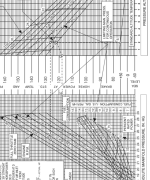
I think that is the wrong chart for determining that, at least for some engines. Some of the charts also have a " limiting man press for continuous operations" line overlayed as well. It is the one with the part throttle curve. That one does a better job of highlighting the limits. For my 320, it is 25" @ 2000 rpm.
 
I think that is the wrong chart for determining that, at least for some engines. Some of the charts also have a " limiting man press for continuous operations" line overlayed as well. It is the one with the part throttle curve. That one does a better job of highlighting the limits. For my 320, it is 25" @ 2000 rpm.
 
You mean this? (For certain IO-360s, including M1B, same engine as my previous chart...obviously different engines will have different charts).
Screenshot 2025-11-18 092127.png
 
Yeah, it's the same kind of chart as my first one, just for a different engine. Not sure what your point is. Mine is for my engine, an IO-360-M1B. Yours is for a different engine an O-360-something. The one I posted has no limiting manifold pressure curve, yours does.

As I said, different engines will have different operating limitations.
 
I can just about double my range on my RV-4 using Lindbergh method at the sacrifice of speed. Altitude to allow WOT, 10,000 MSL or so. RPM to get maximum glide, around 100 - 110 mph indicated, LOP (1500 -2000). Probably not the most effecient for miles/gallon. At this power setting nothing you can do will harm the engine.
 
Back
Top