

Van's Air Force
You are using an out of date browser. It may not display this or other websites correctly.
You should upgrade or use an alternative browser.
You should upgrade or use an alternative browser.
VPX Issues That No One Can Solve
- Thread starter TroyBranch
- Start date



Maybe we are looking in the wrong direction. What if one of the loads connected to the VPX was exhibiting noise on its power line back to the VPX? Other than avionics what else is being switched through vpx. Do you have a USB port for example? Some of these use a switching power supply, which could make noise on the line.
Maybe purchase a small handheld O-scope and monitor various power lines for excessive noise. Also, how about antenna connections a high VSWR? Does the happen when you are using the radio?
Maybe purchase a small handheld O-scope and monitor various power lines for excessive noise. Also, how about antenna connections a high VSWR? Does the happen when you are using the radio?
Last edited:

“…1. Airplanes aren't the place for "most people aren't having problems". If only a few people had cracks in their crankshafts, we would want to know about it, not ignore it on the basis that most people haven't had issues…”
You are missing the point. Statistically speaking, if there was a systemic problem with the VPX, you would expect to see more failures throughout a large cross section of users yet this one user had two consecutive failures in two separate units.
Obviously there is an issue; what the issue is remains to be seen. It is not necessarily the VPX itself but how it is interacting with the system it is installed in. As has been stated, each EAB is unique so finding a common thread between related failures is going to be difficult. I hope the OP will keep updating what he discovers.
You are missing the point. Statistically speaking, if there was a systemic problem with the VPX, you would expect to see more failures throughout a large cross section of users yet this one user had two consecutive failures in two separate units.
Obviously there is an issue; what the issue is remains to be seen. It is not necessarily the VPX itself but how it is interacting with the system it is installed in. As has been stated, each EAB is unique so finding a common thread between related failures is going to be difficult. I hope the OP will keep updating what he discovers.
In our little VAF world, we sometimes mistakenly think we have a broad view of activity in the community and are seeing valid trends. The reality is that regular posters on VAF are a small slice of the community. Sure, for bigger issues like PP problems or sticking valves, that small slice is enough to have the issues emerge, because the issue %age is so large. But for more narrow issues (lets say <1% issue rate), our sample size is just way to small to make claims like EVERYONE ELSE is not having any issues.You are missing the point. Statistically speaking, if there was a systemic problem with the VPX, you would expect to see more failures throughout a large cross section of users yet this one user had two consecutive failures in two separate units.
So, statistically speaking, we can't be making any significant observations unless we know the product installation size and compare that to the number of posters that have actively voiced their feedback. Also, just because a VAF member didn't post their problem here doesn't mean it didn't happen. Guessing a large percentage of "RV Buyers" would be taking an issue like this to an A&P or avionics shop vs fixing themselves with VAF support.

The easy way to test the system (and keeps other factors the same) is to assign switch 3 to a “different switch” and the “different switch” to switch 3 in the VPX. No touching of any wires or changing switches just reprogram in the VPX configurator if one wants to test the switch. Respected panel builders have been using these silver plated contact switches for 10+ years in VPX applications. I’m pretty sure if they suspected an issue they would not be recommending this but I get it gold “probably” better.

TroyBranch
Well Known Member
I just made 3 flight today totally 2 hrs. No issues at all. I am certain it is the switch. I will investigate the ground wire of this switch and the switch itself. Right now I am just trying to get hours on it with the switch bypassed to get the most accurate result. A gold plated switch is not my fix for this though. Keeping avionics off the VPX is the fix that will make me the most comfortable with the install. I feel that any switch function needs to be looked at with how much of an emergency it will create when the switch started to cause the VPX to act up. That’s how I am assessing the risk now at least. I am even considering having a separate switch for the 355, that way i have switch redundancy for my second navigator. I have to think more about that.
Your choice, but really the right switches are reliable as heck. Which ones are you using in your airplane?
TroyBranch
Well Known Member
Right now I am using the Aerosport switches. It is silver contacts and many people use them without issue for the VPX. My decision is mainly because I don’t want to have to go through this again. It’s 20 amps so it will work fine for an old fashion cooper avionics bus.Your choice, but really the right switches are reliable as heck. Which ones are you using in your airplane?

With the VP-X it is also probably worth using a double pole (DPST) switch with the two “poles” wired in parallel. That’s what I am going to do.
Problem with this is, you never know if one side stops working and then you’re back to square one ( a single pole switch).With the VP-X it is also probably worth using a double pole (DPST) switch with the two “poles” wired in parallel. That’s what I am going to do.

Forgive my ignorance on this, I haven't even pulled the first rivet but trying to learn as much as I can to prepare.. including what power options I have available.I just made 3 flight today totally 2 hrs. No issues at all. I am certain it is the switch. I will investigate the ground wire of this switch and the switch itself. Right now I am just trying to get hours on it with the switch bypassed to get the most accurate result. A gold plated switch is not my fix for this though. Keeping avionics off the VPX is the fix that will make me the most comfortable with the install. I feel that any switch function needs to be looked at with how much of an emergency it will create when the switch started to cause the VPX to act up. That’s how I am assessing the risk now at least. I am even considering having a separate switch for the 355, that way i have switch redundancy for my second navigator. I have to think more about that.
If you believe the failure is the switch itself, how does moving the critical avionics off of the VPX on to their own direct circuit - presumably still behind some sort of switch - fix the issue? I understand removing the VPX as a potential point of failure, but you're still going to have a switch in there someplace and you at least assume this is your current point of failure.
I can see how you can get some level of redundancy by using mulitple switches for each critical components to minimize loss, but couldn't you do this with the vpx too? I'm not familiar without how many switch inputs it has so maybe not.
If you use high quality electronics grade switches, the chances of a switch failure are very low IMO. The switches on a VPX carry no current at all, they are all active-low, meaning that they ground out the circuit to tell the VPX to enable the device(s) that switch is assigned to. Using a high current capable toggle switch isn't a great idea when you just need a very reliable logic-level signal toggle.
Here's the ones we (and many others) chose. I believe (check this tho!) that the ones Stein sells have gold contacts.

 www.steinair.com
Here's the ones we (and many others) chose. I believe (check this tho!) that the ones Stein sells have gold contacts.
AML-34 Illuminated Rocker Switch - Steinair Inc.
Rectangular DPST Rocker Switch rated for 15 amps having a single independent lamp circuit. Both AML 12vdc & AML 24vdc LED lamps draw 15ma (0.015amps) at their rated voltages. Both AML 12vdc & AML 24vdc LED lamps have internal current … Readmore
www.steinair.com
This is a very valid observation in my opinion.Forgive my ignorance on this, I haven't even pulled the first rivet but trying to learn as much as I can to prepare.. including what power options I have available.
If you believe the failure is the switch itself, how does moving the critical avionics off of the VPX on to their own direct circuit - presumably still behind some sort of switch - fix the issue? I understand removing the VPX as a potential point of failure, but you're still going to have a switch in there someplace and you at least assume this is your current point of failure.
I can see how you can get some level of redundancy by using mulitple switches for each critical components to minimize loss, but couldn't you do this with the vpx too? I'm not familiar without how many switch inputs it has so maybe not.
Definitely a bad switch will affect anything it controls, VPX or otherwise, the strong ongoing pro/con opinions on the VPX vs conventional CB's notwithstanding.
In fact....just like the VPX, that fancy Garmin stuff in the OP's panel uses switches to control things (GEA24/GAD27 discrete inputs, GAD27 external lighting switches) that carry no current at all, but are just active-low logic switches that just ground a circuit to tell the Garmin boxes to enable the external device the switch controls.
All the discussion about quality switches, silver contacts, gold contacts etc is well informed and worthy of consideration.
Specifically though as noted above in post #113, the designer of the VPX, a recognized aerospace industry expert in the field of next generation electrical systems, has stated that you can use any kind of switch you want with a VPX because it has specific circuitry designed to address the logic switch low current issues discussed by others above.
The OP has experienced the most frustrating situation possible with intermittent problems that defy troubleshooting attempts. Hopefully just a bad switch is the problem.
If so, that is just a switch problem, not a VPX problem.
Going forward, for flying a lot of IFR like the OP, everyone has to make an individual choice to equip/configure their system to give them the comfort level they need.
Last edited:

akschu
Well Known Member
Forgive my ignorance on this, I haven't even pulled the first rivet but trying to learn as much as I can to prepare.. including what power options I have available.
If you believe the failure is the switch itself, how does moving the critical avionics off of the VPX on to their own direct circuit - presumably still behind some sort of switch - fix the issue? I understand removing the VPX as a potential point of failure, but you're still going to have a switch in there someplace and you at least assume this is your current point of failure.
I can see how you can get some level of redundancy by using mulitple switches for each critical components to minimize loss, but couldn't you do this with the vpx too? I'm not familiar without how many switch inputs it has so maybe not.
Think of it like water.
In the case of the VPX you have a very low pressure (say 5 psi) flowing through a restrictor so that by the time the valve (switch) sees it it’s only flowing 1gallon per hour, then that flow of water is what triggers a pressure sensor that tells a computer to open another valve.
The issue is that there is so little pressure and flow that the switch may be reluctant to connect.
In the case of a normal switch the valve would be controlling 12psi with 3000 gallons an hour flow behind it. That valve is going to be forced to connect and practically fling itself open when the operator cracks it. Also, this valve is directly watering the crops, no computer involved.
Edit: I had forgotten that the engineer of the VPX has a clever solution to try and address this where the VPX will ramp up the current on the switch to keep the contacts clean. Perhaps the VPX isn’t sensitive to switches and the OP would have had the same issue if the switch directly controlled the load. If so, the troubleshooting process probably would have been more straightforward.
TroyBranch
Well Known Member
It’s because the switch with silver contacts and no voltage used for the VPX tend to get dirty and I could get the same problem again. Many others have not had that problem with these switches but it looks like I have. There has been some reporting switch issues through the VPx. I am just trying to eliminate that problem. I could try gold contact switches but then I have a lot of work to redo all the switches. This change will allow me to add a back battery to my avionics bus as well in the future. I still have testing of the current switch to do but that is where I am at today.Forgive my ignorance on this, I haven't even pulled the first rivet but trying to learn as much as I can to prepare.. including what power options I have available.
If you believe the failure is the switch itself, how does moving the critical avionics off of the VPX on to their own direct circuit - presumably still behind some sort of switch - fix the issue? I understand removing the VPX as a potential point of failure, but you're still going to have a switch in there someplace and you at least assume this is your current point of failure.
I can see how you can get some level of redundancy by using mulitple switches for each critical components to minimize loss, but couldn't you do this with the vpx too? I'm not familiar without how many switch inputs it has so maybe not.
Pretty sure my AML-34 switches supplied by Stein have silver contacts. Between the 2 VPX's over 800 hrs and 6 years, no issues. Maybe I'm just luckyIf you use high quality electronics grade switches, the chances of a switch failure are very low IMO. The switches on a VPX carry no current at all, they are all active-low, meaning that they ground out the circuit to tell the VPX to enable the device(s) that switch is assigned to. Using a high current capable toggle switch isn't a great idea when you just need a very reliable logic-level signal toggle.
Here's the ones we (and many others) chose. I believe (check this tho!) that the ones Stein sells have gold contacts.
AML-34 Illuminated Rocker Switch - Steinair Inc.
Rectangular DPST Rocker Switch rated for 15 amps having a single independent lamp circuit. Both AML 12vdc & AML 24vdc LED lamps draw 15ma (0.015amps) at their rated voltages. Both AML 12vdc & AML 24vdc LED lamps have internal current … Readmore

VPX has been doing this for quite some time, seems they would recommend gold contacts for switches if it was a factor but that of course is speculation. Stein builds hundreds of panels with VPX, seems they would also specify gold contacts if it was a factor. VPX does recommend gold plated connectors, but I have never read they recommend gold switch contacts.
If someone has a spec sheet showing Honeywell AML series with gold contact would love to review. Thanks !
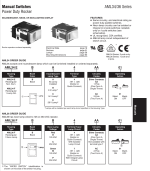
You will see them in the AML24 sheets. AML24 are the lower current version but the same form factor as the AML34.If someone has a spec sheet showing Honeywell AML series with gold contact would love to review. Thanks !
https://www.digikey.in/htmldatasheets/production/1041529/0/0/1/aml24-26-series-datasheet.html
Derek

This is unnecessary. The VP-X works with any and all switches.With the VP-X it is also probably worth using a double pole (DPST) switch with the two “poles” wired in parallel. That’s what I am going to do.
If you do go this route, best is to use a DPDT as they are much easier to find - you just don't use one side of it.
The VP-X is designed to work with all types of switches, you can use anything you want. The VP-X applies a small amount of "wiping current" that effectively cleans the switch contacts as they are used.Pretty sure my AML-34 switches supplied by Stein have silver contacts. Between the 2 VPX's over 800 hrs and 6 years, no issues. Maybe I'm just lucky
VPX has been doing this for quite some time, seems they would recommend gold contacts for switches if it was a factor but that of course is speculation. Stein builds hundreds of panels with VPX, seems they would also specify gold contacts if it was a factor. VPX does recommend gold plated connectors, but I have never read they recommend gold switch contacts.
and… off memory the Dynon Manual says not to enable current fault for that reason.FWIW, one data point.
I had the fault detection enabled on the Dynon Heated Pitot...
Since that device cycles on/off, VPX detected a current drop and tripped the circuit...
Disabled the fault detection and voilà !!! No more tripped circuits.
Other than that, my VPX is working as expected.
Best of luck in resolving your issue.

Can you elaborate on your the flap issue you had?? I am experiencing a flap issue now with my VPX Pro.Im for sure not the one with elect knowledge but I fought a conflict with my VPX and G3X and the flaps for about 6 months. Josh and Nick were great trying to help me out. I never talked to Chad at VPX but I did go to Midwest Panels because the3y are close to me. Still no luck. I was ready to remove the flaps from the VPX wiring and do them direct but tried running a new wire from VPX to Flap motor. Still no dice. I then switched the flap control wires opposite from the drawings and it fixed the issue.
My point is it was not a hardware problem though I was sure it was. Since different components are crapping out, it makes it harder to figure out - maybe. From what you are describing it sounds to me like a power spike or shorting.
Good luck with this. I know the frustration and I do not fly IFR. Im sure you will need to be SURE it is figured out before you do that.
