Van's Air Force

The definitive Van's Aircraft support community! Buying, building or flying an RV? Join our exclusive family of mentors and enthusiasts!

Close call, Stall on Final

climberrn

Well Known Member
Friend
Had a very close call yesterday, and still trying to process it and keep replaying it in my mind.

Plane has Dynon Skyview touch, backup Garmin G5, about 900 hours and 11 years flying. Spends about 30-40 nights a year outside while traveling, and the rest of the time in a climate controlled hangar. About 3 months ago, on takeoff the AOA alarm starts beeping just as I pitch for climb. I am relatively light with the 390, so there is little chance of a stall on takeoff but I lower the nose regardless. Land for fuel 30 minutes later, and the AOA is beeping at me the whole time in the pattern. Im very familiar with the pattern sight picture, but keep my speed up anyway. Pull the aft baggage panel and everything looks connected. Ended up lowering the AOA volume and continuing on. Everything else appears normal. Airspeed seems to be working normally, but he Dynon AP is having pitch issues. Constantly hunting altitudes.

Re calibrate the AOA, do the AP calibration procedure a couple times. Things working normal ish for a while. Flew to NY from NV and everything working perfectly. Almost too good. Spent a few nights out in the rain before I put it in a hangar in NY. Do several local flights while in NY, and practice short field landings since we re landing at a friends 1700’ grass strip. The AOA was going off at 90KTS in the pattern. Went around and turned the volume to the AOA off. Did a few landings. Was concentrating more on the sight picture than the panel. Airspeed seems to be working properly, but on short final my eyes are outside so don’t notice any issues.

On 1 mile final at the 850msl grass strip in VA, the plane felt mushy, but was still at 75KTS. Dynon and G5 rereading the same. Kept slowing to get down to 70, but the pitch was way too high. Got this really bad feeling and added power. In hindsight sight, was starting to stall over the trees, 1/2 mile out. Went around for another try. Switched the ALT static source at pattern altitude, and the airspeed jumped up 30Kts. Switched it back closed and everything working normally again. In hindsight, I just equalized the pressure in the static line. Landing attempt #2, we never got below 75KTS indicated on final but still felt mushy. The plane started to stall just as crossing the runway threshold but still 10-20 feet off the ground. Added full power, to arrest the fall, and hit the runway. Was able to maintain directional control, and pulled the power when I realized we were on the ground and didn’t bounce. Minimal damage to the plane, and no prop strike. Tie her down and try to come up with a plan.

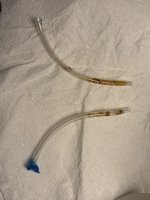
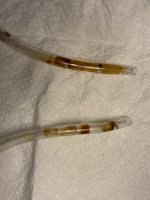
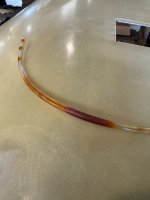
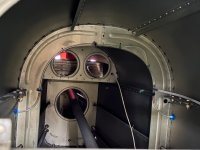
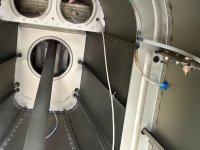
Today, start pulling panels, looking for breaks in static or pitot lines. In the tail section, I see some discoloration in the static lines about 3-4” up from the ports. There is NO loop to trap water. Bends up just near the ports. The discoloration has been there the last couple of inspections but figured the stock Vans tubing was getting old, and would come up with a plan to change it. Disconnected the line from the AHRS, and couldn’t blow through it. Compressed air was able to clear it after a few tries. Ended up cutting the tubing out and replacing it. It has some yellow crusty substance at the curve for a few inches. Totally clear near the ports, and further up. The pitot lines are all the high quality lines from Stein, but the static lines aft of the baggage bulkhead are the stock Vans vinyl lines, and refrigerator water lines included with the kit.

Im sure this will correct the airspeed errors, and the AP should return to normal working order. Unfortunately, we came very close to an accident before the problem was found.
 

Attachments

  • IMG_4766.jpeg
    IMG_4766.jpeg
    2.1 MB · Views: 872
  • IMG_4767.jpeg
    IMG_4767.jpeg
    1.7 MB · Views: 799
  • IMG_4768.jpeg
    IMG_4768.jpeg
    1.7 MB · Views: 744
  • IMG_4771.jpeg
    IMG_4771.jpeg
    2.2 MB · Views: 734
  • IMG_4772.jpeg
    IMG_4772.jpeg
    1.6 MB · Views: 898
Glad everything worked out. This is a very good lesson and reminder that we need to trust our “feel”. You knew something was wrong and fought through what your instruments where telling you. Not easy to do.
Also, those lines should be inspected at each CI. This might have been caught before it became an issue.
Good job getting down safe.
 
Had a very close call yesterday, and still trying to process it and keep replaying it in my mind.

Plane has Dynon Skyview touch, backup Garmin G5, about 900 hours and 11 years flying. Spends about 30-40 nights a year outside while traveling, and the rest of the time in a climate controlled hangar. About 3 months ago, on takeoff the AOA alarm starts beeping just as I pitch for climb. I am relatively light with the 390, so there is little chance of a stall on takeoff but I lower the nose regardless. Land for fuel 30 minutes later, and the AOA is beeping at me the whole time in the pattern. Im very familiar with the pattern sight picture, but keep my speed up anyway. Pull the aft baggage panel and everything looks connected. Ended up lowering the AOA volume and continuing on. Everything else appears normal. Airspeed seems to be working normally, but he Dynon AP is having pitch issues. Constantly hunting altitudes.

Re calibrate the AOA, do the AP calibration procedure a couple times. Things working normal ish for a while. Flew to NY from NV and everything working perfectly. Almost too good. Spent a few nights out in the rain before I put it in a hangar in NY. Do several local flights while in NY, and practice short field landings since we re landing at a friends 1700’ grass strip. The AOA was going off at 90KTS in the pattern. Went around and turned the volume to the AOA off. Did a few landings. Was concentrating more on the sight picture than the panel. Airspeed seems to be working properly, but on short final my eyes are outside so don’t notice any issues.

On 1 mile final at the 850msl grass strip in VA, the plane felt mushy, but was still at 75KTS. Dynon and G5 rereading the same. Kept slowing to get down to 70, but the pitch was way too high. Got this really bad feeling and added power. In hindsight sight, was starting to stall over the trees, 1/2 mile out. Went around for another try. Switched the ALT static source at pattern altitude, and the airspeed jumped up 30Kts. Switched it back closed and everything working normally again. In hindsight, I just equalized the pressure in the static line. Landing attempt #2, we never got below 75KTS indicated on final but still felt mushy. The plane started to stall just as crossing the runway threshold but still 10-20 feet off the ground. Added full power, to arrest the fall, and hit the runway. Was able to maintain directional control, and pulled the power when I realized we were on the ground and didn’t bounce. Minimal damage to the plane, and no prop strike. Tie her down and try to come up with a plan.

Today, start pulling panels, looking for breaks in static or pitot lines. In the tail section, I see some discoloration in the static lines about 3-4” up from the ports. There is NO loop to trap water. Bends up just near the ports. The discoloration has been there the last couple of inspections but figured the stock Vans tubing was getting old, and would come up with a plan to change it. Disconnected the line from the AHRS, and couldn’t blow through it. Compressed air was able to clear it after a few tries. Ended up cutting the tubing out and replacing it. It has some yellow crusty substance at the curve for a few inches. Totally clear near the ports, and further up. The pitot lines are all the high quality lines from Stein, but the static lines aft of the baggage bulkhead are the stock Vans vinyl lines, and refrigerator water lines included with the kit.

Im sure this will correct the airspeed errors, and the AP should return to normal working order. Unfortunately, we came very close to an accident before the problem was found.
First glad you are ok. I think you have a RV-7? The 7 wing is not very tolerant to stalls compared to the 14 and 10 wing. Not sure why your AOA is falling out of calibration but if the sight picture does not look normal go around, obviously. I had a similar issue first flight in my 10 (pitot line had a leak, yes should have had it checked before flight) but knew winds aloft and looked at GPS ground speed to insure I was close to proper landing speed. What was your GPS ground speed telling you? I am convinced in a RV-7 a stall turn to final is almost not recoverable. Glad you are safe !
 
Way beyond the faulty instrument…this is why you should train partial panel. The airplane is gonna stall in a configuration in accordance with physics…not an instrument.
Getting to know the burble…the sound, the feel, the configuration, is time well spent. You did a good job recognizing the attitude was wrong and you solved your own problem prudently…good job and thanks for sharing this. I think this is one of the most important things we can do…share our mistakes so others take heed without needing to learn by doing.
 
I’m glad you are ok and found the problem. Maybe I’m not reading this correctly, but it sounds like your AoA might have been telling you the right thing?
 
In reading, before I saw the pictures, I was convinced something had settled in a low spot. But then the photos show a proper installation where the lines go uphill from *both* static ports. And something has been introduced from both sides. Huh? Paint prep something? I'd think EAA, Van's or someone would be interested in getting a professional analysis of those lines. With all the focus on LOC in the pattern, here we have evidence of something that could affect the fleet. We need to figure out what did that.
 
The Vans stall switch would have been helpful in this instance. A partial panel would not have changed anything. My wife verified the G5 was reading a much higher speed on final. I told her the speeds I was looking for and she was watching the instruments also, but not calling any numbers out. The AOA was probably not coming out of calibration. It was probably interpreting bad static information. Hindsight is 20/20.

I do what I feel is a very thorough condition inspection. The discoloration has been there for a few years and figured it was just hardening and would change it out eventually. Even put some safety wire up there last inspection, but it doesn’t go past the curve. The blockage is soft when compressing the tube.

I’m heading back to NV next week and will bring the bad tubes with me. If anyone has any good ideas how to figure out what clogged them, I’ll be happy to mail you a tube to evaluate. It’s only in the soft vynyl tubing. Nowhere else. Stumped.

I’m constantly replaying the close call. In hindsight, I should have kept the alt static open on landing but the problem was so elusive I didn’t think of it. Glad there was no bent metal or worse…..
 
I’m glad you are ok and found the problem. Maybe I’m not reading this correctly, but it sounds like your AoA might have been telling you the right thing?
It was coming on way too early. At 1000 hours I know the pattern speeds by sight pretty well. It was going off at flap speeds. Can’t process how the static was affected the AOA, but it must be related.
 
In reading, before I saw the pictures, I was convinced something had settled in a low spot. But then the photos show a proper installation where the lines go uphill from *both* static ports. And something has been introduced from both sides. Huh? Paint prep something? I'd think EAA, Van's or someone would be interested in getting a professional analysis of those lines. With all the focus on LOC in the pattern, here we have evidence of something that could affect the fleet. We need to figure out what did that.
I painted the airplane. Cut off a wood toothpick in the rivet hole/port when prepped and painted. This issue showed up 900+ hours in.

(150+) hours in our 6A. That’s the discrepancy in hours I keep mentioning.
 
I painted the airplane. Cut off a wood toothpick in the rivet hole/port when prepped and painted. This issue showed up 900+ hours in.
Seems to rule out some solvent from painting process. It is notable that the stuff is localized, near, but not at the static ports. That is a clue. If it was some sort of tubing degradation it shouldn't be in one area only.
 
Seems to rule out some solvent from painting process. It is notable that the stuff is localized, near, but not at the static ports. That is a clue. If it was some sort of tubing degradation it shouldn't be in one area only.
Maybe mud doppers, they can really do a job on the static system.
 
In reading, before I saw the pictures, I was convinced something had settled in a low spot. But then the photos show a proper installation where the lines go uphill from *both* static ports. And something has been introduced from both sides. Huh? Paint prep something? I'd think EAA, Van's or someone would be interested in getting a professional analysis of those lines. With all the focus on LOC in the pattern, here we have evidence of something that could affect the fleet. We need to figure out what did that.
Had a very close call yesterday, and still trying to process it and keep replaying it in my mind.

Plane has Dynon Skyview touch, backup Garmin G5, about 900 hours and 11 years flying. Spends about 30-40 nights a year outside while traveling, and the rest of the time in a climate controlled hangar. About 3 months ago, on takeoff the AOA alarm starts beeping just as I pitch for climb. I am relatively light with the 390, so there is little chance of a stall on takeoff but I lower the nose regardless. Land for fuel 30 minutes later, and the AOA is beeping at me the whole time in the pattern. Im very familiar with the pattern sight picture, but keep my speed up anyway. Pull the aft baggage panel and everything looks connected. Ended up lowering the AOA volume and continuing on. Everything else appears normal. Airspeed seems to be working normally, but he Dynon AP is having pitch issues. Constantly hunting altitudes.

Re calibrate the AOA, do the AP calibration procedure a couple times. Things working normal ish for a while. Flew to NY from NV and everything working perfectly. Almost too good. Spent a few nights out in the rain before I put it in a hangar in NY. Do several local flights while in NY, and practice short field landings since we re landing at a friends 1700’ grass strip. The AOA was going off at 90KTS in the pattern. Went around and turned the volume to the AOA off. Did a few landings. Was concentrating more on the sight picture than the panel. Airspeed seems to be working properly, but on short final my eyes are outside so don’t notice any issues.

On 1 mile final at the 850msl grass strip in VA, the plane felt mushy, but was still at 75KTS. Dynon and G5 rereading the same. Kept slowing to get down to 70, but the pitch was way too high. Got this really bad feeling and added power. In hindsight sight, was starting to stall over the trees, 1/2 mile out. Went around for another try. Switched the ALT static source at pattern altitude, and the airspeed jumped up 30Kts. Switched it back closed and everything working normally again. In hindsight, I just equalized the pressure in the static line. Landing attempt #2, we never got below 75KTS indicated on final but still felt mushy. The plane started to stall just as crossing the runway threshold but still 10-20 feet off the ground. Added full power, to arrest the fall, and hit the runway. Was able to maintain directional control, and pulled the power when I realized we were on the ground and didn’t bounce. Minimal damage to the plane, and no prop strike. Tie her down and try to come up with a plan.

Today, start pulling panels, looking for breaks in static or pitot lines. In the tail section, I see some discoloration in the static lines about 3-4” up from the ports. There is NO loop to trap water. Bends up just near the ports. The discoloration has been there the last couple of inspections but figured the stock Vans tubing was getting old, and would come up with a plan to change it. Disconnected the line from the AHRS, and couldn’t blow through it. Compressed air was able to clear it after a few tries. Ended up cutting the tubing out and replacing it. It has some yellow crusty substance at the curve for a few inches. Totally clear near the ports, and further up. The pitot lines are all the high quality lines from Stein, but the static lines aft of the baggage bulkhead are the stock Vans vinyl lines, and refrigerator water lines included with the kit.

Im sure this will correct the airspeed errors, and the AP should return to normal working order. Unfortunately, we came very close to an accident before the problem was found.
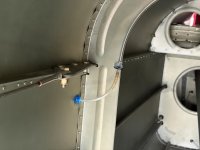
Im no expert but from the pics i see the contamination in same area on both sides. My thoughts are a small bug or fluff off a tree got in there leading to more crap coming in. Looks almost like an oily type residue. You say it’s kept outside and inside. Not sure what kind of environment your in or if thats even related to this. You also said it’s been there awhile. I’d be looking at something in environment caused this. Just my thoughts
 
Im no expert but from the pics i see the contamination in same area on both sides. My thoughts are a small bug or fluff off a tree got in there leading to more crap coming in. Looks almost like an oily type residue. You say it’s kept outside and inside. Not sure what kind of environment your in or if thats even related to this. You also said it’s been there awhile. I’d be looking at something in environment caused this. Just my thoughts
Always hangared at home. Travel to CA coast and PNW for a week or two a year, then Buffalo NY, and VA. So Cal for a week or so a year. There is a lot of country in between she will spend a night or three outside when traveling. A little bit of everything. I doubt the mud daubers. It’s not hard like dirt. Mold seems most likely so far. Will be happy to mail to someone to verify if there is a way to verify. It was difficult to get air past with compressed air.
 
I painted the airplane. Cut off a wood toothpick in the rivet hole/port when prepped and painted. This issue showed up 900+ hours in.

(150+) hours in our 6A. That’s the discrepancy in hours I keep mentioning.
I'm pretty sure inserting a toothpick in the rivet hole prior to paint is not standard practice or at least what I was advised.
 
Always hangared at home. Travel to CA coast and PNW for a week or two a year, then Buffalo NY, and VA. So Cal for a week or so a year. There is a lot of country in between she will spend a night or three outside when traveling. A little bit of everything. I doubt the mud daubers. It’s not hard like dirt. Mold seems most likely so far. Will be happy to mail to someone to verify if there is a way to verify. It was difficult to get air past with compressed air.
Mold like you say. That tells me it’s a vegetation injection. Who knows what got in there. Best thing is change it all out. Keep an eye on it.
 
The Vans stall switch would have been helpful in this instance. A partial panel would not have changed anything.
technically partial panel doesn’t help, but the cross checking discipline associated with that type of flying would. If things get mushy, telling you that you’re slow and the IAS is disagreeing, showing that you are not slowing down, a good cross check is gps grd speed. Not suggesting you did anything wrong, just an idea for others reading.

Ifr flying forces you to always cross check instruments, to insure they are accurate, as failed instruments can kill you if you don’t figure out they are failing. For example, pitch starts to increase, but vsi shows no climb and airspeed not decreasing; clearly not all instruments agreeing on what is happening. In your case, ias is constant and high, yet your pitch would have been increasing, which is a disagreement that must be resolved.
 
Last edited:
An environmental testing lab could identify what it is. They are pretty common and not expensive. Last time I needed one cost was under $100.
Might provide some answers.
 
Could it be an insect nest with eggs? I have heard of that near holes in an automotive distributor. On the car it was described as a brown mass. Did these brown areas stink?
 
I don’t have the discoloration but I did once in 800hrs flying my 8 experience a static system blockage while flying an instrument approach in fairly heavy rain. I needed to switch to my alternate static outlet to finish my approach. Not fun. Never happened before and never happened since.
 
Good learning and thank you for the story. Thank you for taking the criticism along with it as this is adding to everyone else learning both from the story and with critique.

Why switch back off the alternate static when it seemed to clear it? Yes, temporarily cleared.

Switched the ALT static source at pattern altitude, and the airspeed jumped up 30Kts. Switched it back closed and everything working normally again. In hindsight, I just equalized the pressure in the static line. Landing attempt #2, we never got below 75KTS indicated on final but still felt mushy.

Yes, you cleared it, and descending will read fast with a block or restricted static flow as the instrument perceives more dynamic ram pressure from the total pressure side… undoing a fix is a bit like what Ethiopian 302 (2nd MCAS crash) did, made a good fix and undid it after everything appeared to be working from the fix.

Did the field have wind information for groundspeed plus wind? (Assume time of year not a high density alt day so TAS and IAS wouldn’t have huge splits?)

Generally, I tend to agree with

I’m glad you are ok and found the problem. Maybe I’m not reading this correctly, but it sounds like your AoA might have been telling you the right thing?

as static shouldn’t impact AOA but we don’t know what whole ADC systems might be doing. So, have you put the questions to Dynon?

I have seen a blocked pitot kill all ADC information airspeed, altitude, AOA, VVI, mach, TAS, velocity vector in a jet. Had backup altitude and VVI though backup speed was useless and no backup AOA. This because the particular ADC quit with bad pitot. Thought I was going to trim to eight degrees pitch straight and level to set the trim to “onspeed” AOA value, but another plane came along so was able to join up and have them be my instruments. Still had groundspeed so could also have had that plus wind. Had a similar experience in the RV when the pitot got blocked but had not yet installed AOA; was going to use a fast pitch to a long runway and still did this while also luckily finding someone to join up upon. But this person was not form familiar and was uncomfortable with me being as close as I was wanting me to widen away during our base turns… Then again in the RV first flight after having added AOA (no shared lines with pitot) but not yet calibrated the gauge, as it was the Lift reserve Simple pneumatic only no electrical system involved, climbed fast and then stall tested so as to see where that displayed, added three tics and used that to land. This last one was interesting not for the recovery event but for the flight itself. Started my roll, noted no airspeed, was just about to pull power and abort but, gusts, I was airborne and pushing the nose to stay in ground effect.

Have space on the panel for an independent AOA gauge? Could even share existing AOA’s lines to be backup display as opposed to whole of system saving both work and second probe. Though, to be fair, I now have two probes. One to the Lift (recommend rotating gauge 90 clockwise if you use Lift), and later replaced pitot with heated pitot AOA combo which now puts AOA in the D10A giving me two wholly independent AOAs. But I only use sound from the Dynon as I don’t like their inverse fill display.

If speed and/or AOA be suspect and you don’t have reason to land immediately, go to a longer runway where you can land fast. Honor the system that shows you slower, in this case AOA. If single system or both suspect, add a speed margin. If tail wheel plan wheel landing so as to be fast throughout. Unfortunately this is proving pitch and power are inadequate to task.
 
Cessnas have a small plastic "bottle" attached to the inside fitting on the static port presumably for handling this type of thing. Many aircraft like the Bonanzas have multiple holes at the static port.
 
Good learning and thank you for the story. Thank you for taking the criticism along with it as this is adding to everyone else learning both from the story and with critique.

Why switch back off the alternate static when it seemed to clear it? Yes, temporarily cleared.


Yes, you cleared it, and descending will read fast with a block or restricted static flow as the instrument perceives more dynamic ram pressure from the total pressure side… undoing a fix is a bit like what Ethiopian 302 (2nd MCAS crash) did, made a good fix and undid it after everything appeared to be working from the fix.

Did the field have wind information for groundspeed plus wind? (Assume time of year not a high density alt day so TAS and IAS wouldn’t have huge splits?)

Generally, I tend to agree with


as static shouldn’t impact AOA but we don’t know what whole ADC systems might be doing. So, have you put the questions to Dynon?

I have seen a blocked pitot kill all ADC information airspeed, altitude, AOA, VVI, mach, TAS, velocity vector in a jet. Had backup altitude and VVI though backup speed was useless and no backup AOA. This because the particular ADC quit with bad pitot. Thought I was going to trim to eight degrees pitch straight and level to set the trim to “onspeed” AOA value, but another plane came along so was able to join up and have them be my instruments. Still had groundspeed so could also have had that plus wind. Had a similar experience in the RV when the pitot got blocked but had not yet installed AOA; was going to use a fast pitch to a long runway and still did this while also luckily finding someone to join up upon. But this person was not form familiar and was uncomfortable with me being as close as I was wanting me to widen away during our base turns… Then again in the RV first flight after having added AOA (no shared lines with pitot) but not yet calibrated the gauge, as it was the Lift reserve Simple pneumatic only no electrical system involved, climbed fast and then stall tested so as to see where that displayed, added three tics and used that to land. This last one was interesting not for the recovery event but for the flight itself. Started my roll, noted no airspeed, was just about to pull power and abort but, gusts, I was airborne and pushing the nose to stay in ground effect.

Have space on the panel for an independent AOA gauge? Could even share existing AOA’s lines to be backup display as opposed to whole of system saving both work and second probe. Though, to be fair, I now have two probes. One to the Lift (recommend rotating gauge 90 clockwise if you use Lift), and later replaced pitot with heated pitot AOA combo which now puts AOA in the D10A giving me two wholly independent AOAs. But I only use sound from the Dynon as I don’t like their inverse fill display.

If speed and/or AOA be suspect and you don’t have reason to land immediately, go to a longer runway where you can land fast. Honor the system that shows you slower, in this case AOA. If single system or both suspect, add a speed margin. If tail wheel plan wheel landing so as to be fast throughout. Unfortunately this is proving pitch and power are inadequate to task.
All good information and appreciate the suggestions. There was no wind at landing and a basically sea level field, and a cool day so the GPS speed would have been the ticket. I have 3 independent sources displayed for GPS speed. Foreflight, Dynon, and G5. GPS and GS would have been very close that day. The GTN 625 probably even has a GPS speed now that I think of it. Switching the ALT static closed after releasing the pressure was defiantly not the proper action. Clear now, but at the time didn’t seem important.

I originally installed the AFS AOA ports during the build in the top and bottom of the wing, but ended up filling the holes when I decided to go Dynon, and have their heated Pitot with built in AOA. I’m not aware of any other stand alone AOA instruments that use their source. I’ll concentrate on myself (partial panel) for now before I go looking to add information to the panel.

I understand what you guys are referring to on partial panel now. My friend and I have been practicing different scenarios and acting as safety pilot for each other recently. Will add landing with GPS speed to our flights, and with alt static open to see how the plane responds in slow flight and in the pattern.

When I get home, will look into having the substance analyzed, unless someone approaches me about that sooner. No noticeable smell. Our home field is very dry, especially in the hangar. The issues seem worse in high humidity areas when traveling, or after a rain.
 
I had a similar issue due to a clog. Typically my airplane is inside a hanger but I was overnighting somewhere and tied down outside. I didn’t realize I had to protect the static ports from bugs, etc.

Bug crawled up static port and it interfered with ADHRS etc.

Thereafter I used blue painters tape over top static ports and standard Practice on PO tubes, etc. to protect these things. No problems after that. I also tape over the fuel ports to ensure that water doesn’t lay down inside above the cap. Of course I have to be diligent to make sure I remove all those things prior to flight but that’s what pre-flights are for.
 
All good information and appreciate the suggestions. There was no wind at landing and a basically sea level field, and a cool day so the GPS speed would have been the ticket. I have 3 independent sources displayed for GPS speed. Foreflight, Dynon, and G5. GPS and GS would have been very close that day. The GTN 625 probably even has a GPS speed now that I think of it. Switching the ALT static closed after releasing the pressure was defiantly not the proper action. Clear now, but at the time didn’t seem important.

I originally installed the AFS AOA ports during the build in the top and bottom of the wing, but ended up filling the holes when I decided to go Dynon, and have their heated Pitot with built in AOA. I’m not aware of any other stand alone AOA instruments that use their source. I’ll concentrate on myself (partial panel) for now before I go looking to add information to the panel.

I understand what you guys are referring to on partial panel now. My friend and I have been practicing different scenarios and acting as safety pilot for each other recently. Will add landing with GPS speed to our flights, and with alt static open to see how the plane responds in slow flight and in the pattern.
So encouraging to see folks self-analyze situations like this and then take steps to enhance their skills where they can to prevent in the future! So great that folks share stories like this, as I suspect many others will think about the event and also take steps to improve or at least expand their knowledge!

Appreciate you sharing
 
With AOA versus angle of attack, it is prudent to do at least one AOA versus airspeed cross check when entering the landing pattern. Go to a known speed and crosscheck for a valid AOA. If there is a difference at least you will realize it before it becomes a safety issue. This was a standard crosscheck done by US Navy pilots on downwind before their first landing of a flight. We did occasionally find malfunctions this way. This is a good operating practice to incorporate in your habit patterns..
 
With AOA versus angle of attack, it is prudent to do at least one AOA versus airspeed cross check when entering the landing pattern. Go to a known speed and crosscheck for a valid AOA. If there is a difference at least you will realize it before it becomes a safety issue. This was a standard crosscheck done by US Navy pilots on downwind before their first landing of a flight. We did occasionally find malfunctions this way. This is a good operating practice to incorporate in your habit patterns..

If you do speed crosschecks, you have to adjust the speed for weight. You can, however, do it with pitch and not add an extra spot for error. So long as you’re straight and level, pitch = AOA. But to use it, you need sufficient precision in your instrumentation. But you could mark your windscreen for it. Windscreens have greater capacity for precision but only with markings. Something HUDs take advantage upon. I’d actually encourage having both options in your pocket. One for normal ops, the other for abnormal issues and tie-breaking. I almost never did speed crosschecks in the Hornet. Times I flew two-seat, WSOs would, but I never bothered figuring adjusted speeds as I knew eight degrees. Trimmed onspeed AOA, straight and level, waterline should be at eight degrees. Could even check on descent if straight in as you could subtract glide path angle. Waterline at five with Velocity Vector minus three. Brings another point, if you don’t know the particular glide path, look at the difference flight path to watermark so long as you’re neither banking nor pulling a pitch rate.

I originally installed the AFS AOA ports during the build in the top and bottom of the wing, but ended up filling the holes when I decided to go Dynon, and have their heated Pitot with built in AOA. I’m not aware of any other stand alone AOA instruments that use their source. I’ll concentrate on myself (partial panel) for now before I go looking to add information to the panel.

Thinking stand alone off Dynon probe, you could T off from the Dynon plumbing to the Lift gauge. Such gives you a backup display though you’ll likely need to mark it as you’d be stuck with values landing where they land on the gauge. Their design is simple and no electric involved but they achieve it by adjusting the angle of their probe which you’d lose. Though they tell me you could open the display so easily adjust with new marks inside not mere tape, scratches, marks outside of gauge. I’m sure there are others who also use straight air differential with whom something similar could be done. First be worth asking Dynon though if anything static would interfere to AOA in their ADC or was AOA actually fully good.

As a tangent off of groundspeed discussion, James Albright with Code 7700 has some interesting writings regarding using it as a warning indicator of sorts.


As for the Hornet with normal airfields, you’d use ground speeds during rollout vs distance remaining boards as your decision basis to reject landings.

If you’re normally based in NY and like a NH trip, feel free to hit KCON or KLCI, give me a call and we could play.

When I get home, will look into having the substance analyzed, unless someone approaches me about that sooner. No noticeable smell. Our home field is very dry, especially in the hangar. The issues seem worse in high humidity areas when traveling, or after a rain.

So it seems it is absorbing moisture and blocking, or encouraging condensate and blocking. I like the change tubing suggestion as well as the add a low loop two T tied back to themselves so condensate has a non interfering area in which to collect. If need be, you could also go to a wider tubing through empennage portions.
 
Last edited:
well saved, happy for that (y)

Pushing aside technical consideration, this adds to my ongoing training point: any of us should train landings without ASI. Sound, visual pitch, indicated pitch vs RPM, vibrations, general picture, all of this help in detecting a tech malfunction before it develops. Mark IV eyeballs, and the parts of one's body rests on are another great help.

PS
This from an old pilot having learned to fly during last century on a 1943 Piper Cub L-4, sitting behind a tall FI and not seeing the ASI during all of my dual training...
 
well saved, happy for that (y)

Pushing aside technical consideration, this adds to my ongoing training point: any of us should train landings without ASI. Sound, visual pitch, indicated pitch vs RPM, vibrations, general picture, all of this help in detecting a tech malfunction before it develops. Mark IV eyeballs, and the parts of one's body rests on are another great help.
The only time I did this was in a glider when doing a pre-solo checkout. I know the RPM setting for various approach speeds in my RV but I never practiced it, assuming the tach is working. I will add this to my emergency maneuver list to practice.
 
To state partial panel training won’t help…is to not understand partial panel training.

Block off..meaning cover your airspeed instrument completely and learn to fly your plane by feel. All the way to and thru the stall…steep turns and adding some G included. Find the burble, feel the mush and get comfy there…

Correlate those feelings to a working airspeed and you have a recipe for this not being an issue. Ever.

I know…as in absolutely know with my hand on the stick…that when I configure down to full flaps, stick trimmed to neutral and set 15” mp with prop forward…
I am at 75mph ias.

I’ve tested it hundreds of time.

I’ve had airspeed indications wonky lots of times, due to operating off a grass strip and mud, or water affecting my pitot. But I’ve made plenty of landings with wonky airspeed indications, that presented no issue worthy of writing up here…

So yeah…partial panel training helps…specifically…learn to fly your plane without reference to airspeed indicator, particularly, your landing configuration.

It may save your life one day.
 
Block off..meaning cover your airspeed instrument completely and learn to fly your plane by feel. All the way to and thru the stall…steep turns and adding some G included. Find the burble, feel the mush and get comfy there…

Correlate those feelings to a working airspeed and you have a recipe for this not being an issue. Ever.

Try this in a Lance. Lancair 360 little tail. Good luck.
 
Maybe mud doppers, they can really do a job on the static system.
Static Port is too small for mud daubers, however my partner had a similar problem down in Tampa with A/C parked on ramp for a week at a time.
Attributed to very small flying insects looking for a place to lay eggs. also noted in pitot tube.
 
Back to your original post and pictures - this might only cause you to scratch your head, and doesn’t explain the blockage, but the discoloration of the using might only be a coincidence. This piece of scrap poly tube has been sitting in my box of random hose for ten or fifteen years, never been installed or exposed to anything other than the box of other random hose…..

Curiously similar discoloration!


IMG_7637.jpeg
 
Back to your original post and pictures - this might only cause you to scratch your head, and doesn’t explain the blockage, but the discoloration of the using might only be a coincidence. This piece of scrap poly tube has been sitting in my box of random hose for ten or fifteen years, never been installed or exposed to anything other than the box of other random hose…..

Curiously similar discoloration!


View attachment 100611
Paul, that’s exactly what I thought I was looking at on inspection. That’s why I didn’t pull it out right away. Figured it was getting brittle, and would crack eventually. I’ll bring it over when we get back if you want.

Flew today. Everything working properly now. The AP holds pitch better than it has in years. Also, ever since I had the alt static (6+ years), opening it caused the indicated elevation to jump a couple hundred feet. Today in slow cruise at 3500, opening it made little difference. Static was probably partially blocked for years.
 
Block off..meaning cover your airspeed instrument completely and learn to fly your plane by feel. All the way to and thru the stall…steep turns and adding some G included. Find the burble, feel the mush and get comfy there…

Correlate those feelings to a working airspeed and you have a recipe for this not being an issue. Ever.
My primary instructor made me do this all the time and it was great training. It came in handy once when I conducted a... slightly subpar preflight and failed to notice that a mud dauber had taken up residence in the pitot tube of my Warrior.

Getting this kind of "feel" for a specific airplane is, IMHO, a wildly underrated safety benefit of being an owner rather than a renter. You get to be so much more in tune with an airplane that you own.
 
The challenge is less about flying with no ASI, it's having the ability to ignore what looks like a working ASI that is giving you bad information. Easier said than done.
Definitely something I’ll be working on. Thanks everyone for their input.
 
As noted above, having a "known safe configuration" for a certain airspeed is not only a good idea, but a potentially life-saving one. In 26 years of flying I've lost airspeed on takeoff about a half dozen times and every time I do the same thing - full power climbout at a known good deck angle that will not approach stall, then set up for the known safe configuration and come back for a landing. Keep that speed a bit high coming to the runway, get it down to 12"-18" of altitude over the pavement with no power and hold it there until she quits flying, you'll be fine.
 
I don't have AOA or stall warning in my RV-4. I do take it up and stall it clean and dirty every few months. I have two sources of airspeed, steam gages plus AV-30. I check them using 3-leg and gps maybe once a year. I also use Dan Gryder's DMMS (1.4 x clean stall). DMMS until on final then VREF (1.3 x dirty stall) once full flaps and over runway. RV wing is very forgiving. Release pressure and it will recover immediately . . . unless you are in a skid.
 
When driving transport Cat A/C we always practised unreliable AS in the Sim using…. pitch+ power= performance, even though I’ve retired I still practice this in the RV, worth keeping that skill sharp especially in todays high tech cockpits of GA light AC👍
 
Climberrn,

Excellent job, and thank you for sharing! If it doesn’t look right or feel right, it’s probably not right. Excellent discussion regarding pitch and power (go to for unreliable airspeed), alternate static source use and GPS ground speed for a sanity check and trend information.

As far as your AOA goes:

“The Vans stall switch would have been helpful in this instance.”

Correct. That system is completely independent of the pitot/static system, and when properly installed, should provide about 5 KTS (or 11/2 to 2 degrees actual AOA) warning of impending stall if calibrated in a method similar to certified airplanes.

“The AOA was probably not coming out of calibration. It was probably interpreting bad static information.”

Correct (for the Dynon AOA algorithm). In this case, the Dynon system computes AOA by measuring the difference between pitot pressure and the pressure from the offset AOA port and dividing by dynamic pressure (derived from the basic airplane pitot/static system). Since dynamic pressure requires accurate static pressure, any error will cause an error in AOA computation. This is why a certified system requires an independent static source if using this “normalization” technique. This is by no means a critique of the Dynon system—just a limitation that you need to be aware of.

FWIW, the Garmin system uses local pressure data (from the pitot/AOA) and shouldn’t be affected by this type of static pressure error. Garmin doesn’t publish their AOA computation method the way Dynon does, but the Garmin system does record coefficient of pressure; so, it’s practical to plot Garmin data with independently derived pressures from the same probe to ascertain how coefficient of pressure is computed. Other systems are completely stand-alone and fully independent of the basic pitot/static system. In these cases, “honoring the AOA/stall warning” would be correct.

Looking forward to your debrief after you figured out what happened with your tubing/hardware.

Fly safe,

Vac
 
We had a similar issue during our return to service flight after the last annual. I had to pull both g3x out for some other work and didn't get the static line fully seated into the adhrs during reinstall. Our AoA warning was going off constantly during the 1 lap flight. We brought it back indicating a little faster than normal and used ground speed and rpm/throttle to judge the landing. Floated a bit but never felt really unsafe.

After reseating the static line everything went back to normal. I decided to test something I never really thought about before and during the next flight, flipped the emergency static selector during the downwind leg. Along with the expected couple hundred feet altitude jump, my indicated airspeed went from 90 to 110 kias, which was very unexpected. If the AoA hadn't alerted us, it would have been a likely stall during base to final since we were roughly 20 knots slow. Planning on going back up soon and gathering data on normal vs emergency static indication over the airspeed range.
 
Our AoA warning was going off constantly during the 1 lap flight. We brought it back indicating a little faster than normal and used ground speed and rpm/throttle to judge the landing. Floated a bit but never felt really unsafe.

If the AoA hadn't alerted us, it would have been a likely stall during base to final since we were roughly 20 knots slow.

As a good practice, yes I am making a broad generalization despite condemnation of such in another thread, I would not do one lap post maintenance check flights. Orbit over the field, sure, but you want to keep climbing so as to be doing your checking 3k to 5k AGL. Your stall will now be well above base to final while adhering to the practice for other maintenance concerns provides a margin of contingency energy. For other maintenance concerns, you also want to put more than the three minute lap into it for confidence too. With pitot-statics and pressure diff AOA, think we’re learning here that while in this 5k to 3k above, you can do your notional pattern, perhaps level off 4.5k letting things settle then add a 1k descent as part of the checks while having margin and therefore space to recover and time to adapt.

Never say never nor always, but… never do maintenance checks in the pattern always well above it.
 
I have the same discoloration of parts of my static lines as well and IIRC, even the same areas. Just pulling from my old man memory here but I don't recall anything like that on the ram air side. Hmmm, I'm going to check. I had figured the discoloration to be from maybe a few drops of water settling in there when it's washed leading to a bacterial or fungal growth or something like that. We ALL learn when we share experiences so thanks for posting yours!!! I will be having a closer look at mine soon.
 
As a good practice, yes I am making a broad generalization despite condemnation of such in another thread, I would not do one lap post maintenance check flights. Orbit over the field, sure, but you want to keep climbing so as to be doing your checking 3k to 5k AGL. Your stall will now be well above base to final while adhering to the practice for other maintenance concerns provides a margin of contingency energy. For other maintenance concerns, you also want to put more than the three minute lap into it for confidence too. With pitot-statics and pressure diff AOA, think we’re learning here that while in this 5k to 3k above, you can do your notional pattern, perhaps level off 4.5k letting things settle then add a 1k descent as part of the checks while having margin and therefore space to recover and time to adapt.

Never say never nor always, but… never do maintenance checks in the pattern always well above i
I agree, but you're making assumptions that don't seem fair. If you took off for a post maintenance flight and saw 500 degrees EGT climbing out, would you still continue to climb to 5k for troubleshooting, or would you do a single lap and get it back on the ground for troubleshooting? In this case we took off, saw something was immediately wrong and decided to investigate it on the ground. Maybe I described the situation poorly, but jumping straight to chastising me for only doing 3 minutes MX checks and not climbing fast enough seem overly harsh.
 
In reading, before I saw the pictures, I was convinced something had settled in a low spot. But then the photos show a proper installation where the lines go uphill from *both* static ports. And something has been introduced from both sides. Huh? Paint prep something? I'd think EAA, Van's or someone would be interested in getting a professional analysis of those lines. With all the focus on LOC in the pattern, here we have evidence of something that could affect the fleet. We need to figure out what did that.
Blaplante,
Right on.
Your comment deserves real follow through.
Daddyman58
 
Back
Top